My Wikipedia Experience

A lot of people like students and young adults fresh out of school believe Wikipedia to be a write off when it comes to research. This idea has been drilled into their brain as early as elementary school. Teachers often tell us never to use Wikipedia for assignments and many even penalize us for using it. So naturally many students tend to not even take a glance at Wikipedia when conducting research. In many cases however, these educators are completely wrong, or they just don’t want to educate their students on how to properly use Wikipedia. Wikipedia is a great source of information, especially preliminary information. When taught how to use correctly, students can gain a lot from it. 

Wikipedia is a great website not only to use for information, but also to share information. Wikipedia allows for anyone to edit and contribute to almost any webpage they can access and creating a Wikipedia account is simple and quick. This is the issue that many teachers have with the website. They claim that since anyone can edit it, the information isn’t reliable. This is not completely true however because when making my account I learnt that there is an approval system that comes along with it. Although one can go and change a Wikipedia page, any edit they make must be approved by others in the community. If the edit gets approved it will stay as is, but if not, it gets reverted. This ensures some safety in terms of what you read on Wikipedia. 

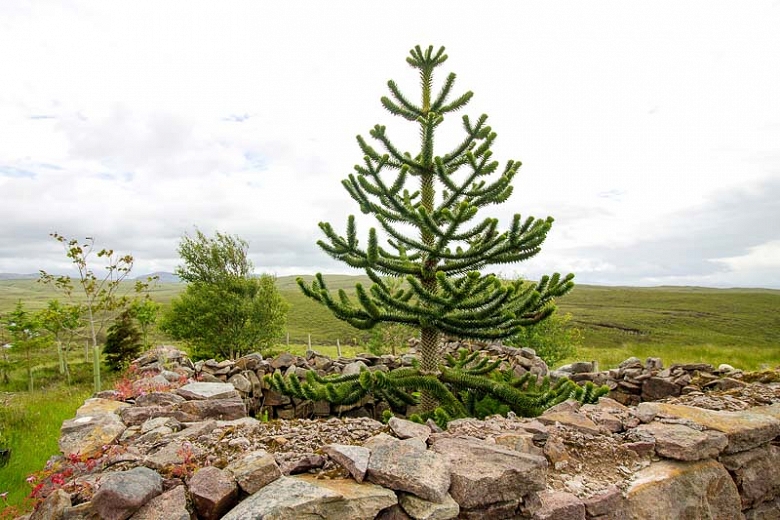
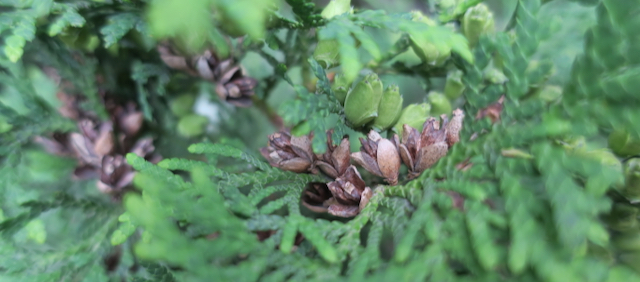
Speaking of edits, I intend to do some myself. I was looking at the Wikipedia page on a native plant to the Azores islands, which is where my family is from. The plant is locally known as pau branco and I wanted to learn a bit more about it because I always see it when I visit but know nothing about it. I ended up finding a Wikipedia page on it but it contains very little information on it so I intend to add more to it. I plan to add more information on things like habitat and distribution
Multiple Choice on Covid-19

Q1.  What is the most efficient PPE to protect yourself against SARS-CoV-2?

A) Any face covering (IE cloth, bandanna, blue surgical mask)

B) A N95/KN95 mask

C) Double surgical masks

D) Face shield

Q2. What is FALSE about N95/KN95 masks?

A) They capture 95% of 0.3 micron particles

B) They impair breathing by limiting the amount of oxygen you inhale and can cause death

C) You should wear your N95/KN95 in all indoor public settings

D) They are reusable

Q3.  What is TRUE about COVID-19 testing?

A) A negative rapid antigen test guarantees that you do not have COVID-19

B) Polymerase chain reaction (PCR) tests are more reliable than rapid-antigen tests

C) There is no need to get tested if you have been in close contact with someone who has tested positive for COVID-19 but you are asymptomatic (have no symptoms)

D) You can catch COVID-19 from taking a PCR test

Q4. What is TRUE about COVID-19 vaccines

A) It is okay to mix vaccines (IE have one Pfizer, and two Moderna)

B) Getting a COIVD-19 vaccine is a better and safer way to build immunity against the disease, rather than catching it

C) COVID-19 vaccines serve to produce antibodies by stimulating your immune system

D) All of the above

Q5. COVID-19 is a zoonotic disease that is transmissible between humans and animals

A) True

B) False

George Washington Carver

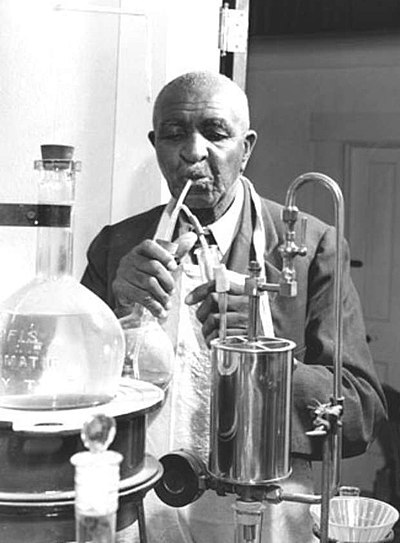
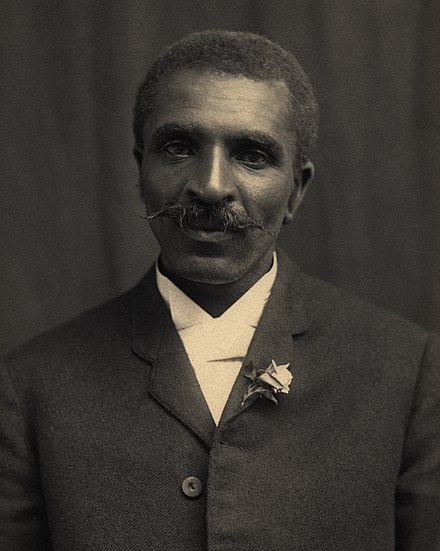
We often think that historical figures in science were educated white men, as racism and sexism kept people of colour and women oppressed and uneducated.  But there are exceptions, like George Washington Carver.

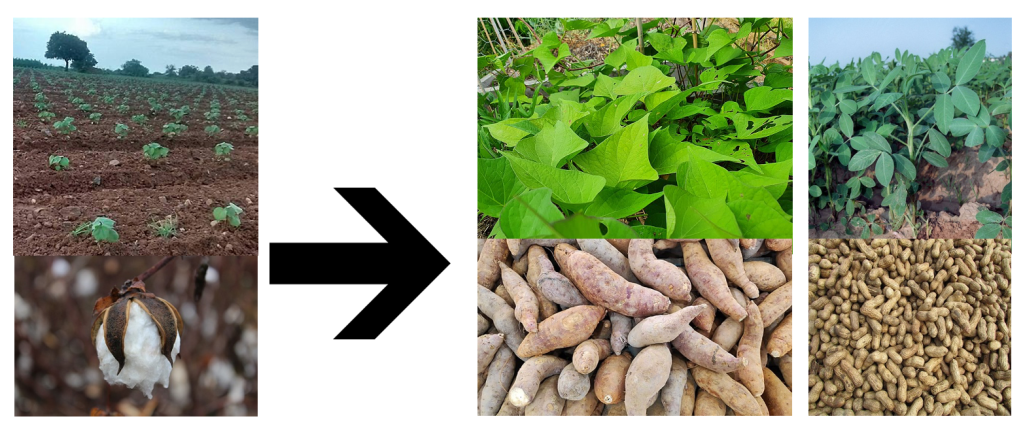
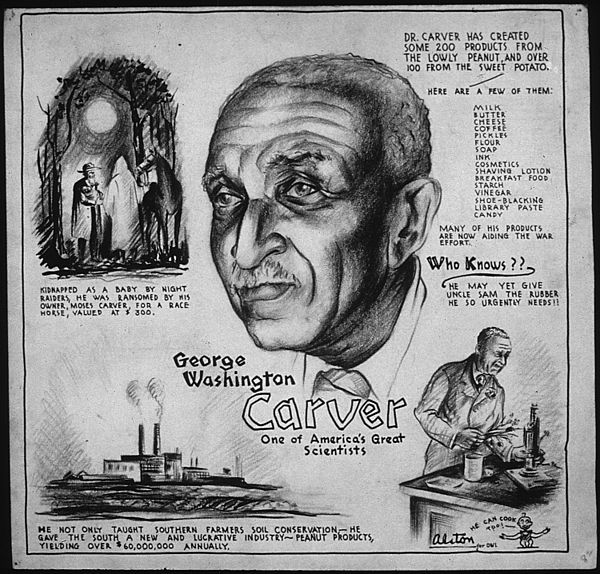
This historical figure in science was a black American born into slavery in the mid 1800s in Missouri.  He and his mother were kidnapped from their plantation during the American Civil War, for the purpose of being sold. George was found and returned to his plantation while his mother was still at large.  The abolition of slavery in 1865 freed George from slavery and allowed him to leave when he was a pre-teen.  He discovered his interest for living creatures and plants at this time and was determined to get an education.  While working odd jobs, he finally received his high school diploma in his late 20s in Minneapolis, Kansas – which only fueled his desire for higher education.  Through much perseverance, George was admitted at Simpson College in Iowa for piano and art.  He then transferred to Iowa State Agricultural College and obtained a master’s degree in agriculture science and a Master of Science. George then became a professor of agriculture at the Tuskegee Normal and Industrial Institute and later became the director of agricultural research. He focused his time on improving Southern agriculture from the devastation caused by the monoculture plantations of cotton.  This is where George Washington Carver made his impact on ecology.

Monoculture left the soil of the South nutrient deficient and prone to erosion – which is unsustainable for plant cover.  His solution was to plant peanuts, soybeans and sweet potato because they enrich the soil with nitrogen and protein.  However, there was no market for these products.  Knowing the importance of these plants, George worked in his laboratory to find other uses for them – and he developed hundreds.  Using peanuts and sweet potatoes for things like ink, soap, milk, flour, postage stamp glue caused for a high demand of these soil enriching plants.  George Washington Carver is the reason that the South restored their soil and ceased their dependence on cotton – whilst also making them a lot of money in cash crops.

George Washington Carver is one of those rare success stories of African Americans in the 1800s.  He overcame a tremendous amount of adversity to get an education and improve the plant ecology of the Southern United States of America.

References

Britannica, The Editors of Encyclopaedia. “George Washington Carver”. Encyclopedia Britannica, 1 Jan. 2022, https://www.britannica.com/biography/George-Washington-Carver.

Bagley, Mary. “George Washington Carver: Biography, Inventions & Quotes”. LiveScience, 7 Dec. 2013, https://www.livescience.com/41780-george-washington-carver.html

Types of Peer-Reviewed Literature

Anything you want to know is just a simple Google search away, but how do we know what we are reading is reliable? The answer is peer-reviewed literature.  Peer-reviewed literature means quite literally that peers, those being masters of the same discipline, have reviewed it and confirmed its dependability.  Thus, Wikipedia is not a peer-reviewed resource as non-experts are allowed to edit and add what they wish.  Peer-reviewed literature is subdivided into three categories: primary, secondary, and tertiary.  These divisions indicate how far from the original source the literature is.

Primary literature is raw material directly for the original source, such as a scholarly article of an experiment whereby the author preformed the experiment.  For example, Gregor Mendel’s paper of his pea plant experiment, entitled “Versuche Über Pflanzen-Hybriden” and published in 1866. 

Secondary literature is one step away from the original source, it interprets, summarizes and/or analyzes primary literature.  An example is William Bateson’s book “Mendel’s Principles of Heredity.”  Bateson translated Mendel’s paper and added his own defense to the book. Translations are a grey area between primary and secondary literature, as mistakes in translation can alter what the primary source author was trying to convey – but because Bateson offered his own commentary for a more in depth look at Mendel’s work, it is definitely secondary.

Tertiary literature is one step away from secondary literature, and two steps away from primary.  Tertiary literature interprets, summarizes and/or analyzes secondary literature.  An example of this is Ronald Fisher’s response to Mendel’s pea plant experiment.  His paper was entitled “Has Mendel’s Work Been Rediscovered?” and was published in the Annals of Science in 1936.  In this paper he summarized both Mendel and Bateson’s work and provided his own commentary. Other common examples of tertiary sources are textbooks and encyclopedias.

It’s always important to know if the information you are learning from is of a reliable source – especially when citing sources for schoolwork.  If you’re looking for more clarification, take a look at the University of Minnesota’s website.

References

Bateson, W., & Mendel, G. (2009). Mendel’s Principles of Heredity: A Defence, with a Translation of Mendel’s Original Papers on Hybridisation. Cambridge Library Collection – Darwin, Evolution and Genetics. Cambridge: Cambridge University Press.

Fisher, R. A. (1936). Has Mendel’s work been rediscovered? Annals of Science, 1(2), 115–137.

Mendel, G. (1866). Versuche Über Pflanzen-Hybriden. Verhandlungen des naturforschenden Vereines zu Brünn: 3–47.

Film Nomination

The Applied Plant Ecology film festival was a very entertaining and refreshing way to spread news about science.  My winning nomination was Extinction: the facts, a documentary narrated by the legendary Sir David Attenborough.  My second nomination was the science fictional TV series Snowpiercer.

Snowpiercer is a post-apocalyptic series showing the aftermath of climate change.  The premise is that the earth was warming to unsustainable temperatures, then war made the earth hotter and caused a mass extinction.  Scientists then wanted to reverse the damage of global warming and they successfully cooled the earth – but cooled it too much.  A wealthy entrepreneur turned tyrant, Mr. Wilford, predicated the demise of earth and built a luxury train 1001 cars long that could withstand the forecasted frozen wasteland.  Housing the last of humanity, this train circles the globe almost three times per year and relies on its constant motion to fuel itself.  Among the trains many cars there are aquatic, seed bank and growing cars that allow passengers of the train to live there for 7 years.  The series is about the people living on the train and the trials and tribulations they face.

In the current season, the train is sending out weather balloons across the globe in hope of finding warming temperatures.  They are hopeful that one location, the Horn of Africa, is a hotspot with a livable climate.

Although science fiction, this series portrays a plausible outcome of climate change – especially with the recent war between Russia and the Ukraine.  If this war turned nuclear, there would be a mass extinction and the land would be uninhabitable… exactly like what happens in Snowpiercer.  Whether it be by climate change, nuclear war or depletion of seed banks, if we continue ruining our world we are going to need an ark to save us too. This series indirectly touches upon the extinction crisis, rare plant conservation and impacts of climate change on vegetation – all topics covered in Applied Plant Biology. I strongly recommend you watch this series, as it excellently exemplifies how bad things can get if we do not take care of our world.

Snowpiercer. Created by Graeme Manson and Josh Friedman, TNT, 2020-2022.

Advice from the People Behind the Science Podcast

Being a post-secondary student in this day and age is not an easy experience. We’re anxious, we’re stressed and many of us are suffering from imposter syndrome.  Dr. Dawn Bazely’s advice for us is to learn how to overcome failure.

I couldn’t agree more.

I feel like we’re always being told that we need to get good grades so we can get a good job and live a happy life – so what happens when we fail a test?  A lot of us just shut down.  We are overcome by this “failure” to maintain a perfect GPA and go into a self-sabotaging spiral.  We take academic failure much too harshly and let it affect our mental health, our motivation and productivity – or at least I do.

Thus, learning to accept and overcome failure is a very important skill.  It is so much more beneficial to grow from it, learn from your mistakes and improve rather than succumb to the failure.  And this is a transferable skill.  For example, if you fail to get a job you applied for; the result should not be you giving up and self-loathing, it should be you getting back up and applying for more.

We need to accept that failure is not always a bad thing.  It is more so a learning opportunity to better ourselves. Failure allows us to identify and improve our weaknesses.  It allows us to build resilience and stronger character in the long run.

To listen to Dr. Bazely’s full podcast on People Behind the Science with Dr. Marie McNeeley, please follow this link.  The mention of overcoming failure was said at 1:01:20, but there are many other gems of advice near the end of the podcast, like the importance of diversifying your mentors. I strongly recommend you give it a listen – especially the last 10 minutes!

References

McNeeley, Marie. “174: Dr. Dawn Bazely: Investigating the Intriguing Interactions between Animals and Plants.” People Behind the Science Podcast, PBtS, 31 Oct. 2014. https://www.peoplebehindthescience.com/dr-dawn-bazely/#volume

Peer-reviewed Primary, Secondary and Tertiary literature

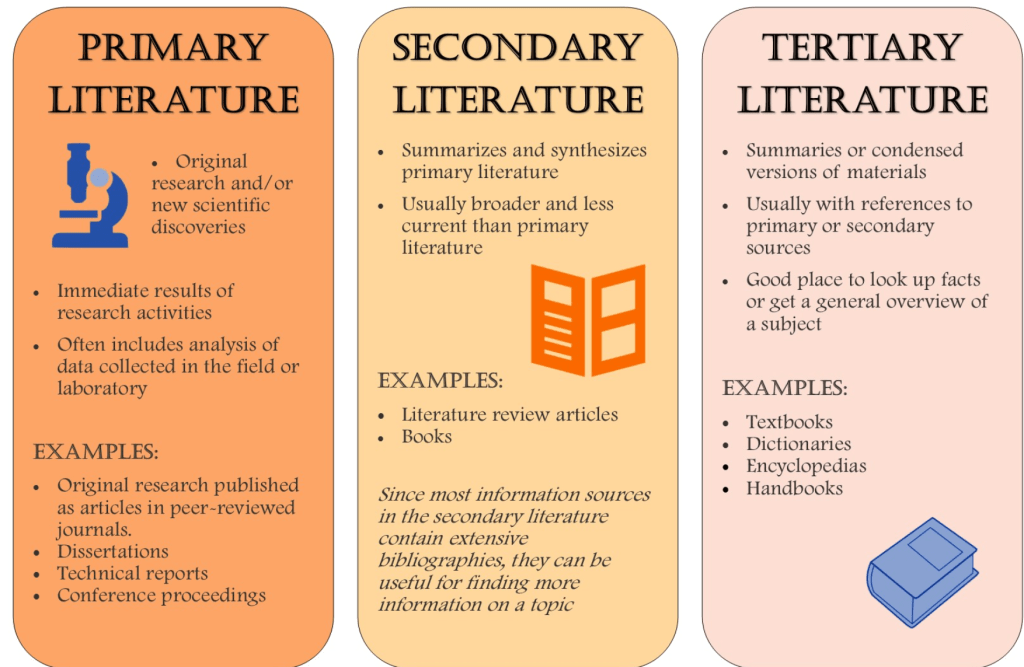
Figure 1.0 A brief summary on 3 different types of literature
(https://library.onu.edu/c.php?g=357753&p=3802458)

The distinction between primary, secondary, and tertiary sources is based on how far the information source is developed from the original event or occurrence. Is it firsthand information? Is this a second-hand translation? Is it possible to get a third-hand synthesis and overview of what’s known?

Primary sources are developed as closely as possible to the original event or phenomena. A main source is, for example, a photograph or video of an event. A main source is data from an experiment, while secondary sources are one step distant from that. Secondary sources are secondary sources that are based on or concerning primary sources. Secondary sources, for example, are articles and books in which authors interpret data from another research team’s experiment or archival film of an event; tertiary sources are a step further away. Secondary sources are summarised or synthesized in tertiary sources. Textbooks and reference books, for example, are tertiary sources.

Examples of each:

Primary source: Gustafsson, C., & Norkko, A. (2016). Not all plants are the same: Exploring metabolism and nitrogen fluxes in a benthic community composed of different aquatic plant species. Limnology and Oceanography, 61(5), 1787–1799. https://www.jstor.org/stable/26628520

Secondary source: Lewis, W. H., & Elvin-Lewis, M. P. (1995). Medicinal Plants as Sources of New Therapeutics. Annals of the Missouri Botanical Garden, 82(1), 16–24. https://doi.org/10.2307/2399976

Tertiary source: Lessing, P. (1989). EARLY GEOLOGICAL MAPS OF WEST VIRGINIA. Earth Sciences History, 8(1), 14–35. http://www.jstor.org/stable/24137144

Resource used to find sources: https://guides.jstor.org/ecob

Primary, Secondary & Tertiary… What’s the Difference?

Primary sources include the first report on a particular topic of research. This includes raw data, first hand observations and overall findings and conclusions obtained from the person writing the piece of literature. For example, in the article “Synthesizing habitat fragmentation effects on plant–antagonist interactions in a phylogenetic context” the author discusses their study conducted to determine the extent and direction of habitat fragmentation impacts on plant- antagonist relations. This article discusses the results of their study including the types of interactions that occur, the types of antagonists, the extent and impact of each interaction and the purpose of each interaction. It also explores the type of fragmentation that occurs amongst these plant habitats and how that plays a role in the interactions between the plants and antagonists. Secondary sources are articles that review and discuss primary articles and research that has already been published. An example of this is the article “The evolution, morphology, and development of fern leaves”. This article reviews the morphology, evolution, development and diversity of fern leaves. It analyzes the experimental results of fern leaf development from several different case studies and discusses the genetics of the fern leaf development and predictions on their evolution. Finally, a tertiary source of literature is quite different from a primary or secondary source as it offers no new information nor does it involve any analysis of previously published information. A tertiary source simply includes a summary of research provided in primary and secondary sources. For example, the references included in the primary and secondary articles discussed above are tertiary sources of literature as they allow you to locate information discussed in those primary and secondary articles. 

References:

Chávez-Pesqueira, Mariana, et al. “Synthesizing Habitat Fragmentation Effects on Plant–Antagonist Interactions in a Phylogenetic Context.” Biological Conservation, vol. 192, no. Complete, Dec. 2015, pp. 304–314, doi:10.1016/j.biocon.2015.10.002.

Vasco A, Moran RC and Ambrose BA (2013) The evolution, morphology, and development of fern leaves. Front. Plant Sci. 4:345. doi: 10.3389/fpls.2013.00345

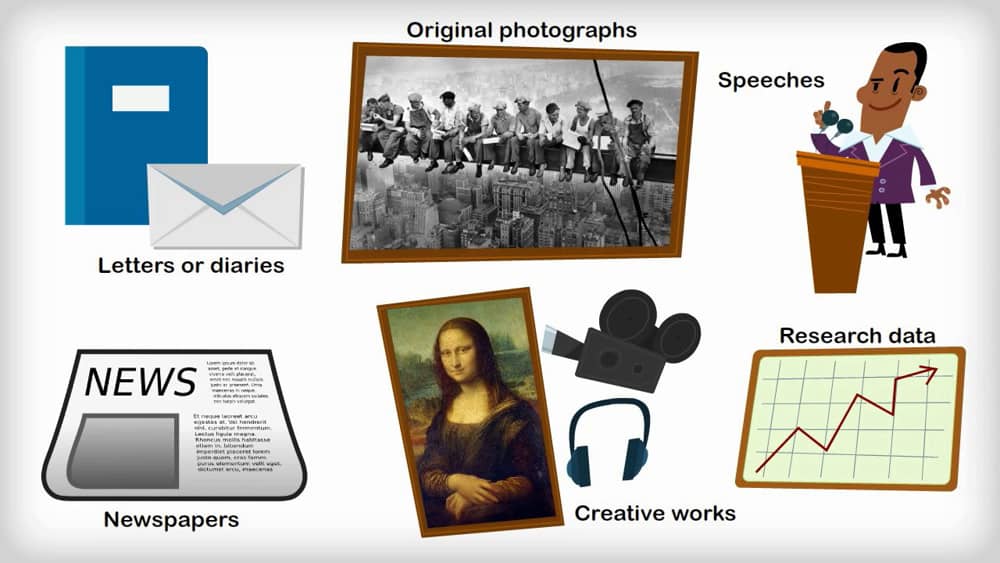
Primary Resources: letters, original photgraphs, speeches, research data. Secondary Resources: Newspapers, creative works.

Test Your Knowledge on COVID-19


Answer the following questions to see if you understand COVID-19. Post your answers and I’ll let you know if you got it right!

1.True or False Covid_19 and SARS CoV-2 are air borne viruses

a) True

b) False

2. The “19” in Covid_19 indicates

a) There are 19 variants of the virus

b) The virus was identified in 2019

c) 19 individuals were initially infected with the virus 

d) This is the 19th pandemic involving a virus such as Covid_19 and SARS CoV-2

3. The “corona” of coronavirus refers to

a) The decrease in corona beer sales as a result of the virus

b) The outer coating created by proteins on the virus creates the appearance of a crown 

c) The strength of the virus

4. Can you tell when someone is infected with Covid_19 and SARS CoV-2?

a) No, not everyone displays symptoms.

b) Yes, if they are coughing they have the virus.

c) Yes, if they are wearing a mask it indicates that they are infected and trying not to spread the virus.

d) No, because you cannot see if someone has a fever and if they have a fever it means they have the virus.

5. The cure to Covid_19 and SARS CoV-2 is:

a) The vaccine and boosters

b) There is no cure, most people get better on their own

c) There is no cure, most likely those infected will have trouble ever recovering

d) Warm drinks, vaccines and boosters, wearing masks and eating greens will cure you

Exotic Mammals & Monkey Puzzle Trees

Araucaria araucanas otherwise known as monkey puzzle trees are endangered trees in Chile and Argentina. The article, “​​Large-scale impacts of multiple co-occurring invaders on monkey puzzle forest regeneration, native seed predators and their ecological interactions” explores the impact communities of exotic mammals have on monkey puzzle forests. The authors conducted a study illustrated in this article where they recorded the amount of uneaten seeds and seedlings under 516 female monkey puzzle trees, by the end of winter, throughout the species’ distribution. This allowed them to identify indications of exotic species that visited each tree. The authors also analysed the foraging behaviour of Austral parakeets to get an indication of the potential indirect impacts of exotic mammals during seed dispersal. They found that seed predators made their way to all trees but one. Additionally, they found that Austral parakeets obtained seeds from 85% of the monkey puzzle trees and mice obtained seeds from 45% of the trees. The number of seeds and seedlings remaining was much larger compared to when exotic mammals also visited the trees in addition to the parakeets and mice as a minimum of 90% of the trees had exotic species coming by. Ultimately, their study concluded that proliferation of exotic mammals can result in the reduction in native seed predators and the regeneration of monkey puzzle forests. This is due to the reduced seed availability and seedling survival as well as the disrupted dispersal process and can continue being impactful as long as exotic mammal invasions are managed accordingly. 

References:

Tella, José L., et al. “Large-Scale Impacts of Multiple Co-Occurring Invaders on Monkey Puzzle Forest Regeneration, Native Seed Predators and Their Ecological Interactions.” Global Ecology and Conservation, Elsevier, 3 Feb. 2016, https://www.sciencedirect.com/science/article/pii/S2351989415300275. 

Araucaria araucana otherwise known as a Monkeyy Puzzle tree.
Design a site like this with WordPress.com
Get started