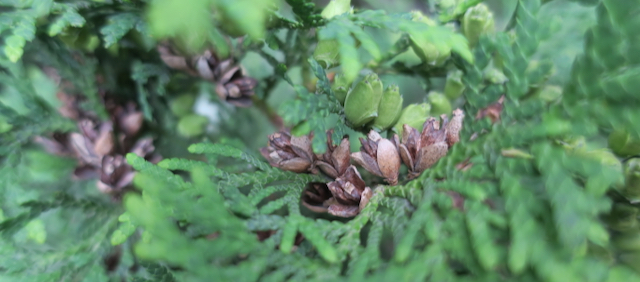
The article by Bastin et al. was chosen in relation to afforestation in southern Ontario’s mixedwood plains. Trees are vital to our planet’s ecosystems and to human health and well-being. Temperate forests play a significant and vital role in sequestering anthropogenic carbon dioxide (Jarvis 1995). Atmospheric CO2 is now over 415 parts per million (ppm). In pre-industrial times it was 280 ppm. In 1958 when continuous monitoring began at Mauna Loa Observatory atmospheric CO2 read 316 ppm.
The Intergovernmental Panel on Climate Change, in its Fifth Assessment Report (IPCC 2014, 102) recommends that:
The most cost-effective [GHG] mitigation options in forestry are afforestation, sustainable forest management and reducing deforestation, with large differences in their relative importance across regions…. About a third of mitigation potential in forestry can be achieved at a cost <20 USD/tCO2-eq emission. [WGIII SPM 4.2.4](IPCC 2014, 102).
Forestry plays an important part in sequestering carbon and climate change mitigation. Besides sequestration, we need to think in terms of carbon conservation and carbon substitution (FAO 2001). Grasslands are somewhat less effective than forests in sequestering carbon (Tallgrass Ontario 2020). A recent Science study (Bastin et al. 2019) postulated that planting another 1 to 1.5 trillion trees worldwide is both possible and imperative:
Ecosystems could support an additional 0.9 billion hectares of continuous forest. This would represent a greater than 25% increase in forested area, including more than 500 billion trees and more than 200 gigatonnes of additional carbon at maturity. Such a change has the potential to cut the atmospheric carbon pool by about 25%.
Canada’s Paris Accord commitments call for significant reductions in greenhouse gases (GHG).
Canada contains 24% of the world’s boreal and 15% of the world’s temperate forests, which comprise 9% of the world’s total forest cover (Biodivcanada 2014). How we manage our forests will play a very important role in GHG reductions (Bellassen & Luyssaert 2014; Henschel and Gray 2007, University of Wisconsin-Madison 2009).
Agriculture and forestry account for approximately 25% of all global greenhouse gas emissions. One acre of mature trees can absorb 2.5 tonnes of CO2 per year and create enough oxygen per year for 8 people (Novak, et. al. 2007). Using estimates of 6.4 tonnes sequestered per ha per year by temperate forests, increasing forest cover in southern Ontario by 10% (1,759,630 ha) could sequester 11.26 million tonnes per year. This is equivalent to sequestering what 665,581 Canadians produce annually. Every person in Canada on average creates 16.92 tonnes of CO2 per year.
In Ontario, the bulk of our forests occur in the boreal ecozone of northern Ontario. Ontario’s 107.6 million hectares (ha) of land include 93.2 million ha of public land. 71.1 million ha is forested, and 56.1 million ha is “productive” forest. In northern Ontario, our forestry occurs primarily on public lands.
In southern Ontario’s mixedwood plains, forest cover has been reduced to 25% from over 75% pre-settlement. Almost all of this is privately owned land (Biodivcanada 2010).
The mixedwood plains region of Canada is one of the most densely populated and least protected areas of Canada. Less than 1%, just over 66,000 hectares, of this region is protected (OMNR 2011) and one third of Canada’s species at risk are located in this area (Environment and Climate Change Canada 2015). Protection of our existing forests, and planting new ones will have multiple benefits to society and to biodiversity, from flood control, source water protection, climate change mitigation, air pollution mitigation, urban cooling, recreation, psychological health, and many more.
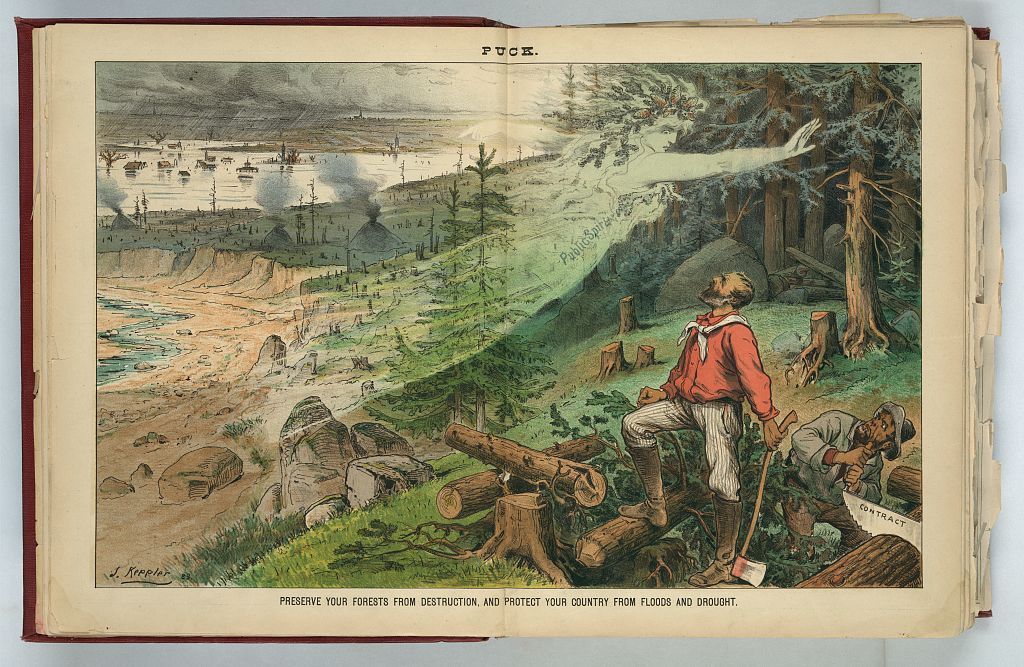
In the 20th century we did just that. From 1906 to 1996 we increased forest cover in southern Ontario from 5% to approximately 25% by planting over 2 billion trees (Bacher 2011).
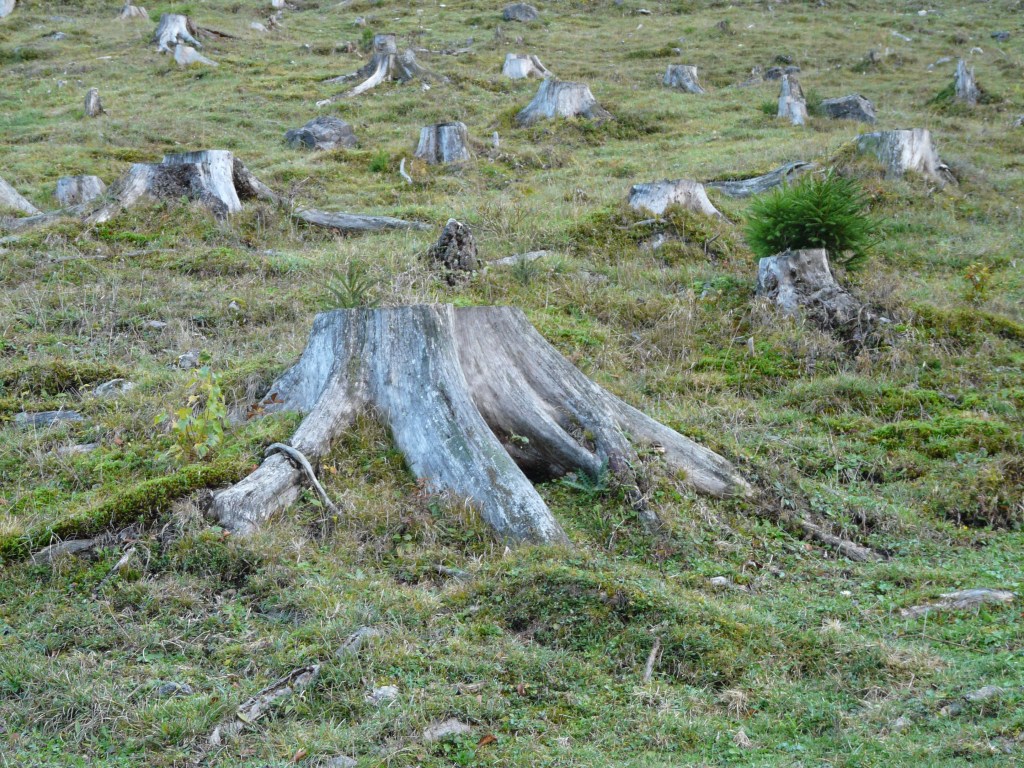
We are now losing forests in southern Ontario at a rate of 700 hectares per year (Saxe 2018; Sproule 2019). Most of our watersheds have less than the 30% forest cover recommended for healthy ecosystem function (Environment Canada 2013). This is driven by agriculture, urbanization, and by global demand for corn and soy biofuels. In Ontario we require gasoline to contain 10% (agriculturally derived) biofuel, and 15% by 2025.
We can reverse this deforestation. We can easily fit another 2 billion climate resilient native trees into southern Ontario. But even if we do, it may be a long time before our forests will become net carbon sinks again (OMNR 2011). Canada’s forests as a whole were net carbon sinks before 2001 (Natural Resources Canada 2018). Since then these forests have emitted more CO2 than they absorb. Forests encompass biological organisms that respond to changing conditions. We can continue afforestation efforts, and manage existing forests effectively.
References:
Bacher J. 2011. Two Billion Trees and Counting: The Legacy of Edmund Zavitz. Toronto(ON): Dundurn Press. 280 p.
Bastin J-F, Finegold Y, Garcia C, Mollicone D, Rezende M, Routh D, Zohner CM, Crowther TW. 2019. The global tree restoration potential. Science 365: 76-79. http://science.sciencemag.org/.
Bellassen V, Luyssaert S. 2014. Carbon sequestration: Managing forests in uncertain times. Nature 506: 153–155. https://www.nature.com/news/carbon-sequestration-managing-forests-in-uncertain-times-1.14687 doi:10.1038/506153a
Biodivcanada. 2010. Mixedwood Plains Ecozone+ Evidence for key findings summary. [146 p.]. https://biodivcanada.chm-cbd.net/ecosystem-status-trends-2010/mixedwood-plains-summary pdf:https://biodivcanada.chm-cbd.net/sites/biodivcanada/files/2018-02/EN_Mixedwood_Plains_EKFS_final 2015-03-18.pdf
Biodivcanada. 2014. Ecosystem Status and Trends 2010. Biomes. Forests. [6 p.]. http://www.biodivcanada.ca/default.asp?lang=En&n=62437FA8-1&printfullpage=true
Environment Canada. 2013. How much habitat is enough? 3d Edition. Graham Bryan and Brian Henshaw eds. Toronto (ON): Environment Canada.
FAO. [website]. 2001. State of the World’s Forests 2001. Climate change and forests. http://www.fao.org/3/y0900e/y0900e06.htm
Henschel C, Gray T. 2007. Forest Carbon sequestration and avoided emissions. A background paper for the Canadian Boreal Initiative/Ivey Foundation Forests and Climate Change Forum, October 15th to 17th, 2007, Kananaskis, Alberta. Toronto (ON): Ivey Foundation. http://www.cef-cfr.ca/uploads/Reference/climate_forest.pdf
IPCC, 2014: Climate Change 2014: Synthesis Report. Contribution of Working Groups I, II and III to the Fifth Assessment Report of the Intergovernmental Panel on Climate Change [Core Writing Team, R.K. Pachauri and L.A. Meyer (eds.)]. IPCC, Geneva, Switzerland, 151 pp. https://www.ipcc.ch/site/assets/uploads/2018/02/SYR_AR5_FINAL_full.pdf
Jarvis P G. 1995. The role of temperate trees and forests in CO2 fixation. In: Hirose T., Walker, B H. (eds) Global change and terrestrial ecosystems in monsoon Asia. Tasks for Vegetation. Science, vol 33. Springer, Dordrecht. https://link.springer.com/chapter/10.1007/978-94-011-0343-5_15.
Natural Resources Canada. [website]. 2018. Our Natural Resources. Forests and Forestry. State of Canada’s Forests Report. Indicator: Carbon emissions and removals. [date modified: 2020 03 09]. [about 6 p.]. https://www.nrcan.gc.ca/our-natural-resources/forests-forestry/state-canadas-forests-report/how-does-disturbance-shape-canad/indicator-carbon-emissions-removals/16552
Nowak D, Hoehn R, Crane D. 2007. Oxygen Production by Urban Trees in the United States. Arboric Urban For. 33(3): 220–226. https://www.nrs.fs.fed.us/pubs/jrnl/2007/nrs_2007_nowak_001.pd
[OMNR] Ontario Ministry of Natural Resources. 2011. State of Ontario’s Protected Areas Report (SOPAR) Toronto: Ontario.ca. ISBN 978-1-4435-6323-9 https://www.ontario.ca/page/state-ontarios-protected-areas-report
Saxe D. 2018. Environmental Protection Report: Back to Basics, Chapter 2, Southern Ontario’s Disappearing Forests. 124, 46-86. Toronto(ON):eco.on.ca https://docs.assets.eco.on.ca/reports/environmental-protection/2018/Back-to-Basics-Volume4-Ch2.pdf
Sproule L. 2019. SDG Chapter of the Ontario Woodlot Association says local forests threatened more than ever amid political procrastination. Vankleek Hill (ON): The Review. https://thereview.ca/2019/09/27/sdg-chapter-of-the-ontario-woodlot-association-says-local-forests-threatened-more-than-ever-amid-political-procrastination/
Tallgrass Ontario. [website]. 2020. Carbon Sequestration. Tallgrass Prairie and Carbon Sequestration. https://tallgrassontario.org/wp-site/carbon-sequestration/
University of Wisconsin-Madison. 2009. Potential To Amass More Carbon In Eastern North American Forests. Science Daily, 11 April 2009. https://www.sciencedaily.com/releases/2009/04/090406192333.htm

