Lately when I hear the word virus, especially in the context of the current COVID-19 pandemic, the other words that immediately come to my mind include “illness, hospitalisation, and caution”. For those who are visual thinkers, figure 1, which has been shown in media outlets many times, could come to mind after hearing the word “virus”. But what is a virus? And how can something that humans cannot see with their naked eyes leave such a great impact on our society and lives.
Viruses are microscopic parasites.1 Just like bacteria, animals and plants, viruses have their own genetic material. But unlike living organisms, viruses cannot reproduce or survive on their own outside of their host’s cell. Due to these characteristics, there is a debate in the scientific community about the status of viruses as living or non-living entities.1
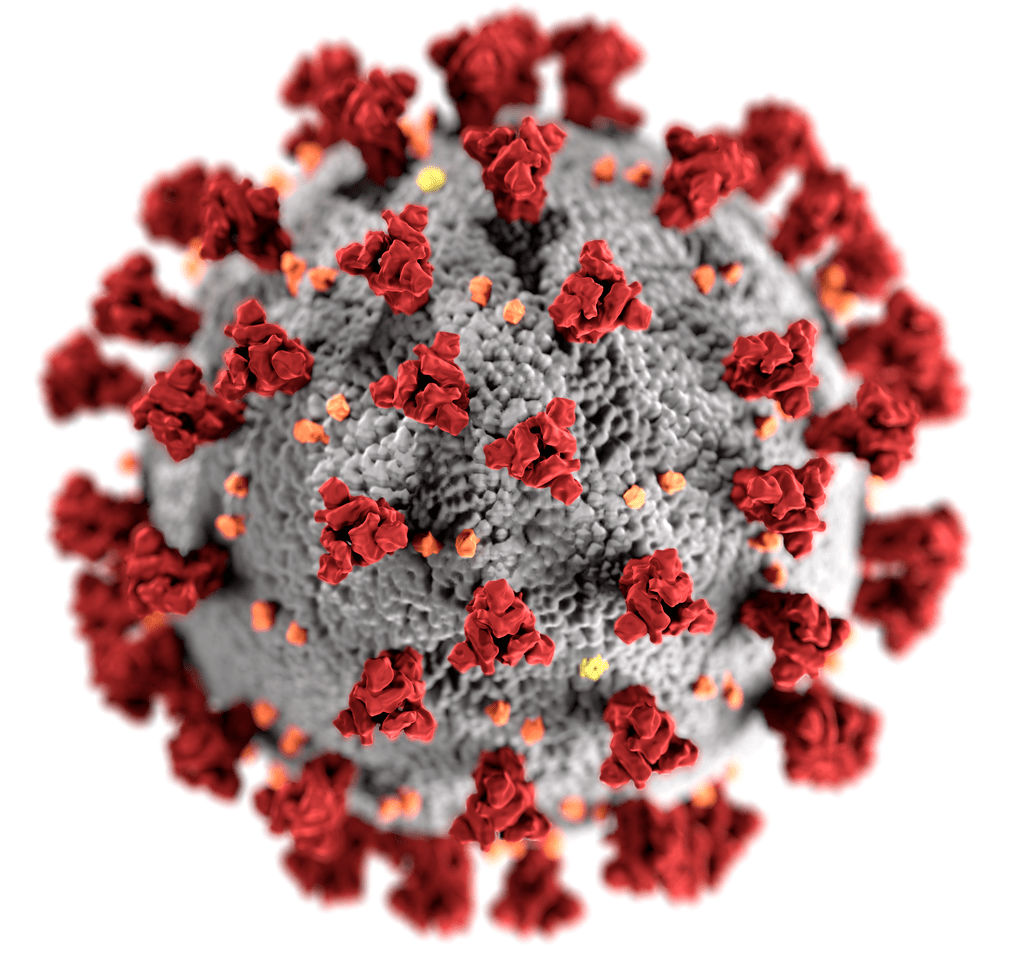
Image source: CDC/ Alissa Eckert, MS; Dan Higgins, MAM. 2020. https://commons.wikimedia.org/wiki/File:SARS-CoV-2_(CDC-23312).png
Viral genetic material, which is either in the form of DNA or RNA, contains the information for creating and assembling new viruses. So in order to replicate their own genetic material, viruses insert their DNA or RNA into the cells of bacteria, animals, plants and other living organisms. Once inside they’re in the host cell, the viral genetic material hijacks the machinery of the host cell, then guides it to create more viruses. The host cell continues to create more viruses until it bursts, releasing the viruses inside it. These new viruses continue to repeat this cycle. The figure below shows the process of a virus infecting a bacterium.
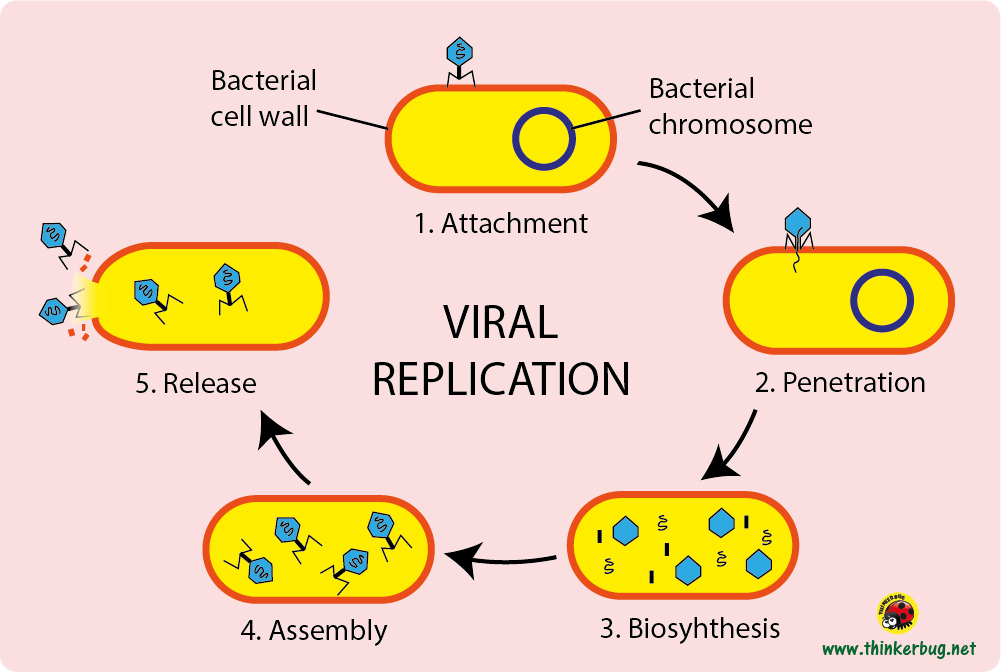
Image source: Cugur. Viral replication of a bacteriophage. wikipedia 2021. https://commons.wikimedia.org/wiki/File:Viral_replication.png
There are more than 9100 known viruses that evolved to specialise for parasitizing the diverse forms of life on earth!2 This includes SARS-CoV-2, which is the virus that is responsible for the current global pandemic. So why are there so many viruses, and how do they evolve?
During the COVID-19 pandemic, variants of SARS-CoV-2 were discovered multiple times. A question that the public discusses is: how do new variants of the virus keep arising? The answer to this question lies in the process of viral replication where the genetic material for the new viruses is created! Although the process where the genetic material of the virus is copied is extremely fast and efficient, it is not perfect and mistakes can occur. These mistakes in the DNA or RNA are called mutations. Firstly, these mutations make the genetic material of the new virus slightly different from that of the original virus. And sometimes, these mutations can give the new virus characteristics that make it more efficient at spreading and hijacking more host cells! This is how viruses evolve.
Reference List
- National Geographic Society. Viruses. National Geographic. 2019.https://www.nationalgeographic.org/encyclopedia/viruses/
- Virus Taxonomy: 2020 Release. International Committee on Taxonomy of Viruses. https://talk.ictvonline.org/taxonomy/ (accessed 3 Mar2022).
 Applied Plant Ecology Winter 2020
.png)
