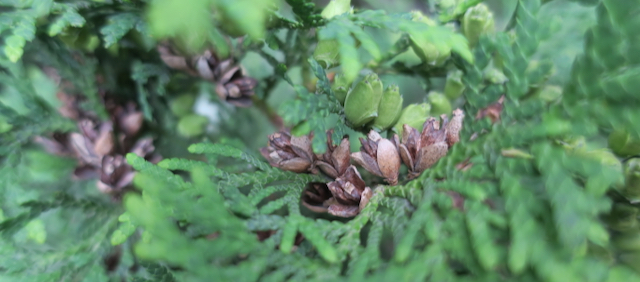
In BIOL4095 lectures, the detrimental effects that large populations of deer can have on plants were covered.1 In the Habitat restoration lecture led by Dr. Dawn Bazely, she shared with the class the results of her previous scientific experiments. Bazely and her colleagues found that creating physical enclosures in forests where deer populations exist showed how much plant life quickly recovered in the enclosures where the deer could not enter.1
Knowing that deer are not the only herbivores that consume plants, I started to wonder about the effects of other herbivorous animals on plant diversity e.g domesticated livestock, rodents, herbivorous birds and insects. So I began my search for a paper that answers my questions, specifically papers published in peer-reviewed scientific journals. After reading the abstract of a couple of articles, I chose to review an article titled “Effects of Herbivores on Grassland Plant Diversity” co-authored by Han Olff and Mark Ritchie, as it has all the answers to my questions! (Fun fact: this article was published in 1998, which is the year of my birth! this undoubtedly influenced my article of choice to blog about).
As it will be explained below, there is not a single statement that perfectly describes every terrestrial herbivore-plant interaction.2 The authors of this secondary literature review article acknowledge the conflicting results found in previous primary literature regarding the effects of herbivore grazing on plant diversity. The objective of this article was to demonstrate how multiple factors can affect whether herbivorous animals reduce or increase plant diversity e.g. herbivore body size, herbivore population density, seasonality, soil type, ecosystem type and multiple layers of environmental factors that act on living organisms in nature.2
In agreement with the results of Dr. Bazely’ s experiment, this article states that high density of hoofed mammals, also known as “ungulates”, reduces plant diversity. Ungulates are relatively large-bodied animals that include but are not limited to deer, cattle, sheep, moose, etc. But surprisingly, intermediate-sized herbivores e.g birds and ground-digging rodents increase plant biodiversity.2 Ground-digging animals e.g prairie dogs create soil disturbances that facilitate the growth of less competitive plants. And finally, small-sized herbivorous insects’ effect on plant diversity range from no effects to slightly negative effects.
Additionally, abiotic environmental factors such as soil productivity might be limiting plant diversity more than herbivore interactions. Fertile soils in East African savannah tolerate high densities of diverse grazing animals, compared to other grasslands with infertile soil.
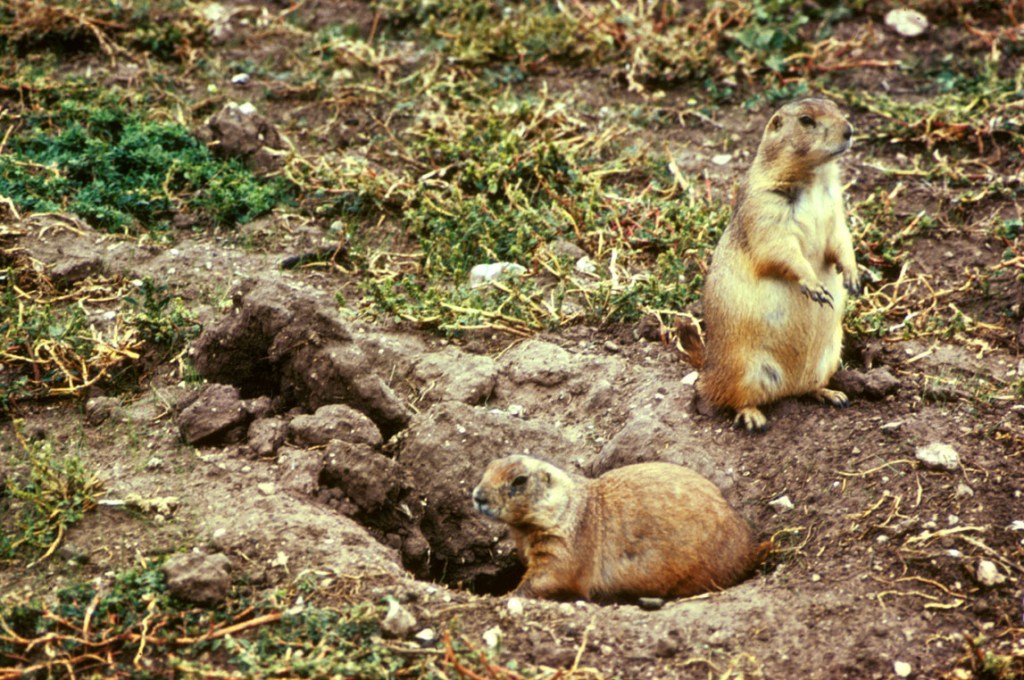
Image Source: Carley CJ. Prairie dogs at a burrow entrance. U.S. Fish & Wildlife Service 2002. https://commons.wikimedia.org/wiki/File:Cynomys_ludovicianus_2.jpg
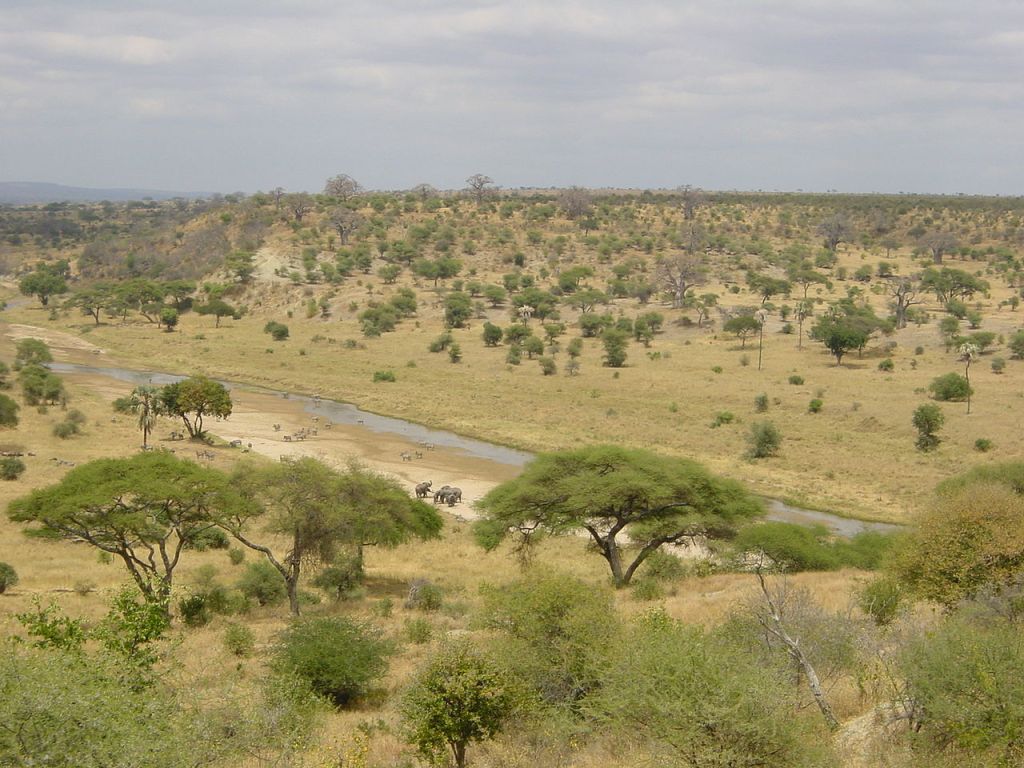
Image Source: ProfessorX. Savanna. 2005.
https://commons.wikimedia.org/wiki/File:Tarangire-Natpark800600.jpg
In conclusion, the effects of herbivores on plants in each ecosystem and environment is the result of multiple interrelated factors. So the take home message of this article is: managing herbivores and assessing the effects of herbivores on plants in each unique environment is crucial in plant restoration and conservation.
Reference List
- Bazely D. What is habitat recovery? How should we measure it? slideshare. 2016.https://www.slideshare.net/DawnBazely/high-park-stewards-talk-2016
- Olff, H., & Ritchie, M. E. (1998). Effects of herbivores on grassland plant diversity. Trends in Ecology & Evolution, 13(7), 261–265. https://doi.org/10.1016/S0169-5347(98)01364-0


