COVID-19 Q&A

How can you protect yourself from COVID-19?

  1. Wear a mask
  2. Get vaccinated
  3. Social Distance
  4. All of the above
  5. None of the above

Although some may have differing opinions regarding if COVID-19 can be avoided or protected from, the science shows that masks, vaccines and socially distancing have all helped against the fight of getting COVID-19.

How can you cure to mild COVID-19?

  1. Antibiotic medication
  2. Antiviral medication
  3. Cold and Flu Medication
  4. There is no cure
  5. Vaccines


Scientists world-wide are currently trying to find a cure for COVID-19 but as of right now there is no specific medication that will resolve symptoms. Those in more critical cases have been treated using specific medications but these would not be applicable for use in milder cases. Vaccines are often also thought of a cure for COVID-19, and although it can help your symptoms and lessen your chance of getting the virus it will not magically make your symptoms go away.

What is the best vaccine to get?

  1. Pfizer
  2. Moderna
  3. They are interchangeable and the best vaccine to get is any vaccine!

Many people started “shopping” for vaccines and would not get specific vaccines based off the brand name. It is important to note that just because some vaccines are recommended for specific age groups, does not mean that they will negatively impact the whole population. For example, just because people aged 18-29 are recommended to get the Pfizer vaccine over the Moderna vaccine because of symptoms faced in studies, does not mean that people who are 40 should be concerned about taking the Moderna vaccine.

How long are you required to self-isolate if you get COVID-19 in Ontario?

  1. 14 days
  2. 5 days if you are no longer feeling symptoms  
  3. 8 days if you are no longer feeling symptoms
  4. You only need to self-isolate if you have symptoms and you can stop isolating once you do not have symptoms

According to the Ontario guidelines you must self-isolate for at least 5 days after testing positive for COVID-19 and must continue to isolate if you feel symptoms passed this date. However, you can still be contagious so you should still isolate and stay away from people.

What is the most protective mask you can wear?

  1. KN95 or N95 masks
  2. Surgical masks
  3. Cloth masks
  4. Bandanas
  5. Winter scarf

KN95 and N95 masks are known to be the most effective, however, double masking using surgical masks or surgical and cloth masks can be seen to be very effective as well.
The rise of zootonic viruses

Zootonic viruses are viruses that are transferred from animals to humans. An example of these can be rabies or COVID-19. These viruses can be due to human interactions with host animals, animal remains, or any other environmental source of the pathogen. Over the last few years, there has been an observed emergence of zootonic viruses, meaning that these kinds of viruses have been occurring more frequently the past few years, and they will likely continue occurring just as frequently, and the cause of these viruses can be linked to the loss of biodiversity and the loss of forest habitat.

How does the loss of biodiversity and the loss of forest habitat link to the emergence of zootonic viruses? Well, when forest habitat is lost, it is often due to humans and our need for more space and resources. Animals, however, have no choice but to continue looking for resources to survive. They may migrate to other forest spaces, or they may be exposed to more humans as they search for resources. Especially since deforestation often leads to the land being developed for human use and humans are likely to be found there, this increases a chance for exposure to animals. If an animal is a host of a virus and it comes in contact with a human who it is then transmitted to, it is then considered a zootonic virus. As humans each year continue to take away the habit of many organisms, it increases the chances of zootonic viruses and diseases to spread since the interactions of humans and animals are increasing.

David Takayoshi Suzuki

David Takayoshi Suzuki is a Canadian scientist who is known worldwide from his work in science and tackling of environmental issues. He has been able to educate the public on issues in an effective way through his television series, The Nature of Things, his CBC podcast Quirks and Quarks and through the many books he has released. In these creative forms he was able to educate people around Canada and around the world of environmental issues being faced and was able to do so in a way where even those without a science background were able to understand and were kept informed.

Suzuki’s grandparents migrated to Canada from Japan. He grew up in British Columbia but later moved to Ontario. He completed his undergrad with a major in biology at Amherst College and later did his Ph.D. in zoology at University of Chicago. Suzuki worked as a professor at University of British Columbia from 1963 to 2001. In 1990 David Suzuki co-founded the David Suzuki Foundation which is a non-profit environmental organization that has a mission in balancing human life with the environment. The organization focuses on many environmental concerns including climate, biodiversity, and the impact of human life on the environment. Through this foundation he has been able to provide research and advise the government and many businesses on how to improve their conditions.

I chose this biologist because growing up in Canada I had always heard of him and was always very inspired by him and his organization. He was someone who I looked up to and kept up with and had influenced my liking and interest to also do a biology major.

Wall-E: The greatest of all time

For the Applied Plant Ecology film festival, the movie I had nominated was The Lorax, however, when making this decision I was very conflicted between choosing this film or my second choice. Wall-E was one of the other films I chose to nominate for the film festival. This film was made in 1994 by Andrew Stanton. I chose this film because it strongly relates to how humans are treating this world which ultimately is leading to loss of biodiversity and destroying the Earth.

The movie is about a robot who was sent to Earth many years ago to clean up. He and many other robots, known as “Wall-E”, were all responsible for cleaning up the mess that humans had left behind. The Earth was full of garbage and materials that humans had exploited and wasted, leaving behind no life other than some insects. The Earth was such a mess that it was no longer in a livable condition for humans. Although humans had the luxury to leave, other forms of life such as plants and animals were forced to then die off.

This movie closely relates to Applied Plant Ecology as it covers issues that plants and life on earth are currently facing. Many plants are in danger due to human exploitation and living, making it hard for plants to live in these current conditions. If changes are not soon made, we can easily face the same problems that were faced in the film and can be left with no plants and a great loss in biodiversity. Although it is just a film, it also foresees a potential future.

“If you can’t explain it to a 6-year-old, you don’t understand it yourself”.

Podcast: 174: Dr. Dawn Bazely: Investigating the Intriguing Interactions between Animals and Plant

https://www.peoplebehindthescience.com/dr-dawn-bazely/#disqus_thread 13 mins

“If you can’t explain it to a 6-year-old, you don’t understand it yourself”.

When asked what motivational quotes Professor Bazely has held on to on the People Behind the Science podcast, she had many answers that came to her instantly, including “the world is run by people who show up” by Robert Johnson and “success is the ability to go from one failure to another without losing enthusiasm” by Winston Churchill. However, the quote that stuck with me most was “If you can’t explain it to a 6-year-old, you don’t understand it yourself” by Albert Einstein. Being in Professor Bazely’s course before, I have heard her repeat this quote many times and it has since stuck with me. It is a very simple concept in which we can all learn from. Science can be complicated, and the content can take us a lot of time, but often when studying we forget to learn the basics and skip over the simplicity of it. Understanding a concept truly would mean that one is able to understand it even in its simplest form, and what can be simpler than the explanation required by a 6-year-old? Science students and students in general need to gain a better understanding of how things work in simple forms and should not solely focus on definitions given by professors and textbooks.  

I strongly agree with this quote and have applied it to my life and throughout my undergrad to recognize if I truly understand a concept by reflecting upon if I can explain it to a 6-year-old. If I cannot, then I find out what I am missing and try to relearn.

The link to the podcast is: https://www.peoplebehindthescience.com/dr-dawn-bazely/#disqus_thread if you would also like to listen you can skip to 11:03 until 14:30.

The Response of Plants Under Stress. What Do All Plants Under Stress Have in Common?

Professor F. Stuart Chapin II states that “All plants respond to stress of many types in basically the same way”. In his secondary literature article, ‘Integrated response of plants to stress’, 1991, Dr. Chapin II explains that due to the lack of optimal conditions for plant growth, all plants respond to stress in different ways. As a result, plants experience either reduced growth rate or a decline in the potential of resource acquisition. As this is the case, plants that are adapted to infertile soil might have a slow growth even during optimal conditions. This is because plants allocate the majority of the resources to functions such as defense or storage (increase survivorship) rather than growth.

The common factor that all of these physiological responses to stress have, is that plants have a centralized mechanisms for stress management. This centralized stress response system is controlled by hormones and involves integrated changes in nutrients, water, carbon, and hormonal balance of plants. Some examples of how this centralized system works include nutrient uptake and mobilization. In the paper, F. Chapin   states that some plants increase their nitrogen uptake absorption potential as measure per gram root. In other words, under low nutrient conditions, the stored energy and resources of plants are proportionally altered to be allocated to root growth. Moreover, withdrawal of tissue nitrogen stores from old leaves as a result of insufficient mobilization of nutrients for optimal growth rate. And finally, the last example has to do with photosynthesis, where the photosynthetic rate and stomatal conductance decrease under low nutrient supply.

Even thought there has been a lack of extensive research in this area, this hypothesis is supported by some studies that indicate that plants have special traits such as slow-growth, low photosynthetic rates, low capacity for nutrient uptake, and others.

III, F. S. (1991). Integrated Responses of Plants to Stress. BioScience Vol. 41 No. 1.

Five basic multiple-choice questions about the novel Covid_19 disease and SARS-CoV-2. Select the best option.

1. How does the SARS-CoV-2 virus spread?

a) When the respiratory droplets and aerosols of an infected person enters your system.

b) Touching an infected person and then touching your mouth, eyes, or an open wound.

c) all of the above

d) none of the above

2. What is the minimum percentage of alcohol required for a hand sanitizer to be effective at killing coronavirus and other germs?

a) 60%

b) 30%

c) 80%

d) 40%

3. What is the incubation period for COVID-19?

a) 1 – 6 days

b) 1 – 6 hours

c) 1 – 14 days

d) 1- 14 hours

4. What is the best way to protect yourself against COVID-19?

a) Use hand sanitizer with at least 60% of alcohol rather than washing your hands with soup and water frequently.

b) Using any type of mask as long as you mouth is covered.

c) Getting vaccinated and staying up to date with your COVID-19 vaccines.

d) Using a N95 or KN95 mask

e) b) and c)

f) c) and d)

5. COVID-19 is caused by?

a) a protist

b) a fungi

c) a bacteria

d) a virus

Are viruses alive and how do they evolve? How do you communicate the complexity of this topic to the public?

To determine if something is alive, there are 7 main requirements that must be met. In this case, do viruses meet the 7 criteria? First criterion is all about maintaining homeostasis; living systems are required to maintain a stable balance (e.g., internal temperature). Cells are capable of doing this; however, viruses are not made up of cells but rather ‘virion’ (virus particle). Because viruses are not cells, they do not posses organelles, nuclei, cytoplasm, etc., this results in it’s inability to create or change their internal environment, a stable balance on its own.

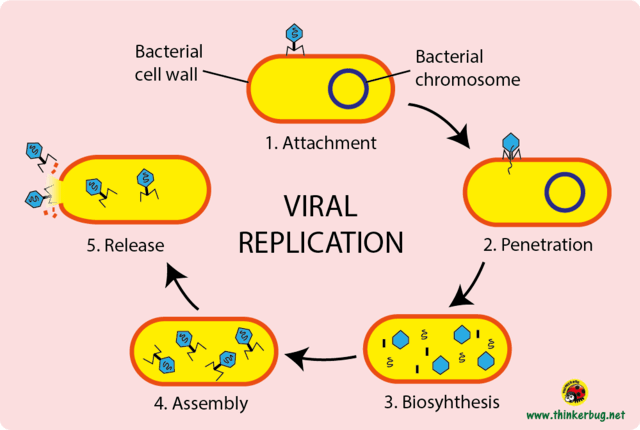
The second criterion requires living things to have a minimal level of organization. Viruses certainly pass this criterion as their structure is made up of a capsid (protective protein shell – some viruses have a double membrane called lipid bilayer) that encapsulates the nucleic acids (genes). The third criterion all living things are expected to meet, is the ability pass on their genetic material. This is a bit tricky since viruses can replicate and, in a way, pass their genetic information. Viruses manipulate a host cell to produce more virions; it takes a short time to create multiple virions if there is a big supply of hosts. The process can be summarized in a virus entering a living cell and using their cellular components to copy genetic information and build new capsids. Next criterion requires living systems to be able to grow. In other words, use energy and nutrients to increase in size or complexity. Viruses replicate by using a host cell, indicating that virions are created a developed state where their size nor structure complexity changes throughout its existence. Thus, virus do not meet this requirement.

Picture by Cugur. Creative Commons Attribution-Share Alike 4.0

The next criterion consists in the ability of living things to use energy either by creating it or using from an outsider source. In this case, viruses manipulate the host cell to use its energy to replicate virion units. Moreover, living things shall respond to stimuli. There has been little research in this area and thus it is unknown. Viruses do not respond to light, sound, or touch the way living systems do. Thus, it is unknown if viruses respond to stimuli. Finally, the last criterion a living thing shall meet, is its ability to adapt to its environment. Viruses do pass this criterion as they have the ability to mutate quite quickly due to their frequent mistakes in their replication processes. The surviving virions (survived drugs and vaccines against it) are able to replicate as long as there are more living host cells.

There is a lot of debate in the scientific community regarding the living state of viruses. I suggest that one of the best ways to share this information is to show a table with the criteria viruses meet and do not meet to the public.

Khan Academy. (n.d.). Are viruses dead or alive? (article) | cells. Khan Academy. Retrieved March 8, 2022, from https://www.khanacademy.org/test-prep/mcat/cells/viruses/a/are-viruses-dead-or-alive#:~:text=So%20were%20they%20ever%20alive,androids%20than%20real%20living%20organisms.

The Basics on Sustainable Agriculture and Local Food Security

As the human population increases each year so does the demand of food. The mass production of “human food, feed, and fiber”  results in the expansion of agricultural areas (deforestation, land/soil modification, habitat fragmentation, biodiversity loss, etc.). Thus, implementing sustainable agriculture practices helps mitigate the environmental impacts of agriculture. Sustainable agriculture refers to the delivery of efficient agricultural production in a way that protects and restores the environment, increases profitable farm income, improves the life quality of farm families and farm communities. Some of the methods are to promote soil fertility, reduce water usage, integrated animal and crop systems, control of invasive plants, and overall, lower the pollution levels on the farm. These methods promote the farmworker wellbeing as well as it improves the local economy.

Furthermore, what is food security? It is said that food security is high when food is produced and consumed locally as it is fresher and more nutritious. The local community relationships improve as the money flows within farmers, local businesses, and residents, making local communities stronger and healthier. In contrast, communities with little land, few food markets, little food production and distribution are mainly indicatives of poor communities with poor food security. Therefore, how can we improve local food security? Some projects include planting small gardens in backyards, organizing a farmers market (an alternative could be food cooperatives as food coop members buy from local farmers), food banks (at the local scale or even national scale – not a solution at the long-term), etc.

Hesperian Health Guides. Improving Local Food Security – Hesperian Health Guides. (n.d.). Retrieved March 8, 2022, from https://en.hesperian.org/hhg/A_Community_Guide_to_Environmental_Health:Improving_Local_Food_Security#:~:text=Food%20security%20is%20strongest%20when,and%20healthier%20places%20to%20live.

Ministry of Agriculture, Food and Rural Affairs. Introduction to Sustainable Agriculture. (n.d.). Retrieved March 8, 2022, from http://www.omafra.gov.on.ca/english/busdev/facts/15-023.htm#Summary

An International United Nations Article About The “Impacts of Ozone on Vegetation”

Impacts of ozone on vegetation in a changing climate:

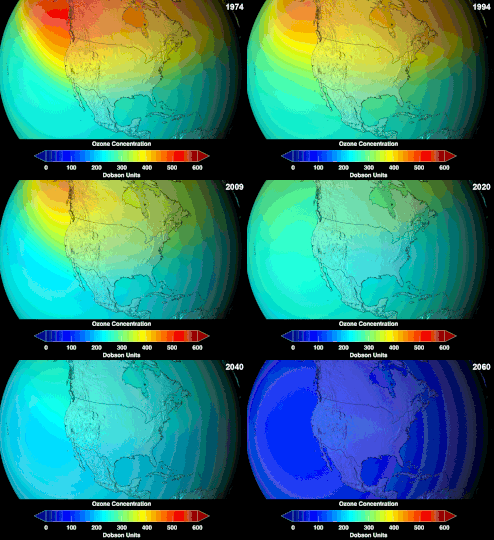
Even though there are several studies on the impacts of ozone pollution on vegetation, it is important to focus its impacts with respect to a changing global climate. In other words, predicting future impacts of ozone pollution on vegetation withing the context of global climate changes rather than within the regional/international scale. 

Research showed how current levels of tropospheric O3 (ground level ozone) are damaging crops, trees, and semi-natural vegetations. Under critical levels of ozone in the atmosphere, resulted in vegetation responding to it by absorbing O3 (or exchanging O3) through the stomata. The purpose of the research is to understand its impacts under a changing climate. Thus, it is important to take into consideration the varying influences of temperature, water vapor pressure deficit, light, soil water potential, O3 concentration in the atmosphere, and the development of the plant under ozone uptake. A scenario modeling provided by the Intergovernmental Panel on Climate Change (IPCC), shows that by the end of the 21st century there will be global changes in the O3 concentrations, an increase in the mean temperature as well as in the carbon dioxide concentrations and in the frequency of extreme events as a result of changes in the precipitation patterns.

Some of the responses of plant to the increasing ozone concentrations in the atmosphere include, for example, warming on the canopy O3 flux. Which might lead to earlier plant development, causing a possible shift in the period where plants absorb O3, followed by a change in the stomatal O3 fluxes. Moreover, studies showed that increasing levels of CO2 in the atmosphere reduce stomatal conductance. Indicating that elevated CO2, the uptake of O3 might decrease.

Something that all researchers should have well into consideration when doing their investigations, is that the global climate is inevitably changing, ultimately having a direct and indirect effects on basically everything. This being said, future predictions on the effect of O3 on vegetation is influenced by a changing climate.

Centre, U. E. (2006). Impacts of ozone on vegetation in a changing climate : report / by the Programme Centre Centre of the International Cooperative Programme on Effects of Air Pollution on Natural Vegetation and Crops (ICP Vegetation).

Design a site like this with WordPress.com
Get started