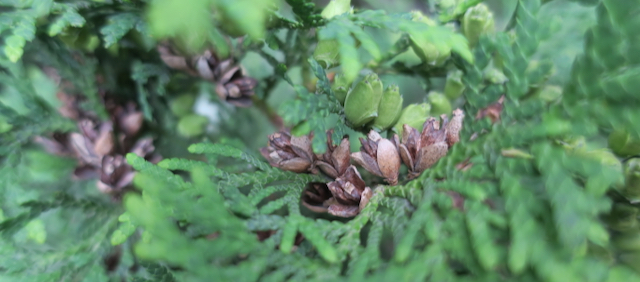
UN Article Regarding Biodiversity

https://www.un.org/sustainabledevelopment/blog/2019/05/nature-decline-unprecedented-report/

Biodiversity has been decreasing at a rapid rate in the current age and with this loss of biodiversity, there will be detrimental, permanent effects on the human population. The fundamental resources we derive from nature will decrease and possibly run out completely. If the resources run out completely, it would force humans to become more innovative and find new resources in the future or kill us.

In the past decades, humans have caused over 1 million plant and animal species to teeter on the brink of extinction. This was primarily caused by the following five factors that we contributed: Land use changes, exploitation, climate change, pollution and invasive species. We’ve built cities on once forested land, converted wetlands to suburbs and changed the naturalistic environment to better suit our own wants and lifestyles. We’ve exploited animals for meat, sport and other products made by animals. We’ve released so much carbon dioxide into the atmosphere that it’s actually warming up the climate – a feat no other single species of organisms have achieved in the whole history of the earth. We’ve invented plastic, a pollutant that is useful for one time uses but doesn’t degrade. Instead, it piles up and takes up space while animals eat it and die. There’s also by-products of factories and manufacturing systems such as heavy metals, nutrient runoff and various greenhouse/toxic gases.

By current projections, nature will continue to decline if we continue on without undergoing massive overhauls on the socioeconomical, political and individual views on nature and how to preserve it. If we go on as is, then the five factors will continue to increase at an unprecedented speed which is bad for humans in the long run.

United Nations: Climate Change – Global Epidemic

The United Nations came out with an article addressing the global issue of Climate Change. I raised emphasis, because this is a defining issue of our era, with fast-changing weather patterns that altogether affect sustainable food production, additional rising sea levels – collectively increasing the risk of flooding. 

The UN has divided their article into individual subtopics including, the human fingerprint on greenhouse gases, and the UN Intergovernmental Panel on Climate Change (IPCC). https://www.un.org/en/sections/issues-depth/climate-change/

The Human Fingerprint on Greenhouse Gases:

The concept of greenhouse gases seems to scare the public, I think what many of us may not know is that greenhouse gases are naturally occurring and are vital to the survival of humans and our living counterparts (all of nature!). However, through human impacts of deforestation, and large-scale agriculture, quantities of greenhouse gases in the atmosphere have risen above the normal standard.

  • The concentration of GHGs in the earth’s atmosphere is directly linked to the average global temperature on Earth
  • The concentration has been rising slowly, and global temperatures have also been rising steadily since the era of the Industrial Revolution
  • The most abundant type of GHG is COdue to the burning of fossil fuels

The UN Intergovernmental Panel on Climate Change (IPCC)

IPCC was organized by the World Meteorological Organization (WMO) and United Nations Environment. In 2013, the IPCC displayed the roles of human activities and their correlation with climate change through an established fifth assessment report.

The fifth assessment report provided information regarding rising sea levels and how they have changed and the impacts it has caused over the years of it being studied. Additionally, provided estimations of cumulative COemissions and how they can control and limit warming to less than 2oC. 

The report concluded:

  • From 1880 to 2012, the average global temperature increased by 0.85°C.
  • Oceans have warmed, the amounts of snow and ice have diminished and the sea level has risen. From 1901 to 2010, the global average sea level rose by 19 cm as oceans expanded due to warming and ice melted. The sea ice extent in the Arctic has shrunk in every successive decade since 1979, with 1.07 × 10⁶ km² of ice loss per decade.
  • Given current concentrations and ongoing emissions of greenhouse gases, it is likely that by the end of this century global mean temperature will continue to rise above the pre-industrial level. The world’s oceans will warm and ice melt will continue. Average sea level rise is predicted to be 24–30 cm by 2065 and 40–63 cm by 2100 relative to the reference period of 1986–2005. Most aspects of climate change will persist for many centuries, even if emissions are stopped.

Invasive and native Hawaiian Rainforest species

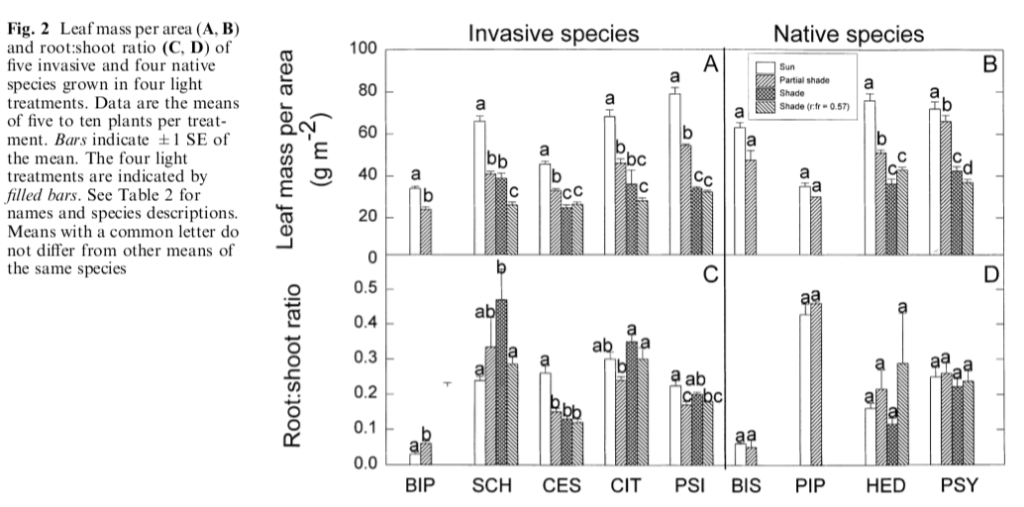
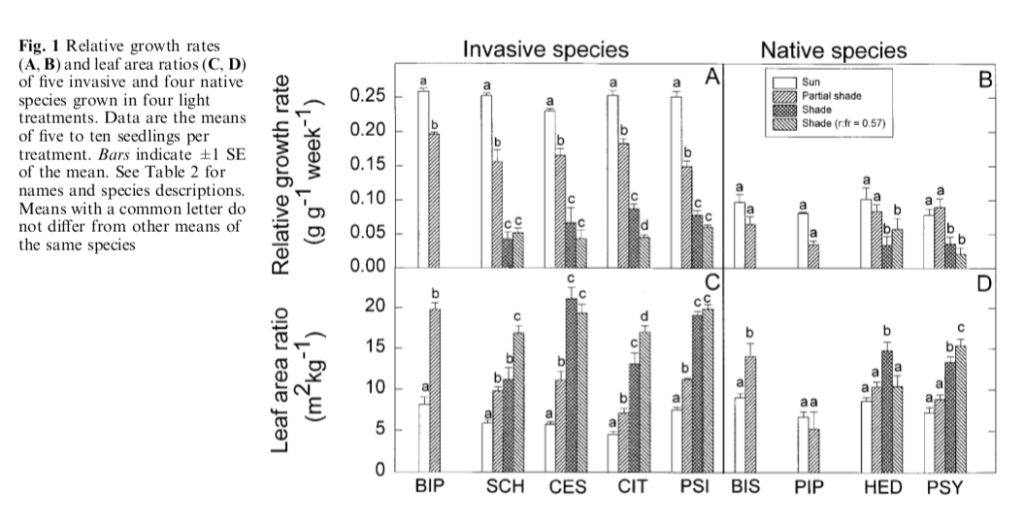
Pattison et al, conducted research on the Growth, biomass allocation and photosynthesis of invasive and native Hawaiian rainforest speciesin the year of 1998 (the year I was born!).

         This primary research article is based on a study done on the growth, biomass allocation, and photosynthetic characteristics of seedlings of five invasive non-indigenous and four native species grown under varying light frequencies to help explain the successive growth of invasive plant species in Hawaiian rainforests. 

“Relative growth rates of invasive species grown in sun and partial shade were significantly higher than those for native plant species, averaging 0.25 and 0.17 g, native averaged 0.09 and 0.06 g, and the relative growth rate (RGR) of invasive species under the shade treatment were 40% higher than that of native species”

(Pattison et al. 1998)

However, observations yielded found that there were no differences between native plants and invasive plants in terms of biomass allocation to shoots and roots or in leaf mass per area across light environments. The light-saturated photosynthetic rates were higher for invasive species than for native species under all tested light treatments. 

         Invasive species assimilate more COat a lower respiratory cost than native species suggesting that invasive species may have higher growth rates than native due to higher photosynthetic rates. Currently there are more than 4600 non-native plant species in the Hawaiian islands, of which are 800 spreading and reproducing independently of human action. 

         Invasive species prevent seedling establishment of native species by occupying “safe sites” and by outcompeting native seedlings for limiting resources (survival of the fittest!!). 

“It is said that invasive species are deemed successful due to their phenotypic plasticity”

Williams et al. 1995

A possible ultimate explanation for the differences between invasive and native species is that native species in Hawaii, a group of islands with low species diversity and disharmonic flora, have undergone less selective pressure to compete for light resources than invasive species. Arguments have arisen against evoking the idea that competition for resources is stronger on mainland than on island ecosystem. The results of this study suggest that invasive species in Hawaii may have higher growth rates than native species as a consequence of higher photosynthetic capacities of plants growing under sun and partial shade, lower dark respiration rates under all light treatments, and higher LARs for plants growing under shade conditions. The removal of elements that create disturbances in these Hawaiian ecosystems is likely to reduce the spread of invasive species. The Herbivore pressure and susceptibility to pathogens may affect potential growth rates in field conditions. 

United Nations Framework Convention on Climate Change

The United Nations Frameworks on Climate Change (UNFCCC) was started mid-1992 in Rio de Janeiro as an international environmental treaty which then entered into full force in 1994. Essentially, the main goal of this Convention is,

“The stabilization of the concentrations of greenhouse gas to a level that would prevent dangerous anthropogenic or interference of the climate system by humans.” 

The Convention states that such a level can only be achieved within a given time frame which is sufficient enough to give room for ecosystems to naturally adapt to climate changes, ensure there is no threat to the production of food and ensure sustainable economic development.  There are non-binding limits on greenhouse gas emissions that are set for individual countries in this treaty, although it lacks enforcement mechanisms, which means that the treaty is not legally binding, and can’t hold a certain country accountable if they go over the limit (aka Canada – major issue being the oil -sands industry but that’s a topic for another day).

Article 3 (1) of the Convention requires,

“All parties to act towards the protection of the climate system with developed countries taking the lead in addressing matters relating to climate change.”

The irony that developed countries are the ones with the most carbon dioxide (CO2) output!

All parties are required under Article 4 of the Convention to make the necessary general commitments towards addressing climate change through actions such as the mitigation of climate change and also adapting to the eventual impacts that occur as a result of the climate change. Under the Convention, industrialized nations also agree to offer their support towards climate change activities in the developing nations through the provision of financial support for climate change actions. These nations also agree to share their technology with less-advanced countries. 

These industrialized nations are also required to play the most and biggest part in cutting emissions in their home ground. They are regarded as Annex I countries that belong to the Organization for Economic Cooperation and Development (OECD) and a significant number of them have taken very strong actions towards mitigating climate change.            

This Convention projects the uncertainties in anthropogenic GHG emissions and concentrations that are related to climate change. The global emissions all over the world should be consistent with the limitation of global warming to below 1.5 or 2 degree Celsius if global warming is to be kept below 2 degrees Celsius. Without having the necessary climate change mitigation policies, the increased use of fossil fuels and energy demand could lead to global warming over between 3.7 to 4.8 °C, which would be disastrous.

To check out the UNFCC page, for what I just summarized, check out: The United Nations Frameworks on Climate Change.

Guest bloggers will contribute some posts

Since there are many cool visitors who know about Applied Plant Ecology at York University, from time to time, a guest blogger will be posting here.

Varsha Boejharat is an International Visting Research Trainee in Prof. Bazely’s lab. She is here from Suriname for 5.5 months on an EduCanada ELAP (Emerging Leaders of the Americas Program) Scholarship. Varsha is a botanist and farmer and you can see her award-winning farm in this Youtube video. Since the Youtube video is in Dutch, Varsha’s post will translate the information into English.

— Prof. Dawn Bazely

Welcome to the #BIOL4095 blog

Hello,

it’s Professor Dawn Bazely here. Welcome to the Applied Plant Ecology website where each BIOL4095 student will post your five blog articles of 250-500 words.

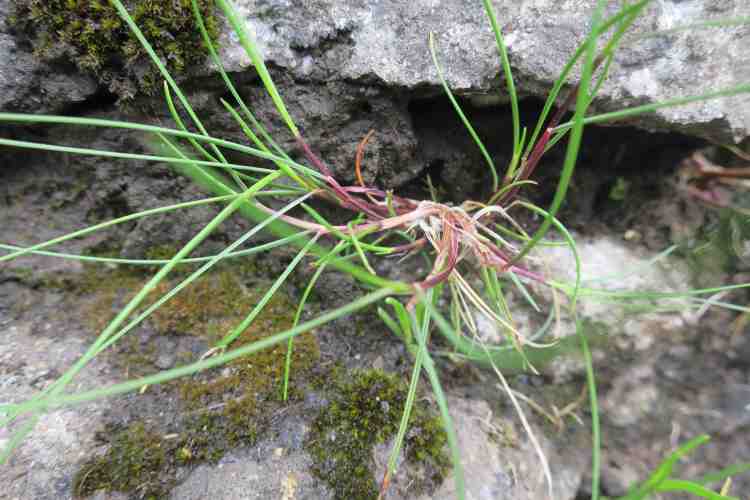
Below you can see a photo of the grass Festuca rubra or red fescue by my friend, famous Canadian photographer, Andre Gallant. I have done research on this grass for over 30 years, and my Wikipedia editing name is Festucarubra.

What I learned from being a podcast guest

Podcasts were invented in 2004. I first discovered them in 2006, when I was a visiting professor at the University of Tromsø (now called UiT – The Arctic University of Norway). I had no internet connection in the visiting scholars’ residence, so I would download podcasts and audiobooks in my university office, to have some English-language programming for my solitary evenings.

Back in Canada, I found that podcasts were a great way to catch up with missed radio programmes. But, my daughters were never interested in listening to them, and I truly thought that this media format would die out from lack of interest amongst the younger generation. I was wrong!

At university, both my daughters listened to them. Today, podcasts are more popular than ever, especially among younger Millenials and GenZ. They are fairly straightforward to make with some basic, affordable equipment. To my surprise, since 2014, I’ve been interviewed for several podcast series:

In these episodes, I’m often asked to advise students. Some of my favourite advice can be heard at the end of my People Behind the Science interview.

Get a career coach, let yourself fail, because you often learn more from failure than success, find as many mentors as possible, and learn from everyone

— Dawn Bazely 59m 39s to 1h 03m 30s

In the summer of 2019, Professor Sapna Sharma connected me with Dr. Eloïse Ashworth, a co-founder of the Lumières Science Podcast. Dr. Ashworth, who grew up in France, before doing her PhD in Australia in Marine Biology, is passionate about Science Communication.

Eloïse had turned to Professor Sharma, an experienced science communicator at York University, for advice about the Toronto #SciComm scene. She was launching the new podcast in August and was looking for scientists willing to speak at the event. Eloïse (Dr. Ashworth) asked her presenters, including me, to speak about our research and the challenges we have encountered, using only one slide.

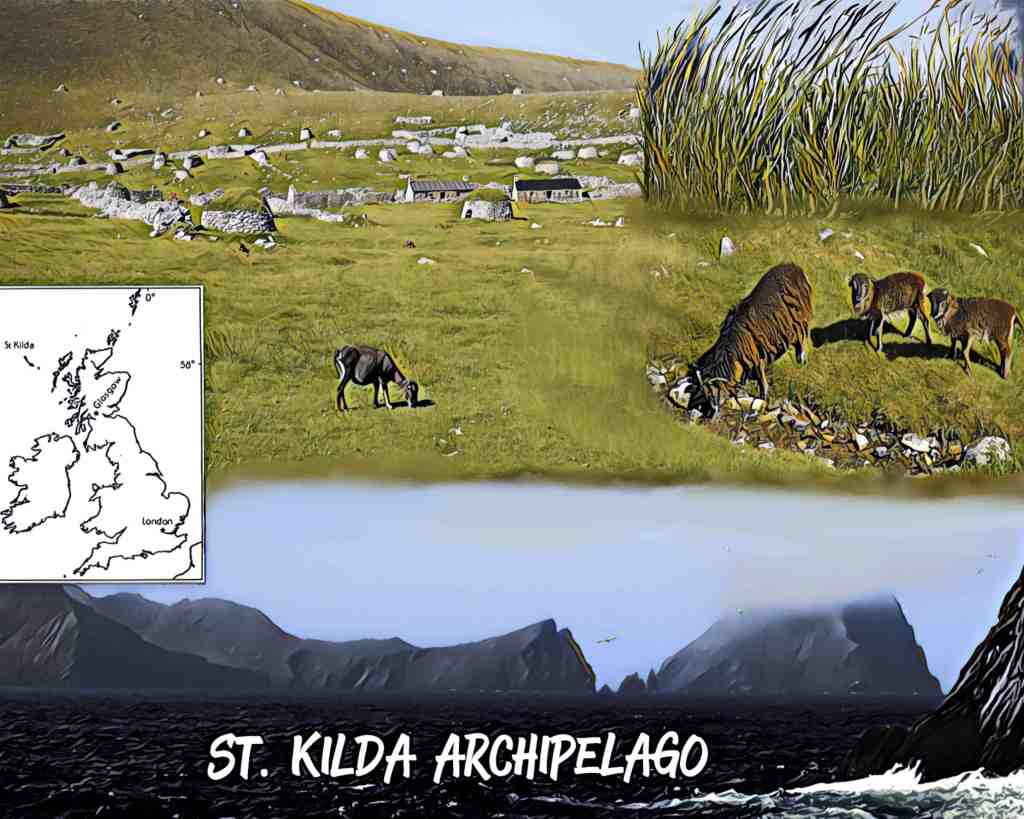
I decided to give a five-minute talk in my ten-minute slot to allow for plenty of questions. I spent two weeks writing a two-page science communications script which I recorded as an mp3 file, and uploaded to my SoundCloud account. Here is the slide that was projected on the screen.

Uploading an audiofile is a great way for Biology 4095 students with low bandwidth wifi or a noisy family, to deliver their end of semester talks when joining through Zoom won’t work. We can listen to this audio as we click through your student group’s Google Slides. Compare my audiofile which was only 8MB with the high quality video from my talk below. The SoundCloud audiofile is a great alternative.

ps This post relates to Blog Topic #8: Listen to a podcast interviewing Dawn Bazely and pick one piece of advice that I have given to science students.

Design a site like this with WordPress.com
Get started