Primary, Secondary and Tertiary Literature – Monkey Puzzle Tree

Students can easily get confused between the different class of literature when they are first starting off writing their very first essay or lab report. I’m sure I did! However, before I started doing my research for those assignments, I took a lot of time to understand the differences between a peer-reviewed primary, secondary and tertiary literature.

I am going to be helping you tell the difference between the different sources of literature with an explanation as well as an example of documents that are related to Araucaria araucana – Monkey Puzzle Tree!

File:Monkey Puzzle Tree.jpg
Image of Monkey Puzzle Tree from: https://commons.wikimedia.org/wiki/File:Monkey_Puzzle_Tree.jpg

Peer-Reviewed Primary Literature

Primary literature is where the researcher publishes their own findings and thus is their original research and new scientific discoveries. It shows research activities and methods done to conduce the experiments. Primary literature often includes introductions, methods, results, discussions and analysis of data collected in either the field or laboratory that are often displayed in tables, charts or graphs. Some examples include original research published as articles in peer-reviewed journals, technical reports, etc.

Specific Example for Araucaria araucana:

Bekessy, S., Allnutt, T., Premoli, A. et al. Genetic variation in the vulnerable and endemic Monkey Puzzle tree, detected using RAPDs. Heredity 88, 243–249 (2002). https://doi.org/10.1038/sj.hdy.6800033

This article is a considered a primary literature because they tested random amplified polymorphic DNA (RAPD) markers were used to determine genetic heterogeneity within and among 13 populations of the Monkey Puzzle Tree species. They included a materials and method section which confirms that they conducted the experiment and wasn’t just based on another research article. They showed results and analyzed the results using various statistical tests and also explained using a lot of graphs, charts and tables

Secondary Literature

Secondary literature are critiques, reviews or descriptions of a primary sources/original work that other people did.  They sometimes contain pictures, quotes, or graphics of primary sources. Some examples include review articles, systematic reviews, and meta analyses. Summaries reported in textbooks, magazines, and newspapers are also considered secondary sources.

Specific Example for Araucaria araucana:

Aagesen, D.L. Indigenous resource rights and conservation of the monkey-puzzle tree (Araucaria araucana, araucariaceae): A case study from Southern Chile. Econ Bot 52, 146 (1998). https://doi.org/10.1007/BF02861203

This is considered a secondary literature source because they collected some of their data collected from archival research n national and provincial capitals. Although they included an abstract, they didn’t include any of the other sections that were included in primary sources such as methods, results, or discussion.

Tertiary Literature

Tertiary sources use information that are gathered from a variety of primary and secondary resources.  Tertiary literature can be textbooks, dictionaries, encyclopedias, bibliographies, etc.

Specific Example for Araucaria araucana:

https://en.wikipedia.org/wiki/Araucaria_araucana

This is a Wikipedia article which is similar to an encyclopedia, but on the web. It includes a large number of facts, information and pictures that are gathered from various other sources that are listed at the very end of the Wikipedia page (references).

#WomenInSTEM – Carrie Derick: Canada’s First Female Professor

For a long time, we have been seeing white males getting recognized for their research, even if they have stolen the findings from other researchers and scientists (most of the times from women). Why is this? Why did we see only males going to university? Why did we only see male professors? Why was there gender disparities in the fields of STEM (Science, Technology, Engineering, and Mathematics) in terms of job opportunities, salary, and recognition/representation. Many decades ago, women were not allowed to peruse careers in STEM because of societal norms. For example, women botanists instead were only able to earn incomes as authors, illustrators or through gardening businesses.

However….women began to break the sound barrier and gender barrier along the way. Women were leaders in the early development of programming and even when it came to discovering the structure of DNA. Us women are bringing new, unique and creative approaches to STEM careers and are supporting each other while we do so!

A great example of a white woman in STEM is……

CARRIE DERICK

File:Carrie Derick.jpg
Image of Carrie Derick from: https://commons.wikimedia.org/wiki/File:Carrie_Derick.jpg

Fields: Medicine, Botany

Main Achievements: Canada’s first female Professor

Carrie Derick was born in 1862 in Clarenceville, Quebec. Derick was educated at the Clarenceville Academy and she began teaching by the age of 15. Derick then became a school teacher in Clarenceville and Montreal, and later was a principal of the Clarenceville Academy when she was 19 years’ old!

Derick pursued studies in Natural Science from McGill University in 1889, and graduated in 1890 with the highest GPA (94%). After graduating she worked part-time as McGill’s first female botany demonstrator (Aka TA). Derick began her master’s program at McGill and received her M.A. in botany by 1896. In 1901, Derick then attended the University of Bonn (Germany) and completed the research required for a Ph.D. but was not given an official doctorate since the University of Bonn DID NOT award women Ph.D. degrees at the time 😦

She then went back to McGill University and wrote directly to Principal Peterson. Due to her previous years of teaching, researching and publishing, Derick and was then given a new position of assistant professor at one-third the salary compared to other male assistant professors.

In 1912, Carrie Derick was officially promoted as a professor of morphological botany by McGill University which made her the FIRST woman both at McGill University and Canada to become the first female professor. When the botany department chair assigned her back as a TA, She later petitioned to have her title changed to be more representative of her expertise and field of research. She later went on the found a Genetics Department.

For most of her life, she was a feminist as she fought for women’s rights in education/voting/work, publicly supported birth control in Canada, as well as mandatory school attendance for children and care for children with disabilities.

Carrie Derick was one of the many women that us females look up to when it comes to #WomenInStem. She was a feminist, botanist, and supported other women that were in the field of STEM to fight for gender equality and to end the stigma! WAY TO GO CARRIE! 🙂

Source: https://scientificwomen.net/women/derick-carrie-134

The Father of Ecology

On September 14th, 1769 Friedrich Wilhelm Heinrich Alexander Von Humboldt was born and lived for 90 years until his passing on May 6th, 1859. Born into a wealthy Prussian aristocratic family, Humboldt was able to fund his explorations through Europe, South America and North America, where he collected numerous amounts of data that has contributed to his findings relating to ecology and biogeography.

undefined

Humboldt had three siblings; a sister that died at a young age, an older brother and a half-brother from his mother’s previous marriage. His father, who was an army officer, passed in 1979, leaving Humboldt with his mother at the age of nine.    

Alexander had a private education where he was taught political history, economics, mathematics and other common courses. Although given the opportunity to learn several subjects, Humboldt wasn’t the best student and only studied under strict supervision. Humboldt later studied economics at the university of Frankfurt. After spending a year at the University of Gottingen he became interested in geology and minerology. His experience at Gottingen led to the beginning of his expeditions.

Humboldt didn’t start in the plant industry but started off as a mine inspector in 1792, where he built relationships with miners and eventually funded a school and an emergency relief fund for them. Although Humboldt was a mine inspector that studied finance and economics, he was always interested in plants as one of his hobbies as a child was collecting and labelling different plants and insects. This interest grew with the influence of Karl Ludwig Willdenow, a botanist and one of his many mentors.

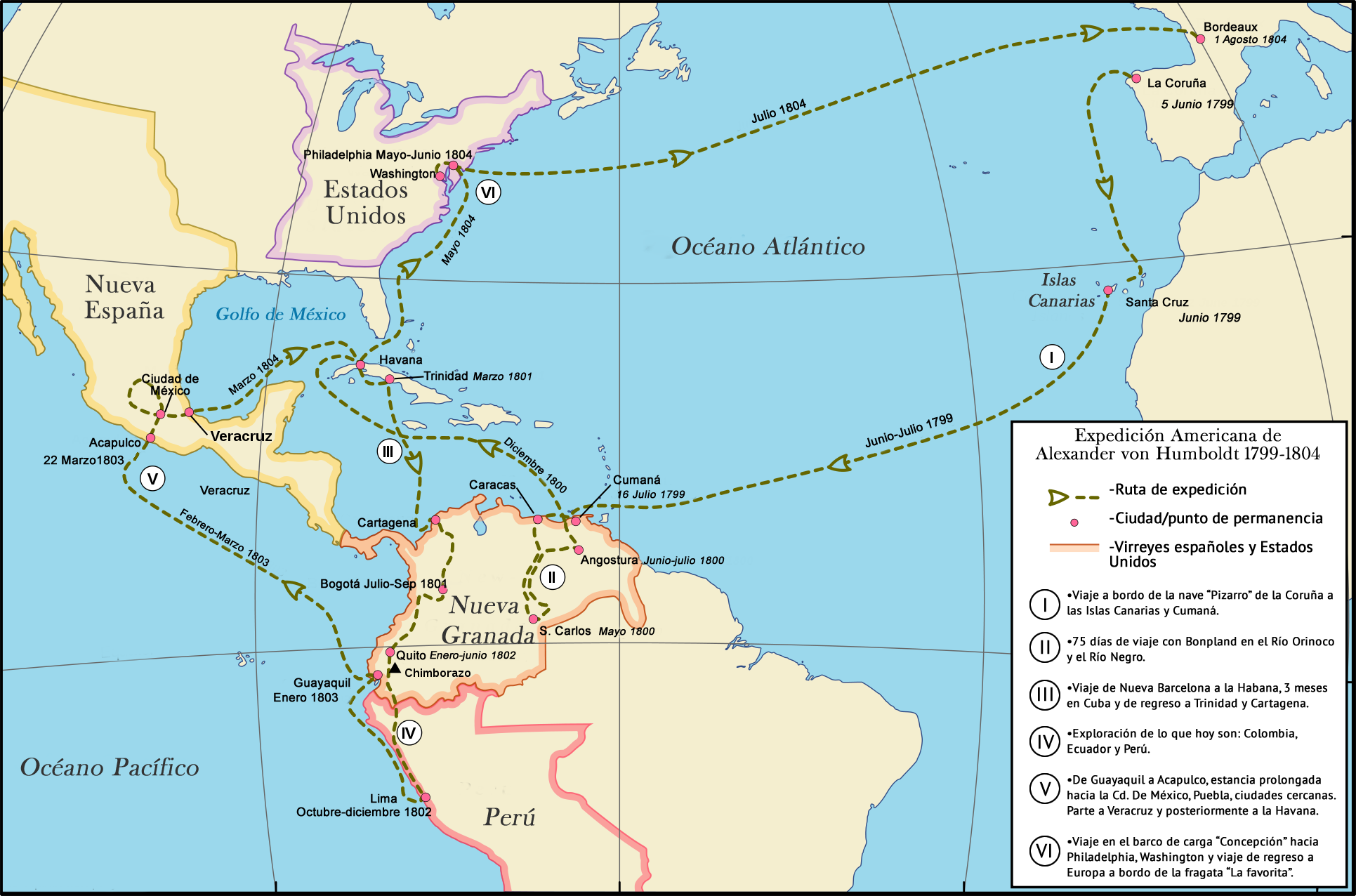
Known as the father of ecology, Alexander Von Humboldt, had several influences on what we know as ecology today. One of his biggest expeditions was the Spanish American expedition from 1799 to 1804.

undefined

Humboldt spent this expedition characterizing different geological features and collecting both botanical and zoological specimens. His studies in Mount Chimborazo, Ecuador led to his belief that everything in nature was interconnected, as he recognized that organisms have a reciprocal effect on their environment. It was Humboldt that gave rise to biogeography through his cross-continental comparisons and observations throughout his various expeditions.

Humboldt has also influenced several other known figures in ecology such as, Charles Darwin, Alfred Wallace and John Muir. To learn more information on Alexander Von Humboldt you can refer to https://www.britannica.com/biography/Alexander-von-Humboldt

Sustainable Agriculture and Local Food Security

Image of vegetables and fruits from: https://commons.wikimedia.org/w/index.php?sort=relevance&search=food+vegetables&title=Special:Search&profile=advanced&fulltext=1&advancedSearch-current=%7B%7D&ns0=1&ns6=1&ns12=1&ns14=1&ns100=1&ns106=1#/media/File:Food-healthy-vegetables-potatoes_(23958160949).jpg

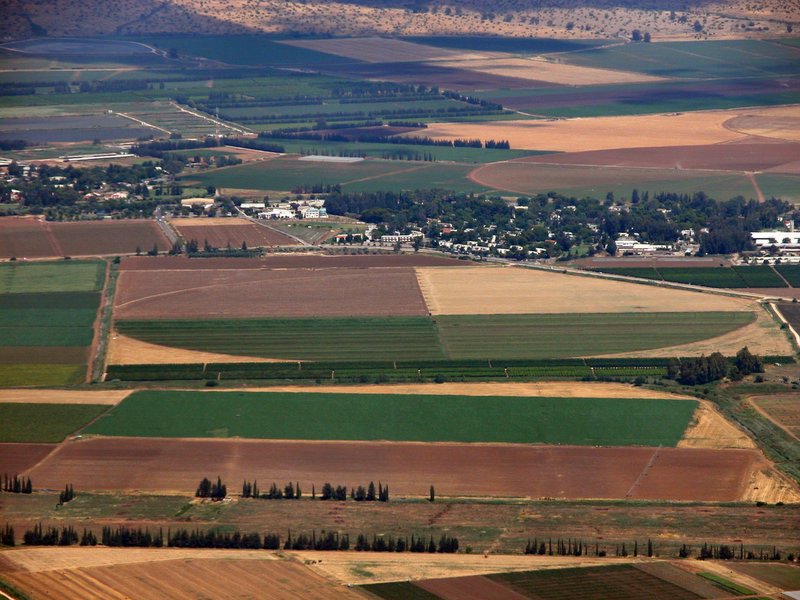
For many years we have produced majority of our food through Industrial Agriculture. Industrial Agriculture can be defined as a system dominated by large farms growing the same crops every…single…year. They use a massive amount of chemical pesticides and fertilizers that damages the soil, water, air, and climate. With the damage it has caused we have realized that this form of agriculture was not meant to last because it destroys the essential resources that the earth needs to produce these plant products.

Many farmers and scientists are starting to take new routes when it comes to agriculture and farming…..with a farming system that is more sustainable – environmentally sustainable, economically sustainable, and socially sustainable. Sustainable Agriculture maximized productivity and minimizes damage made to the environment (soil, water or air).

But what is sustainable agriculture?   

Sustainable agriculture is farming in sustainable ways, which means meeting society’s present needs such as food, without compromising the ability of future generations to meet their needs. The world population is continuously growing and we are expected to reach about 9 billion people by 2050….THAT IS A LOT OF PEOPLE TO FEED.

It involves:

  • Building and maintaining healthy soil
  • Managing water wisely
  • Minimizing air, water, and climate pollution
  • Promoting biodiversity

Some sustainable agriculture practices:

  1. Rotating Crops (Diversity): By planting a variety of different crops on the same soil can be beneficial as it adds nutrients and minerals that make it healthier and improves pest control. Some of these practices include growing a mix of crops in the same area and multiyear crop rotations
  2. Reducing or Eliminating Plowing: Traditional plowing prepares fields for growing plants and for the prevention of weed growth however, it does cause soil loss/erosion. By planting seeds directly into the undisturbed soil can improve soil health and reduce the soil loss
  3. Planting Cover Crops: A cover crop is a plant such as clovers or hairy vetch that grown mainly for the benefits of the soil rather than crop yield. Often they are planted during off-season so that they can increase the health of the soil by preventing erosions, adding in new nutrients, and reducing the growth of weeds.

Local Food Security

The 1996 World Food Summit (WFS) adopted the following Food security definition: “Food security exists when all people at all times have physical and economic access to sufficient, safe and nutritious food to meet their dietary needs and food preferences for an active and healthy life.“ Food security is built on four pillars: availability, access, utilization and stability.

Example: Food Security Challenges in Newfoundland and Labrador

–  Produce only 10% of the fresh vegetables available at major wholesalers. As a result, with Hurricane Igor (2010), many roads were blocked which prevented food shipments coming into Newfoundland mainly because they rely highly on fresh vegetables from other provinces and countries (90%)

– Most fish products are currently exported

-Many rural and remote communities do not have a population large enough to support a full local grocery store so many depend on transportation over long distances to buy healthy food which makes it difficult for those who so not have a car, elderly or those that are physically disable

Tansley’s 1917 – What’s Missing & Why

 In 1917, Arthur Tansley published a paper entitled “On competition between Galium saxatile L. (G. hercynicum Weig.) and Galium Sylvestre Poll. (G. asperum Schreb.) on different types of soil” in the Journal of Plant Ecology. In his paper, he argued that Galium Sylvestre germinates on calcareous sandy soil and acid peat while Galium saxatile grows on all the different types of soils employed in the study. He argued that calcareous soils had the lowest germination rate and those seedlings produced there ends up being chlorotic and many of them dies. Those that survive are usually green but are not able to survive competitive with Galium Sylvestre. The growth of both species is slow on acid peat and loam soil, the two species usually germinate freely. The growth of Galium Sylvestre is normal on calcareous soil and slow with Galium saxatile. Competition, therefore, works through direct suppression of one species and as a result, the other one ends up having a vigorous growth for as long as it is growing on its preferred soil. The paper is a description of two plant species that are found in diversity grasslands in Britain and on different soils and shows how biotic interactions and physiological tolerance limits these species.

The style of his paper is completely different from that of a modern scientific paper. For example, in the paper, he states that tragically, Captain A.S Marsh worked on the study up to the time when he joined the army and ended up being killed during World War I.  This is completely different from the way in which modern scientific papers are written. The paper also lacks statistics as most of statistics had not been invented by the time he wrote this paper. However, he thinks about variance in the paper. The paper also does not have enough citations as it only has three, which are Schimper, Nageli and Drude. A scientific paper like what he wrote is expected to have a significant number of references to support the study and its findings. Based on my understanding, I think a large number of formal scientific ecology had not been discovered or invented during this period.

Reference:

Tansley, A. G. (1917). On competition between Galium saxatile L. (G. hercynicum Weig.) and Galium Sylvestre Poll. (G. asperum Schreb.) on different types of soil. The Journal of Ecology, 173-179.

Peer-Reviewed, Secondary, Tertiary Literature… Whats the difference?

The differences between primary, secondary and tertiary sources originate from the phenomenon of the created information or the original event.

Primary sources are those that are created very close to the original phenomenon or event like a photograph of an event. It may be created at the time of the occurrence of an event such as photographs, conference papers, diaries, research articles, unrefined data sets or newspaper reports or can be documented later such as memoirs, autobiographies and oral histories. They are used in describing the original research. One of the examples of primary sources in plant ecology include “Patterns of plant diversity at high altitudes on the Qinghai-Tibetan Plateau” which discusses the patterns of plant diversity as evident in high altitudes. It is a study that carried out a large-scale investigation on vegetation from different altitudes with the main focus being on the high-altitudinal range. It relates to plant ecology as it discusses the abundance of plants at a high altitude.

Secondary sources are based on the primary sources, and they include books or articles which the authors use in interpreting data from the experiment of other research or archival footage of a given event. Other forms of secondary resources include scholarly review articles and review articles. The article “Impacts of desalination plant discharges on the marine environment: A critical review of published studies” is a scholarly review article which reviews different studies in terms of environmental, toxicological and ecological research include the ecological attributes in the environments that receive desalinated water.

Tertiary sources usually synthesize or summarize research found in secondary sources and primary sources, and they include reference books, abstracts, indexes handbooks, bibliographies or encyclopaedia, and they are usually available in numerous formats such as online or in print form.  They summarize information in both primary and secondary sources with the aim of providing background on a given topic. Some tertiary resources are not used in academic research; rather, they act as an aid of looking for other sources. “Plant Form: An Illustrated Guide to Flowering Plant Morphology” is a reference book that relates to ecology as it discusses on plant morphology.

References

Bell A.D & Bryan A. (2008). Plant Form: An Illustrated Guide to Flowering Plant Morphology. Chang Science Library (Cook) – STACKS

Roberts, D. A., Johnston, E. L., & Knott, N. A. (2010). Impacts of desalination plant discharges on the marine environment: A critical review of published studies. Water research44(18), 5117-5128.

Shimono, A., Zhou, H., Shen, H., Hirota, M., Ohtsuka, T., & Tang, Y. (2010). Patterns of plant diversity at high altitudes on the Qinghai-Tibetan Plateau. Journal of Plant Ecology3(1), 1-7.

UN Article-IPBES Report: Biodiversity and Extinction

Image from https://commons.wikimedia.org/wiki/File:Climate_change_threats_to_coral_reefs.png
Climate change, ocean changes, etc resulting from human activities eventually lead to biodiversity loss and extinction.

The United Nations (UN) recently reported about nature’s dangerous decline and its accelerating extinction rate on the report from the Intergovernmental Science-Policy Platform on Biodiversity and Ecosystem Services (IPBES). I personally, took an interest on this document I found on the UN website because I truly believe that biodiversity is being lost right before our eyes and we will come to a point where our actions cannot be reversed.

Last semester, I took BIOL 2050 4.0, Ecology and I learned a lot about the effects of loss on biodiversity as a result of habitat loss and fragmentation, especially when us humans are the key factor behind it. For example, although deforestation provides us with wood and lumber for paper or building materials, it takes away homes of many species. This negatively impacts species-species interactions as wells as the whole food web as a whole, mainly due to the loss of PLANTS since they are a primary producer. Loss of different species of plants would cause decline in herbivore species which in-turn would decline the biodiversity of species in the top of the food web. This would just be a major disaster!!!

According to IPBES Chair, Sir Robert Watson, “The Report also tells us that it is not too late to make a difference….Through ‘transformative change’, nature can still be conserved, restored and used sustainably”. The IPBES Global Assessment Report on Biodiversity and Ecosystem Services was coordinated and competed by hundreds of experts from over 50 different countries to gather changes in biodiversity over the past five decades.

Findings from the Report

Some findings from the report includes:

  • Since 1900, species in most land-based habitats have declined by 20%
  • >40% of amphibian species and 33% of marine mammals are threatened
  • greater than 9% of all domesticated breeds of mammals used for food and agriculture had become extinct by 2016
  • 66% of the marine environment have been significantly altered by human actions
  • Urban areas have more than doubled since 1992.
  • Plastic pollution has increased tenfold since 1980 (300-400 million tons of heavy metals, solvents, pesticides/fertilizer and other wastes from industrial facilities are dumped every year into the world’s waters)

IPBES has predicted that these negative trends in nature will continue past 2050 because of the projected impacts of INCREASING LAND-USE CHANGE, EXPLOITATION OF ORGANISMS and CLIMATE CHANGE.

Five Main Causes Driving Changes in Nature

Click to watch an animated video

  1. Changes in land (plants) and sea use
  2. Direct exploitation of organisms
  3. Climate Change
  4. Pollution
  5. Invasive species

What Can We Do?

I also agree with the UN regarding the fact that some policies have to be made in different sectors in order to prevent loss of biodiversity and extinction from getting out of control. In agriculture, we need to start managing pests without using harmful pesticides. Some alternatives can include organic pesticides, biocontrol (using a pest’s natural enemy to get rid of the pest), and polyculture. In marine systems, we can reduce run-off pollutants into oceans and set effective quotas for fisheries. By doing so, this will prevent them from drastically reducing the marine population so that the marine species can still repopulate again. In freshwater systems, we can promote practices to reduce soil erosions, increasing water storage, and reduce sedimentation.

Overall, plants are holding the whole food chain by a thread and when any of the 5 factors drive loss of biodiversity or extinction of various plant species, the rest of the species that either directly or indirectly relying on the plants are going to eventually be doomed!

UN Article: Air Pollution’s Effects on Vegetation

Air pollution is a major contributor to climate change by increasing the carbon dioxide, nitrous oxide and super pollutants in our atmosphere. It has already begun and will continue to impact our planet with wildfires, loss of biodiversity, sea level rise and health risks.

United Nations presents a recent results conducted illustrating the effects of air pollution on natural vegetation and crops. 14 countries agreed to participate in the European moss survey, conducted 2010-2011, in which data was submitted on the presence of nitrogen in the countries’ mosses.

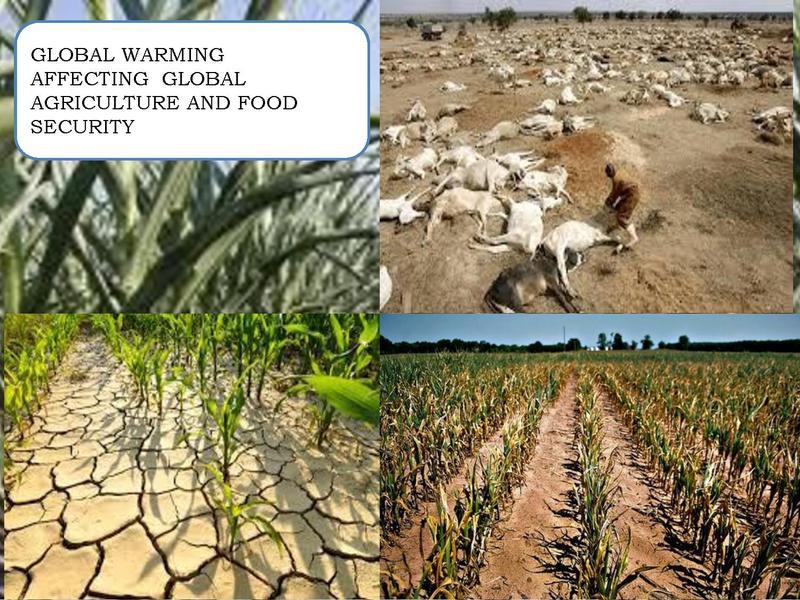
The highly used crops in our world are the ones which have indicated the highest level of sensitivity to the ozone change due to air pollution.  This means the most effected crops would include ones the normal household would rarely be able to sustain without: wheat, soybean and rice. Studies also indicated air pollution’s impact on the substantially decreased level of food quality and security. There was a presence in changes in protein composition and poor digestibility of the crop for cattle and sheep. More significantly, impacts of ozone composition have resulted in a greater presence of droughts in crops.

File:GLOBAL WARMING AFFECTING GLOBAL AGRICULTURE AND FOOD SECURITY.pdf

Although the effects of black carbon on crops and plant species has immense data to still be conducted for direct impact conclusions. It has been identified the effects of small dust particles may affect the level of leaf transpiration by blocking pores. Additionally, the black carbon may directly result in high temperature on the surface area of leaves as photosynthesis is conducted.

Air pollution has shown to significantly impact the agriculture, livestock, and human consumption. Countries should continue to create awareness to the issue as increased pollution would result in economic loss for the country itself.

Do you think we can make a significant change if it affects our health and the countries economy?

For more information regarding this issue please visit the following link:Data Source: UN http://www.unece.org/fileadmin/DAM/env/documents/2011/eb/wge/ece.eb.air.wg.1.2011.8.eng_only.pdf

The Effect of Plant Development on Arthropod Communities and the Impacts of Species Removal

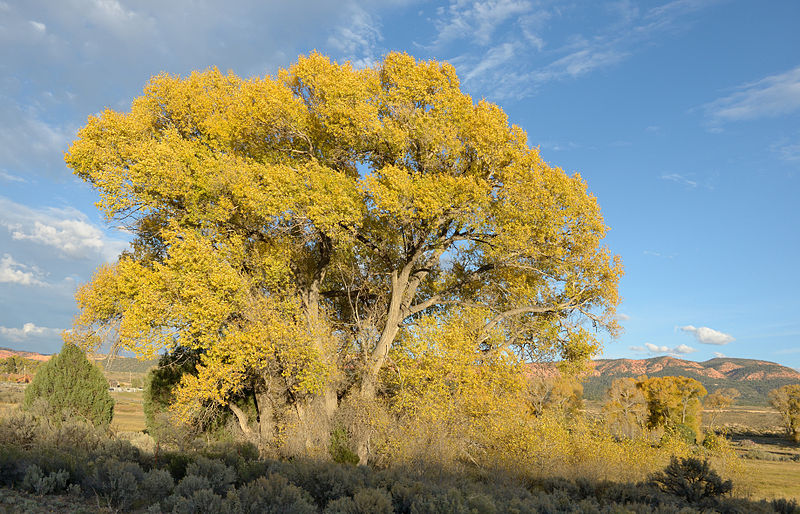
Trees can develop to maturation and senescence. Maturation of trees is irreversible while senescence is reversible whether through asexual reproduction or other growth factors. Insects can respond to these developmental changes of plants, which can affect their community structure. For example, in the article by Whitman and Waltz, it was said that cotton woods can change the develop of herbivore-resistance traits for 10-folds over a period of two years.

cotton wood tree

To better understand the impact of plant development on insects and the community structure, Whitman and Waltz conducted a 3 year study on hybrids of narrow leaf cotton woods and fremont cotton wood. It was found that arthropod species richness and relative abundance varied significantly in zones with mature, juvenile and juvenile ramets. When the plant development was not used as a factor of the community structure , the study showed that plant development was an effect on the interaction community especially at multiple trophic levels, some direct effect of plant development also determined the Aphid (P. betae) fitness distribution.

The removal of Aphids led to a 32% decline in species richness and the removal of beetles on juvenile ramets led to a 75% increase in species richness. Aphids and beetles have different biodiversity due to the different lifestyle which explains the opposite effects on species richness and abundance when the insects were removed from the plant zones. 39% of the plant had significant distributions affected by the presence of beetles or aphids.

Aphids (P. betae)

Overall the effects of plant development prove a mechanism for the presence of different arthropod community found on different developmental zones of a plant; whether it is mature, juvenile or juvenile ramets

To read more about the findings of this article visit https://www.semanticscholar.org/paper/PLANT-DEVELOPMENT-AFFECTS-ARTHROPOD-COMMUNITIES%3A-OF-Waltz-Whitham/419b7f601739eb7f49109098f3605f54e95f75ed or search up the article title Plant Development Affects Arthropod Communities: Opposing Impacts of Species Removal.

Tales Of A White Man – Charles Darwin

Charles Darwin was born on February 12, 1809, and died on April 19, 1882. He was an English geologist, naturalist and a biologist and he is highly known for his science of evolution through natural selection. Charles Darwin was the second born of six siblings, and he was a child of privilege who highly adored being in the nature. He came from a family consisting of scientists with his father, Dr R.W Darwin, being a medical doctor while his grandfather was a renowned botanist. He enrolled at the University of Edinburg in 1825 at the age of 16 and later joined Christ’s College in Cambridge. His father wanted him to be a medical doctor, but Charles went ahead to study natural history.

Charles Darwin

He graduated from Christ’s College with a bachelor of arts degree in 1831 after which he was recommended by Henslow for a naturalist position in HMS Beagle. In 1831, Darwin embarked on a five-year voyage all over the world where he studied different plants that enabled him to formulate his theories.  This led to the publication of his landmark book entitled On the Origin of Species. This voyage ended up being a lifetime opportunity for Charles Darwin as a young naturalist. In the course of this trip, Darwin was able to collect a wide variety of natural specimens that included plants, birds and fossils.

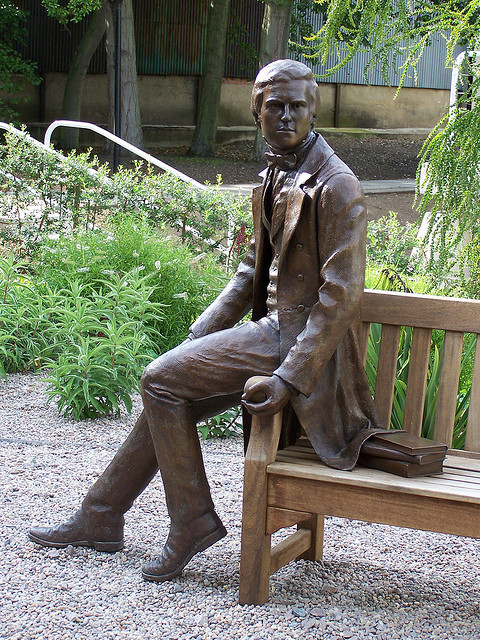
Statue of Charles Darwin in Cambridge, England

Through his hands-on research and also experimentation, Darwin had a rare opportunity of closely observing the principles of geology, botany and zoology. When he returned to England in 1836, Darwin started writing up his findings in the Journal of Researchers whose publication was part of the larger narrative of Captain FitzRoy and was later edited and published in the Zoology of the Voyage of the Beagle. The trip had a significant impact on his view on natural history as it enabled him to develop a revolutionary theory regarding the origin of living beings that contradicted the views of other naturalists of that time.

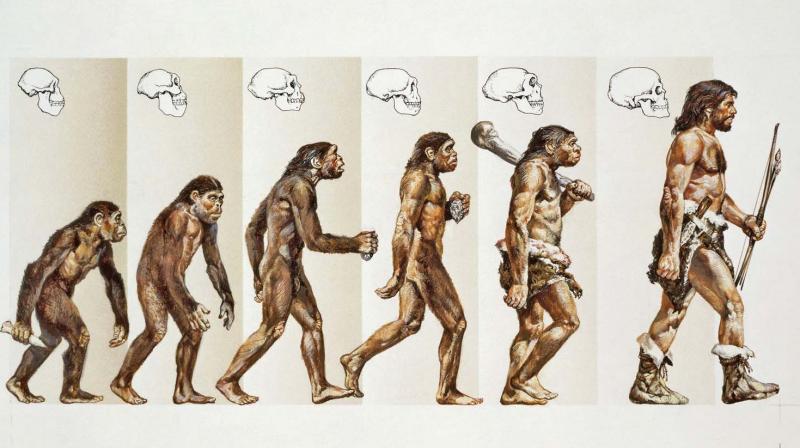
In his Theory of Evolution, Darwin argued that survival of species took place through a natural selection process where the species that become successfully evolved or adapted to meet the dynamic requirements of their natural habitat would thrive and reproduce while those did not evolve and reproduce would die off. Darwin discovered the existence of similarities among different species all over the world with variations on the basis of the locations, and this made him believe that the species of today have gone through a process of evolution from a common ancestor. Darwin’s theory of evolution is also today known as Darwinism.

Theory Of Evolution

Want to know more about this bad ass biologist, that essentially shaped most of our understanding of ecology/evolution? Check out:

https://www.biography.com/scientist/charles-darwin (Reference)

Design a site like this with WordPress.com
Get started