A simple guide to understanding primary, secondary and tertiary literature

At some point during your education, I am sure that you have encountered assignments that mention the use of primary, secondary or tertiary literature. If you are like me and don’t have the greatest memory, you may find yourself having to refresh yourself on the differences between these three types of literature. Therefore, I decided to create this simple guide to help people just looking to get a quick refresher like me, as well as people who are just learning the difference between these types of literature!

1. Primary Literature

Primary literature contains original ideas and often presents new theory and research at the time of publication. This journal article on the impacts of the invasive plant species, Garlic Mustard, on the understory community of a forest original research and thus an example of primary literature.Another fantastic example would be Charles Darwin’s On the Origin of Species (1859) that contains original ideas and theory on the evolution of species based on his observations during his voyage on the HMS Beagle.

2. Secondary Literature

Secondary literature contains discussions, analyses or interpretations of the ideas and information presented in primary literature. For instance, a meta-analysis on the trait differences between invasive and non-invasive plants is a great example because it examines the research of multiple primary sources. Another example would be a journal article or book discussing and analyzing the ideas of Darwin, such as, Niles Eldredge’s, Darwin: Discovering the Tree of Life (2005).

3. Tertiary Literature

Tertiary literature gathers and summarizes information from numerous primary and secondary sources. Wikipedia pages on invasive species or Charles Darwin would be an example of tertiary literature, as would this article on plants (Yopp et al., 2019) in Encyclopedia Britannica.

This guide was written with reference to:

University of Saskatchewan. (2020, Jan 16). Biology 301: Primary, Secondary & Tertiary Sources. Retrieved from: https://libguides.usask.ca/c.php?g=16486&p=91242

United Nations Convention on Biodiversity

The Convention on Biodiversity (CBD) is an international legally-binding treaty with three main goals: conservation of biodiversity, sustainable use of biodiversity, fair and equitable sharing of the benefits arising from the use of genetic resources. Just to recap, components of biodiversity are all the various forms of life on Earth, including ecosystems, animals, plants, fungi, microorganisms, and genetic diversity. The ultimate goal of the CBD is to encourage actions that will eventually lead to a sustainable future.

The conservation of biodiversity is a concern that continues to grow stronger and stronger. The CBD takes all levels of biodiversity into account, including ecosystems, species, and genetic resources. It not only covers biotechnology too, but all possible domains that are directly or indirectly related to biodiversity and its role in development, ranging from science, politics and education to agriculture, business, culture and beyond.

Retrieved from Wikimedia Commons via https://en.wikipedia.org/w/index.php?curid=62037581

The CBD’s governing body is the Conference of the Parties (COP). This ultimate authority of all governments (or Parties) that have ratified the treaty meets every two years to review progress, set priorities, and commit to work plans.

The Secretariat of the Convention on Biological Diversity (SCBD) is based in Montreal, Canada. Its main function is to assist governments in the implementation of the CBD and its programmes of work, to organize meetings, draft documents, and coordinate with other international organizations and collect and spread information. The Executive Secretary is the head of the Secretariat.

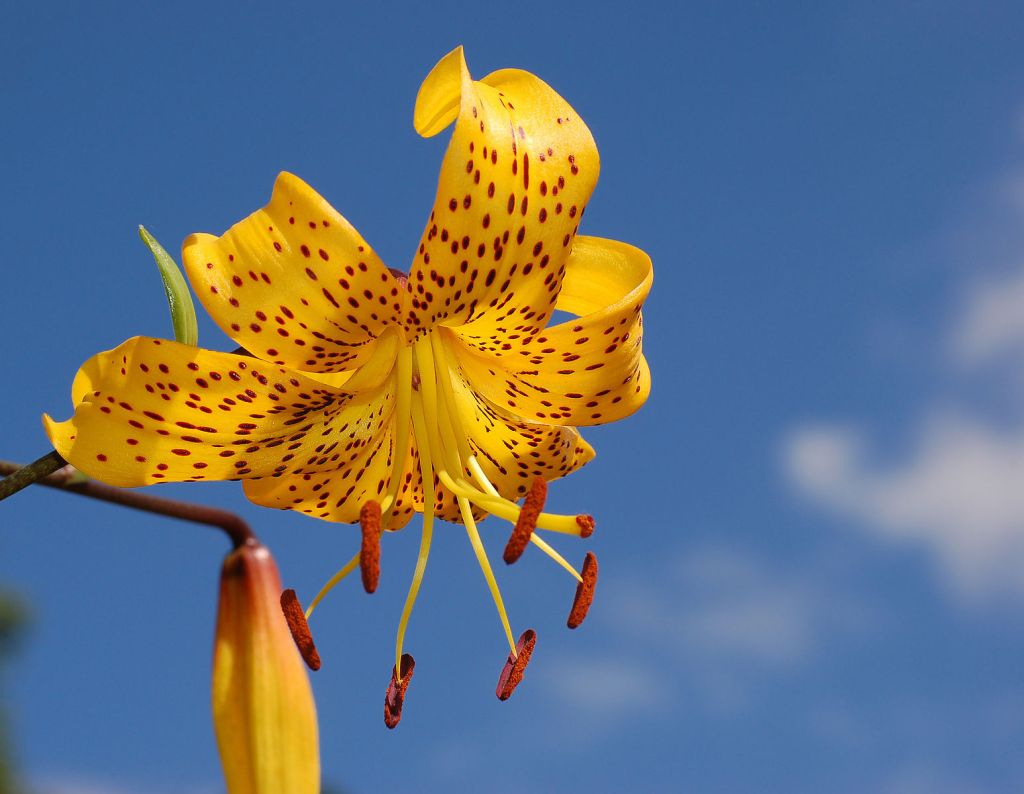
Retrieved from Wikimedia Commons via Derek Ramsey captured in the Chanticleer Garden in 2007.

Although substantial investments are required to fulfill the goal of CBD and conserve biodiversity, it will bring significant environmental, economic and social benefits in return. In fact, a post-2020 global biodiversity framework is being adopted as a stepping stone towards the 2050 Vision of “Living in harmony with nature”. This contains a set of principles to guide its implementation, an organization of work and sets out a comprehensive consultation process, including provisions for global, regional and thematic consultation meetings. An information note on ways and means to contribute to the development of the post-2020 global biodiversity framework has also been developed  to provide background information and to outline various opportunities for Parties, other Governments, and all relevant organizations and stakeholders to participate.

For more information, visit:
https://www.cbd.int/doc/legal/cbd-en.pdf
https://www.cbd.int/conferences/post2020

Tansley 1917: What’s Missing?

Tansley’s 1917 paper brought into prominence an ecological problem of considerable interest and importance, namely the relation of competition between species, particularly closely related species, to their soil preferences. In order to investigate this phenomenon, two species, Galium saxatile and Galium sylvestre, in competition were grown on different types of soil. G. saxatile is ubiquitous on on light siliceous soils and G. sylvestre appears to be confined to limestone hills and pastures.

Results

1. Calcerous soil: the seedlings of G. sylvestre grew quite normally, but those of G. saxatile show marked chlorosis very shortly after germination, and growth is very slow for many weeks. The terms “chlorosis” and “chlorotic” are used to designate the yellow or yellowish brown colouring of the leaves of the seedling.

2. Garden loam: not a type of soil on which either species usually occurs in nature, therefore, the original experiment failed due to lack of germination.

Autumn 1912: G. saxatile was sown and established itself during the next season (1913).

June 1914: a healthy tuft of G. sylvestre grown on the same type of soil was planted in the middle of the mat and established itself during the summer.

July 1915: this plant was holding its own quite successfully in the midst of the mat of G. saxatile which had in the meantime spread over the whole box.

During 1916: the G. sylvestre steadily spread, overshadowing the G. saxatile, whose growth became less vigorous.

In 1917: this process continued and by September G. saxatile had completely disappeared and the box was almost entirely occupied by a mat of G. sylvestre derived from the tuft planted in 1914.

3. Peat: germination of both species was slow and the plants remained small and did not flower during the first year. However, during the second year, growth was considerably more vigorous and some plants of both species flowered. G. saxatile spread rapidly during the third summer, forming a continuous mat over considerable areas of the soil, in which isolated shoots of G. sylvestre maintained themselves quite vigorously. The growth of G. saxatile in the peat boxes was not so rapid and luxuriant as that of G. sylvestre in the boxes containing calcareous soil, and even in 1915 the peat was by no means completely covered. In the autumn of 1917 all three of the peat boxes were completely covered (except for some patches occupied by Molinia) with G. saxatile, among which a few quite healthy plants of G. sylvestre were still maintaining themselves.

4. Natural sandy loam: both germinated and grew well, G. saxatile somewhat
more vigorously than G. sylvestre. TheK former became dominant, but the
latter maintained itself as isolated plants among the mat of G. saxatile so long
as the cultures were kept (three years).

Roots vs. Shoots

Shoots: competition appears to work through the direct suppression of the shoots of one species by those of the other as a result of the more vigorous growth of the species which is growing on its “preferred” soil. Shoot competition acting in this way appears to be adequate as, the cause of the suppression of one species by the other.

Roots: no evidence of root competition was found, though the case of the plant of G. saxatile which flourished on the corner of the box of calcareous soil, where its shoot escaped the competition of the shoots of the dominant G. sylvestre, is, to an extent, evidence against the effectiveness of root as opposed to shoot competition.

What’s missing though?

  • Abstract
  • Hypothesis
  • Statistics
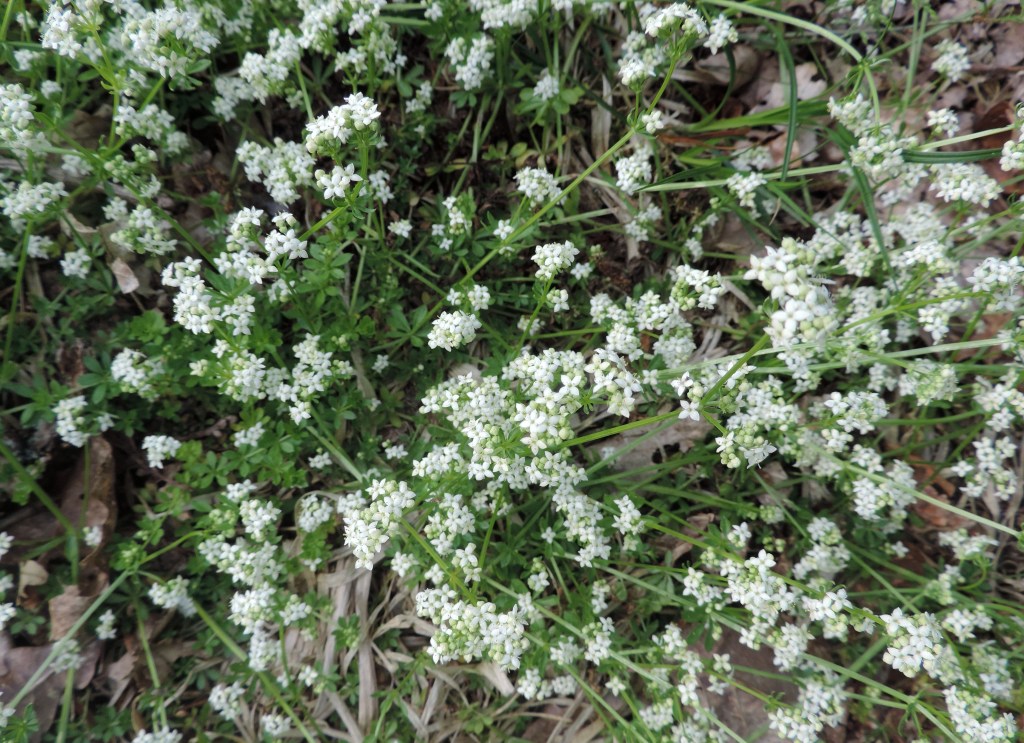
  • Considering that the study largely discusses two species of plants, there should really be a photograph of each of them.

Reference
Tansley, A. G. “On Competition Between Galium Saxatile L. (G. Hercynicum Weig.) and Galium Sylvestre Poll. (G. Asperum Schreb.) On Different Types of Soil.” Journal of Ecology, vol. 5, no. 3/4, 1917, pp. 173–179. JSTOR, http://www.jstor.org/stable/2255655. Accessed 28 Feb. 2020.

The Evolution of Charles Darwin

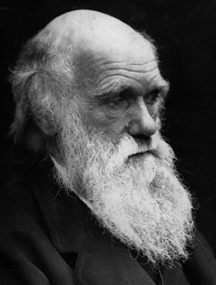
Retrieved from Wikimedia Commons

Charles Robert Darwin was born in 1809 in Shrewsbury, England and was a British naturalist known for his theory of evolution and his deep understanding of the process of natural selection. Darwin was born into a family of scientists, in which he was the second youngest of six kids and a child of wealth and privilege. Having high hopes that Darwin would follow his footsteps and become a doctor, his father had him enroll at the University of Edinburgh Medical School, however, Darwin was uninterested and the sight of blood supposedly made him queasy. His father then had him enroll at Christ’s College in Cambridge to achieve a Bachelor of Arts degree to become a parson. Though Darwin graduated in 1831 with a Bachelor of Arts degree, he was far more interested in studying natural history.

He became a close friend and follower of botany professor John Stevens Henslow at Christ’s College, who had encouraged him to aboard the HMS Beagle. The HMS Beagle launched its voyage around the world on December 27th, 1831 and was considered an opportunity of a lifetime for an aspiring naturalist. While it was initially planned to last for two years, it was extended to five. Darwin collected a wide range of natural specimens, including birds, plants, and fossils. The Pacific Islands and Galapagos Archipelago in South America were of particular interest to Darwin. Years later, Darwin compiled all of his research into his famous book, On The Origin of Species.

Following a lifetime dedicated to research, Darwin passed away in his family home, Down House, in London, England on April 19th, 1882. He was buried in Westminster Abbey. As he once stated, and to wrap up this blog on an inspirational note, “a man who dares to waste one hour of time has not discovered the value of life.”

Reference
“Charles Darwin.” Biography.com, A&E Networks Television, 28 Aug. 2019, http://www.biography.com/scientist/charles-darwin.

Do You Know What’s Missing from Tansley’s 1917 Paper???

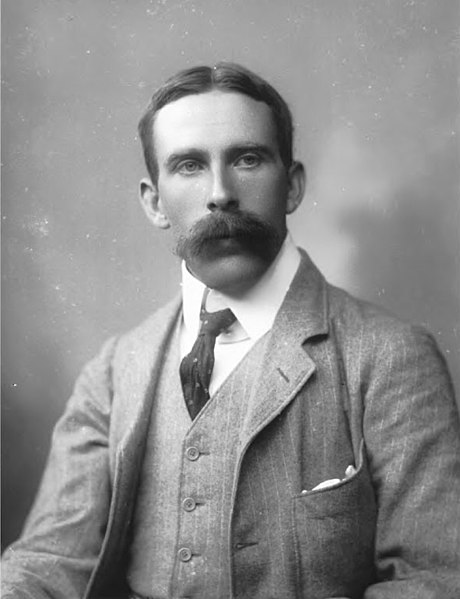
File:Arthur-Tansley-1893.jpg
Image of Arthur Tansley from:https://commons.wikimedia.org/wiki/File:Arthur-Tansley-1893.jpg

Arthur Tansley published a paper in the Journal of Plant Ecology in 1917 titled “On Competition Between Galium Saxatile L. (G. Hercynicum Weig.) And Galium Sylvestre Poll. (G. Asperum Schreb.) On Different Types of Soils”. The original method was to plant the seeds of the two species together in different types of soils. The four types of soils used were (1) calcareous garden soil, (2) a non-calcareous and a reddish-yellow garden “loam”, (3) a strong acid peat, as well as a (4) natural sandy loam (Tansley, 1917).

Article: https://www.jstor.org/stable/2255655?seq=3#metadata_info_tab_contents

Tansley, A. G. (1917). On competition between Galium saxatile L.(G. hercynicum Weig.) and Galium sylvestre Poll.(G. asperum Schreb.) on different types of soil. The Journal of Ecology, 173-179.

RESULTS

Behaviours of the Plants on Different Soils

1. Calcareous Soil

G.sylvestre grew normally but G.saxatile showed chlorosis after germination and grew extremely slow for many weeks and both plants ended up dying

2. Non-Calcareous Soil

Naturally neither of the two species grow in this type of soil due to lack of germination. However, during 1916, the G.sylvestre grew steadily, overshadowing the G.saxatile whose growth became less vigorous. Eventually, G.saxatile completely disappeared and the mat was completely covered with G.sylvestre.

3. Acid Peat

Germination of both plant species were very slow and the plants remained small and no flowering was seen in the first year. During the second year there were some flowering of both G.sylvestre and G.saxatile. In the third summer, G.saxatile spread rapidly while a few healthy plants of G.sylvestre still remained.

4. Natural Sandy Loam

        Both germinated a grew well, but G.saxatile more rapidly than G.sylvestre.

Competition: Between Shoots or Roots?

Tansley argued that competition appeared to work through direct suppression of the shoots of one species by the other due to the growth of one of the species growing on its preferred soil. He also argued that there was no root competition.

BUT…..WHAT’S MISSING AND WHY?

A lot of research papers now include abstracts, introduction, materials and methods, and results which most importantly use STATISTICS to analyze their data. So when comparing research papers now and the 1917 paper from Tansley we can conclude that one thing that is mainly missing is STATISTICS. Why you may ask? Well…. It’s simply because statistics was not full invented by 1917 when Tansley published this paper. As you can see, we have come a long way in terms of scientific reports and data analysis over the past century…. and there is definitely a lot more to come!!!

Lucy Beatrice Moore: A Brief Biography

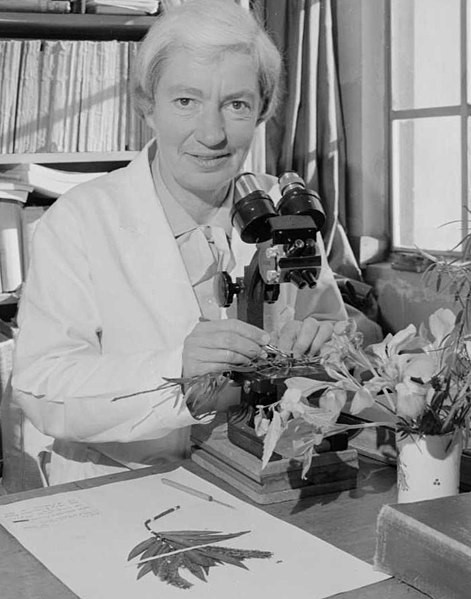
Lucy Beatrice Moore is known as the ‘the mother of New Zealand botany’ was born on 14 July 1906 in Warkworth, New Zealand. She grew up as the fifth child of eight siblings on their farm, Huamara. Her parents Janet Morison and Harry Blomfield Moore (librarian) encouraged her love for nature and plants. After attending primary school at Warkworth and the Epsom Girls’ Grammar School she won a scholarship to Auckland University College (AUC).

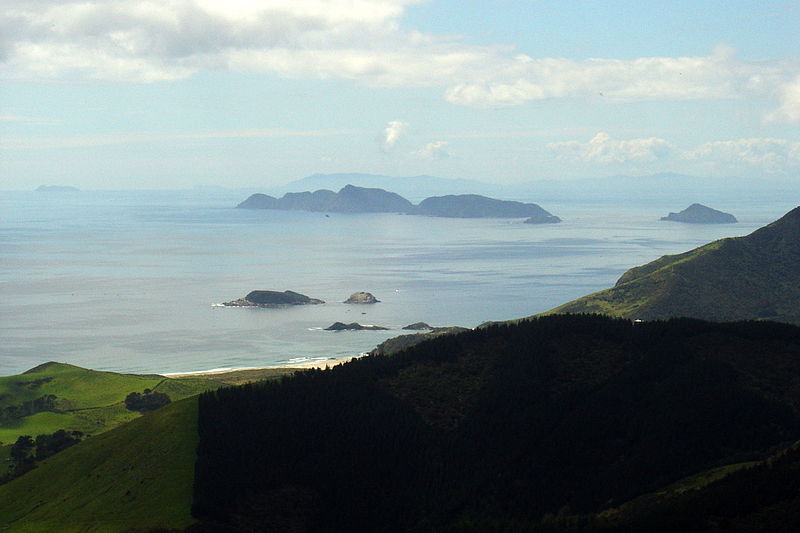
She enrolled at AUC in 1925 and obtained her MSc in 1929 for her thesis paper on the root parasite Dactylanthus. During her time at AUC, she met fellow student, Lucy May Cranwell. Moore and Cranwell began collaborating on field research in remote New Zealand. They published important research on the high-altitude vegetation of Mt. Moehau, Mt. Maungapohatu, and the Hen and Chickens Islands.

Moore applied for university positions at the University of Canterbury and Victoria University of Wellington but was denied. She then obtained a position at the Department of Scientific and Industrial Research (DSIR), in 1938, which had recently opened its doors to women. She was assigned to work on “lower plants and weeds”. Moore conducted research and published an influential paper on the life history and invasion strategies of the fern Paesia. She continued research in ecology publishing papers on invasive species (such as the invasive scabweed Raoulia and Rumex).

She moved to Molesworth station and worked on the restoration of the land from extensive sheep grazing, going on to publishing papers on introduced grass and tussock establishment. Later in life, Moore became an algologist and along with illustrator Nancy M. Adams, published a book – Plants of the New Zealand coast (1963) to educate and inform the public. Moore died on 9 June 1987 at a rest home in Orewa, New Zealand.  

References:

John Morton. ‘Moore, Lucy Beatrice’, Dictionary of New Zealand Biography, first published in 2000. Te Ara – the Encyclopedia of New Zealand, https://teara.govt.nz/en/biographies/5m55/moore-lucy-beatrice (accessed 12 February 2020)

Henry Chandler Cowles: A Brief Biography

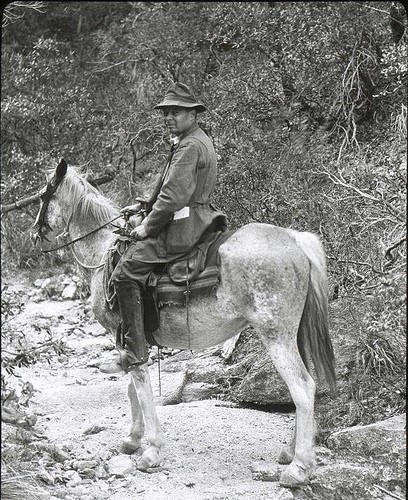
Henry Chandler Cowles was born on 27 February 1869 on a small farm in Connecticut, USA. He was the oldest son of Henry Martyn Cowles (a farmer and market gardener) and Eliza Whittlesey (a Sunday school teacher and daughter of a Cleveland judge). On 27 March 1888 Cowles graduated from New Britain High School and after saving money went on to Oberlin College in 1890 to study biology. At college, he developed a passion for analytical chemistry. His botany professor – Albert Allen Wright – urged Cowles to continue his research and study at the University of Chicago. While at the University of Chicago, Cowles taught classes on physiographic ecology, ecological anatomy, geographical botany, experimental ecology, applied ecology, and field ecology between 1897 and 1934.

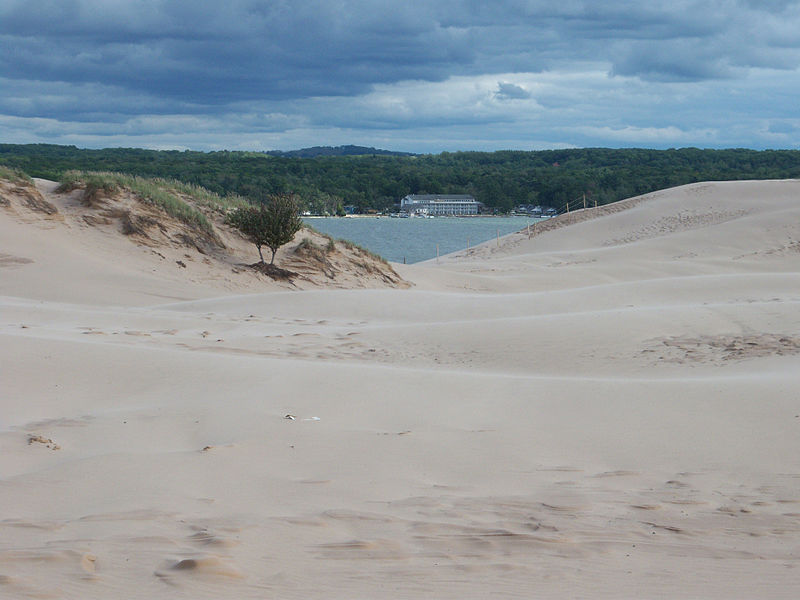
In 1898, Cowles obtained his Ph.D. for his paper on “The Ecological Relations of the Vegetation on the Sand Dunes of Lake Michigan”. His thesis paper was based on plant ecological succession at the Lake Michigan sand dunes. Researcher John Merle Coulter introduced Cowles to ecology (which was a recently emerging field). After this period, Cowles worked primarily in the field of ecology studying plant communities, causes of vegetative cycles, and relationships between vegetation and rock compositions. Later in his life, Cowles founded the Association of American Geographers. In 1915, he founded the Ecological Society of America. He continued to spend the remainder of his life in conservation of ecologically important lands. In addition, he worked with the state to purchase ecologically important lands for parks. Cowles died in 1939.

References:

Cassidy, V. M. (2007). Henry Chandler Cowles: Pioneer Ecologist. Chicago: Kedzie Sigel Press.

The Three Types of Literature

Peer-reviewed articles refer to sources that are reviewed by a panel of authorities and are thus more reliable than sources that have not been peer-reviewed. Research articles in peer-reviewed journals [primary literature] and chapters in edited textbooks [tertiary literature] are some examples of peer-reviewed sources. Peer-reviewed sources are generally more robust since they have undergone a degree of quality control before publishing. Peer-reviewed articles can be further broken down into the three types of literature: primary, secondary, and tertiary.

Peer-reviewed primary literature is a piece of original work where researchers are directly involved with the collecting processing and analysis of data to produce novel conclusions. Examples can include journal articles and conference papers.

Peer-reviewed secondary literature comments on primary literature. It places importance on the synthesis evaluation and rating of primary literature within a body of evidence. Examples can include literature reviews and systematic reviews.

Peer-reviewed tertiary literature is not used as evidence. They are good background reading and good for generating ideas but do not have any involvement with the original work (neither collect nor synthesize data). Examples can include textbooks, newspaper articles, and encyclopedias.

Interesting to note: Meta-analysis is a combination of primary and secondary literature. This is because it compiles original data from other studies (secondary) but also exhibits original analysis and conclusions (primary).

Let’s take the example of soil acidification to explain the differences between peer-reviewed primary, secondary and tertiary literature.

This peer-reviewed primary article on soil acidification in a European deciduous forest contains a materials and methods section which is a good indication that data was collected, processed, and analyzed directly by the researchers.

As an example of secondary peer-reviewed literature let’s look at a literature review on soil acidification and biochar. This paper is published in a peer-reviewed journal but contains no original research. Rather, the paper is a review that is synthesizing all the primary literature on biochar in an attempt to establish the best management strategies available at the present moment.

This textbook section on soil acidification is an example of peer-reviewed tertiary literature. The information listed in section 3.5.1. (page 456) is not original research or a synthesis of primary literature. The information presented serves as background information on soil acidification in general.

References:

Baeten, L., Bauwens, B., De Schrijver, A., De Keersmaeker, L., Van Calster, H., Vandekerkhove, K., Verheyen, K. (2009). Herb Layer Changes (1954-2000) Related to the Conversion of Coppice-With-Standards Forest and Soil Acidification. Applied Vegetation Science, 12(2), 187-197. Retrieved February 19, 2020, from http://www.jstor.org/stable/27735059

Brown, T., & Williams, B. (2015). Evidence-based education in the health professions: promoting best practice in the learning and teaching of students. London: Radcliffe Publishing, 58-59.

Schulze, E.-D., Beck, E., & Müller-Hohenstein Klaus. (2005). Soil Acidification and Forest Damage. In Plant Ecology (pp. 456–457). Berlin: Springer.

Shi, R.-Y., Li, J.-Y., Ni, N., & Xu, R.-K. (2019). Understanding the biochars role in ameliorating soil acidity. Journal of Integrative Agriculture, 18(7), 1508–1517. doi: 10.1016/s2095-3119(18)62148-3

Shades of Green and Brown

What the 2019 Report on Climate Change says about Vegetation Loss

The IPCC (Intergovernmental Panel on Climate Change) an intergovernmental panel of the United Nations published a short report last year. This Summary for Policy Makers also holds integral information on the impacts of climate change on vegetation worldwide.

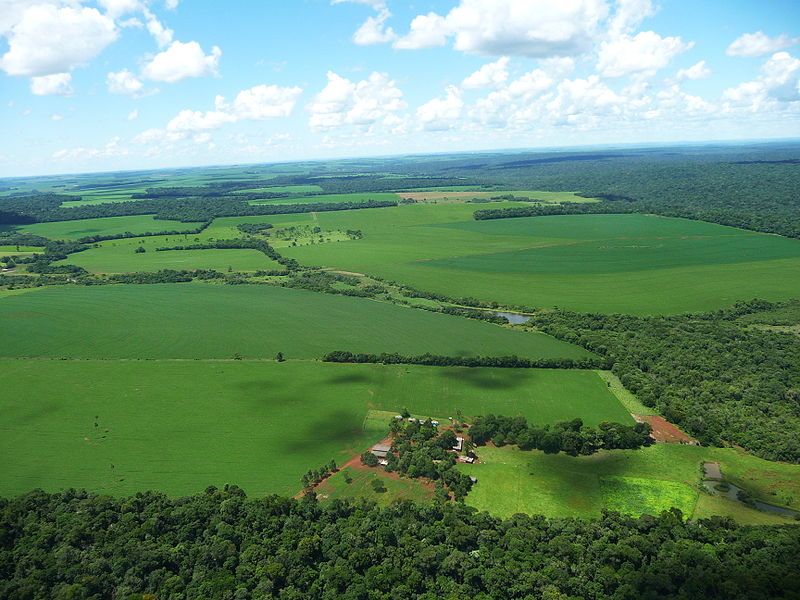
An increase in photosynthetically active plant biomass is referred to as vegetation greening which a decrease is referred to as vegetation browning. This is because when viewed from satellites certain areas appear to be becoming more green or brown over time.

Over the last 30 years, vegetation greening has been occurring in parts of Asia, Europe, South America, Central North America, and southeast Australia due to extended growing seasons, increased nitrogen deposition, increased CO2 fertilization, and intensive land management practices. On the other hand, vegetation browning has been occurring in parts of northern Eurasia, parts of North America, Central Asia and the Congo Basin due to water stress. Generally, more vegetation greening has occurred over vegetation browning.

While this might seem to be favorable, after all, “more plants are better, right?” there are hidden consequences for shifting of the greening and browning patches on Earth. The biggest implication comes from the overall albedo effect (more snow cover = more reflectance = higher albedo = cooling of Earth’s surface temperatures). Which increasing vegetation greening in the polar regions, more snow cover will be replaced by vegetation cover. This will reduce the amount of energy that hits the ground to be reflected back. Decreased reflectivity means lowering the local albedo, which in turn, contributes to the heating (warming) of the Earth.

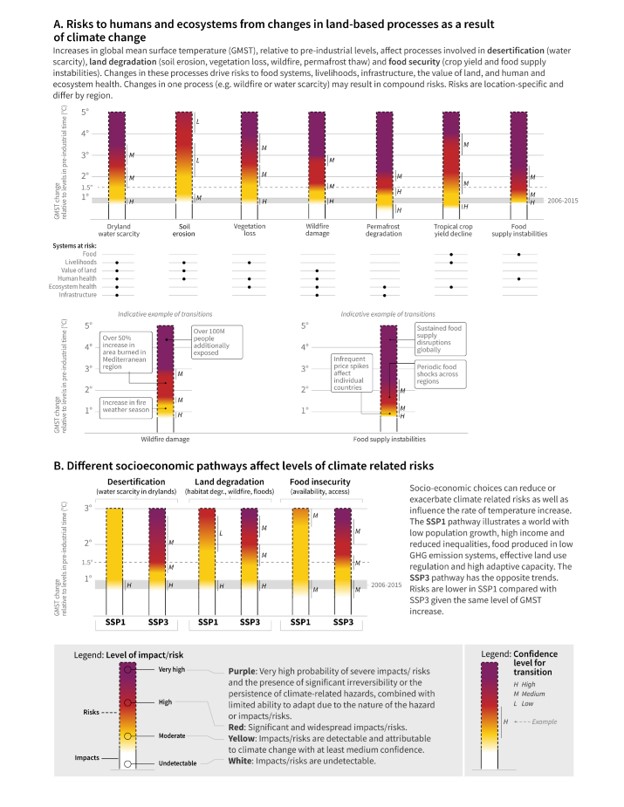
As can be seen in this figure, vegetation loss directly impacts livelihoods, human health, and ecosystem health. This figure also goes on to show the level of impact of climate change (increasing temperatures) on vegetation loss. Cascading risks, such as water scarcity, soil erosion, crop yield declines will exacerbate the loss of biodiversity and vegetation worldwide. While the risk from vegetation loss will be very high at 3°C of global warming, effects will be felt at just 1.5°C of global warming. This will occur in part due to the risks from dryland water scarcity, wildfire damage, and permafrost degradation being high at 1.5°C. An increase in disturbances (flood, drought, fire, pest outbreaks, or future poor management) will lead to loss of accumulated carbon in vegetation.

Restoring natural vegetation and planting trees on degraded land may aid in sequestering carbon in the top and subsoils. However, afforestation, reforestation, agroforestry, soil carbon management on mineral soils, or carbon storage in harvested wood products will not store this carbon indefinitely. Conservation agriculture practices must focus on maintaining carbon stocks carefully because if this is lost then it will take a long time for it to recover.

References:

Intergovernmental Panel on Climate Change. (2019). IPCC Special Report on Climate Change, Desertification, Land Degradation, Sustainable Land Management, Food Security, and Greenhouse gas fluxes in Terrestrial Ecosystems: Summary for Policymakers, 2019. Retrieved from https://www.ipcc.ch/site/assets/uploads/2019/08/4.-SPM_Approved_Microsite_FINAL.pdf

“Overview.” National Academies of Sciences, Engineering, and Medicine. (2019). Understanding Northern Latitude Vegetation Greening and Browning: Proceedings of a Workshop. Washington, DC: The National Academies Press. doi: 10.17226/25423.

Advice to Science Students: Learn How to Fail!

“Ever tried. Ever failed. No matter. Try again. Fail again. Fail better.”

– Samuel Beckett

Every student knows the nerve-wracking experience of failure. Whether we have failed in a biodiversity class, or we think we are going to fail a report on organic chemistry, failure keeps us from moving. Science is all about action, and when we are confronted with potential failure, we tend to remain in a passive, immobile state. Professor Dawn Bazely asks us in simple terms “to let ourselves fail”. The best way to develop self-reliance and bolster your confidence is to stare at the ocean of failure and let ourselves jump off the cliff. She how failure can teach us more about ourselves than successes can. We are defined by our ability to fail, heed good advice, and try again.

I am reminded of Samuel Beckett’s quote that echoes a similar sentiment. In order to accomplish something worthwhile, we must allow room for mistakes and errors and failures. Get up and try again tomorrow. If I were to advise my fellow peers, I would definitely advise everyone to engage with the material you are learning and become passionate about it. By engaging with the material and becoming passionate we can then affect positive change in the world. We certainly need to go from passive science textbook reading to active applications of research and knowledge in the public sphere. However, once again the fear of failure can keep us from speaking up and reaching out. What if we don’t do a good job? What are our plans fail?  Here again, failure is holding us back from delivering actionable scientific knowledge.

In my first semester at York University, I failed my math course. A bright red “F” on my transcript. Were it not for my fellow science students and the Science Academic Advising office on campus I would have been too scared to fail another math class or continue in my biology degree, yet, I persisted. I took another math course, devoted more time to learning limits and derivatives, asked my professor questions after class, and ended up with an A. Later, I took a statistics course, and enjoyed it immensely. Who knew I would find math fun? Were it not for failing math in the first year, I would have thought I would never be able to do math. Therefore, I wholeheartedly agree with Professor Bazely’s advice – Failure does indeed make us stronger, not weaker. We must see failure as a normal part of life rather than an anomaly or something to be feared.

What have you been procrastinating on? What task or lab report is making you nervous to finish? Is it because you are afraid to fail? Take this as permission to fail! Go ahead and fail! And enrich your learning experience all the more for failing.

References:

Episode 174: Dr. Dawn Bazely: Investigating the Intriguing Interactions between Animals and Plants (Oct 31, 2014). People Behind the Science Podcast.

Time Stamp: 01:01:13

Duration: 01:01:13 to 01:02:01 (48 seconds)

Link to the Podcast:

http://www.peoplebehindthescience.com/dr-dawn-bazely/

Design a site like this with WordPress.com
Get started