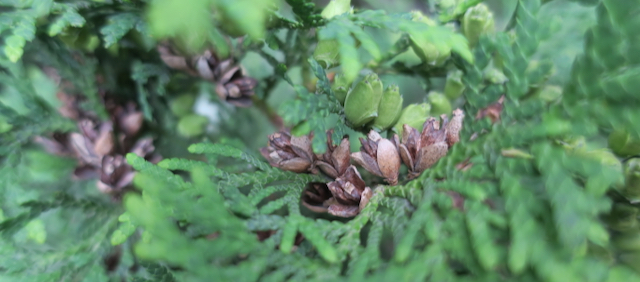
George Carver Washington

George Washington Carver (c. 1860- date of death?;Header image from Wikimedia Commons: Public Domain) was a prominent black ecologist whose contributions have transcended across generations. I chose Carver as the subject of this post because he overcame slavery to establish himself as one of the most prominent scientists of his time. Carver was born into slavery in Diamond, Missouri sometime around the year 1860.

George Washington Carver was not allowed to attend school in his hometown because he was black, so he had to attend a school 16 km away. After high school he applied to the Highland University but when he arrived and the institution realized that he was black, his acceptance was reversed due to his race. However, Carver was able to gain admission to Iowa State University, where he studied botany. He later became the first-ever black faculty member after receiving his master’s degree in science (which year?).

Carver is famous for his research in plant pathology and mycology. He introduced crop rotation practices for farmers to help them restore depleted lands. Benefits of crop rotation included increased soil nitrogen. Nitrogen levels in cotton plantation soils were often depleted and by alternating the cotton crops with legumes like peanuts, the nitrogen levels would increase. The legumes were also a source food.

Carver created agricultural extension programs that trained local farmers in Alabama and Iowa. He taught methods of crop rotation, introduced several alternative cash crops for farmers that could improve the soil in areas where cotton had been heavily cultivated. He also initiated research into crop products (chemurgy), and taught generations of black students farming techniques for self-sufficiency.

During his lifetime, Carver received a lot of honuors for his work and he was one of a few Americans accepted into the Royal Society of Arts in England. His work was also publicly praised by the American president at that time Franklin Roosevelt.

Please add in links and references!
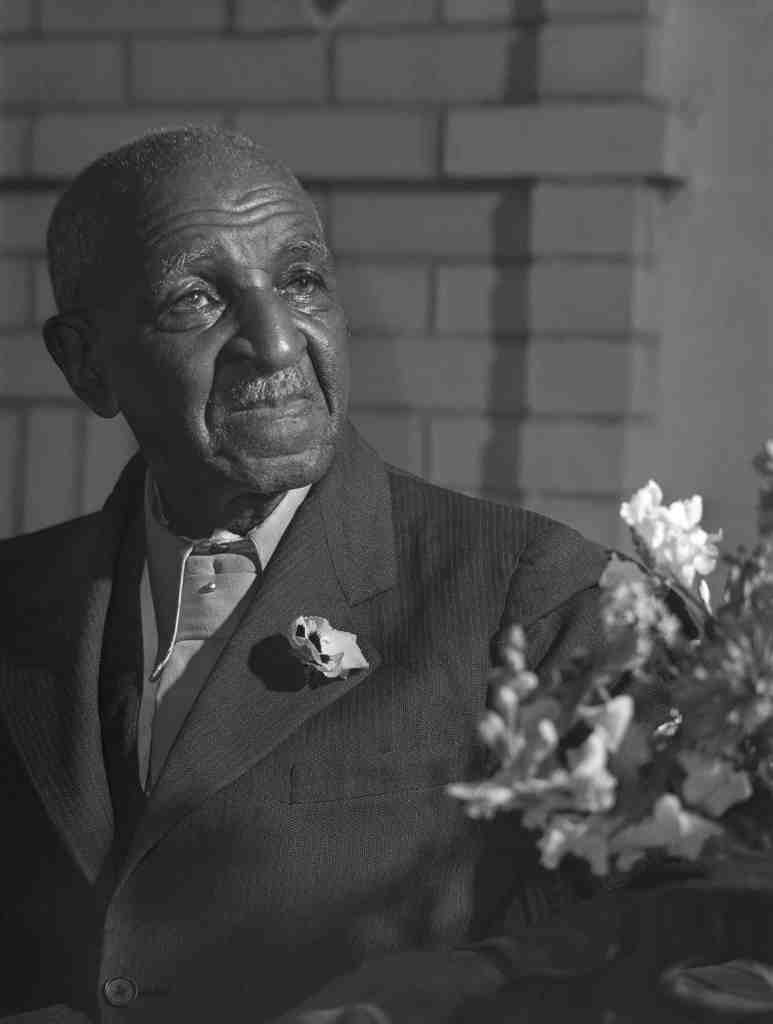
Credit: By Arthur Rothstein (for U.S. Farm Security Administration) – This image is available from the United States Library of Congress’s Prints and Photographs divisionunder the digital ID fsa.8e04903.

Primary, Secondary, and Tertiary Sources

Peer reviewed primary literature presents original research and information that was at some point reviewed by other academics. These literature sources can take the form of, but are not limited to, conference proceedings, pre-publication prints of articles, and articles in general.  The most common form of an article accessed by the general public is the journal article, which can be easily accessed online. Journal articles are an excellent method to learn about and understand the results of various scientific studies. A journal article that I find particularly interesting is entitled “Habitat persistence, habitat availability and the evolution of dispersal,” written by Justin Travis and Calvin Dytham. The article discusses dispersal and migration rates of animals and plants, and the various factors that affect these rates. 

            In addition, secondary sources are those that evaluate or discuss aspects of primary literature. Secondary sources interpret the analysis presented in primary literature, which can also present as a limitation. When secondary literature is being used or viewed, it is important to understand that a bias is usually present. The information is essentially being delivered through a variety of filters, since the author’s perspective shapes the literature. Some secondary sources include documentaries, textbooks (can be considered tertiary sources), magazine articles, academic books and biographies.  An example of a secondary source would be the website https://www.oxfordbibliographies.com/view/document/obo-9780199830060/obo-9780199830060-0083.xml. This website presents a bibliography of Rachel Carson, who was a female ecologist. This is a secondary source, as an author gathered information from a primary source to present the information. 

Image result for primary secondary and tertiary sources


Furthermore, tertiary sources collect information from both primary and secondary literature sources. Common tertiary sources include dictionaries, some textbooks (can also be considered a secondary source), manuals, directories, guidebooks and encyclopedias. Textbooks are considered tertiary sources when the main goal of the text is to summarize or list information from different sources. However, authors are typically not credited if a source of literature is tertiary. An example of a tertiary source of information would be the Wikipedia page https://en.wikipedia.org/wiki/Plant_ecology. The information found on this website is gathered from a variety of primary, secondary and tertiary literature sources. Also, there is not one specific credited author, as various authors contributed to the content found on this website. 

            Therefore, it is important to be able to recognize whether a source of literature is primary, secondary or tertiary. Primary literature presents original information, typically in the form of an article. Also, secondary literature bases information on primary literature; however, there is often bias present in these sources. Finally, tertiary literature gathers information from both secondary and primary sources. This information is usually a good starting point for research, but is usually not trusted enough to cite in a research paper. Overall, finding reliable sources of information is important not only in academia, but also for life outside of academia. This is an important skill that everyone should acquire at some point. 

Works Cited:

Primary, Secondary and Tertiary Sources. (2020, February 10). Retrieved from https://library.carleton.ca/help/primary-secondary-and-tertiary-sources

Dr. Danielle Lee

Dr. Danielle Lee is an important American woman figure in the field of science. She is now an assistant professor at Southern Illinois University Edwardsville, where her research interests include animal behaviour based on evolution and ecology. She does however specialize in the fields of mammalogy, behavioural ecology and urban ecology. 

            She is originally from Memphis, Tennessee, where she received her bachelor’s degree in Animal Science. For this degree, she attended the Tennessee Technological University, and graduated in 1996. Following her bachelor’s degree, her original goal was to pursue veterinary medicine. However, she was denied entry into veterinary school on four different occasions. She then decided to explore other career options, and began learning about olfactory behaviours of meadow voles. It was then that Dr. Lee discovered her passion for academic research. She then pursued a master’s degree at the University of Memphis, and later earned her PhD at the University of Missouri-St. Louis in the field of Biology.

Image result for dr danielle lee
Dr. Danielle Lee


https://theexpertshow.com/blog/2018/4/5/more-about-dr-danielle-lee

Her current research interests, beginning in 2017, focus on the differences that exist in rodent behaviour when exposed to both rural and urban environments. She is particularly focused on the African giant pouched rat. She wishes to conclude if genetics play a role in these potential behavioural differences, for the African giant pouched rat in particular. In 2012, Lee travelled to Tanzania to learn more about her research subject for a different project. Therefore, she had already been exposed to this species prior to investigating her most recent research. 

            In addition, Dr. Lee has excellent science communication skills. She published a blog entitled Urban Science Adventures from the years of 2006-2011. She then joined the Scientific American Blog Network from 2011-2016. During this time period, she wrote The Urban Scientist Blog. In her blog posts, she discussed her experience as a member of the science community. She also focused on explaining scientific concepts in a clear and understandable manner to underrepresented individuals of society. These individuals happened to be members of, for the most part, the African American community. 

            Dr. Danielle Lee felt that women, particularly African American women, were underrepresented in the science community. She has since founded the National Science and Technology News Service, which is a media group that focuses on spreading information about scientific news and STEM fields to the African American community. This is meant to spark scientific interest throughout this community, and spread awareness of the various scientific career pathways available. However, she does admit that she had to work twice as hard as her male colleagues to get to where she is in her current career. Although this can be a common shared experience among female individuals in any male dominated field, Dr. Lee was able to overcome any obstacles she may have faced. She proved that anything is possible to those who work hard and preserver. Overall, this sends a positive message to young girls of any race. We definitely need more women like Dr. Lee in the science community. 

Works Cited:

Danielle N. Lee. (2019, December 3). Retrieved from https://en.wikipedia.org/wiki/Danielle_N._Lee

Dante’s Peak

There are many great films available to nominate for the ‘Applied Plant Ecology Film Festival.’ Although I nominated the film ‘Hurricane Heist,’ directed by Rob Cohen, I considered nominating a film entitled ‘Dante’s Peak,’ written by Leslie Bohem. ‘Dante’s Peak’ is a fictional film about a volcanologist who convinces the people of a town that they need to evacuate, due to the risk of a dangerous volcanic eruption. While doing this, his girlfriend’s young children have made their way up a mountain to rescue their grandmother. He must save these children before the volcano erupts. 

https://www.imdb.com/title/tt0118928/plotsummary

Image result for dante's peak


   https://www.imdb.com/title/tt0118928/

I considered nominating this film because of the effects volcanic eruption has on environments and ecosystems in this film, and in general.   This film relates to habitat fragmentation and loss. Also, despite the fact that the film does not focus on this directly, it can be inferred that this town also faces a loss of biodiversity as a result of its habitat fragmentation and loss. 

            Within a scene of ‘Dante’s Peak,’ as a direct result of the volcanic eruption, conditions within a lake that the main characters attempt to cross become acidic. Various gases form the magma dissolved in the lake, which formed a combination of hydrogen fluoride, carbon dioxide, hydrogen sulfide, sulfur dioxide and hydrogen chloride. All life within the lake is compromised, as hundreds of fish can be seen floating on the surface of the water. The conditions of the water were such that could no longer support life. Therefore, all biodiversity was eliminated within this lake. 

            Also, within numerous scenes of the film, lava is seen flowing down various areas of the town. Through this, habitat fragmentation and loss are seen. The natural habitats within the film are decreased significantly, if not completely eliminated, causing some of the landscape to divide into more isolated pieces. This presents a problem for future species, as oftentimes fragments of a former habitat have difficulty supporting various species. This can threaten the survival of these species in the long term. Also, if a habitat in its entirety is eliminated, all of the biodiversity that accompanies that habitat is lost. 

            As the volcanic lava flows into various regions within the town, all life that comes in contact with the lava is eliminated. It is important to consider that all organisms within an ecosystem have a purpose that contribute to the overall natural balance of that ecosystem. When a species is eliminated, we upset the natural balance of the ecosystem. The role of that species or organism is no longer being fulfilled. This presents a problem for the future of that ecosystem. 

            To conclude, volcanic eruptions have significant consequences on habitats and biodiversity in general. Habitats can be fragmented or entirely eliminated as a direct result of a volcanic eruption. With this comes a loss of biodiversity. Various organisms and species in general can be eliminated from an ecosystem. Therefore, this presents a problem for the future of that ecosystem.

Works Cited

Hurd, G., Singer, J. (Producers), & Donaldson, R. (Director). (1997). Dante’s Peak. United States: Universal Studios. 

Charles Darwin

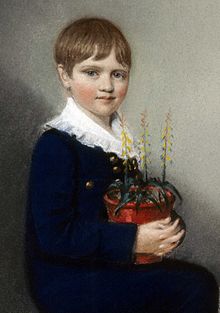
Charles Darwin was born on February 12, 1809 in the Darwin family home. He was of English descent, and had five siblings. His father, Robert Darwin, was a respected financier and doctor, and was married to Charles’s mother, Susannah Darwin. Both of his grandfathers, Josiah Wedgwood and Erasmus Darwin, were abolitionists. Overall, he came from a wealthy and well-respected family. He was baptised in 1809 into the Anglican faith, at Saint Chad’s Church. However, he often attended a Unitarian chapel with his mother and five other siblings until his mother passed away in July of 1817. After Susannah Darwin’s passing, Charles Darwin attended an Anglican school in Shrewsbury with his brother, Erasmus Darwin. 

https://www.biographyonline.net/scientists/charles-darwin.html

Image result for charles darwin
Young Charles Darwin

Charles Darwin worked with his father during the summer of 1825, and acted as an apprentice doctor. In October of that same year, he attended the University of Edinburgh Medical School. However, he neglected his studies and eventually lost interest in medicine. He then started to learn taxidermy from John Edmonstone, and joined a natural history group in his second year of university. He quickly lost interest in this field as well, which irritated his father. Robert Darwin then sent him to Cambridge college to earn a Bachelor of Arts. With his Bachelor of Arts, he was expected to become a parson in the Anglican faith.   

https://www.britannica.com/biography/Charles-Darwin

            Darwin stayed at Cambridge University until the year of 1831, but preferred outdoor activities to studying. However, he read a book entitled Preliminary Discourse on the Study of Natural Philosophy by John Herschel. This book mainly focused on understanding natural philosophy, which really interested Darwin. He then decided to travel to Tenerife to familiarize himself with the natural history of the tropics. To prepare for this trip, he enrolled into a geology course taught by Adam Sedgwick, who saw Darwin’s potential. Sedgwick wrote a letter that recommended Darwin as a naturalist for the HMS Beagle expedition. This expedition was to span the duration of two years, and was heading to South America. Darwin immediately expressed interest in this new role, and his father reluctantly funded the expedition. 

            Despite suffering from seasickness, Darwin made very interesting observations on board the BHS Beagle. A significant discovery took place on the Galapagos Islands.  He noted that among different islands, the finch species had slight differences. This ultimately led him to develop his different evolutionary theories, specifically that of natural selection. He defined natural selection as “the principle by which each slight variation of a trait, if useful, is preserved.” He ultimately noted that natural selection was a driving force behind evolution. Although Darwin was not original with the theory of natural selection, his time on board the BMS Beagle shaped him into the naturalist he is known to be today.  Many of his contributions to academia stemmed from his time on board the BMS Beagle, and science as we know it was forever changed by his work and contributions to ecology, geology, naturalism and botany. Darwin’s legacy will forever live on through these contributions. 

Works Cited

Desmond, A. J. (2020, February 8). Charles Darwin. Retrieved from https://www.britannica.com/biography/Charles-Darwin

Pettinger, T. (2012, September 4). Charles Darwin Biography |. Retrieved from https://www.biographyonline.net/scientists/charles-darwin.html

Habitat Persistence, Habitat Availability and the Evolution of Dispersal

The peer-reviewed journal article entitled “Habitat persistence, habitat availability and the evolution of dispersal,” written by Justin Travis and Calvin Dytham, was published in the year of my birth (1999). The paper discusses how dispersal and migration rates of animal and plant species are influenced by habitat persistence, landscape patterns and habitat availability. Within these factors, static patterns, dynamic patterns and ecological corridors are considered. 

http://www.jstor.org/stable/51420

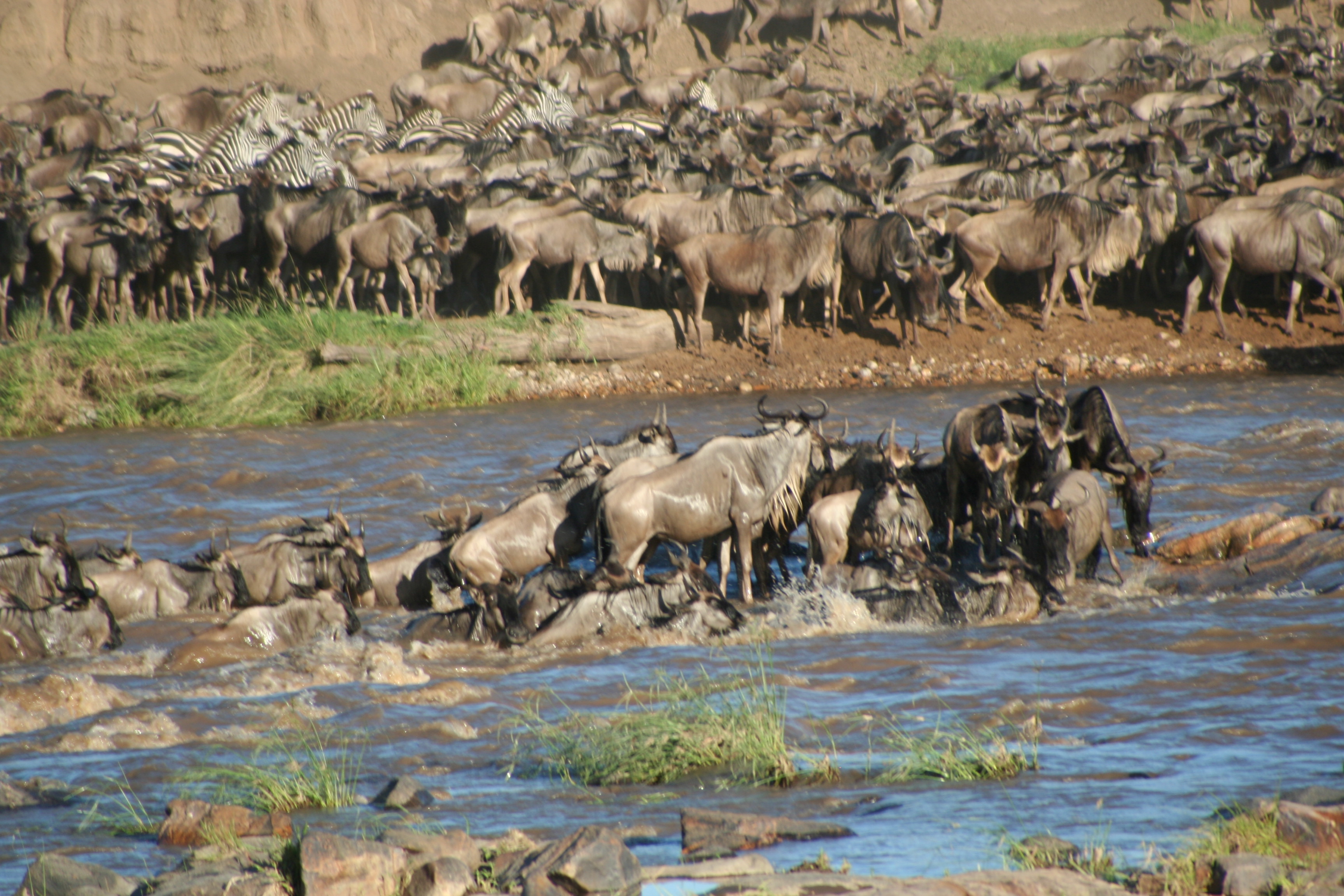
Image result for plants and aniamls migration
Animal Migration

For static patterns, the study is concerned with site availability. A site can either be available or unavailable for dispersal or migration. Those who stay at their original site and do not disperse have a mortality risk of 10% in general.  For dynamic patterns, the study recognizes that habitats are constantly changing. A particular habitat will not remain in a permanent state for different generations of migrators. This aspect of the study is concerned with how much of a particular habitat remains available as time passes for future generations. This influences dispersal and migrations patterns, as the number of inhabitable patches within a habitat can potentially diminish or be compromised in some way overtime. Therefore, less individuals would be able to disperse or migrate to these patches overtime. Finally, for the ecological corridor aspect of this study, the goal is to determine if increasing dispersal rates are correlated with attempts to connect isolated fragments of different habitats. The corridor size varied through different study habitats. 

Image result for plants migration
Plant Seed Dispersal

 Furthermore, for static patterns, it was concluded that as a reduction in habitat availability occurred, less dispersal took place. Also, the likelihood that an individual would disperse form a particular habitat depended on the location of that site relative to other sufficient habitats. If other suitable patches were found nearby, it was deemed more likely for an individual to disperse or migrate to these areas, simply based on accessibility. In addition, the results for the dynamic pattern aspect of the study concluded that as habitat availability decreased, individuals who preferred not to disperse had a greater chance of success.  These species incurred a greater chance of survival overall, and faced a smaller risk or extinction. However, if a habitat was known to persist for an extended period of time, those who dispersed to this location faced a better chance of long-term survival in general. Finally, the results of the ecological corridor aspect of the study yielded surprising results. It was concluded that the corridor reduced the rate of dispersal and migration among the connected fragments of habitats. Therefore, dispersal and migration were not favoured in these environments. The environments with the longest corridors saw the least amount of dispersal, which was contrary to the original hypothesis of the study. 

I settled on this particular paper because I am interested in the factors that affect species migration and dispersal. Both migration and dispersal are important in shaping ecosystems, as each individual plays a role in maintaining the natural balance of an ecosystem. When a new species is introduced, or an unfit species is eliminated from a habitat, succession is taking place for the benefit of that particular habitat. 

Works Cited

Justin M. J. Travis, & Dytham, C. (1999). Habitat Persistence, Habitat Availability and the Evolution of Dispersal. Proceedings: Biological Sciences, 266(1420), 723-728. Retrieved February 14, 2020, from http://www.jstor.org/stable/51420

Rachel Carson and the Silent Spring

Thumbnail for version as of 04:40, 8 December 2016
Rachel Carson Image taken from Wikimedia Commons

The book Silent Spring written by Rachel Carson was a book of great importance in addressing the use of pesticides such as Dichlorodiphenyltrichloroethane (DDT) and its potential harmful effects on the balance of the ecosystem. It is unfortunate that Rachel Carson has received little acknowledgement for this warning even to this day.

At the time dichlorodiphenyltrichloroethane (DDT) was considered to be a positive type of pesticide for human use, as it functions to kill any type of insects in an indiscriminate matter, this meant killing beneficial insects and insects that were considered as pests. Rachel Carson would point out that the use of these pesticides would not just affect insects when applied to agriculture but would also affect fish and birds in a negative matter, hence Rachel Carson’s book title Silent Spring representing the lack of bird calls.

Despite the warning that Rachel Carson gave to the world about the use of DDT in agriculture, it is unfortunate to mention that some people were angered at the publishing of Silent Spring and its warning of the use of DDT, which to no surprise those that were the most angered by Silent Spring were companies that manufactured DDT for agricultural use

Today it is important to recognize the importance of the role of insects in the balance of the ecosystem and the delicate nature of the food web itself and how that balance can be easily disturbed

To learn more about Rachel Carson and her book, Silent Spring, follow the link https://www.rachelcarson.org/

Tansley 1917

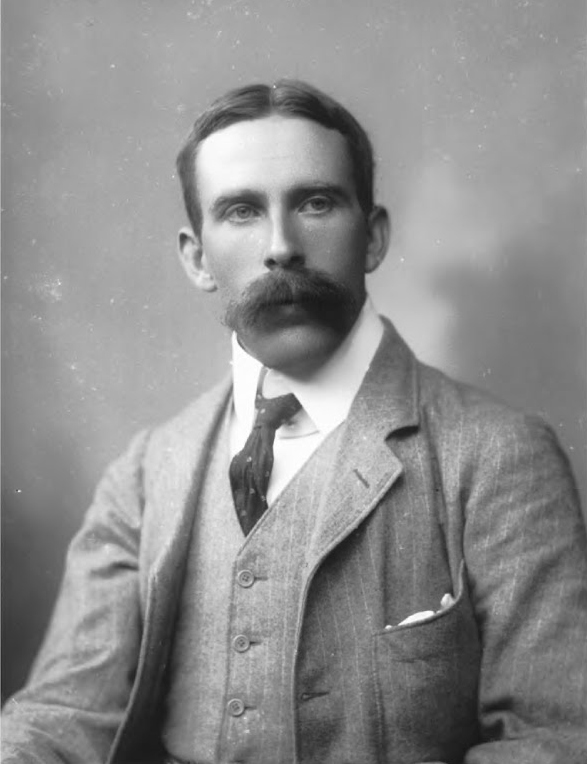
Arthur George Tansley was an English botanist that wrote the article, On competition between Galium saxatile L. (G. hercynicum Weig.) and Galium Sylvestre Poll. (G. asperum Schreb.) on different types of soil in 1917. The study he wrote about was done to analyze the competition between plant species within soils that they naturally inhabit and soils that they don’t. The paper analyzes four types of soils, which were classified based on their texture and the calcium content.

The article was written as a secondary source as Tansley was the writer of the paper, but not the one whom conducted the experiments. The one’s who conducted the experiment was E. M Hume and Captain A. S Marsh. Therefore, as he was not the person who participated in the events of the study, the paper is classified as a secondary source of information.

As this paper was written in 1917; more than 100 years ago, one can imagine it would be different to how a paper would be written today. Comparing how articles are written today, Tansley writes in a more casual tone opposed to the formal tone found in more recent articles. Some other differences between Tansley’s article and more recent articles, are the use of stats to analyse the data and the way he formats his tables and figures. Tansley doesn’t label the figures or tables included in his study, he simply just talks about them. His paper is also missing detailed quantitative information, that is normally included in more recent papers.

Another difference found in Tansley’s article is the amount of sources he has. Today, authors of secondary sources, conduct research and gather information from a wide selection of sources; including them at the end of their papers. However, instead of including a reference or acknowledgement section at the end of the paper, Tansley only cited three people, in a footnote included at the bottom of the page.

Reference:

Tansley, A. G. (1917). On competition between Galium saxatile L. (G. hercynicum Weig.) and Galium Sylvestre Poll. (G. asperum Schreb.) on different types of soil. The Journal of Ecology, 173-179.

Sustainable Agriculture food security in Canada

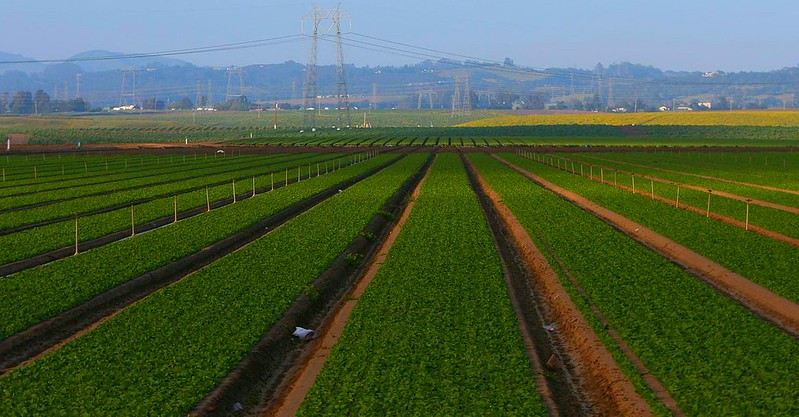
Monterey County agriculture” by Richard Masoner / Cyclelicious is licensed under CC BY-SA 2.0

For today’s blog, I will be writing on the topic of sustainable agriculture and also touch on local food security. While researching this topic, I found this very interesting website link by the TRCA that goes over food security issues how to buy local in Toronto. It also listed farms in Toronto that do their farming sustainably.

Link: https://trca.ca/conservation/urban-agriculture/

It also goes over why one should buy locally. Such as the fact that buying locally means that the food travels less of a distance and that means less burning of fossil fuel emissions. They taste better, it helps with storm water, especially in urban centres, and lastly local places are more transparent about how they farm. This is all the more reason to support local markets across the GTA, and hopefully one day local markets will be popular all over Canada. This particular issue is a big one, considering how many fossil fuels are burned as a result of exporting foods from other countries. If we switch over to local markets, we can cut our emissions dramatically and prevent further damage to plants and animals all over the world.

If you yourself wish to help make agriculture more sustainable in Canada, you can go to this link, https://www.agrifoodsustainability.ca

Primary, Secondary & Tertiary Sources

The different between primary, secondary and tertiary sources is in how far from the original the information sources are based off of. In order to do a thorough research on a particular information, knowing the distinction between these three is crucial. When doing research, you will come across a wide variety of sources and not everything is credible.

Primary sources are sources that are created as close to the original information that is being documented as possible. Meaning that the person that wrote the sources, witnessed the event firsthand. In a scientific journal, any journal that the authors or writer carried out an experiment. That would be classified as a primary resource because the data and the write up would be true, first account of what they witnessed. An example of a primary resource article is the ‘Impact of the invasive rust Puccinia psidii (myrtle rust) on native Myrtaceae in natural ecosystems in Australia by Carnegie et al (2015).

Next, we will discuss secondary sources. These are sources that are based off of primary resources or research. Example of secondary article are research papers or term papers that many of our professors require for us to write, like in this class BIOL 4095. They can also be books; they are distinct because the author interprets data or research that has already been carried out. An example of an article that is considered a secondary source is ‘Nonhost resistance and nonspecific plant defenses’ written by Michèle C. Health. Where the author interpret research that already exists and is incremental on the discovery of a general bacterial elicitor of plant defenses and others of that such.

The third is a tertiary source, which are sources that are summaries of the research done by a secondary source. Examples of these would be textbooks that we have in most classes and an example of one would be Raven Biology of Plants textbook that is a Plants Biology textbook.

These sources are important to know about because different kinds of research that are required of you can require using a certain type of sources or a mixture of all the types of sources. In the sciences, for the most part, we are encouraged to utilize primary sources for research papers or any form of reference, specifically peer-reviewed ones.

References:

https://subjectguides.esc.edu/researchskillstutorial/primary

https://reader.elsevier.com/reader/sd/pii/S136952660000087X?token=CC0337919964C96FB072C6C5A43E428FE5B1DFA356B9BF73362BD26267287DB56E75D295F0FAB2EBBD54C8C3079AC855

Raven Biology of Plants (8th ed.) – Evert & Eichhorn. 2012

Carnegie, A. J., Kathuria, A., Pegg, G. S., Entwistle, P., Nagel, M., & Giblin, F. R. (2015). Impact of the invasive rust Puccinia psidii (myrtle rust) on native Myrtaceae in natural ecosystems in Australia. Biological Invasions, 18(1), 127–144. doi: 10.1007/s10530-015-0996-y

Design a site like this with WordPress.com
Get started