Tansley, 1917 – The missing portion of the scientific report

A question was posed of which of the species of Gallum grew better. This was formulated in refined title that became came known today as “Competition between Galium saxtile and Galium Sylvestre Poll “. This entailed in observing the shoot and root growth of the species in multiple soils. The soils that would studied are calcareous, non – calcareous, acid peat and sandy loam.

Sir Arthur George Tansley would use the data acquired from the original experimental procedure, to compare the lengths to understand how and what competition existed between these plants. From this data it was concluded that G. Sylvestre grew well in calcareous soil, and considerably well in non-calcareous soil. In the non-calcareous soil the G. saxtile grew slowly but surpassed the G. Sylvestre in the end, also in calcareous soil the G. saxtile grew a bit, but was restricted due to chlorinosis. In the sandy loamy soil no growth was observed in either species.

In this secondary report there are some statistical measures available such ass the mean and the range but not to the extent in today scientific reports such as, the t-test, variance, standard deviation. This was not included in the report at the time as the statistics although present had not made its way into scientific literature. It would later be introduced at later date. After statistics had assimilated itself into scientific research its value would be recognised allowing to make sense of large “chunks” of data, which would be appreciated for years to come.

Tansley, A. G. “On Competition Between Galium Saxatile L. (G. Hercynicum Weig.) and Galium Sylvestre Poll. (G. Asperum Schreb.) On Different Types of Soil.” Journal of Ecology, vol. 5, no. 3/4, 1917, pp. 173–179. JSTOR, http://www.jstor.org/stable/2255655. Accessed 27 Feb. 2020.CopyAPA
Tansley’s 1917 what’s missing?

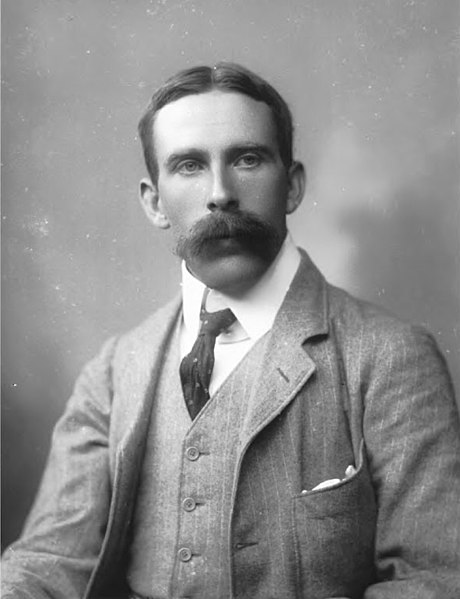
File:Arthur-Tansley-1893.jpg
Arthur Tansley Image taken from Wikimedia Commons

Tansley’s publication On competition between Galium saxatile and Galium sylvestre on different types of soil was published in 1917 though there is an important factor that is missing from the study, which is a statistical analysis.

A statistical analysis is a very important addition to research conducted today especially in scientific research though statistical analysis’ importance is not just restricted to science. Tansley’s 1917 research paper lacks the presence of a statistical analysis despite presenting data with averages. Even with the averages of the data present there is no way to conclude whether the data obtain can be considered as significant or not.

Statistical analysis was first developed during the 19th century indicating that Tansley was in an era that statistical analysis was available for use. Today there are various different types of statistical analysis that can be used including T-tests, Annova, Chi square, and so forth. With the presence of computers there are various software that can easily perform such statistical analysis for us such as SAS which is free to use albeit quite frustrating to use as those who have gone through bio-statistics can attest to . For York University students we have SPSS 26 which much more user friendly and is free for all York University students at the following website https://myapps.yorku.ca/

Those having trouble with statistical analyses on SPSS 26 can also find great videos online and goes through step by step on inputting your data for specific types of statistical analysis

To learn more about the importance of statistical analysis in science, follow the link to another blog post explaining the importance of statistical analysis https://statisticsbyjim.com/basics/importance-statistics/

Becoming a Wikipedian

Creating a Wikipedia account and becoming a Wikipedian is a simple process, the first step involves filling out your username and making a password. The process does not end there however, an user page needs to be created through the edit option. Despite appearing as an easy task the user interface for making edits on your own user page can be quite overwhelming. Fortunately using the visual editing option makes things much clearer in making edits and making it easier to add hyperlinks and citations.

With the completion of your user page, you are ready to enter the vast encyclopedia of Wikipedia, working to ensure that more information is added to various different pages, this addition of information includes adding the information itself and providing a citation to support the new information that is added.

Changes you as a Wikipedian can be monitored on your account, making it very easy to manage the different pages that you have contributed to

File:Dendrocnide moroides by Danny S.jpg
Dendrocnide moroides Image taken from Wikimedia Common by Danny S.

For the Wikipedia pages that I plan on adding to, I plan on adding to the Wikipedia page of Dendrocnide moroides, also known as the gympie gympie plant, as my username is D.moroides. Notably an interesting fact of the gympie gympie plant is that it has a very painful sting that can last for months or even years in the form of a continuous stinging sensation, additionally the gympie gympie plant can also bear a fruit that is edible though the stinging needles must be removed first before it is safe to consume.

Another page I have edited was the Wikipedia page on the American Chestnut tree by adding additional information about the American Chestnut tree being classified as functionally extinct and the over abundance of the American Chestnut being used to feed livestock

Registering with Wikipedia Edu was a fairly informative experience, despite the training modules provided giving a review of what is expected when editing Wikipedia. Going through the dashboard of Wikipedia Edu was helpful in managing the edits that was being made, but the same information can be brought up through the contributions tab in Wikipedia. However Wikipedia Edu was helpful in looking at the edits made by peers and having peers looking over the edits I made to my article, it allowed for a peer learning process whereby peers can provide quick feedback on the articles you’ve edited. Lastly the training modules only provided a review of what was already learned prior, though it did serve as an excellent review of Wikipedia editing and etiquette.

A visit to the sound and moving library: deciding on a film nomination for biol4095

Visiting the sound and moving library had piqued my interest in past years at York, but after the informative class tour with Dr. Bazely it definitely became a great place to not only study but a great place to research films for the upcoming film festival. Right at the front entrance of this library you’re presented with a large display of many film examples across all genres, ranging from pop-culture to sci-fi to action, but most importantly for this course nature documentaries; the staff are quite helpful in finding particular films for research and viewing. As tempting as it was to search and request old personal favourites such as Enter the Dragon (1973), Drunken Master (1978), House of Flying Daggers (2004), The Good the Bad & the Ugly (1966); I had to focus that enthusiasm towards more plant ecology related films, some possible films and episodes that I had the opportunity to view in short bursts included How to Grow a Planet, The Secret Life of Plants, and some portions of Planet Earth. Selecting one film as the better one may pose a challenge as these are popular series that are well known to people, but it would be a better strategy to pick out a specific episode or portion that has a better correlation to plant ecology and build-up a strong case for it by means of a summary of what’s being portrayed and communicated.

As an additional suggestion that can be added to the sound and moving library collection for the action genre would be the Ip Man series (2008, 2010, 2015, 2019) as they are great action films worth watching for both story, and choreography.

Tansley 1917 and the hidden importance of stats analysis

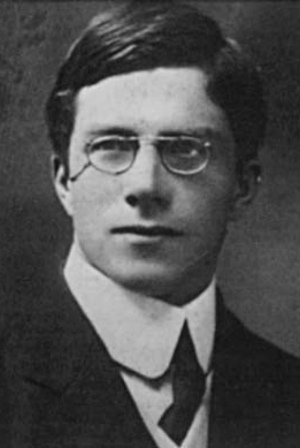
Tansley’s 1917 paper on the competition between G. Saxatile and G. Sylvestre was insightful on the methods and results involved in early day investigations of plant population distribution and the factors involved between 2 different plant species in competition. The findings of from the report states that both species can establish and maintain themselves to a certain extent depending on the soil type both in their roots or shoots, the data that was gathered in this report appeared to be simplistic and the conclusions appeared to be more empirical. Oddly enough something crucial is missing from the data gathered that is constantly present in nearly all scientific reports with numerical data variables have, and that’s statistical analysis testing. A reason that may be the case would be that the statistical tests that became popular in scientific papers has not been invented or standardized yet. The usual test of significance widely used for scientific studies is the t-test, which was developed in 1908 by a chemist named William Sealy Gosset who worked for Guinness brewing company in Dublin, Ireland; he developed the test as an economical way of monitoring the quality of the popular stout that the company is known for. The reason that the test is formally known as Student’s t-test is because Gosset submitted the findings under the pseudonym of “Student” as the company policy didn’t allow the scientists to publish their findings and results to the public due to competition fears. The work of Gosset was referenced and popularized by well-known statistician and geneticist Sir Ronald Fisher. This could explain the lack of statistical analysis in Tansley’s paper as the idea of significance testing of numerical data variables was still under development and not yet mandatory in the scientific community, which speaks to the evolution of scientific thinking from an empirical thought or discovery to a testable hypothesis that can be supported or refuted.

File:William Sealy Gosset Chemist & Statistician 1876 - 1937 Chief Brewer Student 't' test.jpg
https://upload.wikimedia.org/wikipedia/commons/2/21/RonaldFisher1912.jpg

Fungi a foundation of the Earth

Fungi today can be seen in various different lights, some people may view fungi as a food to eat, or perhaps as a nuisance growing in their front lawn. The documentary The Kingdom: How Fungi made our world on CBC, shows the important role that fungi plays in our world.

This documentary depicts the vast array that fungi can play in our world such as its use in medicine and making alcohol, but also displays the ferocity of the fungi consuming various organic material in its path

This documentary relates to applied plant ecology in that it shows the various different interactions that fungi has on various different other plant species, but this interaction is not just limited to plants alone there can be interaction with other animals to further the life cycle of the fungi, such as the Cordyceps fungi. Primarily the interaction of the fungi with various other plants occurs through the mycelium which secretes an enzyme that allows for the digestion of the organic material the fungi is targeting.

Notably not all fungi interactions with other plant species is negative, such a case would be the interaction with trees and mycorrhizal fungi which, functions to increase the amount of nutrients and water that the trees can uptake and in return the tree provides the fungi a food source it can readily use, this is an excellent example of a mutalistic plant symbiosis

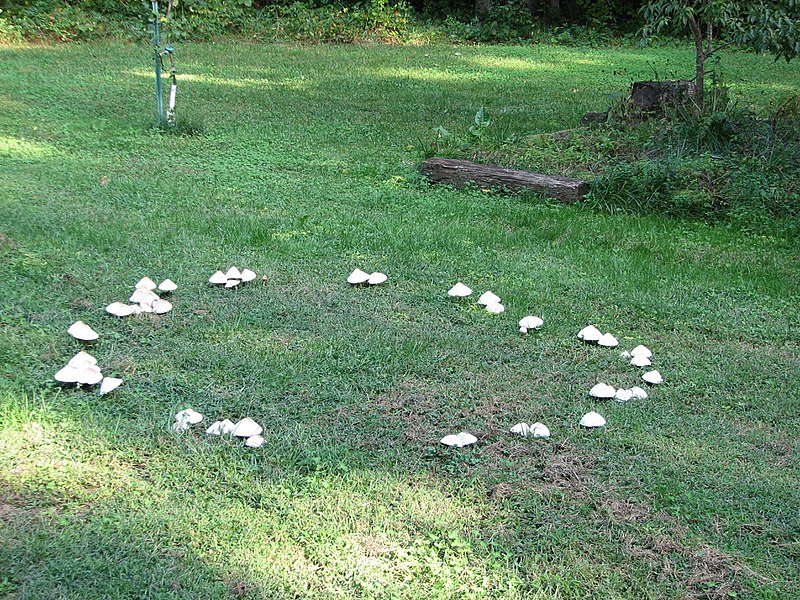
Fun fact! the fairy rings from European folklore is a single large fungi that is arranged in a ring shape and is connected all together by the mycelium underground

File:Fairy Ring 0004.JPG
Fairy Ring Image taken from Wikimedia Commons

To access this documentary follow the link https://gem.cbc.ca/media/the-nature-of-things/season-57/episode-16/38e815a-00e3ed7c794

Charles Darwin: The Voyage of the Beagle

Charles Robert Darwin was born on 12 February 1809 in the town of Shrewsbury, England, UK and he was the fifth child of six. At the age of nine, Charles went to Shrewsbury school and followed a traditional classical curriculum revolving around Greek and Latin. He enjoyed hunting and going for long walks, observing and collecting things from the natural world and very enthusiastic about science.

At the age of 16, Darwin planned to study medicine at Edinburgh University. However, he changed career paths when he realized that he couldn’t stomach the slight if blood and went on to study Divinity at Cambridge University. Darwin preferred to spend time examining natural science and beetle collecting. After graduation with a Bachelor of Arts degree, Darwin was offered a place on the HMS Beagle to act as a natural scientist on a voyage to the coast of South Africa with his botany professor John Stevens Henslow.  

On his journey, Darwin made numerous notes about specimens, including birds, plants and fossils. He noticed the Finch was different on each individual island and somehow adapted to the various aspects to the particular island. After finishing five-years of his journey, Darwin worked on the dilemma of how species evolve and can end up being different on a different island. After extensive research in 1859, Darwin published ‘On the Origin of Species by Means of Natural Selection. Darwin’s theory consisted of two main points; 1) diverse groups of animals evolve from one or few common ancestors; 2) the mechanism by which this evolution takes place is natural selection. Darwin’s theory of evolution and the process of natural selection later became known simply as “Darwinism.” His work was highly appreciated after his death and in the next century, DNA studies provided scientific evidence for Darwin’s theory of evolution.

What are Primary, Secondary and Tertiary Literatures?

Sources of information are often categorized as primary, secondary, or tertiary material and these classifications are based on the originality of the material and proximity of the sources. A professor may request specific source for the research and determining the source can be tricky. Below is a short description of the three categories of information and examples to help you decide. 

Primary Sources of literature

Primary sources are materials that represent original or firsthand information that usually has not been altered. Primary sources for a science experiment, for example, would be the data collection in the experiment or research, how the research was conducted and outlines the authors’ interpretation of the work. In other words, a source that describes an original experiment or research that the authors of the articles did themselves. Key elements to identify primary source are an introduction, methods, results, and discussion/conclusion section. Examples are peer-reviewed article, lab reports, journal articles, and empirical research.

This is an example of a primary source of literature illustrating firsthand information or research based on the data collection and analysis. The article highlights the relationship between the high temperature and lower availability, climate change is likely to have a major impact on walnut production in the future.

Vahdati, K., Ali Reza, M. B., Khosh-Khui, M., Fakour, P., & Sarikhani, S. (2019). Applying the AOGCM-AR5 models to the assessments of land suitability for walnut cultivation in response to climate change: A case study of iran. PLoS One, 14(6) doi:http://dx.doi.org.ezproxy.library.yorku.ca/10.1371/journal.pone.0218725

Secondary source of literature

Secondary sources analyze, review or summarize information in primary resources or other secondary sources. Secondary sources may summarize a single piece of research, provide a general overview of a topic and review a collection of research on a specific topic. In other words, a review article does not report a new data or information and primary sources can be located at the reference section. Examples includes literature review, review articles, Meta-analysis and systematic review.

This is an example of a secondary source summarizing information and providing a general overview on the devastating effects of climate change and tree health. This is an excellent example illustrating the difference on a primary and a secondary source.

Bahnson, F. (2016, 12). THE PRIEST IN THE TREES: Feral faith in the age of climate change. Harper’s Magazine, 333, 45-54. Retrieved from http://ezproxy.library.yorku.ca/login?url=https://search-proquest-com.ezproxy.library.yorku.ca/docview/1853265806?accountid=15182

Tertiary source of literature

Tertiary sources summarize or synthesize the research in secondary sources or other resources and derive information from either primary or secondary sources. Encyclopedias, manuals, handbooks and bibliographies are typically considered tertiary sources.

This is an example of tertiary source and providing information based on primary and secondary sources.

https://en.wikipedia.org/wiki/Deforestation_and_climate_change

Research in Chestnut Blight and the American Chestnut tree in 1998

During my birth year of 1998, research was still being conducted in applied plant ecology, one of those researches of interest would be on the chestnut blight affecting the once dominant American Chestnut tree that was commonly found throughout North America. I settled on this particular research paper due to a personal interest in the history of the American chestnut tree and its high resistance to natural decay

File:AMERICAN CHESTNUT TREE AT REAR OF HOUSE. LOOKING WEST. - Olompali State Historic Park, Mary Burdell Garden, U.S. Highway 101, Novato, Marin County, CA HALS CA-4-20.tif
American Chestnut Tree Image taken from Wikimedia Commons

The research conducted applies to the topic of loss of biodiversity whereby the American Chestnut tree was once dominant in the Carolinian zone in Canada with insects that have relied on it, but due to the Chestnut blight it has become functionally extinct thus we have lost the biodiversity associated with insects that relied on the American Chestnut tree. The research also applies rare plant conservation and managing non-indigenous plants and invasive plants as the American Chestnut tree can be categorized as a rare plant that needs to be conserved due to its critically low numbers and inability to form offspring due to the Chestnut Blight as the chestnut blight itself was introduced by the import of trees from Asia.

The main research questions and the results were to look at how effective the two breeding methods used to form American Chestnut trees that were resistant to Chestnut Blight, which the results found that the hybridization method by cross breeding an Asian Chestnut tree and an American Chestnut tree was not very successful and the back-crossing method indicated certain genes that provided resistance to Chestnut blight which was determined to be promising in aiding the formation of a Chestnut Blight resistant American Chestnut tree.

Link to the research as follows https://www.nrs.fs.fed.us/pubs/jrnl/1998/1998_exotic-pests-papers/schlarbaum_1998-exoticpests.pdf

1, 2, 3, 4, Everybody Plant Some More

In honor of black history month, I want to write one of my blog post about an inspirational black women who has “grinned” her way to the top of her field despite the invisible chains that attempted to limit her from achieving all possibilities. The amazing black women I am choosing to celebrate is, Wangari Maathai.

This incredible woman has accomplished much in her life; she was a social, environmental and political activist who dedicated her life to better the environmental state of her country while also helping women gain income and replenish depleting resources needed for a prosperous livelihood. She was an African women who accomplished many important things, paving the way for other black women. Allowing them to gain a sense of agency to do the unthinkable, despite the obstacles that comes with having dark skin and being a women.

Wangari Maathai, was born on April 1st, 1940 in Nyeri Kenya where she attended school, which was not common for girls at the time. After completing her high school education, she won a scholarship in 1960 that afforded her the opportunity to attend college in the U.S. Maathai went to Mount St. Scholastica College in Atchison, Kansas where she obtained her Bachelor of Biology degree in 1964. After this successful achievement, she went on to gain her masters in biological science at the University of Pittsburgh.

It is important to remember that she was completing her education during the time of the Civil Rights Movement, where racial discrimination was at an all-time high. It was a time where African Americans, fought for equality in “White America.” Maathai pursuing her education challenged the systematic notion that blacks were incapable of learning and thought to be scientifically inferior to their white counterparts in terms of their ability to learn and be educated.

However, despite this, she didn’t stop there, as she choose to continue her studies by pursuing her doctorate at the University of Nairobi; successfully gaining her Ph. D. in 1971 making her the first women scholar to gain a doctorate from east and central Africa.

She was active on the National Council of Women of Kenya where she introduced the idea of community tree-based planting in order to fight poverty and encouraging environmental conservation in Kenya. Due to her initiative there was a planting of over thirty million trees. In 1977 she launched the Green Belt Movement to tackle two important issues affecting Kenya, deforestation and women’s rights. Helping women, restore their primary source of fuel for cooking, securing income and stopping soil erosion.

During some of her activism she was physically beaten by police and classified as a “mad women” by Kenyan President, Daniel arap Moi for making her voice heard, as she acted against deforestation. Attempting to stop forest clearings for the purposes of commercial plantations that would bring about a loss of biodiversity.

In 2004, she was recognized for her astonishing work and was awarded the Nobel Peace Prize for her “contribution to sustainable development, democracy and peace,” and went down in history as the first African women to win a Nobel prize. My hero.

References

Gail M. Presbey (2013) Women’s empowerment: the insights of Wangari Maathai, Journal of Global Ethics, 9:3, 277-292, DOI: 10.1080/17449626.2013.856640

The Green Belt Movement. (2020). Bibliography: Wangari Maathai. Retrieved from https://www.greenbeltmovement.org/wangari-maathai/biography

Design a site like this with WordPress.com
Get started