Rachel Carson

Rachel Louise Carson (1907-1964) was an environmental activist, marine biologist and writer. She grew up on a farm in Pennsylvania, where she was very interested in animals and reading. Carson obtained an undergraduate degree in biology from the Pennsylvania College for Women. She went on to graduate school, studying zoology and genetics at John Hopkins University in Maryland. Carson completed her dissertation on the embryonic kidney development in fish, specifically the pronephros structure. She then earned her masters degree in zoology from John Hopkins. Carson was going to continue on to obtain her PhD, but went through some financial troubles and took up a variety of marine biology related part time jobs instead. She shortly after became the second woman employed by the US Department of Fisheries full time. In the 50s, Carson shifted her focus to conservation work. She wrote many books, her most famous work being the book Silent Spring, published in 1962. This book was a call, one of many, to stop the widespread use of DDT in North America. Silent Spring stood out as it was not only persuasive, scientifically accurate information, but was also written in a way that was accessible to the general public. This book played a major part in the environmental movement of the time, calling to action concerned citizens, especially housewives wanting to do good. There were, of course, mixed reactions, with many government officials and anyone profiting off of DDT dismissing any of her claims and insulting Carson personally. But she did have the support of millions, including John F. Kennedy. DDT was banned  a few years after Silent Spring was published and is still not allowed in US circulation to this day. 

https://www.rachelcarson.org/ –https://www.nytimes.com/2012/09/23/magazine/how-silent-spring-ignited-the-environmental-movement.html
Avatar (2009)

One film I nominated for the Applied Plant Ecology film festival was James Cameron’s 2009 movie Avatar. This film relates to Applied Plant Ecology in a variety of ways. One example is the Home tree of the Na’vi people. This giant, ancient population of trees that come together to form one structure is very important to the indigenous population, a revered landmark that connects the Na’vi directly with nature. There is also the Tree of Souls, a giant fluorescent willow tree that acts as a religiously important landmark to the Na’vi. They use the tree to connect with their spirituality and also use it as a place of worship for their nature deity. Thirdly is the importance and emphasis on the bioluminescent plants. These plants give light and allow for safe passage for the characters on multiple occasions. Throughout the film, the main character Jake further connects with, respects and learns from nature with the help of the indigenous Na’vi population. This movie relates to the themes of industrialization and ecosystem destruction studied in Applied Plant Ecology. The humans want to exploit Pandora for its natural resources, specifically its rare mineral unobtanium, not caring about what effects it would have on the planet or its indigenous population. The humans on Pandora not only end up destroying multiple historical and religious sites, but also massacre a large population of the Na’vi population. These same issues have been happening in reality for thousands of years, the destruction of sacred and important ecosystems and dismissal and murder of people who try to fight against it.

Open Access? Metadata?? Creative Common License??? What the F? (@bodgyalreeree – Winter 2022)

With the introduction of the internet, the availability of reliable information within the scholarly community soared. Open access is a movement that advocates for free and open online access to academic information, without the need of payment. On an international scale, this brought forth learning opportunities for a lot more people across the world. Metadata is data that describes other data, by creating a reference that helps to sort and identify information being described. This data can be thought of as a short summary of the information it is describing. The information that it is describing can be data found within a webpage, document, or a file. The Creative Common License is a standardized method to grant public permission to use an artist’s piece of creative work. There are six different licenses that an artist can choose from that allows the general public to do specific things with those images (depending on the kind of licence it is associated with). 

All three of these advancements act as a security blanket, protecting the intellectual and artistic property of those that release their work to the public. 

One of the main articles used for these blog posts, is the article used in the previous blog post about bioluminescence in plants (very similar to those found in the movie Avatar). The article that was used is called “Plants with genetically encoded autoluminescence”, by Tatianna Mitiouchkina (& her group). This was found on the website called Nature Biotechnology, which is an open access website that complies with the funder and institutional requirements. 

In my personal opinion, these open access sources are so important to the education and movement of information. It helps to break down the barrier that poverty creates, while also giving credit to those who own that intellectual property. Now to provide true open access for all individuals, we need to work on making internet a free commodity!

Avatar & It’s Connections to Applied Plant Ecology (@bodgyalreeree – Winter 2022)

The three films that I chose for this assignment were the Lorax, Avatar and WALL-E. I chose these three movies as they expressed lessons, news, and brought overall awareness to the effects of habitat fragmentation and the extinction crisis. The Lorax and Avatar looked at the cause of habitat fragmentation and the extinction crisis, whereas WALL-E looked at the restoration of the planet Earth. 

Avatar is a movie that focuses on the topic of habitat fragmentation driven by humans. The movie opens in a futuristic setting, where the Earth has been depleted of all its resources. This movie is set up on a moon orbiting Earth called Pandora, that has been mined for 3 years by humans for a rare mineral called Unobtanium. The conflict within the movie arises when the Na’vi people’s environment is under attack by humans – which forces the environment and the animals living within it, to be forced out as well. Loss of habitat is a huge reason why organisms are going extinct, and the movie Avatar touches on these connections, bringing the idea full circle. 

Avatar was a roaring success, as it touched the hearts of audiences all over the world. It not only was able to send out a clear message regarding global warming and the affect humans have on the Earth. But it also allowed viewers to see what the result could be if we do not change our ways. 

In a more scientific light, the movie Avatar has a lot of examples of plant science within itself. For one, most of the plants in Pandora are glow in the dark. The characteristic of being glow in the dark is called bioluminescence and is not natural on Earth. However, a science journal published by Tatiana Mitiouchkina (and others working with her) states that they were able to use bacterial bioluminescence in plastids to create autoluminescent plants (Mitiouchkina, 2020). So perhaps the glow in the dark plants from the Avatar will one day exist!

What comes after the loss of biodiversity? Probably diseases!

A zoonotic disease is a disease that can be transmitted from animals to humans. Presently, SARS-CoV-1 is the zoonotic disease that has plagued the world for the past few years but these types of diseases are not new to us. In the past, some examples of zoonotic diseases include the West Nile virus, anthrax, rabies, and H1N1. There’s a good chance that there are a lot of undiscovered zoonotic diseases out there since the majority of mammals are quite similar in terms of structure and function; meaning we are more prone to undiscovered bacteria, viruses, and parasites than we’d normally expect. 

With the loss of biodiversity, it is speculated that these diseases are more likely than ever to emerge from the shadows. The prevalence of infectious diseases are due to many varying factors, of the few, as human population and land utilization begin to grow, the interactions between animals and humans increase since the dilution effect decreases from loss of natural habitat forcing animals to infringe into so called ‘human territory’. A common example seen in Canada are the encroachment of bears on private properties. Additionally, the amplification effect increases as the exponential growth of the human population in the past few decades continues to grow. This is not to be taken lightly; if the human population comes into contact with a frequency dependent disease, the rate of transmission is high due to high human to human interaction on a daily basis – as well documents with common diseases cuz as the common cold or the flu, and more recently the Coronavirus.

(Word count: 261)

References:

Keesing, Holt, R. D., & Ostfeld, R. S. (2006). Effects of species diversity on disease risk. Ecology Letters, 9(4), 485–498. https://doi.org/10.1111/j.1461-0248.2006.00885.x

Rubio, Fredes, F., & Simonetti, J. A. (2016). Links Between Land-Sharing, Biodiversity, and Zoonotic Diseases: A Knowledge Gap. EcoHealth, 13(4), 607–608. https://doi.org/10.1007/s10393-016-1171-3

Charles Darwin- the man, the myth, the legend

  • Charles Darwin (1809-1882) is a man whose name is familiar even to those who have no background in the life sciences or any science at all. He is a man who is synonymous with biology in pop culture- the face of it all, if you will. But who really was he? Darwin was a man, who, surprisingly enough, studied theology before his career as a natural biologist. In the year 1831, when Darwin was 22, he embarked on the journey that would change his life. He was aboard the HMS Beagle, studying the ecology of the islands in South America, such as the Galapagos. Here, he made crucial observations that would change the field of biology and of science itself forever. His research focused primarily on the question- how do species turn into what they are and how do they form? His research did not stop with the end of the trip- after his return in 1836, he continued to study the fossils and specimens that were collected from South America. To answer his question about how species form, he came to the conclusion of natural selection- a theory that is widely accepted today as being the way that species formed. In 1859, his conclusions were published in a book called On the Origin of Species– one of the most famous works ever published even when compared to fiction books. Darwin passed away in 1882 at the age of 73, and although he is long gone, his legacy in the scientific and biological world will never be forgotten. He is truly one the greatest scientific minds the world has ever seen. 

References:

The editors of National Geographic (n.d.). Charles Darwin. In: National Geographic Online. Retrieved from: https://www.nationalgeographic.org/encyclopedia/charles-darwin/

Can You Differentiate Between Primary, Secondary, and Tertiary Literature?

In the world of literature, especially in science, it is important to check and check again for nuances in an article or journal before publishing. Welcome to the world of peer reviewing! Peer review is an important process where an author’s paper is subject to the peer editing scrutiny of others in the same field in order to ensure quality of the work that is to be published. In light of this, there are three types of literature when categorizing by resource type. 

  1. Primary literature is when raw information (information acquired first handedly) is used in the analysis, results and discussion of the literature. This type of literature is often documented as the events happen and assessed without much interpretation or commentary as the dialogue typically remains within the scope of the study. A good example is this paper by Gregory Asner, Jonathan Scurlock and Jeffrey Hicke titled Blackwell Publishing Ltd. Global synthesis of leaf area index observations: implications for ecological and remote sensing studies where the researchers conducted experiments  and data analysis of raw information on the leaf area index (LAI) on their own accord.
  2. Secondary literature is when the conclusions are interpreted from the analysis of one or more different sources of primary literature. Primary and secondary articles are good for using as references when writing up a scientific review on a topic of interest. An example of this is and article titled Exploring patterns of forest governance quality: Insights from forest frontier communities in Zambia’s Miombo ecoregion by Hellen Nansikombia, Richard Fischerb, Gillian Kabwec, and Sven Günter where they pull data from another study to do data analysis and interpretations of the data for further discussion.
  3. Tertiary literature is when information is condensed and summarized, typically with reference to multiple sources of primary or secondary literature. These resources are good for looking at general information or facts on a subject topic, but usually aren’t used for reference material when writing up a paper as these sources often aren’t accredited to a single author. For example, an encyclopedia (e.g. Wikipedia) is a tertiary source. This Wikipedia page on the Canadian Shield (https://en.wikipedia.org/wiki/Canadian_Shield) is comprehensive on general information and facts about the topic. Additionally, notice the multitude of primary and secondary references at the bottom of the page.  

(Word count: 385)

***information acquired with support from https://library.madonna.edu/research/primary-secondary-and-tertiary-sources#:~:text=What%20are%20primary%2C%20secondary%2C%20and,organize%2C%20or%20compile%20other%20sources.

References: 

Asner, Scurlock, J. M. O., & A. Hicke, J. (2003). Global synthesis of leaf area index observations: implications for ecological and remote sensing studies. Global Ecology and Biogeography, 12(3), 191–205. https://doi.org/10.1046/j.1466-822X.2003.00026.x

Nansikombi, Fischer, R., Kabwe, G., & Günter, S. (2020). Exploring patterns of forest governance quality: Insights from forest frontier communities in Zambia’s Miombo ecoregion. Land Use Policy, 99, 104866–. https://doi.org/10.1016/j.landusepol.2020.104866

Open Access, Metadata and Creative Commons Licenses: Explained!

Three Types of Resources and an open-access Applied Plant Ecology peer-reviewed example!

Open access usually  refers to resources, like scientific articles, that are free to use by the public with significantly less restrictions due to open licenses. 

Meta is a prefix that comes from Greek, meaning “along with”. So metadata is data that comes along with a file –usually this data is attribute data such as location, title, publisher, year, and producer. 

Creative Commons (CC) is a non-profit organization (creativecommons.org) that allows creators to make their work available to the public while still protecting the creator’s rights and content through CC licenses and other tools. 

The open access, peer-reviewed article Plant physiology meets phytopathology: plant primary metabolism and plant–pathogen interactions by Susanne Berger and others looks into the effects of phytopathogens on defence mechanisms of different types of plant and plant tissues. Phytopathogens are plant pathogens such as fungi, bacteria, and viruses. When studying the effects of phytopathogens on the effects of photosynthesis, it was found that some plants “switch off photosynthesis and other assimilatory metabolism to initiate respiratory and other defence mechanisms”. During phytopathogenic interactions, it was also found that sink areas, such as roots, increase invertase activity in the cell walls. Invertase is an enzyme that is important for sink defensive strength as it affects the apoplastic phloem unloading area of the plant. Another defence mechanism observed is  the change in hexose-to-sucrose ratio in the plant tissues, but it was concluded that further research using spatial resolution is required for a full understanding of how sugars are distributed in the plant during pathogenic attacks. Next the relevance of carbohydrate metabolism was discussed in terms of pathogenic resistance. It is summarized in the article that (i) sugars act as nutrients and signals for both the plant partner and for the microbial partner, meaning changes in these levels may change the degree of pathogenic spread; and (ii) “certain pathogens also possess extracellular sucrolytic enzymes, such as invertases”, meaning the pathogens may able able to alter sugar levels on their own. In the end though, more reproducible research needs to be done on a larger scale of plant tissues and plant types for these findings to support further practical applications in the real world. 

(Word Count: 362)

Reference: 

Berger, Sinha, A. K., & Roitsch, T. (2007). Plant physiology meets phytopathology: plant primary metabolism and plant–pathogen interactions. Journal of Experimental Botany, 58(15-16), 4019–4026. https://doi.org/10.1093/jxb/erm298

Film nomination 1st runner up – Pom poko (1994) 

Why I nominated the film and how it illustrate issues in Applied Plant Ecology

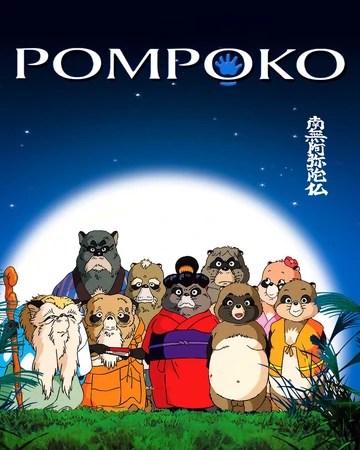
My second choice film nomination is Pom Poko (1994, Studio Ghibli). In short, it’s a film about the loss of land and habitat fragmentation due to urbanization and modern development. The film follows a family of raccoons as they attempt to navigate through the ever changing human world while trying to maintain their land and integrity from being lost to the humans. I nominated this film because it’s an enjoyable watch for all ages that does a good job of tackling the heavy topic of biodiversity extinction due to loss of land. In addition, I liked the way the anthropomorphism of the main character’s are represented both metaphorically and literally. With urbanization comes the loss of biodiversity, the increase of pollutants in the localized ecosystem, unsustainable forestry, and habitat fragmentation and loss. In Pom Poko, the deforestation outlined in film realistically reflects the negative situation humans have put on the natural habitat. Since this film was produced in the mid 90’s, it represents a state when habitat conservation was comparatively less dire to todays state which justifies the optimistic ending despite the complex problem at hand. Today, we have seen the transitive effects of the human actions that result in unstable and changing hydrological cycles which affect vegetation growth and landscapes.  Racoons are omnivores and opportunistic eaters, meaning they often scavenge for what they can. In the film, the city development and urban expansion not only paints humans as an ever growing threat, but also clearly outlines the loss of natural foraging opportunities as land is lost to bulldozers. More and more, plants and animals alike are unable to adapt to human environments and are faced with the challenge of a survival so dire, it may mean extinction in the short term.   

(Word count: 292)

Design a site like this with WordPress.com
Get started