Scientific Writing Isn’t What It Used To Be

Scientific writing is a form of literacy which is quite different to what one usually encounters in everyday life, whether academic or otherwise. And while it is quite straightforward and aims for clarity and brevity while maintaining all the necessary details, in doing so it becomes almost alien to anyone entering the field.

But it wasn’t always like that. The formality and structure of scientific writing has developed over time and when reading older and older papers and articles it becomes increasingly clear that rather than the highly edited and reviewed process that goes into their publishing now, at one point they were written much more simply and were far less formal.

Tansley’s paper from 1917 is a perfect example of this. Comparing it to today we can see that there are few subheadings, and there’s no clear abstract. The methods are mixed in with the results, and while there are some tables, there are no figures and no clear statistical tests done to interpret the data (many statistical tests that we use now of course didn’t exist back then, and those that did would have looked quite different without the use of computers). The paper itself also just has an antiquated, yet oddly friendly and familiar one of voice to it. Tansley refers to E. M. Hume throughout the paper as “Miss Hume”, and there is even mention made of the fact that A.S. Marsh could not continue his research due to leaving for the army. Seeing both of these in a scientific article feels quite jarring from a modern perspective.

However, despite these changes the primary purpose of scientific writings hasn’t changed. Today, just as in the past, these papers are just a tool to convey ideas and theories about the world around us and the experiments that we’ve done to strengthen our argument. The delivery may have changed, but the core message remains the same. So while scientific writing looked different in the past than it does now (and undoubtedly it will look different in the future than what we’re used to reading), let’s not forget that in every change and convention in our writing style we’re merely developing better ways to deliver the same type of message.

You can access Tansley (1917) through the following link: https://www.jstor.org/stable/2255655?origin=crossref&seq=1 (Paywall to download, however an online version of the article is available for free)

Raymond Lindeman

Raymond Lindeman graduated from the university of Minnesota with a research centered on ecosystem science . His thesis provided new developments and knowledge on how nutrients and energy go through ecosystems through photosynthesis and the food chain. He believed that the understanding of ecological succession in lakes over long periods of time depended on the quantitative assessment of the biological relations of the organisms found in those lakes.

He was so passionate about ecology that even when he suffered from a rare liver disease, he still got back up to continue his work with the help of his wife, Eleanor Hall Lindeman. She helped him gather information and specimen. although he died early at 27, he had a great impact on ecological science which was something he devoted himself to and even in the conditions surrounding his sickness, he was able to submit his paper to Ecology and get it published. After his death, his wife continued to carry on his research.

For more information on Raymond Lindeman; check out https://cbs.umn.edu/about/cbs-greats/lindeman

United Nations on Climate Change

Climate change is a promising issue of today’s age. Climate change is affecting food production, increase risk of flooding and rise in temperature and sea level that has a great impact on a global level. Greenhouses are a very important part for all life (animals and plants). These gases are monitored scientifically annually and have been reported to be increasing over the past century due to industrialization, deforestation and large scale agricultural. The greenhouse gases have increased over time with mean global temperature and carbon dioxide levels by increase fossil fuels emission. There are two worldly organizations that monitor and reports climate change.

The UN intergovernmental Panel on Climate Change (IPCC) which was set by world meteorological Organization (WMO) and United Nations Environment to monitor and report climate change. IPCC provided a report in 2013 (fifth assessment report) that proved climate change to be real. Fifth assessment reported that the global temperature increased by 0.85 degrees, sea levels have risen 19 cm from 1901 to 2010 to artic ice melting which was reported to be 1.07106km2 of ice per decade, by the end of this decade a sea level rise is estimated to be 24-30 cm and 40-63 cm by 2065 relative to period of 1986-2005. Antonio Guterres, secretary general, brought world leaders of government to increases and accelerate climate action and motivation. Politicians have proposed several solutions, plans and international agreements to tackle the long-standing issues that biodiversity loss and climate change present.

In the meantime, we as individuals can take small actions in our daily lives to reduce our environmental impacts on the planet. Unplugging your unused appliances, changing to LED lightbulbs, carpooling, and participating in growing trees and educate people in the community to become an active citizen to fight climate change.

File:Climate change performance index of various countries.png
Climate change performance index of various countries. Image retrieved from Wikimedia Commons.

Following article was used from International United Nations on Climate Change.https://www.un.org/en/sections/issues-depth/climate-change/

UN Report: Nature’s Decline

In the current year the extinction rate has been rising rapidly, with some species unable to recover as population continue to decline. This can be mostly associated with humans, as we continue to develop and our civilization progresses, we tend to inflict damage on the ecosystems whether we realize it or not.

As the human population increases, the need for more food arises, to acquire food either by animals or plants. Land has to be cleared to prepare that site for its future agricultural facilities. In doing this we are destroying the plants that are native to those areas, these plants may be unable to regrow. This is directly affecting biodiversity of said areas. Commercial growing of crops causes soil degradation, after self crop cycles the land cannot support that level of growing naturally, this lead to complete reliance on artificial fertilizers.

The artificial fertilizers can potentially lead to surface run-offs , this can be detrimental to an aquatic ecosystems, and in the worse case scenario form a “dead zone”. The report then focuses on the fact that despite the future of nature looks bleak there is still time to put in place measures and actively work towards solutions before it becomes too late and there will be nothing save.

https://www.un.org/sustainabledevelopment/blog/2019/05/nature-decline-unprecedented-report/

Charles Darwin

Charles Darwin is one of the greatest biologists in history known by most people. He was born February 12, 1809 into a wealthy family of 5 children in Shrewsbury, England, UK. His family had several scientists with his father being a medical doctor and his grandfather a renowned botanist. His mother died when he was only 8 years old and he began school at the age of 9 attending high school.

At the age of 16, October 1825, he has attended University of Edinburgh with his brother. Within the next 2 years, he had attended Christ’s College in Cambridge. He has crushed his father’s dreams when he did not follow his path to becoming a medical doctor. This was due to the fact that the sight of blood would make Darwin queasy. His father gave him the alternative to study parson but Darwin was interested in pursuing natural history.

After graduation from Christ’s college with a bachelor of arts in 1831, his botany professor Henslow suggested that he takes a naturalist’s position on HMS Beagle. On December 21, 1831, Darwin voyaged on the ship for 5 years around the world commanded by Captain Robert FitzRoy. He collected natural specimens in his writings which are still shown in many biological class till this date. He was particularly interested in the Pacific Islands, South America and Galapagos Archipelago.

His return to England was in 1835 where he first published his findings into Journal of Researches and later modified to Zoology of the Voyage of the Beagle. The dominant belief at the time was of the naturalists which opposed Darwin’s findings that species act by natural selection for evolution. On November 24, 1859, Darwin published one the most known biology books till date, On the Origin of Species by Means of Natural Selection.

The 1800s emerged themes of Social Darwinism in which Darwin’s theories were used to explain the economic struggles in society. There was use of Darwin’s notes made in the wrong aspects by using his concepts such as “survival of the fittest” to explain economic driven urges, poverty and racism.

Charles Darwin passed away in London on April 19, 1882. He was one of the best evolutionists, naturalist and biologist known till date.

Sources: https://www.biography.com/scientist/charles-darwin

What Differentiates Primary, Secondary and Tertiary Literature?

In a society where it is extremely important to review the source of information before advancing it to the public. People should be aware of the type of literature and whether to read certain articles with a “grain of salt.” Information being read should be analyzed whether it is first hand knowledge or passed through several interpretations.

Primary literature are derived first hand knowledge through experiencing the event or deriving the evidence. For instance, this research presents original thinking or new discoveries. It would not simply be replicating a study or experiment through another individual’s protocols/methods.

An example related to plant ecology would be the following primary literature: https://www-sciencedirect-com.ezproxy.library.yorku.ca/science/article/pii/S0929139319310340?via%3Dihub

Secondary literature would consist of works which analyze, summarize or restate information indicated in primary articles. This would present an author’s interpretation of the original material. For instance examples would include textbooks, books or biographies.

An example of a secondary literature related to plant ecology would be the following book: http://www.esalq.usp.br/lepse/imgs/conteudo_thumb/Plant-Ecology-by-Ernst-Detlef-Schulze–2005-.pdf

Tertiary literature are sources which organize, reinstate and compile and aggregation of several other sources.

For instance, an example of a tertiary literature source would be the following wikipedia page explaining plants: https://en.wikipedia.org/wiki/Plant

African-American Women in STEM Fields: Cassandra Extavour

Cassandra Extavour is a Canadian geneticist, researcher of organismic and evolutionary biology, professor of molecular and cell biology at Harvard University, and a classical singer. The central focus of her research has revolved around evolutionary and developmental genetics.

Extavour was born and raised in a mixed race household. Her father was from Trinidad and Tobago and her mother was from Switzerland and Hungary. She didn’t realize she had an underlying interest in science until high school. Her performance in math and science was outstanding, which, as a result, led her to consider a career in science instead of becoming a musician or a baker as she had always thought she would be. Her interest in developmental genetics in particular began through a summer internship in the laboratory of Joe Culotti at the University of Toronto.

Extavour went on to receive an Honours Bachelor of Science degree at the University of Toronto. She later on also completed her Doctor of Philosophy in Madrid, for which her thesis was on germ cell selection in genetic mosaics. Her work was published in Proceedings of the National Academy of Science of the United States of America (PNAS) in 2001.

In 2003, Extavour conducted her postdoctoral research with Michael Akam, a zoologist and embryologist at Cambridge University, on the mechanisms of germ cell formation. The prevailing theory held that most animals formed their germ cells early in development as a result of molecules inherited from the mother. Popular model organisms, including flies and roundworms, all generate their germ cells that way. However, mice were an exception, in which those cells form later during development when signals coax some of the embryo’s cells to take the first step towards becoming eggs in females and sperm in males. Determined to understand the bigger picture, Extavour embarked on a first-of-its-kind review of existing data on the mechanisms that specify germ cells in a wide range of organisms, from jellyfish to turtles. She read more than 1000 academic papers on germ cells, and in nearly 300 of them, she found relevant information on the cells’ origins, which led her to conclude that the most common method of formation—and probably the oldest in evolutionary terms—is the process seen in mice.

In 2007, Extavour started her independent laboratory in the Department of Organismic and Evolutionary Biology at Harvard University as an Assistant Professor. She was promoted to Associate Professor in 2011 and to Full Professor in 2014. Some of Extavour’s research during the course of this time showed that bone morphogenetic proteins (BMPs) can help to induce primordial germ cells (PGCs) in the early stages of embryo development in a cricket. Extavour and her colleagues were able to specify that two BMPs, BMP8b and BMP4, help induce PGCs in this insect. This is significant because it was the first demonstration of a specific signalling pathway operating in the induction of embryonic germ cells in an invertebrate.

From 2010 to 2015, Extavour directed a national research collaborative called EDEN, which stands for Evo-Devo-Eco (evolutionary-developmental-ecological) Network. This organization, funded by the National Science Foundation, encouraged scientists to develop and share tools and techniques for use in a broader spectrum of organisms than the traditionally studied laboratory model organisms. Extavour believes that a number of deep evolutionary questions cannot be answered by examining only one organism, and therefore hopes that science will move past the model organism paradigm.

Reference
https://en.wikipedia.org/wiki/Cassandra_Extavour
https://www.nature.com/articles/d41586-019-02040-6

Article from the year 1998- Biodiversity model

This article looks at the effect of plants in an ecosystem specifically how the loss of the loss of plant diversity affect an ecosystem. In this paper, the plants are observed in an ecosystem looking at nutrient uptake. It was speculated that higher plant biodiversity may pose a competition among the themselves and result in difficulty in the long run.

The paper uses mathematical models to understand and explain the relationships among the abiotic factors (soil) and the biotic factors in ecosystems. It was deemed that a correlation of resources i.e nutrient uptake and the species richness existed. A positive correlation is present, the paper tries to explain this result by bringing to two explanations possible one of them being the area occupied between the plant species i.e. how close are the plants to each other.

The other explanation is associated with the sampling effect “in which the average resource-use intensity increases with diversity because high-diversity plots have a higher probability of containing the most competitive species from the species pool.” (Loreau, 1998)

The paper is saying that the more plant diversity means different levels of nutrient availability and by doing so the soil may become depleted over time as the soil can not sustain that intense pressures. The plant in close proximities to the other will be directly competing for resources i.e water, nutrients, sunlight. This will lead to one being more dominant and the other to slowly die off.

Paper – Biodiversity and ecosystem functioning: A mechanistic model, Micheal Loreau PNAS May 12, 1998 95 (10) 5632-5636; https://doi.org/10.1073/pnas.95.10.5632 Communicated by Harold Alfred Mooney, Stanford University, Stanford, CA (received for review November 19, 1997)

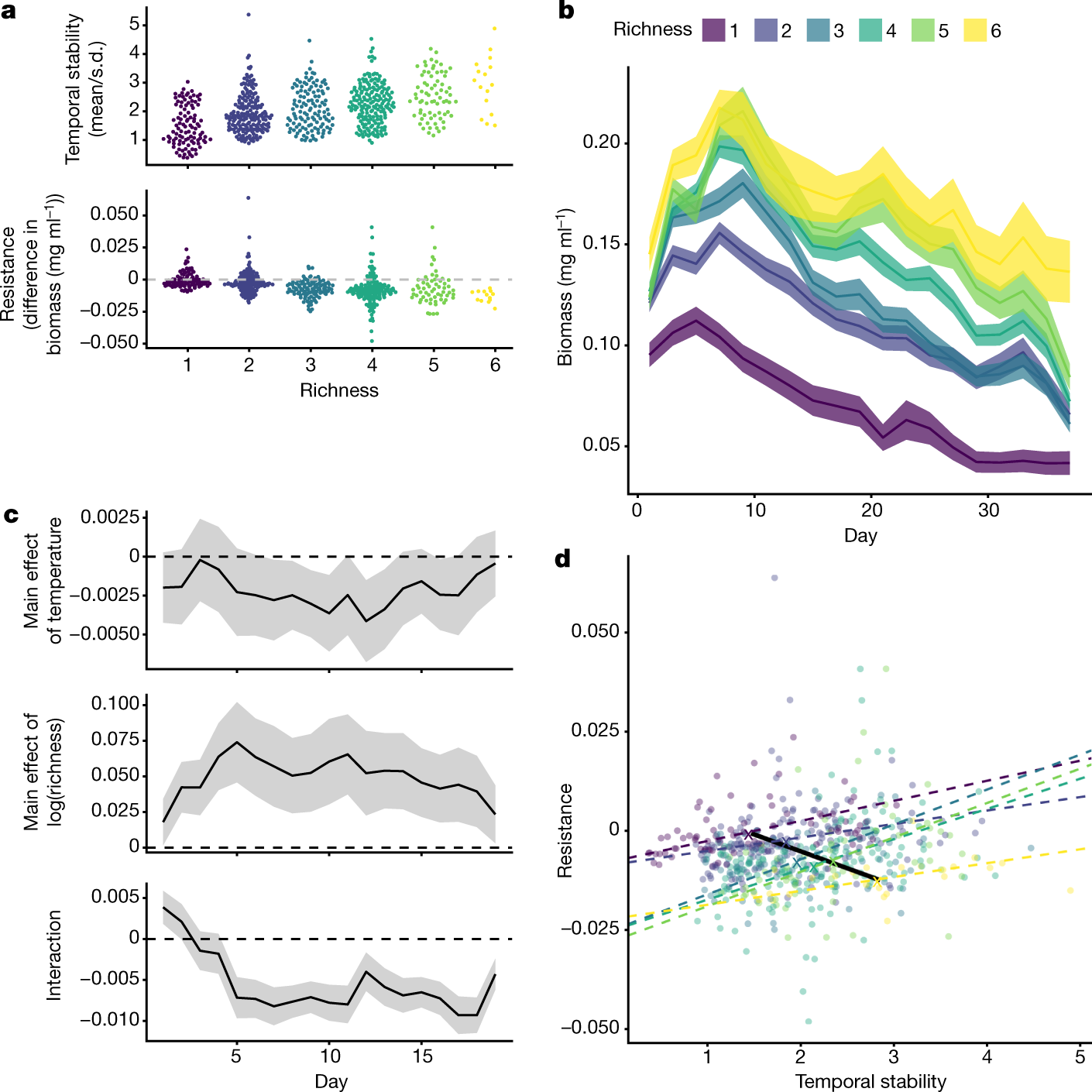
Biodiversity increases and decreases ecosystem stability | Nature

image derived from: https://www.nature.com/articles/s41586-018-0627-8

Primary, Secondary, and Tertiary Literature

It is very important to be able to distinguish between different types of literature when you are looking for sources to write up an essay or lab report. This includes primary, secondary, and tertiary literature.

I have listed three different documents that fall under each type literature. These documents revolve around the Kudzu, which is a perennial climbing vine native to eastern Asia and one of the world’s most invasive plant species. The plant was first introduced to North America in 1876 to landscape a garden at the United States Centennial Exposition in Philadelphia, Pennsylvania. Its use was later encouraged for livestock forage, erosion control and ornamental use, which led to it being widely planted in the southeastern United States.

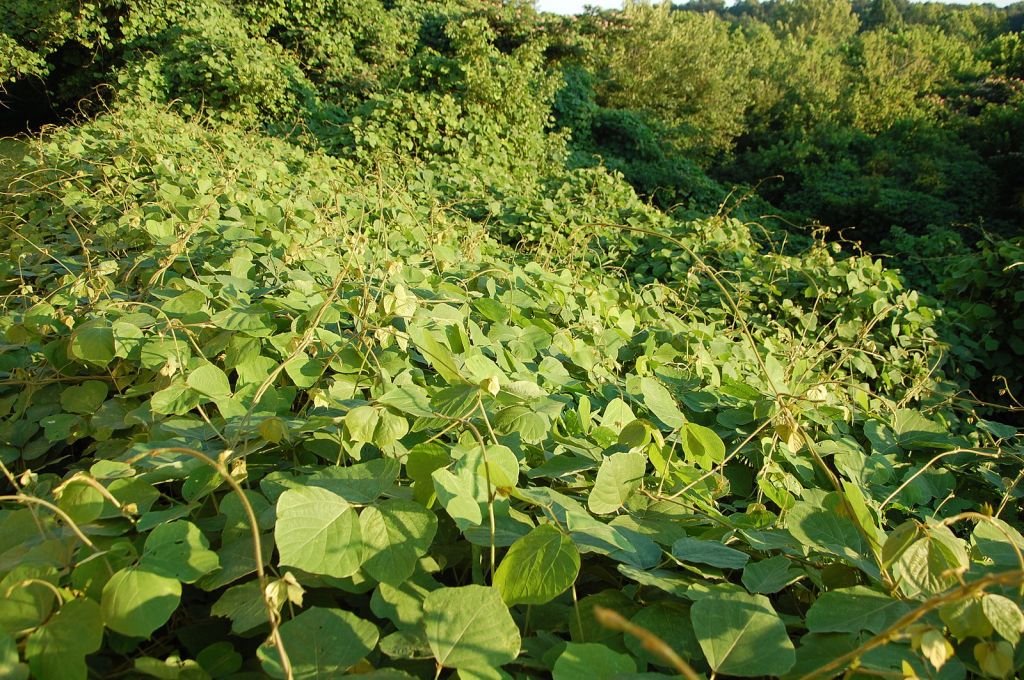
A photograph of Kudzu plants near Canton, Georgia, USA. Retrieved from Wikimedia Commons

Primary literature

First-hand data collected by the author of events as they are first described or actually happened, and therefore represents original findings.

The following document is a study that measures the impacts of Kudzu invasion on microbially-mediated nitrogen transformations and emission of NO and N2O from invaded and uninvaded soils at three sites in Madison County, Georgia in July 2007. It includes a material and methods section to describe how the study was conducted and data was collected.

Hickman, Jonathan E. et al. “Kudzu (Pueraria montana) invasion doubles emissions of nitric oxide and increases ozone pollution.” Proceedings of the National Academy of Sciences of the United States of America 107 22 (2010): 10115-9 .

Secondary literature

When an author describes, interprets, or analyzes information from other sources, often primary sources.

The following document is a review on the use and characteristics of Kudzu as a potential feedstock. The fact that this document is a review shows that it does not contain the original findings of the author.

Gulizia, Joseph P., and Kevin M. Downs. “A Review of Kudzu’s Use and Characteristics as Potential Feedstock.” Agriculture 9.10 (2019): 220. Crossref. Web.

Tertiary literature

When the author compiles and summarizes mostly secondary sources.  This includes reference publications such as encyclopedias, bibliographies, or handbooks. Wikipedia, which is widely-known online encyclopedia, is the perfect example of tertiary literature.

https://en.wikipedia.org/wiki/Kudzu
https://en.wikipedia.org/wiki/Kudzu_in_the_United_States

Reference
http://www.invadingspecies.com/kudzu/

Logging, Agriculture, and the Loss of Birds

American Tree Sparrow (Ontario, Canada) – Photo Courtesy of Wikimedia Commons

Often when we think of habitat destruction the first image that pops into our minds is the loss of rainforests in South and Central America due to the vast amount of deforestation that occurs every day. And it’s no surprise that that’s the case, between 2004-2012 estimates suggest that 17.7 million hectares of the Amazon rainforest was lost. For perspective, that’s an area almost twice the size of Portugal.

It’s not only the Amazon either. Deforestation is a phenomenon that’s happening all around the world. Whether due to logging activities, wildfires, or other causes, it’s something that’s been going on for a while. However, logging is often only the first step in humans changing the environment and attempting to use its resources. While the wood from logging is indeed useful, often it’s the opportunities for agricultural land that people are after when deforestation is taking place.

Sometimes looking back can offer insight into the way forward, and there’s an interesting article from 1997 (my year of birth!) that looks at the effects of logging and agriculture on habitat fragmentation and birds. Habitat fragmentation was known to decrease reproductive success and survival in birds from a variety of studies prior to this, however these studies focused mostly on logging and did not consider the area surrounding the remaining fragments of habitat. Bayne and Hobson were interested in studying whether utilizing the land between fragments for agriculture would affect survivorship and population levels of birds.

What was found was that for areas where only logging took place predator populations and their interactions with prey didn’t change much and was very similar to areas where natural disasters shaped the landscape, as well as quite similar to continuous forest habitats. Contrary to this, when the surrounding lands were being used for agriculture there was a much greater predatory pressure on the birds.

While there have been many studies done since, a take away point from looking at this study at-a-glance is that, while logging often steals the show with regards to habitat destruction, agriculture is in fact a more powerful agent of change for the remaining patches of forest. The vast amount of deforestation occurring across the world is indeed something to be worried about, but rather than just focusing on the loss of trees we should focus on what is being done with the remaining land, and finding ways to mitigate and reduce the ecological damage that these changes impart.

Sources:

https://conbio-onlinelibrary-wiley-com.ezproxy.library.yorku.ca/doi/pdf/10.1046/j.1523-1739.1997.96135.x (paywall – will be updated with open access link)

https://wwf.panda.org/our_work/forests/deforestation_fronts2/deforestation_in_the_amazon/

Design a site like this with WordPress.com
Get started