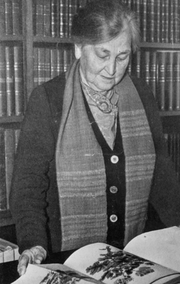
Louisa Bolus was known for authoring more land plant species than any other female scientist, a total of 1, 494 species. She was born in Burgersdorp, South Africa in 1877 and passed 1970 in Cape town, South Africa.
H.M.L. Bolus. Photo from Botanical Exploration of Southern Africa, second edition
She decided to dedicate her entire professional life to the herbarium until she retied at the age of 77. Throughout her time dedicating her life to herbarium she described new South African plant species from 1914-1928.
She wrote popular journals such as; Nature Notes, South African Gardening and Country Life and the Journal of the Botanical Society of South Africa. She was an active plant collector around Cape Town but sadly she had an ankle injury and it put an end to her field work.
Even after her retirement she continue to visit the Bolus Herbarium that her uncle and her works on and kept working in a reserved area, she was also appointed an honorary reader in plant taxonomy by the University of Cape Town.
After her passing she left such an impact in the community of plant taxonomy, the genera Kensitia and Bolusantemum and the species Geissorhiza lousiabolusiae were named after her.
Primary papers are studied that are directly from the researcher, these types of papers have the original researchers methodology, results acquired from their experiments that which is subject to interpretation and in the writings explaining what was observed. These papers are then reviewed among their peers, hence the the term “Peer reviewed”, the papers are checked to see if they can be replicated results and the theories being it, once this has been approved it can then be published for all to read. One example of a primary research paper is “Bioactive carbon improves nitrogen fertilizer efficiency and ecological sustainability”, this paper looks at stimulating the soil to have more nitrogen present in the soil.
Secondary sources of information are usually presented as journals, books which are centered around primary sources or use them specifically to review concepts of which the data, helps address the basis of their topics. The secondary sources either directly review the papers they are based on, for example a scholarly review, or can be using can be using the primary articles for their own reports from which they are using data. An example of a secondary article is “A transgenic approach to enhance phosphorus use efficiency in crops as part of a comprehensive strategy for sustainable agriculture”, this article makes uses of multiple primary sources to deliver evidence of said viewpoint.
Tertiary sources, these can be in the form of textbooks, blogs, handouts, anything that uses primary and secondary information. The information here is usually very modified and simplified where it becomes smaller and easier to digest and is available to everyone. An example of a tertiary source would be “Radosevich, Steven R. et al. Ecology of Weeds and Invasive Plants : Relationship to Agriculture and Natural Resource Management . 3rd ed. Hoboken, N.J: Wiley-Interscience, 2007. Print.” this source explores into the realm of invasive plants and how they contribute towards the ecosystems.
Secondary Source – Gaxiola, Edwards, Elser. A transgenic approach to enhance phosphorus use efficiency in crops as part of a comprehensive strategy for sustainable agriculture. Chemosphere Vol 84 Issue 6 August 2011 pg 840- 845 https://doi-org.ezproxy.library.yorku.ca/10.1016/j.chemosphere.2011.01.062
Tertiary Source – Radosevich, Steven R. et al. Ecology of Weeds and Invasive Plants : Relationship to Agriculture and Natural Resource Management . 3rd ed. Hoboken, N.J: Wiley-Interscience, 2007. Print. Stacie Stacks
Sir Arthur Tansley’s paper written in 1917, while good for its time, differs from scientific papers written in today’s society. Although the paper follows the same template as a modern paper, elaborating on his hypothesis and explaining his experimental methodology, it is evident that there are stylistic distinctions. Before we contrast modern day articles with the one drafted by Tansley, we must first get a better understanding of what his work entailed.
Tansley paper explains the competitive effects of closely related plant species (Galium saxatile and Galium sylvestre, later referred to as G. saxatile and G. sylvestre respectively) when placed in different soils. It was shown that G. sylvestre grew best on calcareous soils and the least on acid peats. G.saxatile showed opposing results, having the most efficient growth on acid peats and the least efficient on calcareous soils. As such, it was concluded that competition directly suppresses one of the species, consequently amplifying the growth of the organism as it resides on its soil of preference. Thus, the fall of one of the species from being outcompeted helps the other rise depending on which soil they are growing in.
By today’s standards, Tansley’s paper is lackluster. Looking at the data presented in the paper shows us already that the paper is outdated as the recorded growth is not presented in a detailed manner. Although, this is fair, as the discipline of statistics was not as developed as it is today. Also, the mention of Captain Marsh and his implications in the work is not something that would be explained in that manner in today’s scientific writing. Lastly, a scientific paper should relay its methodology in a way that another individual or group of individuals could replicate the study in question. Tansley does not present the methods portion with enough detail and efficacy to do so. Keep in mind that the field of ecology is a continuously growing discipline, as such, the way we experiment and explain our field work is continuously evolving as well.
Several articles posted online are hard to differentiate when trying to determine what type of literature they are. For starters, there are three types of general categories for articles: Primary, secondary and tertiary. Primary articles are commonly known as “peer-reviewed” articles, as they go through a certain process before being published online. An example of a peer reviewed article would be an article where the author explains an experiment that they have done. Secondary literature is commonly found in the form of a review like a textbook or a body of work reviewing several articles with a common interest. Tertiary literature would be bodies of work that can not be used as a source, but they are great ways to get background knowledge on the topic in question. An example would be a blog post and newspapers
Looking at this peer reviewed journal on seawater pH in ecosystems in California, it can be seen that the author follows certain guidelines. Having a materials and methods section is essential as it allows readers to be able to replicate the body of work. It also shows that some experimentation was done. The results section follows showing us the original data obtained.
Many papers online claim to be reviews in the title, for example “Taking action against ocean acidification: a review of management and policy options”. Evidently, the title suggests that it is a review prior to reading the paper itself. Looking at this article, it can be seen that there is a centralized idea being presented, using several papers to reinforce the idea. There are no original material and methods section showing the work of the author as they have only cultivated papers on the subject.
This article on ocean acidification gives solid background information on the topic but lacks the experimental work to be considered credible, to be used in subsequent papers. They present videos and pictures to help support their idea but do not refer to previous papers on the topic to back up their body of work
It can be tough to differentiate the three sometimes, mainly primary and secondary articles, hopefully using these few tricks as rules of thumb, it can become easier to identify them.
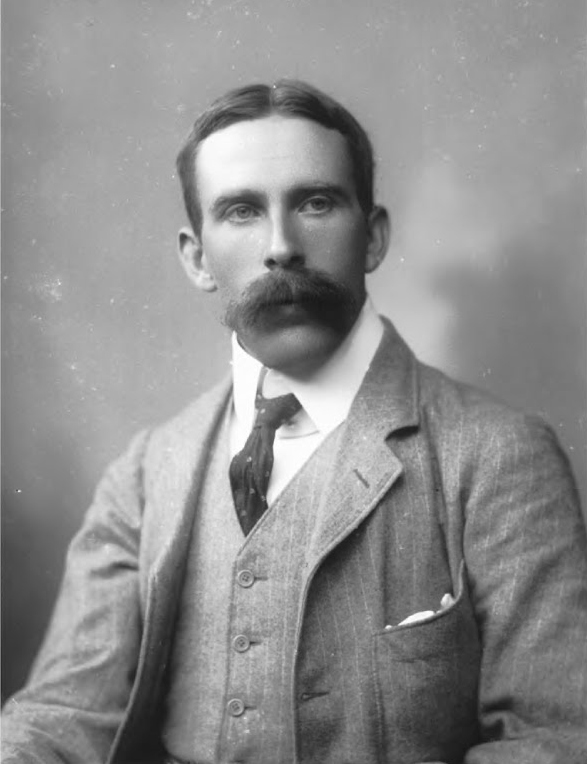
Sir Arthur George Tansley, born in August of 1871, born from a high class furniture manufacturer, is considered to be one of the people to pioneer the study of ecology. Knighted in 1950, he was known to his friends as A.G. Tansley studied and taught at several universities such as Trinity and Cambridge. He was very fond of Francis Wall Oliver’s (an english botanist) work. As such he became his assistant in his work. Consequently falling in love with plants.
Although considered to be one of the forefathers of ecology, Tansley showed much interest in psychology. This led him to write The New Psychology and Its Relation to Life. This book helped popularize Freudian psychoanalysis. Studying at Cambridge he then both researched psychology and ecology. After which he accepted the Sheridan Chair of Botany at Oxford. There, he then wrote another piece of literature directed to a seperate audience labeled: The British Islands and Their Vegetation. As such, he continued to educate the populous on the fundamentals of ecology. He is credited with the introduction of the term ecosystem, which is one of the most fundamental terms ecology.
He is also one of the founding men of the British Ecological Society, which was the first of its kind worldwide. Tansley was the first president. They acquired enough members to publish the Journal of Ecology where he was their editor. They used his paper The Problems of Ecology as the “founding paper” of the association in 1904A plaque in his honor was placed in 2005. It was placed in Kingley Vale, in South-East England, where Tansley would admire the scenery.
Anna Atkins was an english botanist. She is commonly credited to be the first person to publish an illustrated book, having photographic images. Born in Tunbridge, England, in 1799, she did not get to grow up with a mother’s care as her mother passed away a year later. It has been said that this was due to the after effects of childbirth. Her father, being a chemist, mineralogist and zoologist, educated her more in the sciences than a young woman would have at her time. She married John Pelly Atkins, they had no children. Atkins had a large interest in botany, collecting dry plants in her spare time
Her husband and father were both friends with Henry Fox Talbot, who taught her some of his inventions related to photography such as a technique coined “photogenic drawing”. This technique involves an object that is placed on light sensitive paper, which is then exposed to the sun, facilitating drawing the image out. She was also taught calotypes, which involves using paper that is coated with silver iodide. Atkins would then use her skills in photography along with her interest in botany to produce illustrations in books.
A friend of hers, Sir John Herschel, invented cyanotype, commonly known as blueprints. Within a year, she was able to draw out seaweed using this method by placing it directly onto the cyanotype paper. With this technique, she published her first book Photographs of British Algae: Cyanotype Impressions. This is the first book to be considered to have illustrations of photographic images.
Atkins is also arguably the first female photographer, as she had known access to a camera by 1841. Although, it is up for debate whether she should be credited with that title or Constance Fox Talbot. Neither of them have salvaged camera based photographs, as such the debate may forever stay unsolved.
George Washington Carver, was an African American agricultural scientist. He was also an inventor. He played a large role in american agriculture. He was one of the most well known black scientists of the early 20th century. Carver was orphaned and a slave in the civil war. After the Emancipation Proclamation, the man who had owned him, offered him to stay with them and raised him as a member of the family. Carver went to school in Kansas, far from home, where he was fostered by another family. He had to attend a school that allowed African Americans. Afterwards, he had attended Simpson college in Iowa, for music and art. As he was talented in drawing plants, his professor had encouraged him to pursue agricultural studies. As such, he then went to study botany in Iowa State. He was the first African American to be in the program. His success led him to do a masters and become the first African American faculty member there.
In 1896, he left to establish himself at the Tuskegee Institute, where the first principal had invited him to be the head of the agricultural department. There he taught crop rotation and alternatives such as peanuts, sweet potatoes and soybeans improving their soils for cotton cultivation. He had also designed a mobile classroom to teach farmers. Carver had also developed several products from the harvest that he had taught them, developing around 300 products from peanuts such as paste, flour, lotions and wood stains. His work largely helped develop the peanut market.
In 1921, he stood before congress, representing several important men in the peanut industry, asking for a tariff, imposing a tax on Chinese peanuts, talking about improving the peanut production in America . At the time, many men (mainly from the south) were furious as it was not common to have a person of colour give a presentation. Carver held strong and congress passed a pro-business tariff known as the Fordney-McCumber Tariff in 1922. Standing against congress made Carver a public figure. He then proceeded to help several leaders such as Theodore Roosevelt, Calvin Coolidge and Franklin Roosevelt.
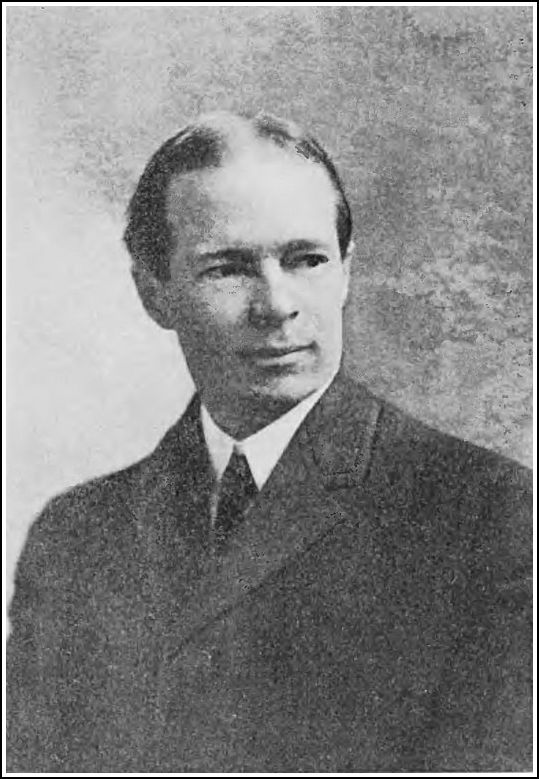
Henry Cowles was a botanist and an ecological pioneer, and he was one of the most influenced educators in the study of plant communities. He was born in 1869 and developed an interest in plants at a very young age. He studied botany and geology; he went on to study ecology!
He dealt with vegetation of sand dunes along the shores of Lake Michigan, he also recorded changes in vegetation, starting with hardy plants growing a unstable dune. He described the growth of deciduous forest growing on ancient dunes as a process of plant succession.
By 1898, Henry had gotten his Ph.D and he had joined the faculty of the botany department at the University of Chicago and he spent the rest of his time there.
His earlier research on Lake Muchigan dunes served as a model for student who wanted to study the relations of plants and animals, many of his students became ecologists in their own way due to him. He was an inspiration to many and a lot of his students such as William S. Cooper and Arthur Vestal were known to help him founding the Ecological Society of America in 1915.
Henry passed away in September of 1939 and he was honored at the Indiana Dunes National Lakesore (National Park) where theres a field study location named “Cowles Bog”.
An article I found from 1990 brings to light the ideas and goals of genetic engineering of plants, and the risks involved. This was an interesting find as when I was growing up; the notion of genetically modifying crop plants to be more resilient to predation or harsh climates was considered a “mad” science and many had very skeptical views on the practice. Since it was a new facet of science the risks involved with transfer of genetic material by means of horizontal hybridization were not as concerning until further studies looked into the environmental consequence of this method. Analysis of the ecological risks was assessed by the UK Department of Trade and Industry and a consortium of plant biotechnology firms was performed using economically important crops sugar beets (Beta vulgaris), rapeseed (Brassica napus), and potato (Solanum tuberosum) where modified and unmodified plants were introduced into several habitats at 4 studies sites in Britain where the climatic and soil conditions can be emulated, the idea was to see if these species were prone to becoming transgenic for one or more of the modified traits such herbicide resistance. Potential environmental impacts highlighted in this article involve the development of environmental tolerance, pest resistance stemming from uncontrolled or accidental release of a “mutant” plant into the wild. Other more obvious ecological threats would involve the evolution of herbicide resistance of agricultural weed species, resulting in an arms race for farmers to implement more dangerous concoctions to control spread of weed species. The implementation of insect-resistance genes into some plants would result in a favourable and rapid evolution of pest plant species where alternative control methods would need to be implemented; some rare plant species may get hustled out and eliminated by competitive displacement. Manipulation of wind pollinated/ dispersed species such as pines or poplars have the potential to have disruptive effects to the delicate balance of community dynamics.
A variety of SEM images of Fern Spores -Photo Courtesy of Wikimedia Commons
I recall all throughout high school that we were always told “Wikipedia is not a good source, do not use it as it isn’t reputable or reliable”. Now, this wasn’t just one of my teachers mind you, it was all of them, and I know that many of my peers had the same experience through their educational years; whether high school or post-secondary many of us were taught to avoid the website like the plague.
Yet we all used it anyways.
Now, there is definitely some truth to the fact that Wikipedia can be unreliable. After all, it’s an open source encyclopedia which anyone can edit. But there’s no denying its usefulness, and as anyone who’s ever needed to quickly look something up can attest to, it’s great for quick, at-a-glance information. And as I’ve gotten more of a look under the hood of how the website it run I was surprised to find out just how much debate and back-and forth the community has about some edits. Individuals from all over the world vet each others’ contributions, promoting and adding to what is beneficial and stopping the trolls from doing rampant damage.
It’s not the end all and be all of research, but it was never meant to be. Yes, primary journal articles and secondary sources such as textbooks will continue to remain as the sources we should consult when doing research, but for a starting point when learning about a new topic Wikipedia is an invaluable tool.
That’s why I’ve been so excited to learn about becoming a Wikipedian and editing articles to provide the most accurate, up-to-date information possible. We all use it, so it’s only fair that we should contribute with what we can. One article in particular that I’ll be looking at and adding to is about the plant Ceratopteris richardii, more commonly known by the name ‘C-Fern’. This plant is one that is seeing increased usage in labs around the world, both as a model organism for studying plants in a more general sense, as well as a commonly used observational study for introductory plant and botany courses in Universities and Colleges.
As I get more involved with Wikipedia I encourage you to do the same. I understand that not everyone has the time or desire to edit and contribute to articles, but we should all understand a bit about the behind the scenes of a website that, quite frankly, the internet wouldn’t be the same without.
Update (April 2020):
While I first started editing and adding to Wikipedia articles through the main website, utilizing the tools and education provided through Wikipedia Edu enabled me to more effectively edit pages and communicate with other Wikipedians. One of the main things that I had difficulty in understanding how to use was the talk page of articles. It comes as no surprise to me that many people don’t even realize their existence, as I know for a fact I did not prior to creating a Wikipedia account.
Even after editing some articles and adding sources, citations, and links, the talk page was something I tended to ignore. The fact that it is only editable while viewing the Wikicode (rather than the simplified UI of editing the main article) only added to the mystery surrounding what exactly this page was and how to use it.
The educational modules and videos allowed me to better understand the purpose of the talk page and how to use it effectively, and I have since done so.
While I continue to edit main articles through adding text, fixing citations, and adding new ones, I have been using the talk page more, as it is something that is often lacking in detail, and the incredible communication that it allows between editors (that is visible to lurkers as well!) is something that adds to the transparency and quality of the articles on Wikipedia.
After adding to the article page about Ceratopteris richardii, (including uploading my own photos to Wikimedia commons and linking them!) I later went back to review the talk page, which I found had not been edited or updated since 2013! I found this to be a great opportunity to make some changes with mentioning what is needed in the article as well as classifying it as a “start” rather than the “stub” it had been a few months prior.
I look forward to continue using Wikipedia, and especially utilizing the talk page to its full potential, communicating article issues with other editors and deciding on the best content and format that should be included and used in any given page.




 Applied Plant Ecology Winter 2020