How Mononoke Hime change my perspective of environmentalism

Two decades have passed since Hayao Miyazaki’s environmental masterpiece Princess Mononoke – and there is still a lot it can teach us. Its been 15 years since I first watched Mononoke Hime and it still got me every time I replay it. Released on July 12, 1997 in Japan, the prolific animation maestro’s bloodiest film remains one of his most politically poignant tales. A cautionary tale of gods and mortals set in feudal Japan, Mononoke is about war, accountability and redemption. On his journey to find a cure for a fatal curse, the prince of a rural village encounters San, a feral young warrior woman who was raised by wolves in the woods, as well as Lady Eboshi, the leader of Irontown, an industrialized settlement that has waged war on the forest surrounding it. In her quest to continue building for the benefit of her people, Lady Eboshi seeks to totally destroy the Forest Spirit.

As a child, I was so amazed by the artistically frame shots of Miyazaki (as well as marvelous music composed by Joe Hisashi). But since I started study about environment, I figure out so many hidden messages of the movie. Especially about the conflict/ trade-off between economy and environment. As a human-who struggle to survive, as a leader of a country- who have to decide to boost up the economy or spend that amount of money to invest in natural maintenance,… does environment really mean that much? The movie really bring up a new idea about environmentalism for me: its not about “fighting for the Earth”, or something like “its all because of human, WE HAVE TO STOP IT!!!”. Its about finding a real solution, an equilibrium point in which economy and environment conflict the least.
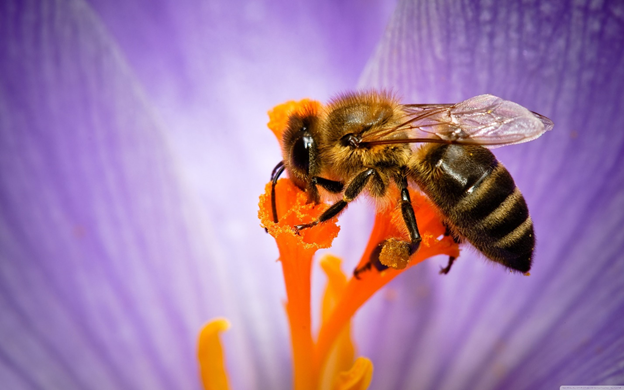
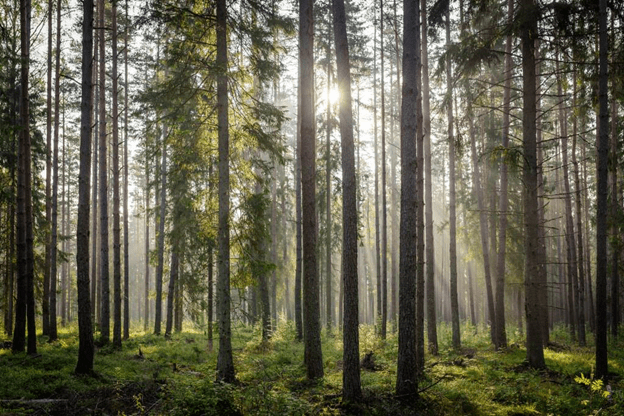
What happened to flower and its pollinator during the crisis of climate change

Flower is a part of plant ecology therefore there is no reason to exclude it from the topic. In this blog, I will talk about how climate change disrupts flower pollination.

Bee is the most important pollinator for plant, especially flower-like plants. With the increasing of temperature which leading to the overgrowth of competitors and fungus, the bee is now threatened to significantly reduce in total number. A new study shown that in North America, we are nearly 50% less likely to see a bumblebee outside than we were 50 years ago. This isn’t not a big issue for animal conservation but also for plant. According to the University of Leeds, the diversity of bees and of the flowers they pollinate, has declined significantly in Britain and the Netherlands over the last 25 years for around 37%.

This is definitely bad news for us. We must act quick! (fortunately, we did, our government did a pretty good job for bee conservation).

(fun fact: York University is the largest bee research campus in the world)

6 steps of “how to plant a forest myself”

This is the advice from Akira Miyawaki – a famous scientist who plant has planted around 40 million trees all over the world, and in 2006, he won the Blue Planet Prize, the equivalent to the Nobel Prize in the environmental field. 

•  1. First, you start with soil. We identify what nutrition the soil lacks.

• 2. Then we identify what species we should be growing in this soil, depending on climate.

• 3. We then identify locally abundant biomass available in that region to give the soil whatever nourishment it needs. This is typically an agricultural or industrial byproduct — like chicken manure or press mud, a byproduct of sugar production — but it can be almost anything. We’ve made a rule that it must come from within 50 kilometers of the site, which means we have to be flexible.

• 4. Once we’ve amended the soil to a depth of one meter, we plant saplings that are up to 80 centimeters high, packing them in very densely — three to five saplings per square meter.

• 5. The forest itself must cover a 100-square-meter minimum area. This grows into a forest so dense that after eight months; sunlight can’t reach the ground. At this point, every drop of rain that falls is conserved, and every leaf that falls is converted into humus. The more the forest grows, the more it generates nutrients for itself, accelerating further growth. This density also means that individual trees begin competing for sunlight — another reason these forests grow so fast.

• 6. The forest needs to be watered and weeded for the first two or three years, at which point it becomes self-sustaining. After that, it’s best to disturb the forest as little as possible to allow its ecosystem, including animals, to become established.

The Great Green Wall

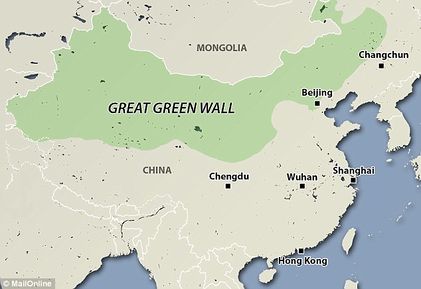
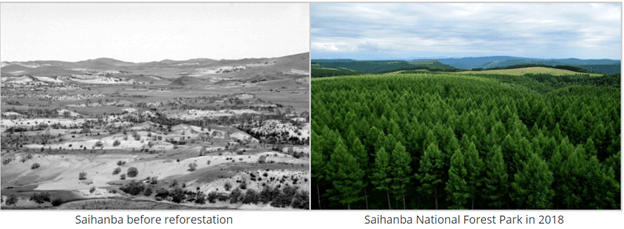
China is rebuilding the Great Wall but, this time, it is made of Trees and it will stop the Desert advancing. Let’s discover the Great Green Wall, the biggest man-made forest in the whole World! China has been dealing with desertification for almost 50 years now and the battle is still rough. We are talking about the Gobi Desert which extends until Mongolia and it is one of the driest deserts on Earth. The phenomenon of desertification had overtaken thousands of km2 grassland in China and blown tons of dust toward the South. In order to stop this negative effect, China government approved in 1978 the Three North Shelter Forest Program, the biggest attempt of reforestation ever tried. The term Three North refers to the 3 Regions in North China and it highlights the commitment of these areas to the problem. The goal is to cover 15% of the land till 2050.

Kết quả hình ảnh cho the green great wall of china

Even though the program got some many issues such as storm, epidemic, lacks water sources, the result recorded lately was 13,5% of committed land- which roughly the size of Greece. It now seems that desertification is probably starting to stop, and forests are growing faster than the desert.

Also, in Africa people tried to do something like the Chinese achievement to stop the Sahara Desert. In 2007, under the guidance of the African Union, people started to build the Great Green Wall of Africa. In this case, we talk about a longer wall: 8.000 km of length, 11 signed Nations and more than 20 Countries that support it.

Words of Advice From Professor Dawn Bazely

Professor Dawn Bazely was on a podcast which was truly inspiration and very interesting to listen to. Among all the advice that she stated, her experiences through school to reach to the point she is at now. I loved a specific quote which she strongly believes in. She stated a quote from Albert Einstein: “If you cant explain it to a 6 year old then you don’t understand it.”

The world is huge! Step out, explore and apply your knowledge…

She expanded on it by stating that it a variation of the principle attributing to making this very clear. This expanded on an incidence that occurred with her teaching as a professor. She asked students to state the definition of ecology and experienced that most students attributed to a “textbook definition.” Most people generally choose to memorize knowledge which is presented opposed to truly taking out time in understanding what it means. She explained that such definitions are very passive because when you truly understand something, you are able to explain “what it means.”

She then proceeded to explain that “science is about action and stuff.” I think this is truly important as to genuinely understand and explore a field an individual should step out of simple knowledge and be able to explore & apply it. An individual only truly learns when they are able to apply their knowledge and further explain it in different situations and through various problems.

Give a listen to the podcast, the link is attached below!

Episode 174: Dr. Dawn Bazely: Investigating the Intriguing Interactions between Animals and Plants: http://www.peoplebehindthescience.com/dr-dawn-bazely/

The quote was stated by Professor Dawn Bazely at 13:20.

Professor Dawn Bazely explained her ecology experience with students at 8:20 to 9:50.

The consequence of tourism to ecology

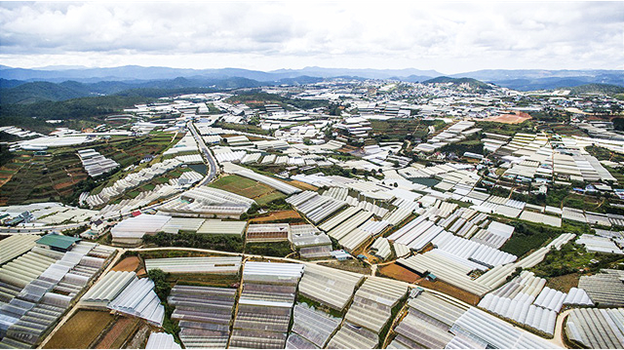
For my first blog, I would like to link the relationship between ecology vs tourism/economy. And there is no place better than my own country to start with. Vietnam is widely known as a tropical, hot and moist region. But there is a place in Vietnam where we have mild, chilly climate. We call it Dalat- the city of flower Located 1500m above sea level, the city has temperate climate with average temperature was about 10 C. Dalat is best known for historical attractions as well as flowers. In the last two decades, tourism and farm-product trade had boosted the economy of the city, transformed it from remote French colony to a modern, developed area. However, the downside of this is the increase in number of large greenhouses throughout the heart of the city, which brought vast ecological and physical ramifications to Da Lat as a whole.

Greenhouses used for vegetable and flower captured the sunlight, warmed Dalat “up to 1-1.5 degree and is predicted to increase within a margin of 3 degrees in the coming decade” – Southern Institute of Ecology. Greenhouses also destroyed the geological structural of the place, leading to the increase of mass wasting and flood events in the present. Air and water pollution are also witnessed as we travel further deep inside the city.

I remembered when I first came here, it was so fresh, peaceful and romantic. A perfect choice for escaping from busy and stifling daily life. In 2018, I had a chance to come back, but this time, all the good that I felt in love with had gone. Dalat was “bleaching”, losing its beautiful landscape. What remain now is just a broken fraction of nature and an ugly evidence of unstainable economy.  

Plant Ecology in 1999: The Effects of Climate Change on St John’s-Wort

As the environment around us continues to develop and be affected by a variety of external factors, so does the field of ecological research. In the last year, young environmental activists like Greta Thunberg have drawn attention to the topic of climate change and brought it to the forefront of the news, encouraging us to make our voices heard and putting pressure on world leaders and politicians to do their part. I was curious to see if research surrounding climate change’s effects on vegetation had changed since the year I was born, so I came across a peer-reviewed paper published in 1999 on the effects of climate change on St. John’s-wort (Hypericum perforatum); the flowering shrub pictured below.

Common St. John’s-Wort (Hypericum perforatum) in Kitchener, Ontario, Canada. By Ryan Hodnett – Own work, CC BY-SA 4.0. Obtained from Wikimedia Commons

This long-term study aimed to observe grasslands’ biotic responses to climatic change, particularly focusing on the effects of summer precipitation and winter ground temperatures on the growth, reproduction and herbivory of St John’s wort (Hypericum perforatum). St John’s wort is a perennial plant used in some liquid extracts, pills, and teas. To conduct this experiment the researchers simulated climate change and created randomized block treatments. There were 3 groups for varying summer precipitation and 2 groups to represent winter warming. The summer precipitation group had simulations for drought and excess water along with a control group. Winter warming groups were broken down into a control group and a warming group. “Rainfall” was created by spraying the plants with de-ionized water and “drought” conditions involved keeping the plants in rain shelters that prevented direct precipitation. Winter warming was simulated by keeping the plants 3°C above ambient temperatures measured at the field site.

A field of St John’s Wort, Hypericum perforatum, a noxious weed in New South Wales. By John Tann from Sydney, Australia – St John’s Wort to the horizon, CC BY 2.0. Wikimedia Commons.

As expected, both the winter and summer conditions had affected the growth and performance of St John’s wort, especially its herbivore interactions. Much to my surprise there were some positive effects on the winter warming group: they had earlier growth and were less susceptible to damage by gall-forming and sucking insects. However, these warming conditions stunted growth, flowering and reproduction. Summer droughts didn’t affect plant growth but rather their reproduction and vulnerability to damage from insects. Summer precipitation simply contributed to the winter warming conditions and didn’t really have a separate effect on its own.

Close-up of St. John’s wort (Hypericum perforatum). By Line Sabroe from Denmark – St John’s wort, CC BY 2.0. Wikimedia Commons.

I settled on this specific paper because the effects of climate change are only intensifying as time progresses and the world becomes more industrialized. Climate change was already a concern at the time of the experiment in 1999 and it’s alarming to see just how widespread the effects of climate change have become. The predictions made in this report have seem to come true as more and more forms of vegetation suffer as a result of Earth’s rising temperatures. It’s essential that action is taken against climate change before we experience an extreme biodiversity loss. The approach to plant ecology has certainly evolved since 1999 and I hope that within the next 20 years this approach continues to evolve into one that prioritizes preservation and sustainability.  

References

Fox, L., Ribeiro, S., Brown, V. et al. Direct and indirect effects of climate change on St John’s wort, Hypericum perforatum L. (Hypericaceae). Oecologia 120, 113–122 (1999). https://doi-org.ezproxy.library.yorku.ca/10.1007/s004420050839

Social Media Communication Should be Used in Science

Dawn Bazely, my applied ecology professor is an advocate for the use of social media platform for her students. At first I didn’t understand its importance and felt that it was just more extra work but after much experience and knowledge about it, i can say it is of importance to science work. Firstly, social media as become popular and a tool that is used by all therefore the use of social media is a useful skill to have and learn. It is a transferable skill that can be used beyond what it seems.

Social media can also create an avenue for scientists to share their research. Scientists can tweet about a new discovery that other scientists can see also conduct their own findings.

Twitter for example has been a popular outlet such that its brevity and the use of pictures and videos can be used to look at information and delve deeper into the topic. people can follow specific accounts that inspire them and filter their interests through the accounts they follow. There are even options for live tweeting from large conferences which can provide avenues for networking and once again, gaining information.

With the experience I have gained from using twitter, I am now able to convey my thoughts about a certain topic and also follow accounts that correlate with my interests which help me collect data and learn about things that I didn’t know before.

Robert H. Whittaker

Robert Whittaker (1920 -1980) is a respected ecologist for his contributions to the field. He is noted for several publications in plant ecology, some of his works are associated with primary production, nutrient cycling and species diversity. His works have known to change and add value of how we view plant ecology today.

Whittaker is also known for proposing the 5 kingdom system which can be seen in classification, the kingdom being Protista, Animalia, Fungi, Plantae, and Monera. He is also known for his studies of ecological communities differentiating between based on temperature and rainfall this was referred to gradient analysis. The communities would be separated in subcategories such as tropical rainforest, temperate rainforest, tundra, woodland, grassland, and shrubland.

His work on supraroganismal theory of plant association can be said be based on his kingdom classification studies. He studied primary production of organisms mostly with shrubs and grasses. His nutrient cycling was combined with his biomass study in plants in which he would observe and test the tree rings to understand better.

Robert Whittaker is not only a researcher but also a professor who has contributed to teaching numerous amount of students. His work is diverse and have a little bit of everything and because of this the study of ecology can continue to progress as the way it is and what it will become in the near possible future.

Some additional readings – https://esajournals.onlinelibrary.wiley.com/doi/abs/10.2307/1936481

Click to access eminent1981.pdf

Joel B. Hagen, Five Kingdoms, More or Less: Robert Whittaker and the Broad Classification of Organisms, BioScience, Volume 62, Issue 1, January 2012, Pages 67–74, https://doi.org/10.1525/bio.2012.62.1.11

Primary, Secondary, and Tertiary Articles

To begin with, the purpose of a primary, secondary, or even a tertiary article is to provide information about a topic. The way in which the information is conveyed, differ amongst these three types of sources.

Primary sources are defined to be the work which is directly done by the author themselves such as, a journal article containing both materials and methods to signify to the reader that they conducted this research firsthand using methods to follow. Primary articles do not analyze the work done, instead, provide direct firsthand information to the reader regarding the topic of interest. 

Examples of primary sources include, autobiographies/memoirs, diaries/personal letters, interviews, surveys, research work including materials and methods, emails, blogs (our blogs!), newsgroups, photographs, drawings, and works of art and literature, etc. 

A Primary journal article on applied plant ecology is listed below, in which researchers have studied an area of interest and conducted firsthand research on:

In addition, secondary sources are analysis reviews of primary articles, in which authors will critique and analyze the work conducted by the researcher and relate it to further topics led throughout the research. They summarize, evaluate, and analytically interpret primary material, often by offering a personal perspective. 

Examples of secondary sources include: monographs (books), analysis writing, review articles, thesis, dissertations, textbooks, indexes, abstracts, etc.

An example of a secondary source, relative to applied plant ecology:

Furthermore, tertiary sources are joined together as summarizations of both primary and secondary sources and are presented into forms of factual information. Therefore, tertiary sources do not contain reviews, instead, are filtered amongst many reviewers to contain reliable and accurate information – broadly explaining over a range of topics. Tertiary sources are recommended to be used when conducting initial background research to grasp an idea of the overall topic.

Examples of tertiary sources are encyclopedias, directories, dictionaries, handbooks, guides, classification, news articles, social media news, etc.

A tertiary source related to applied plant ecology in example is, checking twitter for updates on climate change – specifically keeping up with those social media accounts for the news they release.

References

S.Livelya, J., & J.Carpenter, E. (2004, November 19). Phytoplankton ecology of a barrier island estuary: Great South Bay, New York.https://esajournals.onlinelibrary.wiley.com/doi/pdf/10.1890/1051-0761%282002%29012%5B0335%3ACEOEAT%5D2.0.CO%3B2

Balmford, A., & Rodrigues, A. (2008, May). REVIEW ON THE ECONOMICS OF BIODIVERSITY LOSS: SCOPING THE SCIENCE.http://uknea.unep-wcmc.org/Portals/0/Documents/Balmford%20et%20al%2008_Economics%20of%20biodiversity_Scoping%20science%20report.pdf

Design a site like this with WordPress.com
Get started