Wikipedia – Editing and publishing

You have a research paper due and you’ve waited until the last minute to start. Now there is a lot of pressure on you to fill these pages with vast amounts of information and submit it in for marking. But, do you really trust the source from which you got your information from?  

Wikipedia: 

An online encyclopedia launched in January 15, 2001 is an open collaboration project. Reading this really blew my mind because I am guilty of referring to Wikipedia for many of my previous projects, despite the teachers specifically telling the class “Do not use Wikipedia as your source”. I had no idea anyone can edit Wikipedia post and insert any type of information they wish. For a while I thought about how people can trust Wikipedia, as there are a lot of trolls on the internet which will love for you to puts false information they write, into your assignments.  

Counter vandalism: 

Lucky enough, Wikipedia has a lot of measures that are taken to prevent false information from circulating. Such as automatic filters, IP bans and a lot more to prevent internet trolls from making a mockery of every students first source of information. There are computer programmed bots that can track when someone is vandalizing a wiki post and remove whatever they wrote, and or ban the person from ever editing again depending on the severity of the situation.  

Personal experience:  

Personally, I didn’t enjoy editing Wikipedia pages as it’s a lot of pressure. Your information has to be 100% correct and you have to provide all your sources. If you’re information is even slightly misleading, you could potentially affect the work of students or people reading what you submitted. Also, its very time consuming as much of your efforts will go unnoticed. Wikipedia editing it best for people who have vast amounts of knowledge they’re are willing to share for free, as well as having a lot of time on their hands.      
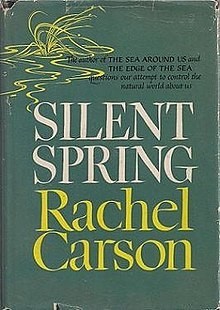
Rachel Carson – Female American biologist

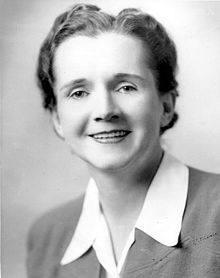
Best known by her full name Rachel Louise Carson, was a well-known American marine biologist. Born on May 27, 1907 in Springdale, Pennsylvania, she was destined to be a gifted writer. She also had efforts in conservationist, especially environmental conservation. Due to this her book “Silent Spring” and work by other authors, pushed and made the public focus on the global environmental movement. Carson was born and raised on a 65-acre farm, so she was surrounded by foliage which grasped her interests in biology. Her work on the farm, directed her research later in life. For example, in her book “Silent Spring” she discussed crop conservation issues caused by synthetic pesticides. This received a lot of backlash by chemical companies, but moreover led to a nationwide ban on DDT and other pesticides.  

Marine Biology:  

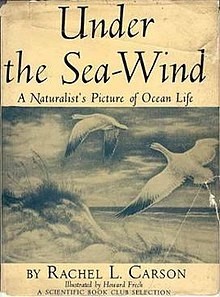
Rachel Carson had other bestselling books that discussed details of life underwater. Under the Sea Wind released in 1941, The Sea Around Us released in 1951 and The Edge of the Sea released in 1955, all talk about marine organisms and their survival. Though her first book sold poorly despite having positive reviews, she kept writing and informing the public of the feeding, survival, predation behaviors and much more on marine organism in her books.  


Death:  

Rachel Carson’s life was full of struggles of being a female scientist in the 20th century, and a list of accomplishments such as pesticide bans and her books. Her life came to an end from a list of medical issues caused by breast cancer. She had severe anemia from radiation treatments, but the cancer still spread to her liver. She died of a heart attack April 14, 1964 in Silver Spring, Maryland.  

Links: https://www.britannica.com/biography/Rachel-Carson

https://www.womenshistory.org/education-resources/biographies/rachel-carson

YorkU Library E-Resources & Databases

Near the starting time of the Applied Plant Ecology course, there was a lecture about electronic libraries and how to find resources online. One major thing I took from that lecture was York Universities E-Resources & Databases. This is an online database accessible by students and researchers. I never understood the full potential of this database until after hearing about it during lectures, and exploring it afterwards. I realized almost any article I was looking for, could be found on this database. The database also includes separate guides like “Quick Guide to the Bronfman Databases” and “Business Resources A-Z” which can specify your search results and let you which articles are peer-reviewed. As well as date, language and field options that can help narrow your search for the best results.

As a science student at YorkU, we are expected to read a lot of research articles related to our course. This year I’ve had to read at least one or two research article every week. This online database has improved my study condition tremendously. I can easily search for my article, download a PDF version of it, and read it on the go on my phone. Without this database in place, I suspect we would be expected to read these articles on printed paper. This switch to an online database versus the printed paper option not only saves paper and trees; but also, is easily accessible by students than paper copies. I’ve also found some of my course textbooks and other required resources using this search database, so I have nothing but positive reviews for this whole system. 

Charles Darwin – Father of evolution

Charles Robert Darwin, alive from February 12, 1809 to April 19, 1882, was a geologist,
naturalist and an outstanding biologist. Most people know him as the man who invented the
theory of natural selection, and who also made heavy contributions to the theory of
evolution. He was a fortunate man born into a fortunate family. His father Robert Darwin,
was best known as the father of the naturalist; so, biology, naturalistic thought and
science was nothing new to him.

Evolution:

Darwin brought a lot of awareness to the theories of evolution. Though, in his time, no one was ready to accept that species evolved over time. Likewise, his colleagues and scientist before him like Jean-Baptiste Lamarck, received a lot of backlash and controversy over their ideas about evolution.  But his almost five-year Voyage on the HMS Beagle, where he traveled to islands like the Galapagos, provided compelling evidence of evolution by natural selection. He studied the adaptation of Galapagos finches, which solidified his theory of Evolution by natural selection. Darwin’s book, The Origin of Species, at last opened the eyes of the public and finally allowed them to accept his theories and contributions.

4 postulates:

Darwin published Four Main Ideas on Evolution, known as Darwin’s 4 postulates. Those postulates being, Individuals within species are variable. Some of these variations are passed on to offspring. In every generation, more offspring are produced than can survive. And finally, the survival and reproduction of individuals are not random; individuals who survive and reproduce have the most favorable variation, and they are naturally selected.

Links: https://www.britannica.com/biography/Charles-Darwin

https://www.smithsonianmag.com/science-nature/the-evolution-of-charles-darwin-110234034/

Film Festival Selection

For one of my film festival selections, I chose the documentary “The 11th hour”. Most of the production was done by the Oscar winning actor Leonardo DiCaprio, who is a firm environmentalist. The documentary emphasizes the limited time all humans have on Earth to reverse the damages of climate change. The film also includes the opinions of intelligent scientist, for example from theoretical physicist Stephen Hawking. This documentary goes into detail about all the negative impacts made by humans, on individual ecosystems; and to the whole biosphere. And likewise, discusses possible solutions to these issues.

The main topics this film goes into are Global warming, mass species extinction, deforestation,and depletion of the oceans’ habitats. What I really like about this documentary is that is provide real life footage of all these impacts. For example, there is footage of a flood wiping out a town and destroying houses. This scene is powerful because it makes the viewers realize that those are not special effects made by some big production company. The reality of the situation really hits when you see peoples homes and livelihood been completely destroyed while they fend for survival.

Overall, I believe this documentary film did an excellent job of bringing awareness to the whole issue of climate change, deforestation and everything else. The viewers are left with a great take home message. After watching, I thought really hard about all my contributions to these environmental issues. This film motivated me to evaluate my carbon footprint, and do whatever I can to lower it. Also, I found the value in everyday things like tap water, as I try my best not to waste; and try to reuse, reduce and recycle as much as possible.     

Plant-based Burgers

🍔🍔🍔Yummy ! The only word that comes to our mind when we think of food.

https://upload.wikimedia.org/wikipedia/commons/9/98/Burger_King_Country_Burger.jpg

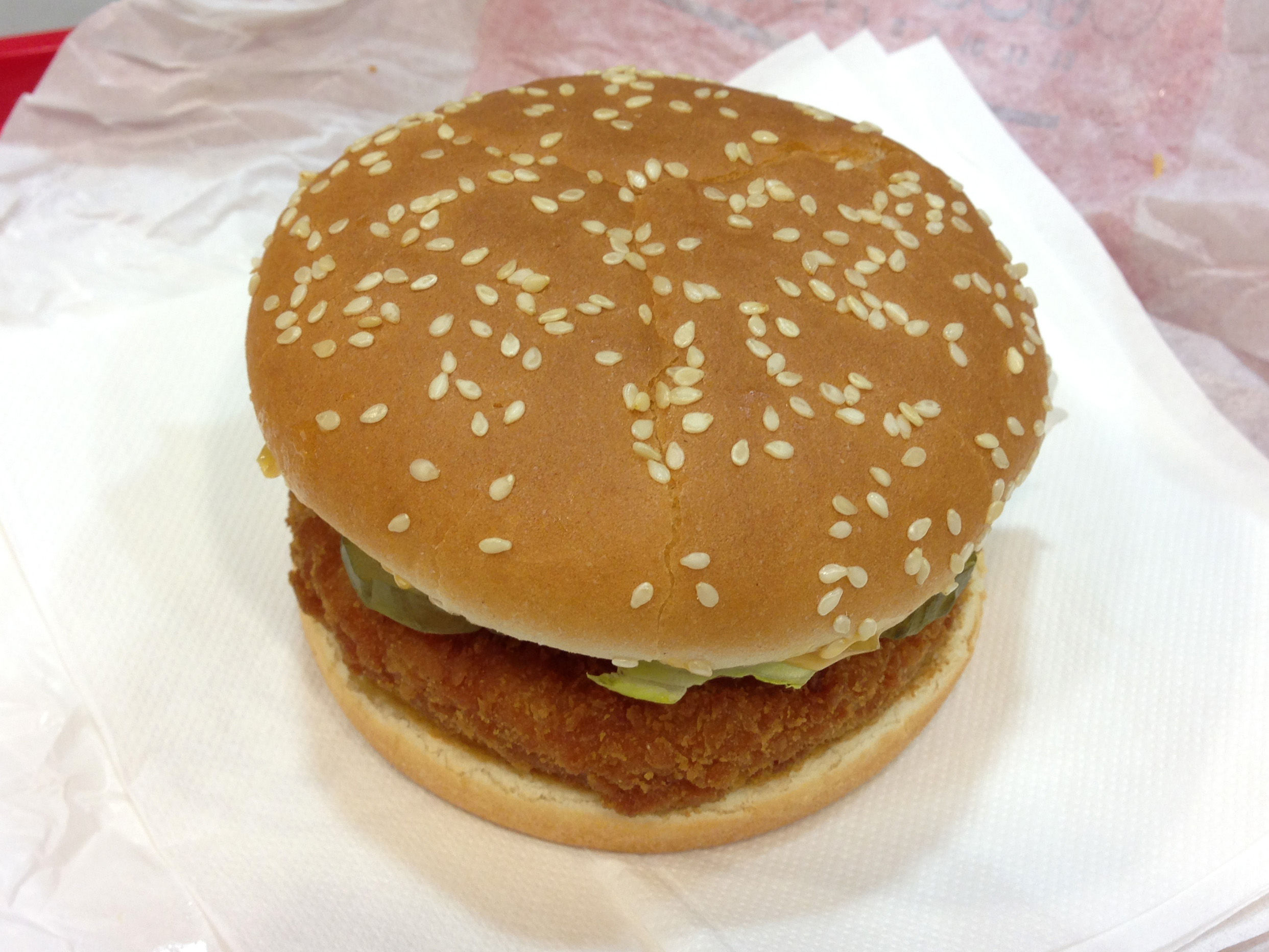
Plant-based burgers are the new food that Canadian favourite Tim Hortons started selling off on their menu in 2019. Plant-based burgers are vegan burger options but with the aromas and taste of a meat burger.

What makes the burger taste like meat?

Meat flavours are produced when fat and muscle cells release small molecules and further breakdown of these molecules into amino acids, fatty acids and sugar occur when the animal is slaughtered. Furthermore, myoglobin denatures when meat is cooked and releases heme which produces the “meat” taste.

In plants, a protein called leghemoglobin, is found in roots and can also be produced through genetic engineering. Leghemoglobin tastes similar to meat and give the plant-based burger its flavours and taste.

Is it good for health?

Plant-based burger are superfoods that are genetically modified. The proteins and yeast involved in these processes could possibly cause a severe allergic reaction. The synthetic ingredients might be a risk to health because our body isn’t adapted to consuming all those modified ingredients. But these might just be some myths because yogurt is a highly processed food and not too many incidents have been reported upon consuming GMO foods.

Why care about their production?

The meat industry heavily effects the environment because vast majority of resources such as food and water are consumed whereas plant-based burger reduces these amount significantly. But a critical view examines that the use of pesticides, fertilizers and chemicals endanger the environment too !

It is worth pondering upon whether the production of these GMO foods propels a sustainable or a harmful environment !

Things plants do secretly 🤫🌳

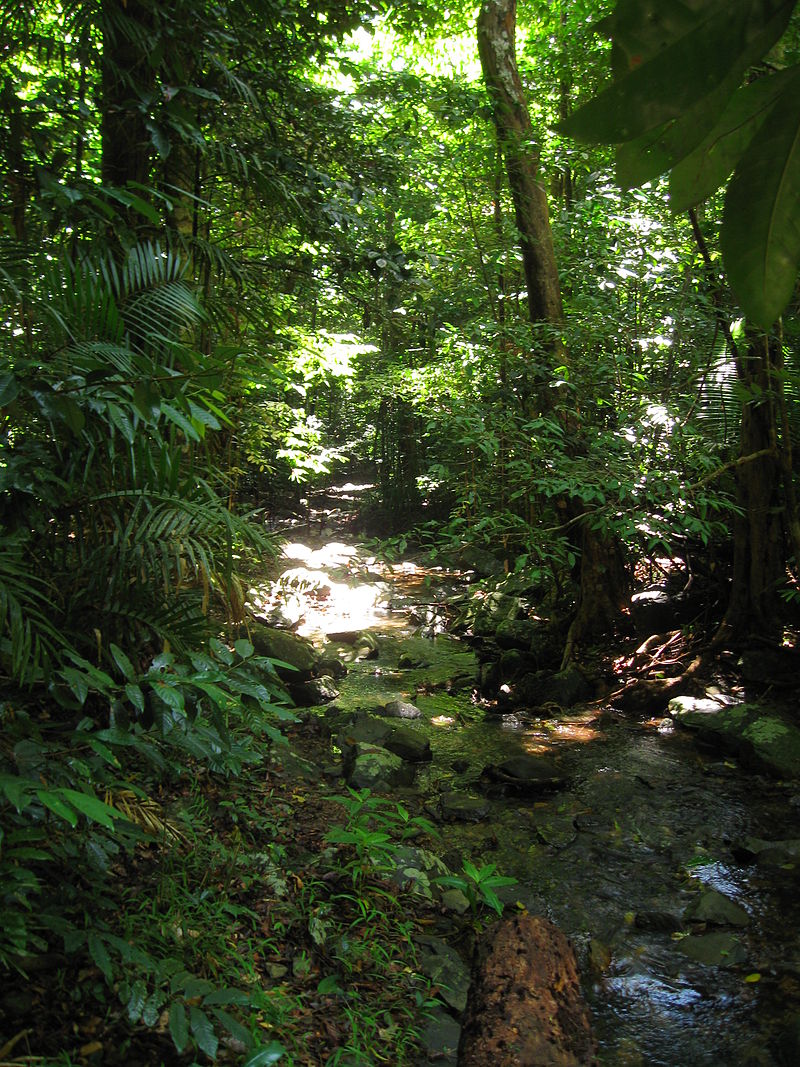
https://upload.wikimedia.org/wikipedia/commons/3/31/Nusfjord_road%2C_2010_09.jpg

Plants and trees are full of wonder, they provide us with oxygen and fresh air. They cleanse our environment from the pollution and are a source of nutritious food to animals. These are the common images that appear’s in one’s mind when they think about plants but when I think about plants, it reminds me of Toy Story animation films. In the movie, the toys come to life when humans are not around, plants also do the same but even when humans are present. In this blog, I will share some of those things that goes unnoticed unless we observe them carefully.

😱1. Plants talk with each other

Yes ! They do eavesdrop on each other but not exactly the way humans do, they communicate through chemicals released via air or roots. These signals are necessary to transmit information when a nearby plant is being attacked or damaged.

😱2. Plants can see

Simple cellular organisms like green algae have eyespot and observational research evidence suggests that similar proteins are seen in plant structures called plastoglobuli which changes the colours of the fall leaves.

😱3. Plants can move

Plants can not literally walk but they can disperse to new areas through their seeds. Some plants produce samara seeds (winged seeds) which can fly off long distances avoiding predation/parasitism or unfavourable environmental conditions.

😱4. Plants are carnivores too

Some plants have special defense mechanisms to defend themselves from insects/parasites etc. The Venus Flytrap is one of the most popular plants that traps and eats insects.

Hence, plants are more than just oxygen pumping systems, they have a whole world of activity under those steady structures.

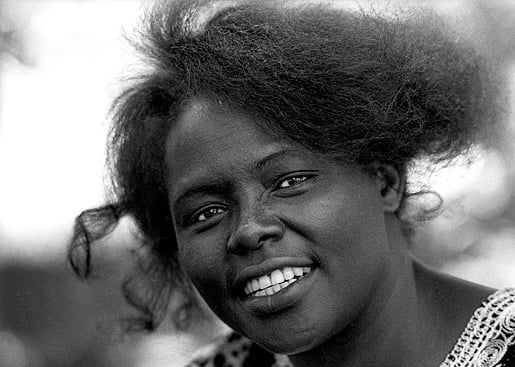
A Visionary : Wangari Maathai

Photo from: Wangari Maathai – Photo gallery. NobelPrize.org. Nobel Media AB 2020. Fri. 28 Feb 2020. https://www.nobelprize.org/prizes/peace/2004/maathai/photo-gallery/

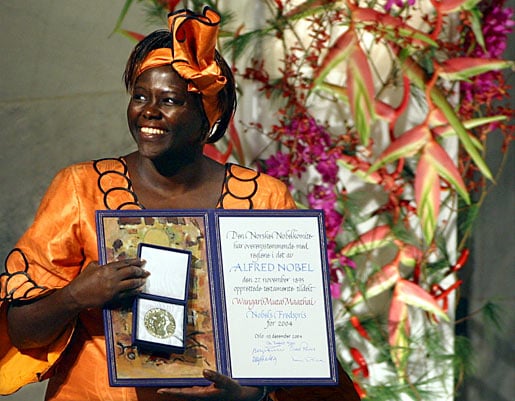
Wangari Maathai is the founder of the Green Belt Movement, and a woman in STEM of many ‘firsts’. Maathai was the first African woman to receive a Nobel Peace Prize in 2004, for her work and contribution to sustainable development, democracy, and peace. She was the first female doctorate scholar – in Biology, from central and east Africa. As well as Kenya’s first female professor, and later on became chair of the Department of Veterinary Anatomy .

Photo from: Wangari Maathai – Photo gallery. NobelPrize.org. Nobel Media AB 2020. Fri. 28 Feb 2020. https://www.nobelprize.org/prizes/peace/2004/maathai/photo-gallery/

The Green Belt Movement started in the late 1970s in Maathai’s home-country Kenya. The movement in time spread to other African countries and is responsible for more than 30 million trees being planted. Wangari sought to find a solution for the deforestation that was crippling and changing Kenya’s landscape. This movement started with simply planting trees but soon became a movement to empower African women, to ecologically think of sustainable ways to harmoniously co-exist with the landscape.

The late Dr. Maathai (she unfortunately passed from ovarian cancer in 2011) modeled what a passionate, hard-working, humanitarian focused individual should strive to be. She gave a voice and shined light on many women that would have not gotten the chance, had Wangari Maathai not broken that ceiling for them. For her extensive humanitarian work she has been awarded many achievements – campaigning for women’s rights in Africa, raising AIDS awareness and advocating for sustainable development – to name a few.

Click here to watch Wangari Maathai deliver her 2004 Nobel Peace Prize speech. Wangari Maathai is a phenomenal woman figure in STEM who was dedicated and passionate about maintaining environmental sustainability, democracy, peace and a women’s rights advocate. Her inspiration of creating a world where nature is not paying the price, is a goal we should all strive towards.

References:

Wangari Maathai – Facts. NobelPrize.org. Nobel Media AB 2020. Fri. 28 Feb 2020. https://www.nobelprize.org/prizes/peace/2004/maathai/facts/

Loss of Biodiversity in Amazonian Forests

The research article which pertains to our class topics and my year of birth is the following article: https://link-springer-com.ezproxy.library.yorku.ca/content/pdf/10.1023/A:1008815930865.pdf

The study states that in New Caledonia more than 25% of endemic plants are at risk in which 5 species have already faced extinction. They have reviewed the distribution to determine that several of the threatened species were not even located in any conservation area. the middle and north geographical areas of this island are less without any conservation for the plant species. Specifically, the two following vegetation areas: the “sclerophyll forest” and the “unique maquis” both lack any type of conservation. The study looked to increase the protected areas and conservation efficiency for plant species within New Caledonia.

The results showed that 83% of the total 447 plant species do not occur in a protected area with any conservation. The study was conducted out of the concern for the future of the various rainforests as “New Caledonia is one of the 10 hotspots of tropical biodiversity.” The researchers found specifically that rainforests are the least threatened out of all of the other 4 vegetation types since they have the highest amount of conservation efficiency (19.9%). Sclerophyll forests and low or middle altitude maquis found to be the most threatened vegetation types which are located in New Caledonia. However Rainforests do still present high degree of concern for the loss of biodiversity even though they are the least threatened. New Caledonia suggested several initiatives after realizing that 145 rainforest species are of conservation concern.

Lets save our rainforests and our planet!

To read about the initiatives they put forth and more about the threatened species in New Caledonia, please refer to the article link below:

Click to access A:1008815930865.pdf

Pueraria montana: An Invasive Specie that is still Haunting the Biodiversity of the Southern United States.

Kudzu, (Pueraria montana), is a group of plants in the genus Pueraria, and native to China and Japan, where it has been growing for its edible starch roots and for a fibre made from its stems. Kudzu has been used for as a form of erosion control and to enhance the soil. As a legume, it increases the nitrogen in the soil by a symbiotic relationship with nitrogen-fixing bacteria.

In 1876, the kudzu plant was introduced to the Unites States from Japan and was implemented at the Centennial Exposition in Philadelphia. Kudzu was brought to US to help control erosion of slopes which led to the government-aided distribution of 85 million seedings. The climate and environment of the Southeastern United States allowed the kudzu to grow virtually unchecked. Kudzu’s ability to grow quickly, survive in areas of low-nitrogen availability, and acquire resources quickly allows it to out-compete native species.

kudzu is extraordinarily resistant to both strain and drought, and it can easily survive in soils with low quantities of nitrogen. In addition, it can develop surely and virtually fast. Although older Southerners swear the invasive pest can develop a mile a minute, many horticulture and extension sites instead say it is able to grow a foot a day. These traits make it an exceptionally competitive species, particularly while pitted in opposition to the more fragile indigenous species of the region. Finally, fast-growing kudzu killed trees and shrubs by cutting off nutrients supply, reduced plant biodiversity by eliminating competitive vegetation.

As of now, kudzu covers a staggering 7.4 million acres in the South, with the heaviest infestation concentrated in Alabama, Georgia and Mississippi.

Image retrieved from Wikimedia commons

References:

Waldner, L. S. (2008). The kudzu connection: Exploring the link between land use and invasive species. Land use Policy, 25(3), 399-409. doi:http://dx.doi.org/10.1016/j.landusepol.2007.09.006

Design a site like this with WordPress.com
Get started