One Literature, Two Literature, Three Literature, More!

A blog about the 3 types of peer-reviewed literature.

In academia, or in anything for that matter, literature is the way we receive information. Whether you are casually browsing the internet one day after work, or you are frantically researching a topic in the library for a school paper, you have come across at least one of the 3 types of peer-reviewed literature.

Before we get into the types of peer-reviewed literature there are, we’ll first go over what peer-reviewing is. Peer reviewing is the process of subjecting an author’s scholarly work, research, or ideas to the scrutiny of others who are experts in the same field. Reviewing must be done ethically, objectively, and with integrity through constructive criticism and advice. This ensures published work is accurate and ethical in itself before it gets to potential readers. Without this practice, academia, and in broader terms, the internet, would be left to fend for itself and nothing would be believable.

The following explains the 4 main ways peer-reviewing is done:
-Single blind review: author does not know reviewer, most common in science
-Double blind review: author does not know reviewer and vice versa
-Open review: author and reviewer are known to each other
-collaborative review: a team reviews the work before or after the article is released

Now that we know what peer-reviewed literature is, we can move onto investigating the three main types of peer-reviewed literature. The three types of literature do not refer to the medium they are receiving the literature by, such as the internet versus a hard cover book. Instead, the types of literature refer to what kinds of information is found within the literature. The three types of literature include: primary literature, secondary literature, and tertiary literature.

Primary literature is literature that shares original research and new discoveries, results of research activities, and/or analysis of data collected. This includes: original research published as articles in peer-reviewed journals, dissertations, technical reports and conference proceedings. Secondary literature is literature that summarizes and synthesizes primary literature. This includes: literature review articles and books. Tertiary literature shares summaries or condensed versions of material. This is what we explore on the internet daily as a way to look up facts about a general overview of subjects. This includes: textbooks, dictionaries, encyclopedias (such as Wikipedia) and handbooks.

Primary and secondary literature is what is mainly used in academia today. In science and ecology, many researchers individually and collaboratively work on new studies and experiments and they share their findings with colleagues, friends and the public through journals. This type of work is an example of primary literature. Another very common practice in science and ecology is building off of previous data and work done by past researchers in the field, such as meta-analysis. This is an example of secondary literature.

Without peer-reviewed literature, science would be harder to advance. Being able to gain knowledge on others work and/or past work is vital in learning the way the natural world work. If scientists could not learn and build off of past ideas, or collaborate with other scientists works, scientific fields would come to a halt and discoveries would come by even more rarely. Peer-reviewed literature ensures the advancement of science in an ethical and accurate manner.

Commercially utilizing plant “waste” to save the environment

Plants serve a variety of purposes for animals and the environment through respiration and photosynthesis. They also provide us food, shelter and products from the beginning of their life from a seed (edible seeds can be consumed like pumpkin seeds) to their end (decomposers consuming the dead material).

When we eat fruits or vegetables we tend to throw away the leftovers in the green bins and it helps to nourish the soil after the organic material has been processed. But when we go to a restaurant, cafe or a grocery store, we eventually end up using plastic to put our fruits/vegetables in it or drink/eat from plastic products.

But some companies took innovative measures to protect the environment !

Rimping Supermarket (Thailand)

They started a novel idea of wrapping their organic produce in banana leaves instead of handing transparent plastic bags. The products the wrapped by banana leaves and tied off with a bamboo string. The banana leaves are a no-cost and effective option when compared to plastic bags.

For more information and images: https://www.forbes.com/sites/trevornace/2019/03/25/thailand-supermarket-uses-banana-leaves-instead-of-plastic-packaging/#26960cbe7102

Eat Raja (India)

This stall in India utilizes the pulp/fruit to make the juice and serves the juice in its own fruit. Examples include: watermelon juice in watermelon’s shell or banana juice in banana’s peel. It is also priced cheaply. Additionally, they also utilize the leftovers to make their own bio enzymes and compost. The waste generated from fruit cups is also fed to livestock such as cows.

Hence, such revolutionary ideas do not need installation of expensive solar panels or huge amounts of time and energy consumption but they can just be simple steps incorporated in the way people do business whilst safeguarding the environment and sustaining it.

The Monkey Puzzle Tree

Araucaria en Parque Nacional Conguillio.jpg
Photo of Monkey Puzzle Tree (Araucaria Araucana) retrieved from Wikimedia Commons: By Vicente Fernández Rioja – Own work, CC BY-SA 4.0, https://commons.wikimedia.org/w/index.php?curid=70557515

What a peculiar name for a tree, the Araucaria Araucana are not called this because monkeys enjoy spending their time completing puzzle games in the branches of these trees. In fact, monkeys don’t even reside in the region in which these trees are found.  A. Araucana are native to central and southern Chile and western Argentina. The monkey puzzle tree got this nickname because it would be difficult for monkeys to climb this tree due to the spikes on the tree’s bark and branches.

Photo of Monkey Puzzle Tree (Araucaria Araucana) branches retrieved from Wikimedia Commons: By Marco Almbauer – Own work, Public Domain, https://commons.wikimedia.org/w/index.php?curid=44922610

 In doing research on this odd looking tree, I have discovered the article, “Indigenous knowledge and management of Araucaria araucana forest in the Chilean Andes: implications for native forest conservation” and would like to spend this time blogging about the information discussed in this paper. The paper discusses the field research done in collaboration with the indigenous Mapuche Pewenche community in the southern Chilean Andes based on their ecological knowledge, values, use and management of the A. araucana forest. It attempts to reveal how indigenous people and their knowledge contribute to the sustainable management of these forests.

In Southern Chile deforestation threatens the life and security of many plants and animals alike. One of the most important and endangered tree species of the country are the A.araucana. These trees are being depleted from the forest in which it grows because of exploitation of timber, construction of railway sleeper, ship masts, furniture, mine construction, paper pulp and the list goes on and on.

It is sickly how quickly these prickly trees are being consumed, no longer to bloom, and if we do not sustain these trees they will no longer remain. So, the question to ask, is what is being done to sustain these trees to prevent extinction? (my attempt at a poem).

 Mapuche Pewenche community and the A. araucana:

The Mapuche Pewenche people consider the tree sacred as they use this tree as a food source, since historical times to present day, the seeds from the tree are a major part of their diet. It is also used to make flour and a fermented beverage used in ceremonial rituals.

Photo of The Mapuche Pewenche people retrieved from Wikimedia Commons:By Raul Urzua (REUS) – https://www.flickr.com/photos/raulurzua/4984784473/sizes/l/, CC BY 2.0, https://commons.wikimedia.org/w/index.php?curid=22319359

The Mapuche often claim that they have managed the Araucaria trees properly and have acted as stewards of their land and resource. They are trying to sustain this tree through a variety of methods, the Mapuche Pewenche participate in the development of the A. araucana trees and Nothofagus tree species through the installed of tree nurseries, platinating seeds in nursery plastic bags.

These people also saw fit to plant the seeds of these trees directly into the soil among willow trees claiming, “that this way the seeds would not feel lonely and could speak with the other young trees” (Herrmann, 2006). At the time the willow tree branches were to be picked and weaved into baskets, the Araucaria trees will have access to better light needed to grow. The Mapuche Pewenche community have started to develop new managing concepts for A. araucana, they are cultivating their gardens with these trees. They are doing this with the idea that co-planting of A. araucana could be extended to interplanting Araucaria with other crops than willows such as corn or quinoa.

References:

Herrmann. (2006). Indigenous knowledge and management of Araucaria araucana forest in the Chilean Andes: implications for native forest conservation. Biodiversity and Conservation: 15:647–662. DOI 10.1007/s10531-005-2092-6

URL Link:

https://link.springer.com/article/10.1007%2FBF00329762

Sustainable Agriculture: Returning to Our Roots?

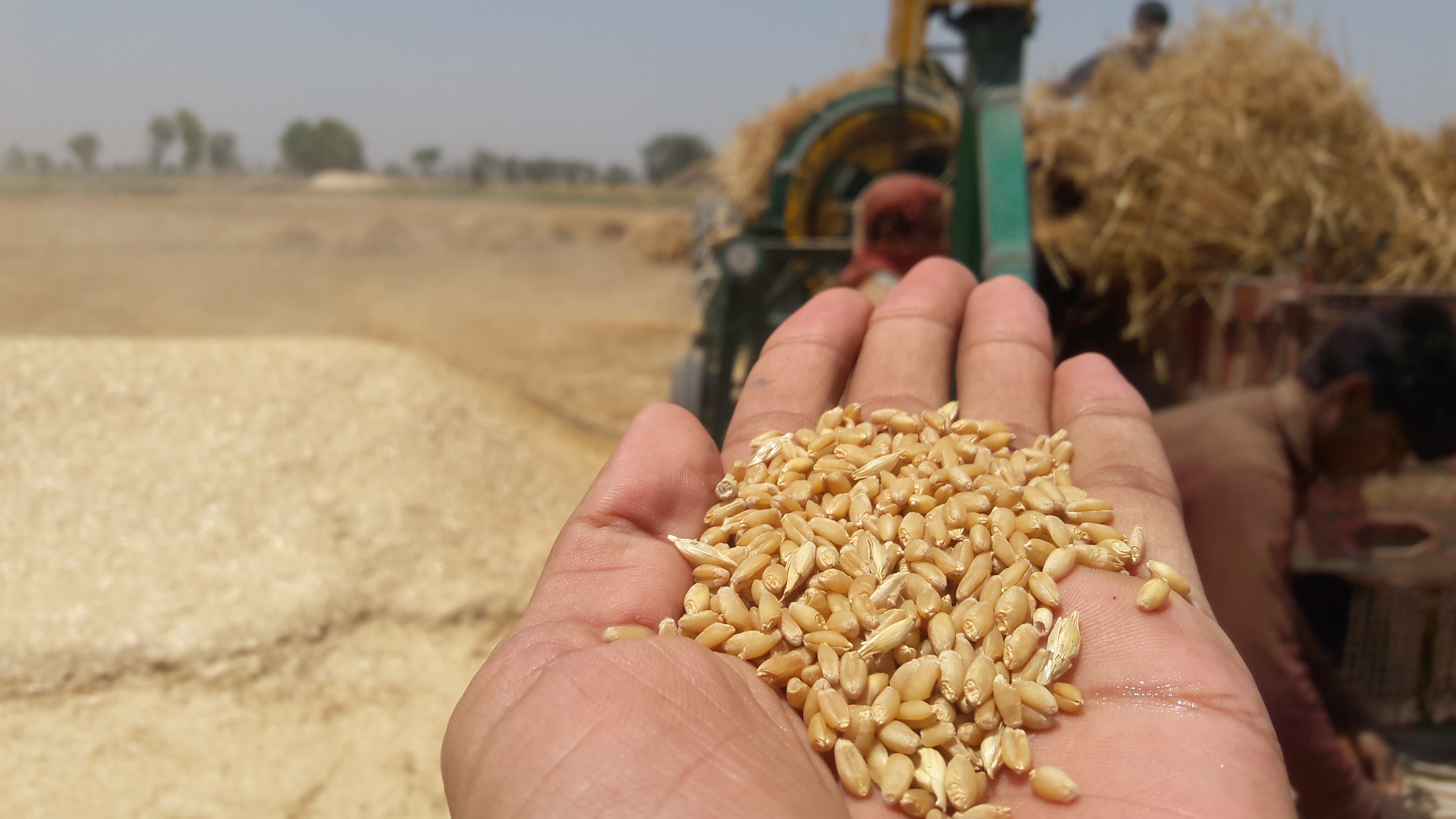
Harvesting Crops of Wheat – Photo Courtesy of Wikimedia Commons

The advent and development of agriculture was an immensely important leap in the history of Humans as a species. There are different estimates as to exactly when we started farming and producing crops, however all the sources agree that doing so led to a revolution and allowed us to shift our focus from merely getting enough food to survive to building and developing more complex societies, ideas, and a myriad of other things that were not possible prior.

So, it comes as no surprise that as long as agriculture has been a part of our lives, we’ve been working to improve it. Increased crop yields, reduced pests, hardier plants – these are all desirable traits that our ancestors sought after, and though our methods have changed what we aim to achieve is much the same. However, contrary to what farming and agriculture looked like several thousands of years ago, we are changing the world around us and exploiting its resources in ways like never before. Advancements such as the development of crop rotation resulted in greatly increased yields that affected societies across the globe, but the possibilities that a better understanding of science has opened up has left us wanting more, even at the expense of the land we live in. Fertilizers, pesticides, herbicides, and GMO’s have allowed unprecedented yields and quality of food and has even allowed us to grow plants completely outside of their natural range; and while the idea of growing a tropical fruit or vegetable in Canada sounds like a great thing, it presents its own challenges, and often we deal with these challenges in ways that we only later realize are harmful.

Now that’s not to say that GMO’s, Pesticides, Herbicides, and other modern agricultural tools and techniques are all bad, in fact quite the contrary – they’ve allowed us to advance farming far beyond what our ancestors could have ever imagined. But the key is to use these tools responsibly, and rather than fight nature and try to dominate it, to work with it in an effort to increase production without harming the land we use.

What this looks like depends on many factors, but a good starting point is to plant crops that are native to an area, and to not overwhelm a location with a monoculture. In this way we can take advantage of the benefits that millions of years of adaptations that have formed, and not irreversibly change the environment and ecology in which we grow our food.

We’ve come a long way with agriculture, but we’ve still got a long way to go, and a large part of our future developments might just be the result of combining our past techniques with our current knowledge in an effort towards sustainability.

References:

https://www.nationalgeographic.org/article/development-agriculture/

https://science.jrank.org/pages/1870/Crop-Rotation-History.html

http://www.omafra.gov.on.ca/english/busdev/facts/15-023.htm

Welcome to the World of Wikipedia

An incomplete sphere made of large, white, jigsaw puzzle pieces. Each puzzle piece contains one glyph from a different writing system, with each glyph written in black.
Photo of Wikipedia Symbol retrieved from Wikimedia Commons: CC BY-SA 3.0, https://en.wikipedia.or/w/index.php?curid=3328541

I can’t count the number of times I have been told by high school teachers about the unreliable source of, Wikipedia and to never use it when citing papers because they are unreliable sources. Since then, I have been going about my academic career always avoiding Wikipedia pages  like the plague; out of fear that I would be using wrong information and look like a brainless fool in front of my professors. Until the day I stumbled upon BIOL 4095: Applied Plant Ecology run by Professor Bazely.

She has opened my eyes to a new view on the source of Wikipedia, about the idea that it truly can be a great source to obtain information,as it can be a good source of Open access for Science Communication, a major concept of the course. At first, I was nervous to get started, as I was a little intimidated by the process (which is why I procrastinated doing it for so long). When I finally got started with making an account I choose the name of pinguicula dilemma. Pinguicula, is the genus name of my favorite carnivorous plant species, the butterwort plant. And dilemma was chosen due to the deceitful ways this plant lures its prey in, to then be eaten.

I started editing the Wikipedia page on this plant species, but I was confused on how to start editing. I then read the article that Professor Bazely suggested in the assignment guidelines, an article by graduate student, Ms. Farah Qaiser. Although, helpful I was still lost on how to actual edit, until I realized that I was trying to edit in “source editing” which made the task a lot harder, as I realized I should be editing in “visual editing” making it A LOT  easier to edit the page. (thank you to my fellow classmates for the information)

After this mishap, it was pretty much smooth sailing from there, I was adding in additional information to that page. I felt like an expert and professional while doing it. I found myself keep looking at the page to stare at my work. Being a Wikipedia makes me feel confident and smart.

My newfound experience with the Wikipedia dashboard as connected the dots from my previous experience of editing a Wikipedia article. My experience registering with Wikipedia Edu was not a challenge at all, it was very easy, simply the click of a few keys, which I appreciate. I must say, editing an article through the dashboard was very helpful. It took you through step by step and explained everything in detail, it even had videos. When I first edited an article in Wikipedia for this course, it took a little bit to understand the mechanics of how to edit. Even though I was able to edit a page, I wasn’t completely confident about my work. However, using the dashboard helped with my understanding of editing in visual as oppose to source view, improving my understanding of what are considered reliable sources, being able to communicate with fellow Wikipians, etc. After my Wikipedia dashboard training, I felt like a true, Wikipedian. As I now know how to properly edit and how to looks for article that need improvements. What I learned through these modules was, the different classes of articles, such as C- class, S- class, etc and wiki code.

The Ecologists: Connecting with Nature

This blog post will talk about a news article that was written by “The Ecologists” called “People ‘need connection with nature’”.

This article talks about how many adults rarely listen to birdsongs or smell wildflowers, and it talks about how 7 out of 10 children never see butterflies or bees. Compared to people who regularly connect with nature can help tackle with wildlife crisis far better because they are connecting.

Being connected with nature is linked to a higher well being, there is a new guide out that is called “couch to 5k for nature” to help promote people connecting with the nature and to help take action against wildlife declines.

People need to educate themselves on nature and what is going on in wildlife such as; declining populations that are human induced.

Photo by: Steven Feather Via Flickr (image was taken from the article “People need connection with nature”

There are tips on to how to connect better with the nature, there are simple everyday things:

  1. watching the sunrise
  2. listening to birdsongs (which are in fact really cool to listen to because they use songs to claim and defend territories and to attract mates and they have high and low frequencies!)
  3. watching bees and butterflies
  4. taking walks around forest areas
  5. planting flowers or doing a garden

“Every bit of connection makes a difference. If we’re to tackle the nature crisis, then a closer connection and new relationship with nature is needed across the majority of the population” – Professor Miles Richardson, University of Derby

“Daily doses of nature are vital to making this connection. The fantastic thing about it is that it’s not hard for people to do”- Andy beer, National Trust

This article does have a message that is it easy for people to connect with nature and help them grow with the crisis surrounding wildlife, and biodiversity but its also a way for them to part take in the natural part of earth and see the difference of how ecosystems function.

Looking at bees and seeing how they intercorrelate with others and how they pollute is an experience for sure! (and then learning that bees are declining due to industrial agriculture, parasites and climate change) This an amazing way for humans to see nature and then understanding the real impacts of climate change!

Reference: https://theecologist.org/2020/feb/27/people-need-connection-nature

United Nations Report: Increasing Temperature levels impacting Ecosystems – Specifically Coral Reefs

This blog post is going to further expand on the United Nations reports on Climate Change and how its critical to maintain the global temperature at a steady rate to allow fewer negative impacts on ecosystems, biodiversity, food security and more but mainly talk about coral reefs!

Throughout this report, it goes in depth about a lot of different temperature impacts such as; warmer lands, human inducing global warming, intensity and frequency in climate, how to limit global warming can reduce the extreme drought, precipitation deficits and much more. There is one piece in this report that talks about Coral Reefs and the dangers they face throughout this all.

The image above shows different factors that are impacting the coral reefs!

Coral reefs are found along the coastlines where they habitat for over a million species, they harbour and help with food, income, coastal protection, cultural context and so many other services in the coastal regions.

They are usually found under the water deep in about 150 metres and are dependent on light, making themselves higher than the deep-water coral reefs. The warm- water coral reefs are dealing with high levels of risk due to climate change. They would be able to better work in an environment where the temperature remained around 1.5 C compared to if the temperature was higher, they would all disappear.

Due to recent climate change there has been mass coral bleaching and mortality occurring, the ocean warming, and the acidification can cause slow calcification and slow growth making the coral reef less competitive.  The biggest issue with coral reef disappearing is the loss of fish and many other dependent species. The possible regeneration of the loss of coral reefs can be determined by refugia and if the coral reefs can be protected from risks.

Damaging coral reefs will remove resources that are needed for coastline regions, and how dependent millions of people are to the value ecosystems. The report outlines that the communities need to develop a new sustainable industry and how reduce the dependency on the threaten ecosystems.  Furthermore, they need t make changes to provide support and protection for the coral reef.  

The coral reefs need to be protected to help keep the surrounding ecosystems and with climate change really increasing risks, they need help in aiding against the heat stress!

Uk, Sally Brown, Arona Diedhiou, Ivory Coast, R Allen Uk, and Peter Berry Canada. 2018. “Impacts of 1.5°C of Global Warming on Natural and Human Systems.”

Not Your Typical Library

8mm Film Reel and Canister – Photo Courtesy of Wikimedia Commons

Libraries are great. They’re also old, like, really old. There’s evidence of collections of tablets with text in Assyria reaching as far back as the 7th century BCE, and despite almost three thousand years of progress, the general idea of a library is the same. While we don’t use tablets (at least not the ancient kind) or papyrus anymore, if you walk into a library you’ll still be greeted with the same thing: writing.

But we live in an exciting period in human history, and while books still dominate libraries there are more and more mediums by which we can communicate information and ideas. One that’s somehow more intuitive than books; that would be photos, videos, and audio.  Growing up reading is something that we all had to learn, but simply listening, looking at a photo, or watching a movie doesn’t require years of learning, and is sometimes able to convey much more complex ideas than a book ever could. Amassing a collection of these forms of media is what the Sound and Moving Image library (SMIL) at York University has been doing for a while and continues to do.

I’m not sure about other students, but for years I’ve walked through Scott library at York without ever batting an eye at the SMIL. At most I may have peeked inside and thought to myself “hmm, that’d make a nice study room”. Recently though I decided I would go and see what it had to offer, and I was surprised at the vast selection and amount of material. I guess somehow I always thought I could access what I needed through quick online searches or streaming services, but the SMIL had things that were either a complete pain to find online, or simply not available elsewhere.

With the film festival nominations for BIOL4095 being submitted I’ll be taking a look at Call of the Forest: The forgotten Wisdom of Trees, which just so happens to be available at the SMIL.

There are so many resources and materials available to students, not just at the SMIL but all throughout campus, and too often we don’t realize they are there, or we take them for granted. Let’s instead appreciate them and explore what they have to offer.

You can view the online catalog of the SMIL at: https://www.library.yorku.ca/web/smil/collections/

And The Runner Up Goes To…..FernGully:The Last Rainforest!!

I have been at York for a little over four years and never, knew about the hidden cubby-hole, known as the Sound and Moving Library, tucked away in the corner of Scott Library. This discovery was made, thanks to Professor Bazely. After going there on my own, in search for a film to nominate for the film festival, my experience was that the library is intricately organized, but there is a willing staff eager to help and it is essentially very resourceful tool.

AND THE RUNNER UP IS….

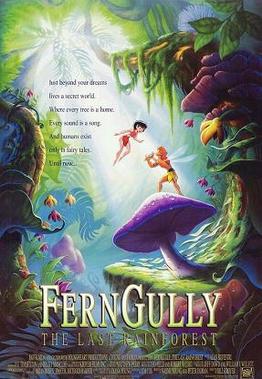
Photo of FernGully: The Last Rinforestposter retrieved from Wikimedia Commons: By Source, Fair use, https://en.wikipedia.org/w/index.php?curid=3347206

FernGully: The Last Rainforest was discovered at The Sound and Moving Library and was a close contender when deciding on a film to present to the York University community that would highlight themes of plant ecology and important topics discussed in class. I strongly contemplated this film although it is a children’s animation movie. I thought it would be a fun way to educate others on environmental and ecological problems. However, I had to essential go with the film “The man Who Planted Trees” because in my opinion it is a lot better, as it is able to hold the audience’s action and connect with them on an emotional level.

However, this film still deserves an honorable mention. This 1992 animated fantasy film that depicts a rainforest inhabited by magical fairies who believe that the humans have gone extinct. But when a logging company begins to cut down the trees in the rainforest, it releases an evil spirt named Hexxus who feeds off the pollution and destruction that comes with deforestation. The main fairy, Crysta and her friends, play the hero, to try and stop the destructive works of human beings to save the rainforest and their homes.  

Although this film is amazing, I think the message and importance of the ecological issues presented in the film could have gotten lost in the background noise, of the magic, romance, friendship, etc that is also presented in the film.  However, one important theme discussed in the film is biodiversity loss in plants and the effects of deforestation and pollution on vegetation and species that inhabit these areas, specifically in Rainforest. I think the writers did a good job playing with the idea that cutting down trees, pollution, and deforestation, can result in the release of an evil spirit, who can destroy everything. This message can be translated into the notion that the effects of vegetation loss can negatively impact the environment and the inhabitants that live on the planet. This film can target almost all audiences, young old, and allow a full understanding of the environmental issues presented; allowing people to act. This film was released in collaboration with Earth Day, it was displayed during the UN Earth Summit in Rio de Janeiro.  “Distributed internationally by 20th Century Fox and dubbed in at least 10 languages, it was an economic success by the standards of independent animation, grossing over US$65 million dollars” (Starosielski, 2011). Therefore, with the international attention and distribution of the film it is able to reach a vast audience and with hope can allow people to understand some important environmental and ecological issues affecting our world, to hopefully allow people to educate themselves on these issues and take action.

References

Starosielski, Nicole. “‘Movements That Are Drawn’: A History of Environmental Animation from The Lorax to FernGully to Avatar.” International Communication Gazette 73.1-2 (2011): 145–163.

URL Link

https://journals.sagepub.com/doi/pdf/10.1177/1748048510386746?casa_token=FtxnyR3OIXQAAAAA:sMMytvZBF2XTq6HYXVamFvPV_Jxpfv8-Z45ynCWeCMdSUoT_annkcKH9DZ6WiaLaawqJ4Tzm_NA

Sustainable Agriculture: Follow the Green Brick Road

When you are sitting in front of your favorite meal and your mouth is salivating from the amazing smells that is illumining off your plate, have you ever stopped to wonder about the process that allowed the food to reach your plate?

Photo retrieved from Wikimedia Commons: By Abellman – Own work, CC BY-SA 3.0, https://commons.wikimedia.org/w/index.php?curid=4661716

Before, being put onto your plate, food is produced, processed, packaged transported, prepared and served, and throughout every step it releases greenhouse gasses into the air.

Increased population results in an increase in food insecurity, a greater demand for agriculture and ultimately overexploitation of the environment. So, are we supposed to give up having children, becoming mothers and fathers in order to ensure food security? Well no, but one solution can include sustainable agriculture practices, to help ensure that agriculture practices does not exceed the environments “carrying capacity”.

First, one might ask how does agriculture contribute to climate change, loss of biodiversity, greenhouse gas emissions and several other horrific impacts we have witnessed it having on our precious planet earth?

Well good question! Agriculture is the means of faming practices, which include the cultivation of soil in order to grow crops and the nurturing of animals for food, wool and other products. However, when agriculture is produced through unsustainable practices it can contribute immensely to the issue of climate change, through greenhouse gas emissions. Farming releases a great deal of methane and nitrous oxide, also contributing to biodiversity loss through the production of turning non-agricultural land, such as forests, into farmland, cutting down all the trees, eviting them from their homes in order to use it for farmland.

So then, what is sustainable agriculture? How is it going to help eradicate these harmful practices? Well, sustainable agriculture involves an economic factor, the ability of farms to be a lucrative business, making profit that contributes to the economy and enhancing farms with useful technology. A social factor, including the proper treatment of farmers and abiding the laws put in place, and an environmental factor, producing goods in a way that is mutually beneficial for both society and the environment.

Sustainable agriculture involves working towards building and maintaining healthy soil, cutting down on water, air, energy and climate pollution and promoting biodiversity. It will allow us to work together with nature as oppose to against it. If we are able to successfully use sustainable agriculture, it can be a contributing factor to the demolishment of the damaging effects it has on the planet and ensure food security in a positive manner.

We should be moving towards sustainable agricultural practices to better the planet and ensure food security, but we can not get there by clicking our heels three times and magically appearing in a world unaffected by climate change and food insecurity, instead we have to follow the  “green brick road” towards more environmental friendly practices.  

References

ibhatu KT, Qaim M (2017) Rural food security, subsistence agriculture, and seasonality. PLoS ONE 12(10): e0186406. https://doi.org/10.1371/journal.pone.018640

URL Link:

Design a site like this with WordPress.com
Get started