The Problem with Tansley

Ecology and the methods of writing a scientific paper have evolved over the last few centuries and it’s worth juxtaposing the methods from then and now to see what’s changed and what’s remained the same. This can be seen looking at the 1917 paper “Competition between Galium saxatile and Galium Sylvestre Poll” written by Sir George Arthur Tansley pictured below.
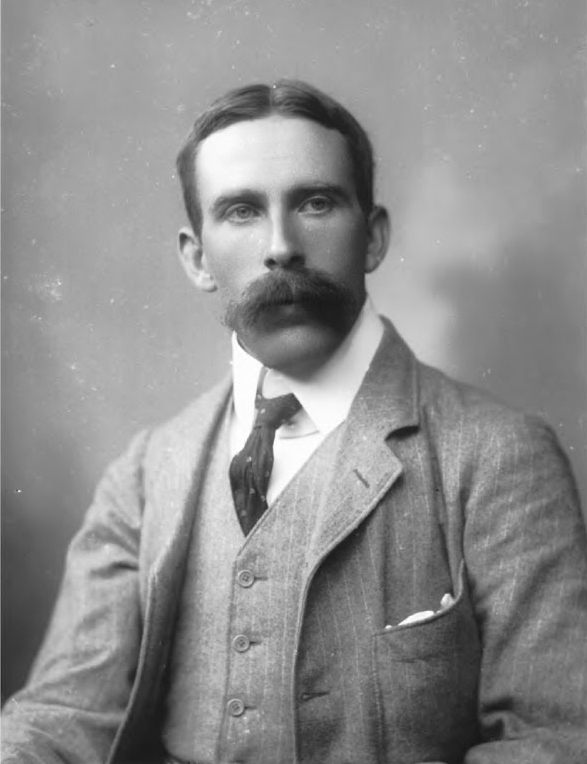
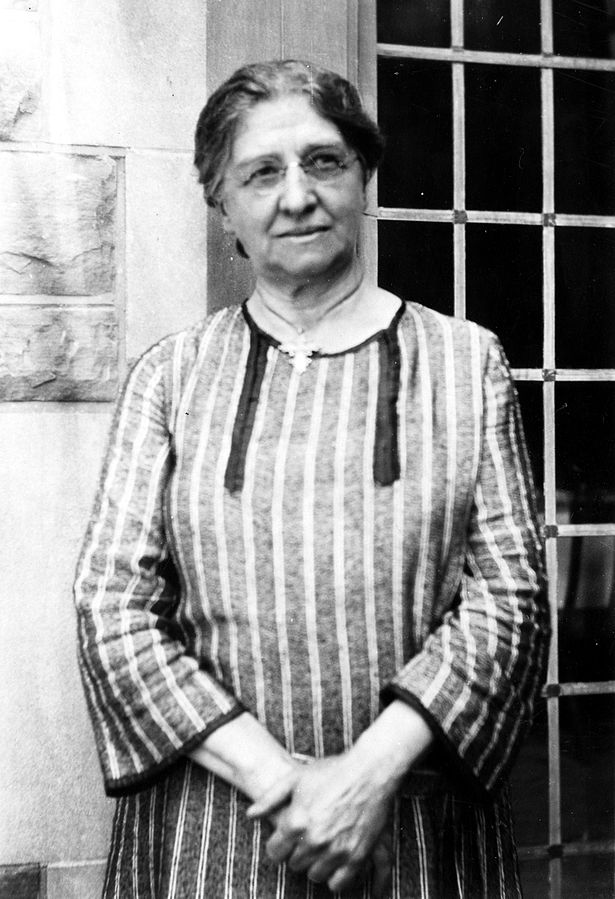
Photograph of the British botanist Arthur George Tansley (1871–1955). By Anonymous – Forrester, John & Cameron, Laura: Freud in Cambridge, p. 10. (Cambridge 2017.), Public Domain, Wikimedia Commons.

Tansley’s paper documents the competition between Galium saxatile and Galium sylvestre, two closely related plant species, when placed in varying soil conditions; acidic peats, calcareous soil, and sandy loam. He concluded that Galium sylvestre grew the best in calcareous soil and worst in acidic peats while Galium saxatile opposed this and grew best in acidic peats and had little growth in calcareous soil. Sandy loam was the most inefficient soil of the three, as there was no growth observed in either species. This experiment demonstrated that in contrasting soil types, the success of one species was dependent on the failure of the other.

Although Tansley provided some numerical data like mean and range, he failed to provide any sort of statistical analysis. The T-test was invented in 1908 by William Sealy Gosset and used to determine if two sets of data are significantly different from each other. Statistical analysis tests existed at the time of Tansley’s experiment but perhaps they weren’t as widespread or too complex to understand. Thanks to today’s digital age, performing a statistical analysis can be easily done using computer software. Regardless of the reason it isn’t present in his report, the lack of statistical analysis makes Tansley’s work seem less credible and reliable. He also fails to provide clear methodology which would make it difficult for anyone trying to replicate his experiment.

William Sealy Gosset, who developed the “t-statistic” and published it under the pseudonym of “Student.” By User Wujaszek on pl.wikipedia – scanned from Gosset’s obituary in Annals of Eugenics, Public Domain. Wikimedia Commons.

Statistical analysis has become widespread and as the field of ecology continues to evolve it is necessary we have this analysis to sift out which experiments are credible and significant.

References

Tansley, A. G. “On Competition Between Galium Saxatile L. (G. Hercynicum Weig.) and Galium Sylvestre Poll. (G. Asperum Schreb.) On Different Types of Soil.” Journal of Ecology, vol. 5, no. 3/4, 1917, pp. 173–179. JSTORhttp://www.jstor.org/stable/2255655

Journey to the Centre of the Library

I am currently completing my fourth year in a biology program at York University. And in those 4 years (yes, I have suffered), I have been in every library but not once have I ventured into any room that wasn’t a designated study room. Although I find myself quite familiar with Scott Library, down to the exact location where a student had a bucket of feces dumped on him last semester, I had never heard of the Sound and Moving Image Library, SMIL for short.

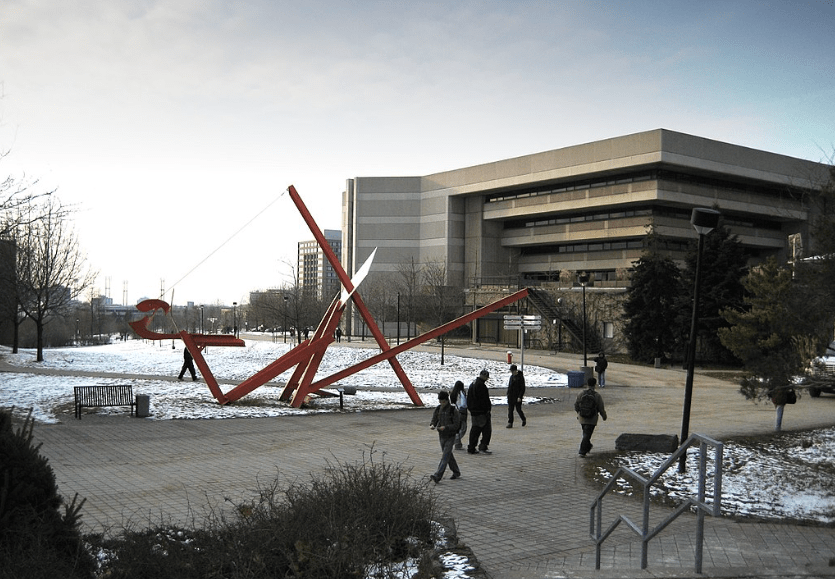
View of Scott Library from exterior

In early February, my fourth year biology class took a field trip across campus to visit the SMIL. Given that this school holds infrastructures that seem as old as time, I figured that the movie selection would be as such as well. Boy was I wrong! They had selections that were fresh out of theatres! I found myself wanting to stay as a result of finding movies that I, myself had not yet seen.

There was an abundance of video and audio formats ranging from DVDs, to CDs, to audiocassettes, VHS players, and many more. This library even has a website through which you can discover all that you’d wish to know about their media. One would think this would be a bad idea to flaunt movies in front of overly stressed young adults, who will do anything to procrastinate.

If all of this still doesn’t pique your interest, this library is typically not brimming with students, has many seats, couches, and tables, and can be a great study area during times of stress, such as exam season. So get cracking on those books!

Another Side of the Forest (1974)

One documentary I considered submitting to our class film festival is Another Side of the Forest (1974), directed by Raoul Fox and Strowan Robertson and produced for the National Film Board of Canada. 

The documentary is about 20 minutes long and explains the developments of the Canadian forestry industry in the 1970s. The film demonstrates various techniques that the Canadian Forestry Service and forestry industries use to study and preserve the forest.

The documentary discusses the use of tools like aerial photographs, maps, dibbles, and X-ray for studying the forest and individual plants.

It also demonstrated various studies the forestry service conducts all over Canada. Some experiments subjected tree seedlings to artificial lab conditions to determine how changing the atmospheric conditions modify tree growth. There were experimental tree plantations to determine the optimal space to leave between trees when replanting the forest for maximum growth and to see how different varieties of the same tree species from different provinces grow once they are all transplanted to the same climate. It showed the processes scientists use to study tree diseases, such as studying the behaviour of elm bark beetles which cause Dutch Elm Disease and spraying a bacterial insecticide from airplanes over a forest in Quebec to stop the spread of the Spruce budworm. It showed how scientists collect different branches of tree species to bring them back to laboratories and systematically test them under different fire conditions. It also showed the variety of labs and workshops dedicated to studying tree rot and conducting stress and shock tests on tree wood to ensure its quality for the market. 

I decided not to submit the film because I wanted to submit something a bit more modern. However, I still think this film is worth watching for many reasons. It relates to our course because it is related to applied plant ecology, specifically related to sustainable forestry. Even if it might be outdated, it is a film that shows the sheer amount of scientific work that is dedicated to studying and preserving the forest which I think many people might not realize is occurring (hence the name “another side of the forest”). It seems like these types of educational documentaries aren’t produced as much these days. Also, the film in general is enjoyable to watch. National Film Board documentaries usually have great cinematography and music, and this particular film is a great historical document and time capsule (it definitely “feels” very 70s). 

Watch the film for free here:

https://www.nfb.ca/film/another_side_of_the_forest/

Wikipedia Wizard

Wikipedia is an online, open access encyclopedia, although some may refer to it as their academic hero. This website is brimming with information on nearly any topic one can think of. The only downfall, depending on how you look at it, is the fact that anyone can edit it as they please. As a result of this, there is a popular anecdote circulating on the internet, explaining how an entire high school history class wrote papers about how Hitler was secretly in a relationship with Stalin, a ploy devised by their teacher to weed out the hard workers from the plagiarizers. Regardless of this problematic facet, myself, along with the rest of the world will most likely never grow tired of good ol’ Wikipedia.

I, myself, had never edited a Wikipedia page until a few weeks ago. I’d always assumed there was some criteria or certification that one needed to edit a page. But it turns out that all you need to do is create an account! And let me tell you, it’s a rush knowing so many people’s sources of information lay in the palm of your hand. I could alter history… At least until someone corrects my edits and probably has me banned from the website.

To edit a page, you need to start out by finding a page that actually needs editing and will allow it. Most Wikipedia pages are overflowing with both useful and useless tidbits, although some are locked and cannot be edited by the general public. In this example, not surprisingly, I chose cake.

Reading the Wikipedia page on red velvet taught me something valuable. Red velvet cake is actually just red dyed chocolate. The nerve.

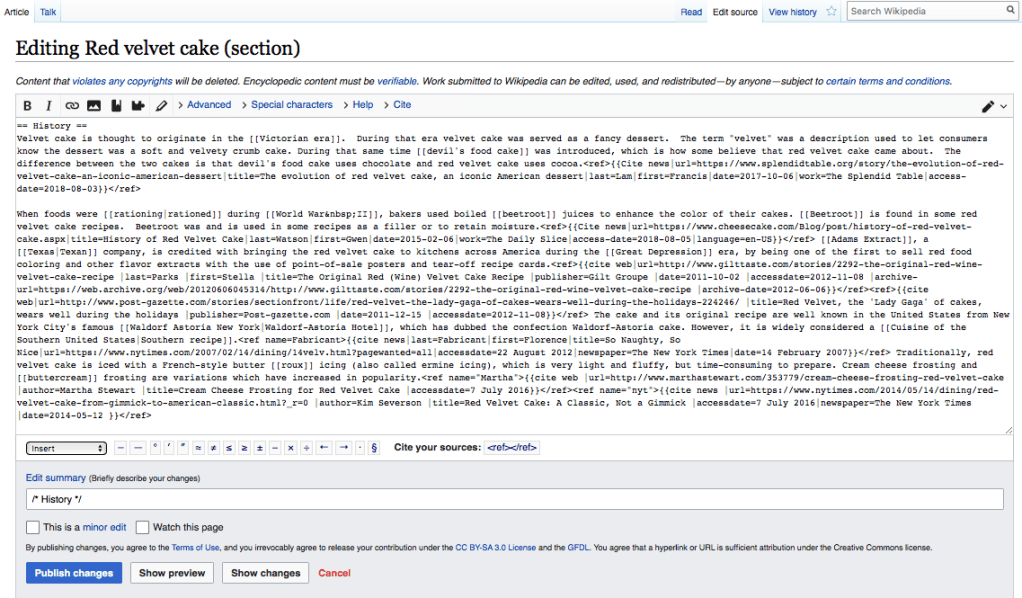
I would suggest only writing about something you are 100% certain of, such as something native to your home country. To edit, you click on “Edit Source” by the title of the given section on the page you have chosen, enter your revisions, click “Publish Changes” and voila! You can now call yourself a true Wikipedian.

Welcome to the family. 🙂

Carrie Derick – Thank You.

Obtained from wikimedia.

There are many women in science that are often forgotten, not celebrated or uncredited for their work. As times are changing, more and more women in science are being recognized and honored for their work in the field. I would like to travel back in time and give thanks to Canada’s first female biology professor – Carrie Derick.

Carrie Derick was born in what is now known as Quebec in January of 1862. She received her B.A from McGill University at the age of 28 and went on to be the universities first female botany demonstrator. She later received her M.A in botany at McGill, but decided to leave behind Canada and her many jobs to seek out a Ph.D. degree in Germany. Although she did complete the research required for her Ph.D, she was not granted one as at that time, females could not receive such a high level of academic stature. As a woman in science today, I could not fathom how Carrie could have felt being treated as a lesser than to her male colleagues plainly on the idea that she is a woman.

Sadly that was not the only battle Carrie had to face in her career, as many other females at the time, there were many inequalities that existed in her career. Carrie also faced pay reductions based on gender, including lower salaries and published work without pay.

Despite all this, she continued to work in science alongside her male colleagues and advocate for early feminism. She became the chair for McGill’s Botany Department in 1909 and after they removed her in 1912, she went on to become the very first female to have a university professorship. Although she was told her title was courtesy title, she continued to show up, research and publish a number of academic publications that continue to make a difference in science today. This strength and perseverance allowed her accomplishments and research to speak for itself, and she became a leader in botanical and genetic studies, and in feminism. She co-founded the National Council of Women, was a member of the Alumnae Society and many other women’s movements, and supported fellow women in academia and law.

Because of women like Carrie Derick, women like me over 100 years later are able to follow our passions and contribute to the study science. We are able to get proper educations, we are deemed equals in our work place (for the most part, feminism still has some ways to go) and are able to follow a variety of fields in science and contribute to changing the world. Women everywhere, not only women in science, should salute Carrie Derick and thank her for fighting her many hardships and fighting for a future she believed in, one where women in science were recognized.

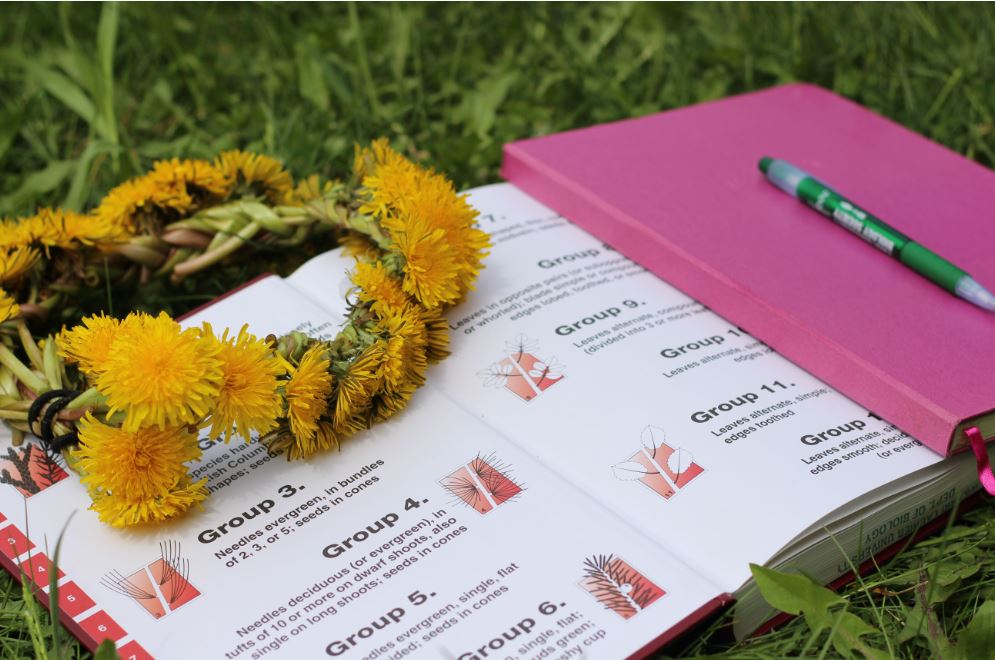
A picture captured by me on one of my days out in the field studying Canadian tree identification.

Technology teaching about the environment

Go Diego Go is a kids TV show adventure series where a young explorer tries to protect the animals and their environment. It used to be one of my favourite shows as a kid which played a significant role to grow my love and awaken my curiosity for the environment.

Here are the things that I learned from the show:

  1. There is a huge amount of biodiversity in the environment.
  2. It made me aware as a kid regarding some of the existential environment issues such as plastic pollution and oil spills etc.
  3. Plants and animals do need the help of humans. Sometimes even a lot of times !
  4. Scientific gadgets are cool and they help to make things a lot easier.

Integrating technology with education is a wonderful way to educate young children. The visual output from shows becomes easier to remember for a long time than the concepts learnt or read. Kids are usually fascinated easily by gadgets such as tablets or mobile phones. Engaging kids with technology by teaching in such a way spread more awareness of the environment. It leads to discussion & more creative ideas to save our planet !

I find Minecraft really interesting to educate children about the ecosystems and climate change. Students can also learn about the different components of ecosystem by creating it. Here’s a link, that includes designing projects such as an animal life cycle, forest scene or farm etc.

Hence, technology is an efficient way to incorporate learning about the environment 🌲🌳🌿into the daily life of young children.

Tyrone Hayes

Tyrone Hayes is a biologist specializing in frogs and who is a professor at Berkeley University in California, where he got his PhD after completing an undergraduate degree at Harvard University. 

Hayes is most well-known for his controversial research on the effect of herbicides (specifically the herbicide atrazine, the second most popular herbicide in the US) on the endocrine (or hormonal) systems of frogs. In 1997, he was recruited to join a consulting team to study the effects of atrazine on the environment by Syngenta, the company producing the herbicide. After his results reporting toxicity caused by the herbicide were doubted and then rejected by the panel, he left the consulting firm and continued to study the effects of atrazine as a professor. He has published multiple studies on the topic with other researchers in journals such as Nature and Proceedings of the National Academy of Sciences (PNAS), including reports that the herbicide can cause male frogs to develop female characteristics or become hermaphroditic or chemically castrated, and that the herbicide can cause reproductive cancers in lab rodents and possibly humans.

Atrazin.png
Chemical composition of Atrazine. Source: Wikimedia Commons

Despite this, the herbicide has still not been banned by the Environmental Protection Agency (EPA) in the United States, which has done at least 3 reviews on the dangers of atrazine in less than 10 years, citing that there has not been enough sound research conducted on the issue.

Hayes believes that there has been an organized campaign by the manufacturer of atrazine to try to discredit his work and his credibility as a scientist in order to prevent the herbicide from being banned. He believes among other things that the company hired scientists to produce flawed studies to contradict his own, attempted to get journals to retract his research, flooded Google with webpages attempting to discredit him, and followed him to every public event he hosted in order to harass him and discredit him among the attendees. Other researchers also studying atrazine have also reported similar things happening to them as well.

The controversy has attained notoriety due to the casual and unrestrained nature of the conflict, especially in emails between Hayes and Syngenta over the years. In one email he wrote to the company, he sarcastically gave them advice for attempting to discredit him at his presentations, stating “you can’t approach your prey thinking like a predator”. When he found out a company lobbyist once described him as “black and quite articulate”, he began to sign his emails with “Tyrone B. Hayes, Ph.D., A.B.M.,”, “A.B.M” standing for “articulate black man.” In one article about Hayes published in Mother Jones, journalist Dashka Slater characterized this controversy between Hayes and the atrazine manufacturer as “one of the weirdest feuds in the history of science”. 

Tyrone Hayes at King University in 2013 (10680719164).jpg
Tyrone Hayes. Source: Wikimedia Commons

I decided to write about this topic because I admire Hayes’ determination to stand by his results as a scientist and it is a fascinating story that demonstrates how science, politics, and industry can often conflict with each other.

Sources and further reading:

https://en.wikipedia.org/wiki/Tyrone_Hayes

https://www.newyorker.com/magazine/2014/02/10/a-valuable-reputation

Save the Bees!

This blog posts are on bees! there’s a huge issue with the declining rate of bees and we all need to realize that we have to thank bees for the food we eat.

Honeybees are known to do 80% of the world’s pollination, fruits, nuts and vegetables are all pollinated by bees. The declining in bee population is not an unknown factor its chemical industries, they are dying from pesticides, drought, habitat destruction, air population and many more. The key information here is two of the main causes are human induced; pesticides and habitat destruction. 

Bees cannot keep up with the pace of pollination being done in the winter as the mortality rate is higher and there’s a loss of habitat. Commonly about 30-50 percent of losses occur in the winter in the USA.

Pesticides are a huge factor when it comes to mortality rates biologists have found more than 150 different chemicals in bee pollen which is deadly.  The bee’s habitats are shrinking because of the contaminated of pesticides in grasslands and forestry.

There are many solutions out there to help restore and protect the bees! Starting with banning dangerous pesticides, preserving habitats, restoring ecological agriculture, banning genetically modified foods to help the farms and many more.

The main goal is to restore the bee’s population because they are the main providers and by better research and funding the farmers, and industries could work together and help maintain the health of the bees!

USA bee declining rate is very high compared to other countries, Europe has a report out that understand 3 widely used pesticides and the risks associated with bees. Europe ended up banning certain pesticides for a couple of years to help the recovery rate of bees and then implemented longer bans to help preserve them.

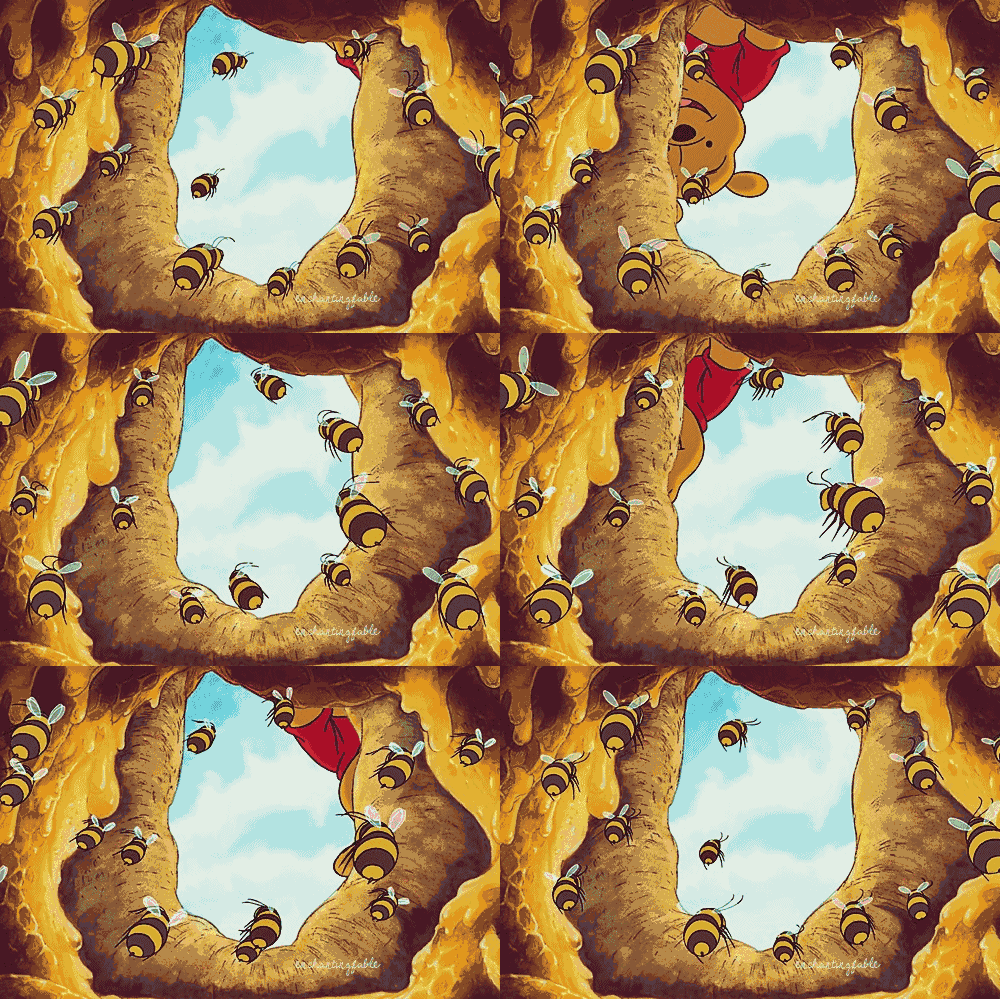
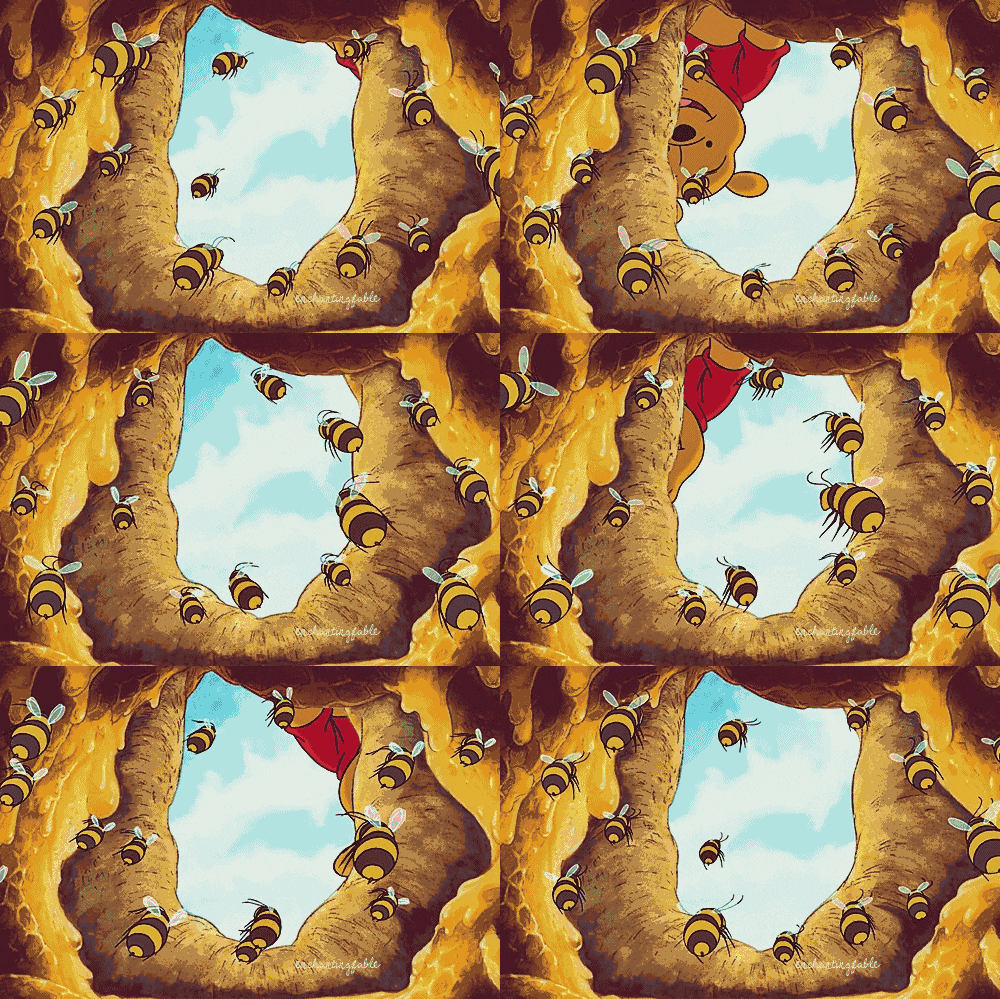
Image/GIF was taken by: https://media.giphy.com/media/12qphcuKTtGVoI/giphy.gif

In conclusion, bees are our lives without them there is no us! and we need to take all the steps we can to help reduce the declining rate! We gotta love the bees as much as Winnie the Pooh does! #Savethebees!

Reference: https://www.greenpeace.org/usa/sustainable-agriculture/save-the-bees/

Plants as Pets

Pets are sweet and friendly companions and we all love to have them around us. People not only keep animals but plants are also regarded as pets. Additionally, they have a really good effect on our physical and mental health. In this blog, I would be elaborating those effects.

According to an article, plants remove the indoor pollution from our environment and cleanses the air. Sick Building Syndrome is often seen is workplaces or homes with poor ventilation and indoor air quality. Indoor plants purifies the air and releases molecules that contribute to an indoor fresh air environment.

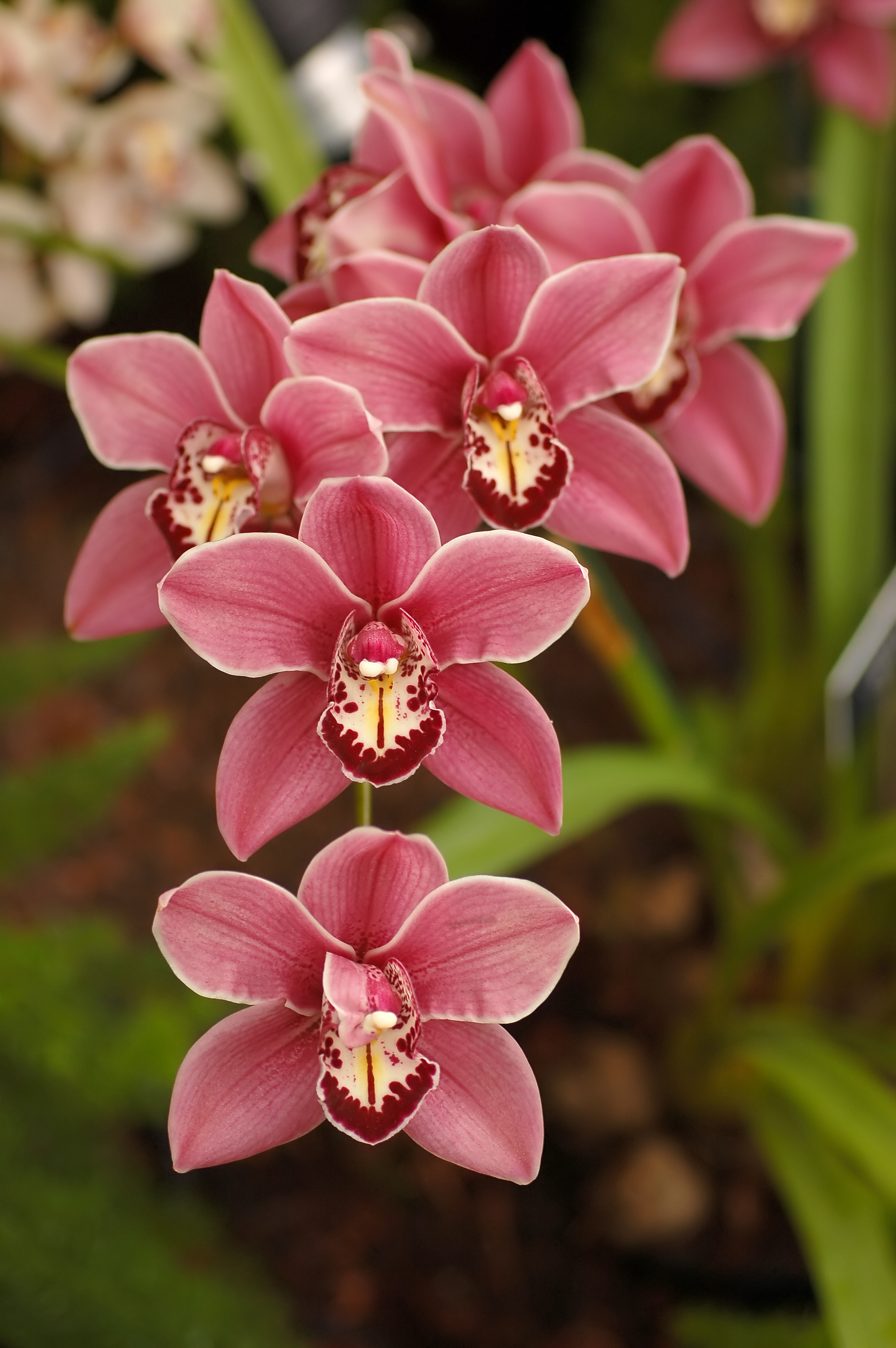
A tweet from a construction company, suggests the importance of plants on mood. Think of it this way, we feel aesthetic when we are surrounded by the beautiful nature, plants and flowers evoke positive response in our emotions. In a study, flowers led to positive moods after 3 days in females, flowers given to men/women in an elevator elicited more positive social behaviour and flowers given to elderly led to an increase in their episodic memory. It is amazing how these beautiful creatures can trigger beneficial activities in the body. Here’s a delightful flower picture for you !!!

Taking care of a plant by keeping it under a sunlight and nourishing it with water allows us to be more mindful. Mindfulness not only decreases anxiety and depression but also leads to increased productivity and self-esteem.

Also, there are smart planters in demand which literally turns your plant into a pet by sensing moisture, sunlight etc. and displaying animations accordingly to maintain the health of the plant.

Sounds amazing, doesn’t it !

Open The Door on Science

A blog about the importance of open access data.

Who hates paying subscriptions for materials they barely use or are rarely what they’re looking for? A LOT of people. Well, thankfully there is a way around expensive, impersonal subscriptions, and its called open access. Open access is a form of free, unrestricted access to research, such as journal articles and books. It is becoming increasingly popular as it allows everyone to gain knowledge. Beyond that, in academia it allows the ability to replicate the study, build on the study, or simply just learn from the study. Not only is open access beneficial to the readers, but it is also beneficial to the authors and publishers. It can create lower costs in publishing, and can send an author’s name around the internet further, reaching more people and potentially opening up new opportunities. ELSEVIER and Research Gate are great databases about science and health to start your exploration into open access data!

But how is it done? A few key factors are needed to allow for data and knowledge to be open access. Metadata and a creative commons license is needed. Metadata is a set of data that describes and gives information about other data and must be available to the reader. There are 3 main types of metadata:
1. Descriptive metadata – information about the resource (i.e. author, title, keywords)
2. Structural metadata – information about containers of data (I.e. pages, chapters, versions)
3. Administrative metadata – information to help manage a resource (i.e. date, publisher)

Creative commons licenses are public copyright licenses that allow free distribution of someone’s work to be done legally, whether the distribution is for friendly sharing purposes or for the public to learn, use and build upon the work. They are administered by creative commons, a non-profit organization, and there are 6 main license types available. To learn more about creative commons, visit their website at https://creativecommons.org/

Creative Commons logo, obtained from wikimedia.

The following will go through an example journal article that is open access.

Article title: Long-term decline in stream total phosphorus concentrations: A pervasive pattern in all watershed types in Ontario.
Citation: Stammler, Katie & Taylor, William & Mohamed, Mohamed. (2017). Long-term decline in stream total phosphorus concentrations: A pervasive pattern in all watershed types in Ontario. Journal of Great Lakes Research. 10.1016/j.jglr.2017.07.005.

Summary: This paper explains the importance of shedding light on the nutrient loading issue in the Canadian Great Lakes. This issue is causing imbalances in the marine ecosystems and can create algal blooms. Nutrient loading, also known as cultural eutrophication, can be caused by the household products that we, the community, use daily, such as bathroom cleaners, toothpaste and shampoo. But more recently it is being caused by agricultural practices, land-use practices and water, waste and storm management in urban areas.

This paper highlights the importance of open access as it itself used data from open public access databases. Without access to this past data, the researchers would not have been unable to create a study with such strength. As for readers, without this information being open access, many people would have missed out on the important purpose of this study and may have continued to be unaware of the issue. Additionally, many new researchers would not be able to build on or replicate the study. This is how science is done, through collaboration and the building on of past data. Without access to this past data, science would never move forward as a field.

Design a site like this with WordPress.com
Get started