Building off the Millennium Development Goals nearly 15 years later, in 2015 the U.N. established the current 2030 Agenda for Sustainable Development, to find more sustainable ways to live on this earth we share. With the current methods of development – let’s not even get into how only a small fraction (<12%) of one-time-use-plastics is actually recycled, and the rest ends up either incinerated or in landfills- the 2030 agenda aims to find solutions to save our Earth. With current advances in technology, we are in an optimal position to be sustainably developing our landscapes.
The 2030 agenda outlines 17 sustainable development goals with 169 targets, agreed upon by an almost astounding unity by world leaders, and was implemented on January 1st 2016 for a 15 year period. The 2030 agenda aims to create global sustainable development, where all countries partaking shall have huge gains that extend to all parts and corners of the world. Goal 13 as outlined by the Agenda, focuses on Climate Action – to take urgent action to combat climate change and its impacts.
Goal 13 of the Agenda focuses on strategies and ways climate change can be mitigated through polices and sustainable development. It promotes educating and creating awareness, of how real of an issue climate change is. More general public awareness is necessary as there are many individuals – even world leaders – that are simply un-aware and un-educated in the reality of climate change. This is detrimental as one of the most effective manners of climate change mitigation is the implementation of government policies. On a global front, goal 13 undertakes the responsibility of helping under developed countries mitigate climate through the Green Climate Fund. This fund is a commitment undertaken by developed-country that were parties to the United Nations Framework Convention on Climate Change. The goal is for developed countries to aid undeveloped countries jointly by assembling $100 billion annually, by 2020 from all party sources to address the needs of developing countries.
Hopefully, this new 2020 decade ushers in with it global commitment to fulfill the 17 goals of the 2030 Agenda. But above all, the influence of our commitment – on an individual and personal level – to mitigating climate change may be what inspires others, to lend a helping hand in fighting climate change.
George Evelyn Hutchinson, (born on 13 January 1903) in Cambridge, is considered to be the father of modern ecology by many. On receiving the Tyler Prize in 1973, he said that the credit should go to Darwin and Charles Elton. Nonetheless, he is credited with infusing the science with theory that was anchored in natural history and transforming it into a science.
His father, Arthur Hutchinson, was a mineralogist who would have been the discoverer of radioactivity and terrestrial helium if he had not insisted on first finishing some work at hand. Hutchinson left behind the science of modern ecology, because ‘everywhere in education we should aim at seeing life as a sacred dance in which the champions are those who give most beauty, truth and love to the other players.’ His earliest work was on aquatic ecosystems. He studied limnology of lakes of the western Transvaal, South Africa, of the Tibetan plateau, and of northeastern North America. In 1935 he demonstrated the importance of the horizontal movements of water in stratified lakes in mixing the uppermost layers of water with the lowest layer. Later he obtained irrefutable proof of the circulation of phosphorus in stratified lakes. His Later work focused more on various aspects of evolution. Some notable works of his include: The Clear Mirror (1936), The Itinerant Ivory Tower (1953), A Preliminary List of the Writings of Rebecca West, 1912–51 (1957), A Treatise on Limnology, 3 vol. (1957, 1967, 1975), The Enchanted Voyage (1962), The Ecological Theater and the Evolutionary Play (1965), Introduction to Population Ecology (1978), and The Kindly Fruits of the Earth (1979).
In 1949, he was elected to the American Academy of Arts and Sciences and to the National Academy of Science in 1950. He posthumously received the National Medal of Science in 1991.
An Inconvenient Truth is an American documentary released in 2006 centered around the climate change campaign that was created and presented by American politician and environmental advocate Al Gore. The film is a recording of a presentation that Gore has done “almost a thousand times” as he stated, in which he shares personal anecdotes and opinions which led him on his journey to make people aware of climate change, paired with a slide show with graphs, charts, and imagery to support his points. Gore identifies climate change as a moral issue over a political one, and stresses the consequences of climate change if there are no mitigating factors put into place.
The topic of climate change itself is an umbrella, underneath which comes not only the effects on human life, but the effects on an array of species, which includes plant life forms. Deforestation due to human activity leads to the loss of natural carbon sinks in the environment, which in turn leads to more carbon released into the atmosphere, which negatively impacts the global environment. These negative impacts in terms of plant life include loss of plant species due to inhabitable conditions, which effects many animal species, and in turn effects humans.
The film was a success, and became well known for its campaign against climate change and for describing to viewers what a world would look like in the near future if our carbon footprint remained the same.
Charles Darwin was an English naturalist, geologist and biologist, best known for his contributions to the science of evolution. He lived a long life from 1809 to 1882. During that life span, he proposed that all species may have descended from common ancestors, and since then, this has become a foundational concept in the field of science.
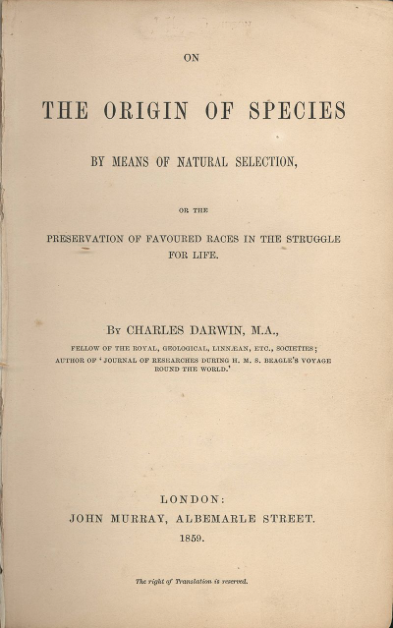
His controversial book, “On the Origin of Species,” published in 1959, consisted of detailed observations explaining the concepts of common descent through the use of homologies between humans and other mammals. He outlined sexual selection as the cause for differences between races.
The concept of natural selection also came to light, explaining that there is a recurring struggle for existence where any variation that is deemed profitable to an individual will increase chances of survival, emphasizing the link with survival of the fittest. This book ended with the last word being the only variant of “evolved” found throughout his first five editions of the book.
Darwin’s work consisted of 4 postulates. He declared that individuals in a population have variations which make them unique, some of these variations are passed on to offspring, some individuals are better able to survive and have more children than others due to the inherited variations, and finally, variations that increase survival and reproductive success will have a greater chance of being passed on than those that do not.
Although all of these findings and controversial ideas came to light in 1959 with Darwin’s sold out book, the term evolution was only written in 1971, in his, “The Descent of Man,” and from then on became associated with this thematic. The rest is history. Literally.
Although at this point, hope for humanity remains at an all time low, raising the question, are we regressing as a species?
I have been working on improving my science communication skills, an increasingly desirable trait within the science community. Not only have I been blogging and tweeting (follow my twitter! @MirandaFerrant3), but I have been Wikipedia editing.
Before I get into becoming a wikipedian, I want to quickly discuss the benefits of blogging and tweeting if you are trying to advance your science communication skills. Blogging has improved my writing skills as it allows me to develop clear, concise writing habits, and it allows me to write in plain language, something you don’t get much practice in as a science undergraduate. It also refreshed my skills on effective, quick researching. Twitter has improved my science communication by being an open platform for networking, collaborating and learning. It’s an easy form of quick communication to peers, colleagues, or potential opportunities.
Wikipedia is a known all around the world for its fast and mostly accurate information on a number of topics. It’s an online encyclopedia and you can search anything you’re interested in learning. But have you ever stopped to think how these Wikipedia pages come to be? Well, in simple terms, it’s people like you and me who all contribute and edit pages of their choice!
To help better my science communication (and for some awesome additions to my CV/resume) I have become a Wikipedia editor, or Wikipedian, myself. It is very easy to do, just make an account, pick a page/topic, do some research, and put everything you learned into Wikipedia! The platform is very user friendly, which makes everything that much easier.
The two pages I will be editing are: Phenology and Jane Colden. Phenology has always been one of my main interests in school, and I would love to put my own touch on a Wikipedia page I have read many times over. I will add into the page a category for climate change and write a blurb on a warming climates effects on invasive species in many countries in North America. Warming climates are causing invasive plant species to bud, bloom, and grow earlier in the season, allowing these plants to out compete and harm native plant species. This can cause changes in the animal-plant relationships that are phenologically sensitive.
Jane Colden was the first female botanist in the new world. She inspired many botanists, both men and women, despite not being recognized as a professional botanist during her life. She had many famous allies and described many new plant species in America, however she was not honoured until many years after her death.
I am excited to continue my work in bettering myself and to begin to contribute the information found on the internet. I will be back to edit this blog with updated information on where to find my contributions to the two pages above.
………………………………………………………………………………………………………………….
I am back with my update on wikipedia editing and becoming a wikipedian!
A simple summary about my experiences is that I enjoyed the process of editing articles. I chose articles I have a genuine interest in as I got to learn more about each topic, share the knowledge I found only became more exciting. The wikipedia platform is fairly easy to use and the visual editor really allows for beginners to have easy access to editing. I am also pleased to share I not only edited two articles, I have also uploaded two images to Wikicommons. By doing this, I furthered my understanding on copyright laws and metadata. Pro-tip: Screen capturing your original pictures removes your name from the metadata!
I truly felt like a wikipedian after I completed the training modules on Wiki Edu. Registering with this platform within wikipedia was as easy as clicking 1 button, and this platform opened up a world of wikipedia training opportunities. Training modules included training on wikipedia policies, finding sources, which sources should be referenced, how to edit an article, the best ways to create your own article, and plagiarism. These modules did take some time to complete, but overall they were effective. They help users better understand how wikipedia works and why it is such a unique open access database. a few things I learned through these modules are how wikipedias plagiarism rules differ from plagiarism rules students are normally used to, how sources must be vetted before they are cited and used, and how to properly share images.
The modules would have been more effective if we completed them before editing pages, especially the module about images as I had to upload some myself. Despite this, I see the value in these training modules and will use what I learned for future edits and to better the edits I have already done.
I loved editing wikipedia pages and will continue to do so in the near future.
What is the goal of sustainable agriculture? It is to meet society’s food and textile needs in such a way that future generations will not have to compromise to meet their needs. How does sustainable agriculture accomplish this? By incorporating a healthy environment, economic profitability and social and economic equity. Every person has a role to play, this includes growers, distributors, consumers etc. Without this practice, millions of people are affected by food insecurity. The limited availability of nutritionally adequate foods or inability to acquire it in socially acceptable ways, can have adverse effects on physical and mental health. According to statistics Canada, the prevalence of food insecurity in Canada there was a significant increase from 11.3% in 2007-2008 to 12.4% in 2011-2012. The other big challenge that sustainable agriculture is facing, is rapid depletion of natural resources- When the production of food and fiber degrades the natural resource base, future generations are unable to produce and flourish.
However, sustainable agriculture is more than a collection of practices (e.g. crop rotation and diversity, cover crops, no-till farming, integrated pest management, agroforestry, renewable energy use etc.). It is also process of negotiation: a tug of war between the interests of an individual farmer or of people in a community who need to solve the complex problem of how food and fiber should be grown. In order to promote more sustainable agricultural systems among society, we need to create and implement policies that integrate social, environmental, and economic interests.
Check if your local library or university library allows you to have access to the documents in their online databases. If you are an alumni of a university, you may also be given permission for some time after your graduation date to use their databases. In addition, consider whether you can obtain access to multiple library systems. For example, if you live outside of the City of Toronto but go to school or work in the city limits, you may still qualify for a Toronto Public Library card.
Conduct a simple Google or Google Scholar search to see if the document you are searching for is already available somewhere for free either as a PDF or HTML.
If what you are looking for is a research paper that is paywalled behind a journal, consider emailing the author of the paper directly to politely ask for them to send you a digital copy of their work. Their email should be easily accessible from a simple Google search of their name.
Use an app such as PressReader to access newspaper articles that are behind a paywall.
On desktop, often times opening a webpage to an article in your browser’s “Private Mode” or “Incognito Mode” will allow you to bypass paywalls.
Check if the webpage you are trying to access has been already archived in the Internet Archive’s WayBack Machine (a service which archives web pages). When the WayBack Machine saves the webpage, the paywall block is usually removed.
I’ve had the pleasure of contributing to the making of an online film festival for the York University community. York University professor Dawn Bazely has organized her senior applied plant ecology class to create a film festival that will broadcast everything plants. From their importance, to the issues they’re facing, to their amazing capabilities, this film festival will captivate and inform the audience on all things plants and the natural world.
The film festival will be available online, with a mix of films from the Sound and Moving Image Library and online resources. And not to worry, it will include both fictional and factual films for those of you who aren’t completely sold on documentaries.
Myself, along with classmates, have all personally contributed to and voted on the final film selections that were nominated for the festival. The films I personally nominated were How To Grow a Planet: The Power of Plants and Honeyland. I even had the added pleasure of collaborating with Dr. Bazely in creating Google Forms for easy collection of individual inputs.
A little side note- Google Forms are awesome!
How To Grow a Planet: The Power of Plants is an insightful BBC television series that explains to its viewers the historical importance of plants. I nominated this film as I wanted to inform viewers that plants are not only important in the modern world, but they have long roots (pun intended) in the evolution of us. Plants jump started the evolution of many species, they carved the beautiful bountiful landscapes around the world, and they hold vital importance in the creation of a livable world.
Honeyland is an amazing film that follows a wild beekeeper and her journey to sustainable living. I thought it would be a great addition to festival as it changes the focus from plants to living sustainably, something we should all strive for, and it allows the viewer to use critical thinking to make connections between many environmental topics and plants. Although the film sounds like a movie about bees, Honeyland highlights climate change, biodiversity loss, and the exploitation of natural resources. This can branch into topics such as sustainable agriculture, invasive species and their risks to indigenous species, the extinction crisis, and so many more plant ecology issues.
The film festival will be available by the end of the winter 2020 term and I will update this blog with instructions on how to access it. I hope viewers leave feeling inspired, and learn some new amazing things about plants, ecological studies and making a difference in the world!
Primary sources: A primary source is a source that displays original work and thinking or is the source of new evidence without any further interpretation or commentary. In the sciences, some examples of primary sources might be research journal articles, theses, lab reports, field or lab notebooks, datasets, interviews, or pictures. A typical example of a primary source in applied plant ecology is the basic research paper which is published in publications like Nature, Science, or Plant Ecology (Springer). The article only provides the basic new research conducted by the scientists and is not a comment or interpretation of other research.
Secondary sources: A secondary source is a source that summarizes, reorganizes, comments, or restates the information that is found in primary sources. The purpose of doing this is to help organize the information, make it easier to understand, and provide an analysis on the information. In applied plant ecology, this might consist of things such as a textbook or meta-analysis studies. For example, to an undergraduate student in first year biology, it would be much too difficult and time consuming to find, read, and understand multiple research papers (primary source) for the vast amount of information in their biology course. Therefore, a textbook (secondary source) which compiles all the research, puts it into context, and makes it easier to understand is used for efficient learning.
Tertiary sources: A tertiary source compiles, organizes, and indexes primary and secondary sources about a subject matter and helps the reader to find other research. Examples include encyclopedias, manuals, guidebooks, dictionaries, and bibliographies. An example of a tertiary source is applied plant ecology would be a field guide that helps the book user identify plant species or a manual which helps researchers by outlining basic research methods to follow in their experimental design.
It is no secret that our planet is suffering. From insurmountable climate change, to holes in the ozone layer, the composition of Earth’s ecosystems is plummeting at a catastrophic rate. If we do not make drastic changes fast, we may as well prepare our swimsuits, such as in the film Waterworld, released in 1995, starring Kevin Costner. In this film, the polar ice cap has completely melted, and sea levels have overtaken all land, leaving the population scrambling to survive in water.
The concept of applied plant ecology promotes the idea of environmental conservation, a theme that is physically absent from the film, though metaphorically very much there. The inability of man to save the planet by diminishing carbon footprint, using green energy, forbidding mass production via factories, reversing the damage done to the ozone layer, protecting ecosystems, species, biomes, etc, led to a calamitous increase in global temperature, and thus the melting of ice, flooding the continents.
This film seems very preventative in nature, and exposes the fact that the concept of global warming/climate change is very much real and has been much present for the past 20 + years. The movie is set in the year 2500, but is based on a book written in 1986. If novelists from 40 years ago see a problem, then so should we as a collective.
Waterworld follows the main character who battles his way to escape thieves who want his “equipment” and boat. The characters are barbaric, dirty and lack moral integrity, emphasizing the possibility of regression imposed by the planet if we do not stop this ongoing assault. The pursuit of “nature” is not even implied throughout the film, as there hasn’t been sighting of anything remotely green for years. The newest generation did not know what greenery was, which is why the discovery of land in the film is very inspiring. The characters go as far as to unironically say they’d have to give it a few days to get their “land legs,” as they have spent their lives on boats and jet skis.
Jet ski
Thus, the film portrays multiple themes and preventative/warning concepts. We are urged to protect and reverse the damage we have imposed upon the planet, lest we desire to find ourselves forever swimming.







 Applied Plant Ecology Winter 2020