Tansley’s Troublesome Trials

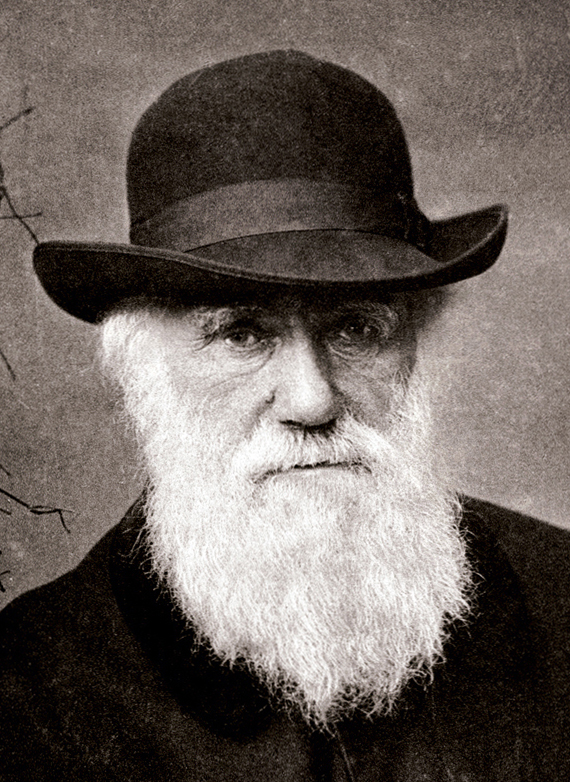
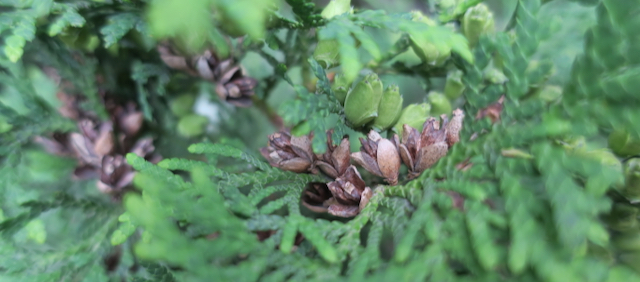
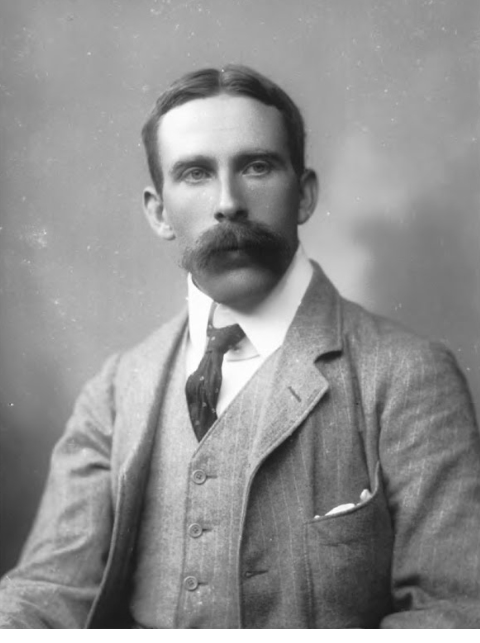
Sir Arthur George Tansley, was an English botanist and a pioneer in the science of ecology. In 1917, he published a paper on the competition between Galium saxatile and Galium sylvestre in different soil types. The paper itself, consists of the relevant elements any typical paper should, ranging from a clear hypothesis, to a detailed experimental methodology section, revealing an exceptional grasp on the material, especially given that this was over 100 years ago. Nevertheless, Tansley’s research maintains a single blatant discrepancy. Let’s dive in.

The findings from Tansley’s work suggest that both species in question were capable of surviving, however, differences were revealed with regard to soil type. Although all of the data are indeed there, a statistical analysis seems lacking. Today, this form of testing can be regarded as a hallmark for research papers.
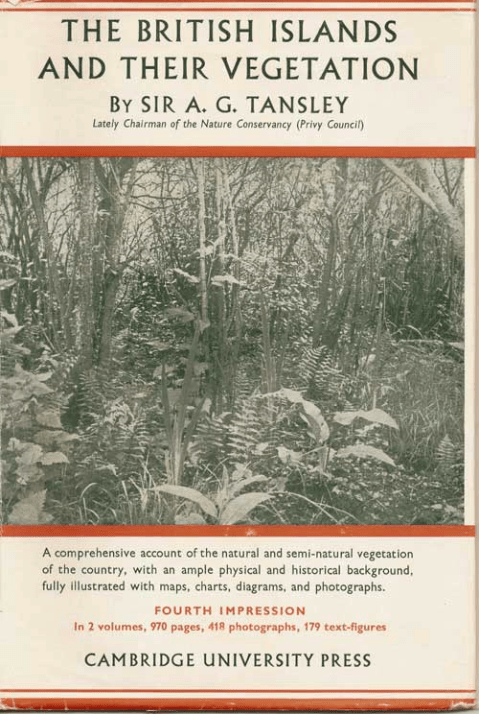
TANSLEY’S, “THE BRITISH ISLANDS AND THEIR VEGETATION”

Upon further analysis, we deduce that the reason for which Tansley did not include a statical analysis in his paper is actually quite humorous. Statistical testing hadn’t been invented yet! Statistical analyses were in their infancy period. The t-statistic was only introduced in 1908 by William Sealy Gosset, making this methodology too recent for Tansley to include in a publication.

This valid excuse evokes deeper thought. One may ask, “How has scientific thinking evolved in the past 100 years?” And, “How much further do we have to go?” That, my friends, is a question to which nobody knows the answer. All I can say is, I hope they won’t go inventing many more tests. There’s only so much us students can handle!

Advice to Women in STEM – Podcast or Perish

By Apple Inc – macOS image, Public Domain, https://commons.wikimedia.org/w/index.php?curid=83436857

On November 4 2019 Professor Dawn Bazely was a guest on the podcast “Podcast or Perish”. This episode discussed barriers women face in STEM, and how they are under represented or disregarded on wikipedia and other platforms. Half way through the episode (37:44) she mentions that women need to be better at becoming rampant self promoters. She mentions that many of the women academics and graduate students she works with tend to undervalue or set really high expectation for themselves and tend to underestimate their potential and their skills when applying for jobs etc. I would definitely agree with this piece of advice because as cliche as this might sound, no one is going to push or advocate more for you in place of themselves. So knowing your capabilities and being able to speak up and out is very important. 

In relation to women, in recent years this theory of the “confidence gap” has emerged. This theory suggests that women feel less confident than men in their own work and abilities. In the corporate world that lifts up self promoters, the modest women avoiding self promotion results in them being passed over for projects. Although this theory seems be applicable to the experiences of some women, this issue is more complex. Research shows that women in fact feel just as confident in their leadership skills and abilities as their male peers. It’s more that women struggle to find the balance between modesty and confidence. If you’re too modest you get looked over but if you’re too confident you get faced with the “backlash effect” and are perceived as less likeable and hireable. Here is the article about women’s confidence in the workplace for more information (https://www.theatlantic.com/family/archive/2018/09/women-workplace-confidence-gap/570772/). With all that said I think being able to read a room and people is very important in addition to rampant self promotion because this way you can be able to see how your actions are perceived by others in order approach ways of self promotion that won’t seem so threatening. 

Becoming a wikipedian: account creation and contributing to a plant ecology wiki page

Creating a Wikipedia account and becoming a wikipedian was relatively simple, selecting an appropriate username posed some challenge as some usernames were already taken, but I settled on Bambuseae-8368, as it is a plant I have become familiar with and like due to its ease of growth as well as its versatile spectrum of uses.

There were many options presented in class as suggested editable pages the challenge stems from selecting an appropriate page to edit as it requires detailed additional research in a particular plant ecology subject and finding the gaps in information to edit and contribute to the wiki page entry.

The experience gained from learning about Wikipedia editing and the intricacies behind it was very useful. The training modules that are integrated are very helpful in providing guidance for the average individual that wants to get involved in editing and contributing to Wikipedia content, and the dashboard is quite user friendly and contains easy access to guiding resources as well as senior editors who are willing to help you get started. The training modules cover the basics, and aspects of editing a public access website with credible sources without compromising copyright laws, all while promoting open active discussion  to make an existing page more informative and insightful to the general public.

Diversity in Ecology- Who is Dr. Wangari Maathai

By Kingkongphoto & http://www.celebrity-photos.com from Laurel Maryland, USA – Wangari Maathai 2004 Nobel Peace prize winner, CC BY-SA 2.0, https://commons.wikimedia.org/w/index.php?curid=75053665

Dr. Wangari Muta Maathai born April 1, 1940 lived a full life as a renowned social environmental and political activists. She was the founder of the Green Belt Movement in 1977, (https://www.greenbeltmovement.org) an organization that aims to restore ecosystems and reduce impacts of climate change by planting trees and spreading awareness about conservation. Her efforts to develop her community through planting trees has garnered her the 2004 Nobel Prize for Environment. Even with her passing on September 25, 2011 her work was able to live on. To date this organization has contributed in planting over 51 million trees in Kenya. Her broad-based grassroots organization established a Pan African Network which exposed others to this approach in conservation in 1986. This starting similar initiatives in countries such as Tanzania, Uganda, Malawi, Ethiopia, Zimbabwe, Lesotho etc.

Over her life she has accomplished so many things. She was the first woman in East and Central Africa to earn a doctorate degree. Professor Maathai got her bachelors in Biological science, then moved on to get her masters and finally Ph.D. in Germany (1971) where she taught veterinary anatomy. From then, she become the first woman to become the chair of the department of veterinary anatomy (1976) and an associate professor (1977) in the region. She was active in the National council of Women (1976-1987) where she became chairman (1981-1987). It was while she served in this council when she introduced her idea of planting trees. For more information on her life work check out her biography (https://www.nobelprize.org/prizes/peace/2004/maathai/biographical/) or her wiki page.

Understanding Open Access, Metadata and Creative Commons License

By MikeAMorrison – Own work, CC BY-SA 4.0, https://commons.wikimedia.org/w/index.php?curid=71278711

Open access is an international movement that aims to provide people with free online access to academic information. A publication is defined as open access when no financial, legal or technical barriers is involved in receiving their information. Open access is very important because it increases visibility and reuse of reliable academic research and in a time where the spread of false information can be so easy, having platforms that make reliable and honest information more accessible is great. 

Metadata is basically information on information. It’s a set of data that gives information about specific data. Metadata can either be created manually by people or by computers automatically. There are three main types of metadata, First is Descriptive metadata this describes resource for purpose of identification. For example, if you took a picture the metadata would describe the subject of the picture where it was taken, the date and time and even the name of photographer. Second is structural metadata, this shows how compound objects are put together. So in that picture the metadata would show the type of camera used, the file format the picture was saved under and the technical dimensions of the picture etc. Third is administrative metadata, which provides information to help manage resources. This is subdivided into two categories rights management metadata which deals with intellectual property rights. In relation to the previous example this data would say who can view the picture, under what conditions and if they can reuse it. The second subtype is preservation metadata which is the information required to archive and preserve resources, this would keep track of actions taken to preserve the picture for later use. 

Creative common licences gives people the opportunity whether its individual creators or large companies a simple standardize way to grant copyright permission to creative work that can be copied, distributed, edited etc. all within the boundaries of copyright law. With that being said holders of this creative commons license still requires themselves to credit the owner, maintain copyright notices on all copies of the work among others. So with this license you are still required to get permission to do anything that the copyright law reserves exclusively to the licensor of the original work.  

Applications in Plant Science is a monthly peer reviewed open access journal providing newly developed, methods and tools in all fields of plant science. This article titled Small unmanned aerial vehicles (micro-UAVs, drones) in plant ecology provides an innovative way to mapping vegetation over small to medium sized areas using small aerial drones. 

Article Citation: Cruzan, M. B., Weinstein, B. G., Grasty, M. R., Kohrn, B. A., Hendrickson, E. C., Arredondo, T. M., & Thompson, P. G. (2016). Small unmanned aerial vehicles (micro-UAV’s, drones) in plant ecology. Applications in Plant Sciences 4: 1–11.

Distinguishing between primary secondary and tertiary resources

Distinguishing between primary, secondary and tertiary literary sources is an essential skill for anyone in academia and can make or break a submitted paper. Questions stemming from it may circulate in the minds of many students (including me during 1st year) circulate around “is this a firsthand knowledge/ lab report or resource?”, “Is this a review?”, “is this from a textbook or an opinion piece?”.  Over the years I’ve found the general way to distinguish between these sources as follows:

Peer-Reviewed Primary sources: These are usually crated as close to the original area of study, such as a direct lab report from other scientists in the field of work. (A good shortcut would be to see if the paper includes an abstract and results section, but still scan through it as some papers can be sneaky). Works like these have to be peer reviewed before publishing in scientific journals or specific literary compilations.  Unpacking multi-trophic herbivore-grass-endophyte interactions: feedbacks across different scales in vegetation responses to Soay sheep herbivory, 2018 (https://doi.org/10.1007/s00114-018-1590-9)

Peer-Reviewed Secondary sources: These are generally the next step down from primary resources, these sources are typically based on the primary source, these include reviews, or journals where the authors interpret the data from the study(ies) of others;  An example of this would be publishers such as The Science of Nature

Tertiary sources: generally these are the next step down from the previous, these resources tend to summarize the research found in secondary resources. An example of this would often be textbooks or reference texts such as Raven’s Biology of Plants (8th ed.) Evert & Eichhorn. 2012

References from some university libraries covering this subject:

https://www.crk.umn.edu/library/primary-secondary-and-tertiary-sources

https://library.carleton.ca/help/primary-secondary-and-tertiary-sources

Henry David Thoreau Ecologist (1817 – 1862)

Henry David Thoreau, born and raised Massachusetts, and from a young age loved all things nature. He studied how plant seeds are spread and came up with the theory of forest succession. Known as an observer and naturalist. He graduated from the prestigious Harvard in 1837. Thoreau publish his classic book, Walden, about the ties between people and nature. His book discussed embracing life in the woods. This was not his first published book but the book that set the path for him to be known as a naturalist. The book describes the years he spent at Walden Pond and how he embraced nature and the simplicity of his surroundings.

By B. D. Maxham – National Portrait Gallery, Public Domain, https://commons.wikimedia.org/w/index.php?curid=72850880

His philosophy on how to live naturally created a path for modern environmentalist ideals that are sill applied today. Thoreau is mostly however recognized for his environmental endeavor form later years of his life, where he also became more politically active. He was constantly aware of what he used, intentional about what was necessary and what was waste He can be remember for saying,

“Thank God men cannot fly, and waste the sky as well as the earth.”

He as sadden by the way he saw how wasteful humans were. Treating the environment with respect was imperative to him. Also saying,

“What we call wildness is a civilization other than our own. In wildness is the preservation of the world”

He passed away on May 6, 1862 because of tuberculosis at the age of 44. His work and forward thinking was beyond his lifetime and he will forever be remembered for creating a path in environmentalism.

In reference to: https://www.americanprogress.org/issues/green/news/2011/07/13/10013/its-easy-being-green-happy-birthday-henry-david-thoreau/

Sustainable Agriculture Practices: Crop Rotation

Crop rotation is one of the most widely used methods to promote sustainable agriculture. Crop rotation is accomplished by successively growing a series of different types of crops on the same plot of land. 

When only one type of crop is grown on a piece of land, the soil eventually becomes depleted of certain nutrients and plant yields in later years are significantly reduced and the use of fertilizer may be required. By changing the types of crops that are grown on the soil in yearly cycles, different nutrients can be restored back into the soil. For example, planting legumes like alfalfa and clover help increase the amount of nitrogen in the soil thanks to their capacity for nitrogen fixation. There are also other benefits for the soil. For instance, planting crops with short roots (typically vegetables) one year followed by plants with longer roots the next year (typically grasses and cereals) may help stabilise the soil and prevent erosion of the soil by water.

In addition, rotating crops prevents problems with insects, weeds, nematodes, and diseases that tend to affect monoculture crops. 

Yields in crops that grow in rotations are approximately 10% higher than those that are grown in monoculture crops. 

Crop rotation has been used throughout human history wherever agriculture has been practiced.

File:Crop rotation graphic -- en.png
A typical crop rotation. Source: Wikimedia Commons

Source:

https://en.wikipedia.org/wiki/Crop_rotation

Charles Darwin (1809-1882)

Charles Darwin: Picture from Wikimedia Commons

Charles Darwin is one of the most famous biologists and naturalists in the world of science. He was born to Robert Darwin and Susannah Darwin on February 12, 1809. Since his father Robert Darwin was a successful physician, so in general he belonged to a wealthy and respected family. He had five siblings with whom he would attend the Unitarian chapel along with their mother. However, unfortunately his mother died in July 1817 when he was only eight years old. He started attending University of Edinburgh Medical School in October 1825, but found lectures dull and surgeries distressing. Due to this he had started neglecting studies and so his father sent him to Christ’s College, Cambridge, to study Bachelor of Arts degree. He graduated from Cambridge in 1831.

Charles’s Darwin was always interested in studying natural history and so planned to visit Tenerife with some of his classmates after graduation in order to study natural history in the tropics. On 29th July 1838 he visited his cousin Emma Wedgwood and ended up marrying her on January 29, 1839. According to Darwin, marriage came with an advantage of having constant companion and a friend in old age. After marriage he had ten children and two of them died in infancy. Anne Elizabeth Darwin was his second child and his eldest daughter. She died at the age of ten and her death had a traumatic effect on both Darwin and his wife Emma. Being a devoted father, Darwin always feared when his children fell ill that they might have inherited weakness due to inbreeding as he shared close family ties with his wife and cousin. So he examined inbreeding in his writings and compared it to advantages of outbreeding in many species.

Darwin today is known for his Theory of evolution and in 1859 he published his book On the Origin of Species. He proposed one of the main fundamental concepts in science that all species have descended from a common ancestor. In 1882 he was diagnosed with a heart disease and unfortunately died on April 19, 1882.

Sources: https://www.britannica.com/biography/Charles-Darwin

https://www.biography.com/scientist/charles-darwin

Sustainable Agriculture

By Prabal Barua – Own work, CC BY-SA 4.0, https://commons.wikimedia.org/w/index.php?curid=35477050

Let’s start off with explaining what is sustainable agriculture. As its name implies, it’s farming in a sustainable way. For decades industrial agriculture has been the mode of producing food in bulk for everyone. This systems consists of farms growing the same crops every year, utilizing fertilizers and pesticides which are bad for the environment in order to get the greatest yield. This system isn’t sustainable because it’s only using up the resources (depletion and contamination of water and soil) it needs to grow. 

Sustainable Agriculture is a system that aims to mimic natural ecological processes to meet society’s food needs in the present without impacting the ability for future generations to meet their requirements as well. Practices of sustainable agriculture promotes soil health by minimizing tilling while planting fields of various crops year after year. It lowers pollution levels by nurturing the organisms that control crop destroying pests instead of using chemical pesticides. 

Sustainable agriculture is the way of the future because of its contribution to environmental conservation. This practice helps to replenish the land and its natural resources all while suppling us with the food we need to survive. It betters public safety as this practice avoids the use of toxic pesticides and fertilizers to produce food that is safer to eat. In addition to this sustainable farming results in farmers receiving a fair wage for their produce potentially reducing farmers reliance on government subsidies. The money the government saves from providing less subsides can be used elsewhere, for example in funding social programs to make foods produced through sustainable methods more accessible and affordable to lower income individuals. 

With all the benefits sustainable farming has to offer still critics say that these methods results in lowered crop yields while using more land, and that this would lead to inevitable food shortages as the human population exceeds 8 billion by 2030. But to combat this many individuals advocating for this sustainable practice suggest that with increased efficiency these lands can produce as much as these conventionally farmed lands.

Design a site like this with WordPress.com
Get started