Becoming a Wikipedian

While many of us usually go Wikipedia as a quick access to find facts, or a quick fact check, in the academic world it has been engraved in us that Wikipedia is not a reliable source of information. This is because of the mere fact that just anybody can create an account and edit the information that can be found. Now this can be seen as problematic and an unreliable source of information. However, the power in anyone being able to edit a Wikipedia page can also motivate one to become an expert on a particular topic in order to be able to give accurate information that will be disturbed to millions of people that utilize it.

Before this class, I had never thought of creating a Wikipedia account, yet alone editing a page. The first step to becoming a Wikipedia is simply creating account, which I did. The next step was to find a particular topic of interest to me that I would edit. What I realized whilst trying to make a decision on this, I didn’t want to just edit any page. I wanted to edit a page that I was interested enough to do my research and homework on, so that I would provide beneficial information so that my work would be credible.

I would hope future editors and creators on Wikipedia would go in with the same mindset – editing to provide credible, reliable information so that our beloved Wikipedia can increasingly become more credible. We all enjoy a good Wikipedia read, I enjoy the platform and will continue to use it as a quick search too. I would not have considered ever editing a Wikipedia page if I was not enrolled in this class, I am glad I was able to experience and understand what creating one entails.

Exam Update

For the final exam, in my Biol4095 class, one of the exam questions was to compete the training module and exercises on Wikipedia Edu and compare it to my experience editing a Wikipedia page before the training. From my initial experience editing Wikipedia, I found it to be a little complex with getting used to the setup because it had so much going on. After completing the Wikipedia training, that thoroughly guided me, I have a much better grasp of the website and the functions that I could use to add to the quality and the display of edits. The training was educational and showed me step-by-step what was essential to know in the editing process. It also showed me the ropes around what Wikipedia considers to be plagiarism. This allowed me to go back to my initial edited article and make changes on Plant Ecology in Nigeria. After the module I knew to go back and add references at the end of every point that was supported by an article.

Overall, I found this Wikipedia task to be very useful yet quite educational and interesting, I have garnered skills that are transferable for the future and I am able to see Wikipedia in a different light.  Instead of the stigma that is around Wikipedia being an unreliable source. I see it now as tool that can be used to raise public awareness on topics as a first step, especially in this case, in science.
Quinoa for Global Impact

In the last 10 years Quinoa (Chenopodium quinoa Willd) has been put forward as part of the solution in the challenge of global food security. The United Nations has been working through the Food and Agriculture Organization to spread Quinoa worldwide, for what 2013 was declared “International Year of Quinoa”, and the crop has been labeled a “Super Food” for its remarkable nutritional value (Gamboa et al., 2017).

The UN has been very active in recent years to show us why Quinoa is an important crop worldwide because of its potential to make a significant impact on the global food shortage crisis, and capacity to help us fight poverty, starvation, hunger and malnutrition. Moreover, as climate change rapidly degrades the farming conditions throughout the world, a crop that resists these conditions is becoming vital. A profile review of the plant is provided in their website, highlighting how this plant is notably adaptable to a wide range of conditions and highly stress resistant (FAO database). 

Quinoa, originally from the Andean region, is a pseudocereal which provides all nine essential amino acids plus flavonoids, phytoestrogens, amylopectin, amylose and lithium (Ruiz et al., 2014). A chemical defense for the seeds protects it from pests, predators, and diseases. Hence, the plant requires minimal protection. One of the key aspects to highlight about this crop are the mechanisms that react to salinity levels as an essential instrument of defense to optimize water use efficiency (Shabala et al., 2012). You can all imagine how important this turns to be in places where droughts are long-lasting and increasingly happening.

This incredibly adaptable plant adjusts its growth to the environmental conditions, has a highly efficient survival mechanism, and thanks to its adaptations throughout the Andean macrozones has evolved to suite in five different ecotypes; Valleys, Highlands, Yungas, Salt flats, and Coastal or Sea Level (Murphy et al., 2015). To the world, this means we can grow Quinoa almost anywhere!

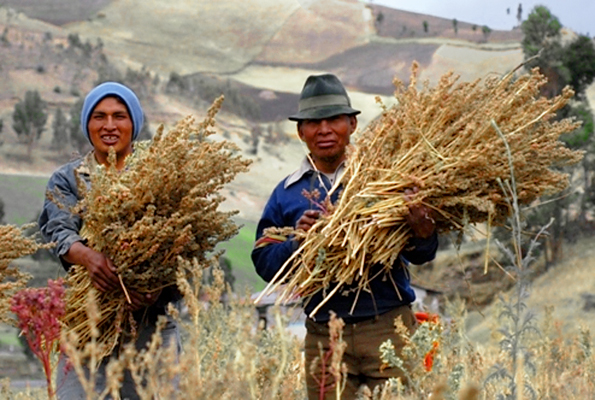
For Andean cultures that include Mapuches, Incas, Quechuas, Aymaras, and others it was sacred and a dietary staple (Valencia et al., 2010), but the Spanish discouraged and destroyed the cultivation of this crop, reducing its biodiversity. The species survived only thanks to indigenous small-scale growers in Peru, Bolivia, and Chile (Bazile et al., 2014).

References:

Bazile D, Martinez E, Fuentes F. 2014. Diversity of Quinoa in a Biogeographical Island: A Review of Constraints and Potential from Arid to Temperate Regions of Chile. NotulaeBotanicaeHortiAgrobotanici Cluj-Napoca. 42(2).

Ch14. Fao.org. 2018 [accessed 2018 Aug 20]. http://www.fao.org/docrep/t0646e/T0646E0e.htm

Gamboa, Cindybell, Monica Schuster, Eddie Schrevens and Miet Maertens. 2017. The quinoa boom and the welfare of smallholder producers in the Andes.

Ruiz K, Biondi S, Oses R, Acuña-Rodríguez I, Antognoni F, Martinez-Mosqueira E, Coulibaly A, Canahua-Murillo A, Pinto M, Zurita-Silva A et al. 2014. Agronomy for Sustainable Development. 34th ed. Institut National de la Recherche Agronomique (INRA). p. 349–359.

Shabala L, Mackay A, Tian Y, Jacobsen S, Zhou D, Shabala S. 2012. Oxidative stress protection and stomatal patterning as components of salinity tolerance mechanism in quinoa (Chenopodium quinoa). PhysiologiaPlantarum. 146(1):26-38.

Valencia B, Urrego D, Silman M, Bush M. 2010. From ice age to modern: a record of landscape change in an Andean cloud forest. Journal of Biogeography;37(9):1637-1647.

Murphy K, Matanguihan J. 2015. Quinoa: Sustainable Production, Variety Improvement, and Nutritive Value in. John Wiley & Sons.

Sustainable agriculture and Food security

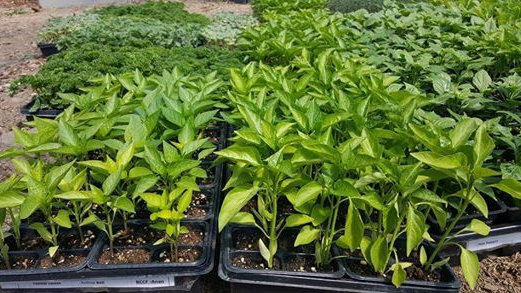
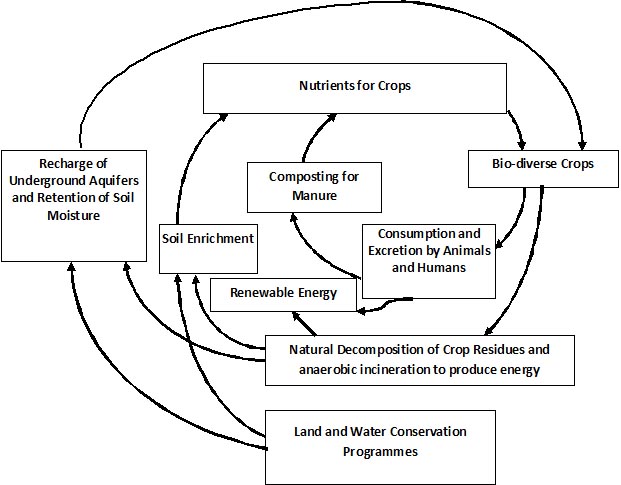
Sustainable agriculture: Picture from Wikimedia Commons

Sustainable agriculture can be defined as a type of agriculture that focuses on meeting both social and environmental needs. In other words it is a way in which farming is done using eco-friendly methods that helps maintain the relationship between the organisms and its environment. As the global population is increasing so is the demand of food consumption. Since the key variable that affects the demand for food is population growth, so it is very important to understand the rise in population worldwide. Over 5 billion people in the world are undernourished due to insufficient access to food. Farming can lead to the depletion of soil, water, air, wildlife and quality of human resources. So sustainable agriculture would not only help with conserving food but would rather also play a big role in preventing climate change.

Food security can be defined as sufficient access of food to everyone for a healthy living. Sustainable agriculture is one way to increase food security. It helps prevent food borne illnesses as it encourages the use of natural fertilizers instead of pesticides and other harmful things. This also helps improve soil quality that further helps in the increase of crop yield. There are many ways of farming sustainably. Some ways to practice sustainability are:

  1. Using organic waste as pesticides: Helps prevent use of toxic pesticides.
  2. Promote biodynamic farming: Nature animal raising in order to promote mutually beneficial relationships.
  3. Promote agroforestry: Growth of trees and shrubs amongst crops or grazing land.
  4. Encourage urban agriculture: Grow food closer to home.
  5. Polyculture farming: Growing multiple crop species in one area in order promote balanced diets, improve soil fertility and prevent weather fluctuations.

Sources: https://casfs.ucsc.edu/about/publications/Teaching-Organic-Farming/PDF-downloads/3.4-sustainable-ag.pdf

Food Security — It’s happening all around us, but we might not even see it.

During the summer of 2019, I had the privilege to take a geography course called “Conservation in the GTA: Nature, People, & Politics”. The course was structured as a field course and as such, we got to personally meet a wide variety of people (policymakers, indigenous peoples, and ordinary citizens) around Toronto and learn about their work. One topic which we were exposed to is the issue of green spaces and food security, especially in the lower-class areas of Toronto.

Now, you may ask “how does Toronto face food security issues if there is a supermarket every other street corner?”. While that may be true, food security isn’t just the availability of food, but also the means for people to access it. While you or your friends may enjoy eating whatever you want, some groups are disproportionately affected by food insecurity. One such example of this is the general area outside York University along the Jane and Finch area, where many families are low income and do not have the means to afford or grow their own food at home.

Almost 12% of families in Ontario lack the ability to afford or access adequate healthy food or the means to prepare it, often resulting in them subsisting off of cheaper fast-foods or no food at all, which can be a cause for poor heath (subsequently increasing the cost to the healthcare system).

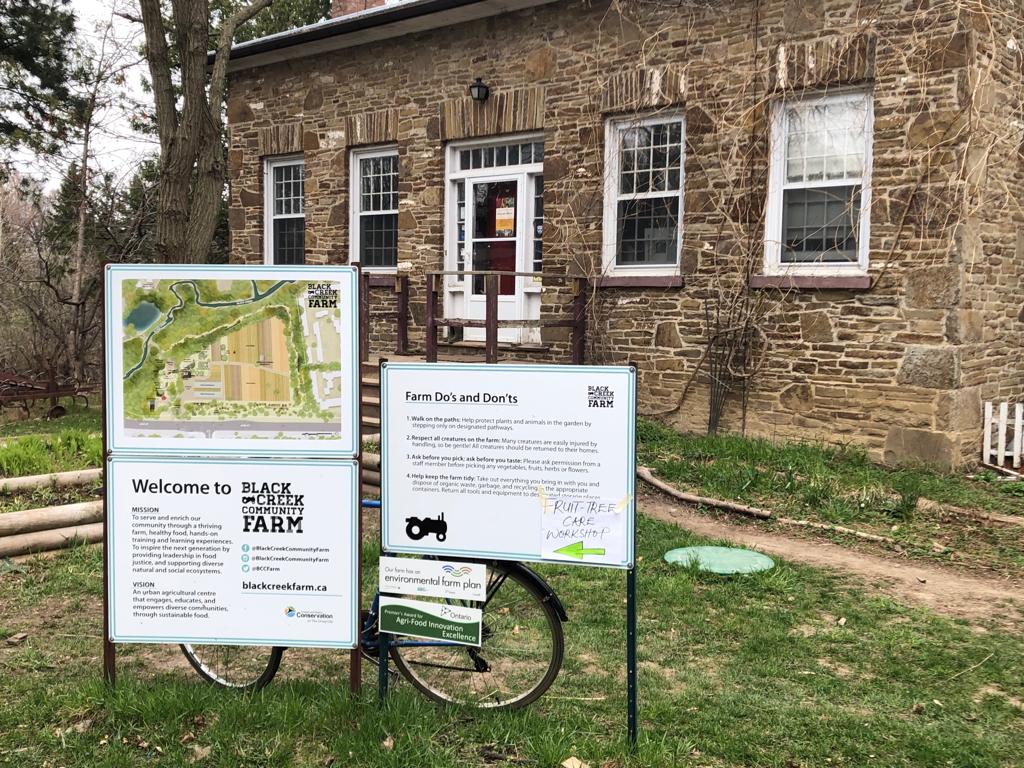
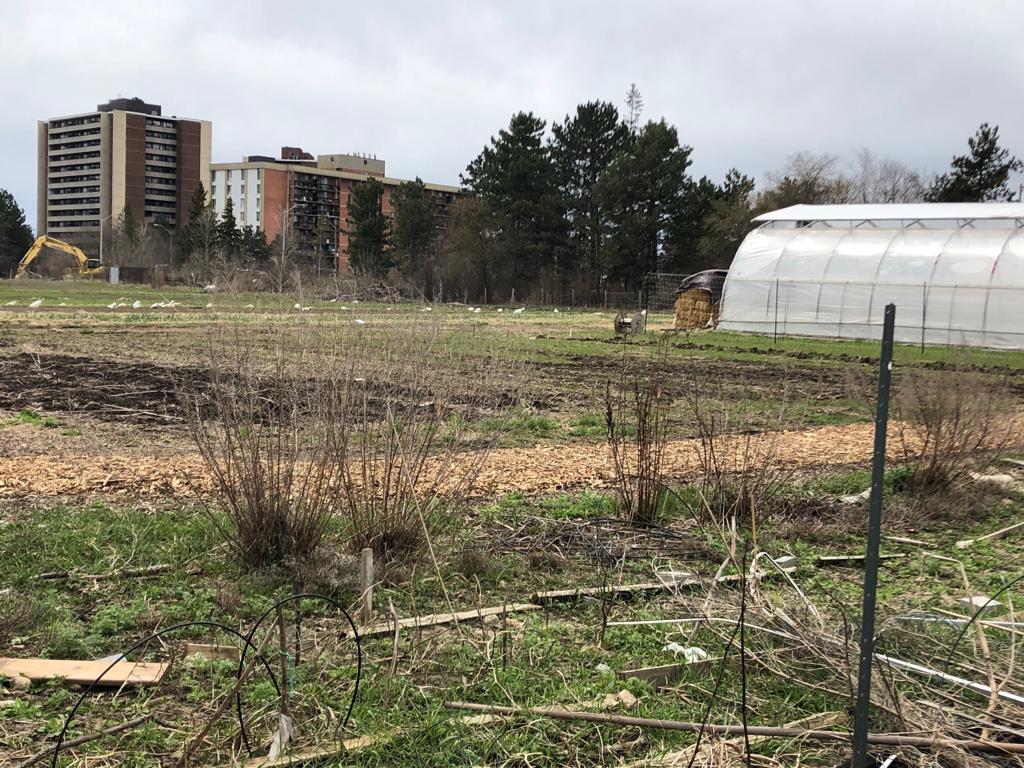
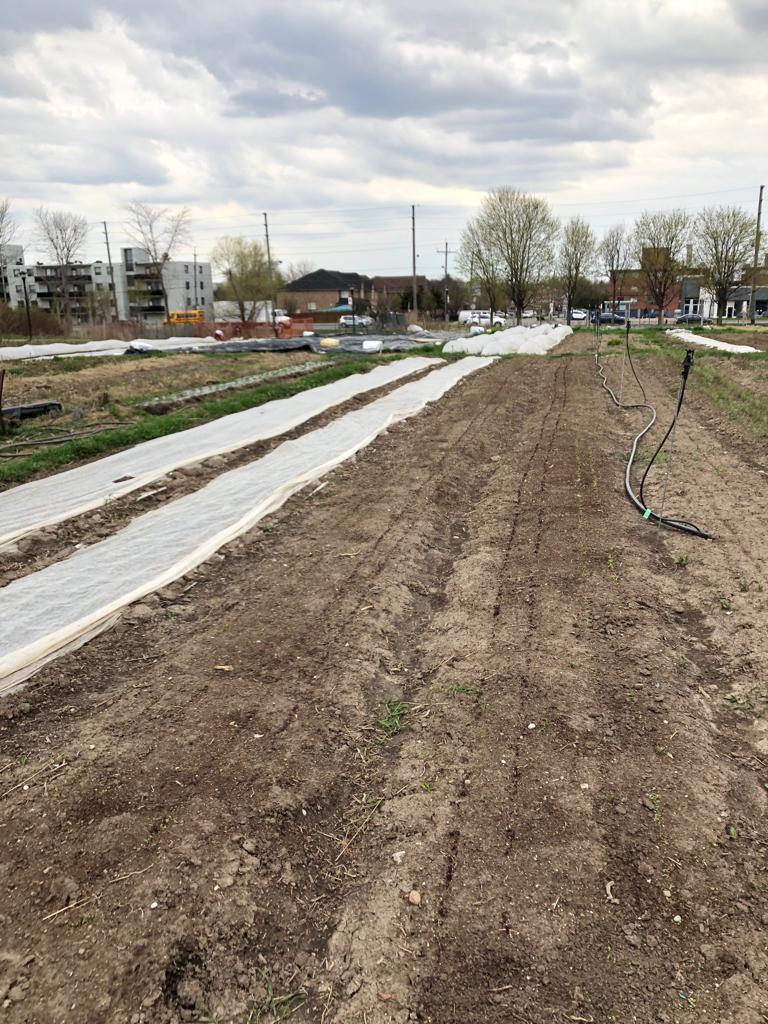
The Black Creek Community Farm aims to provide food security and food justice for needy families in the Jane and Finch area of Toronto.

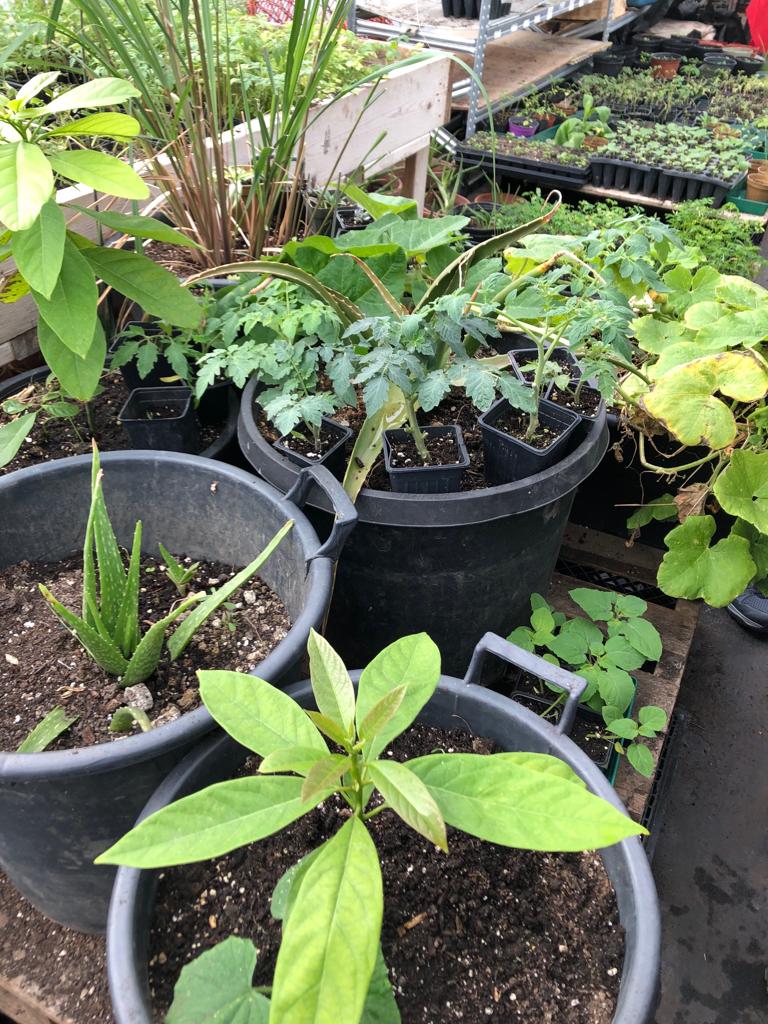
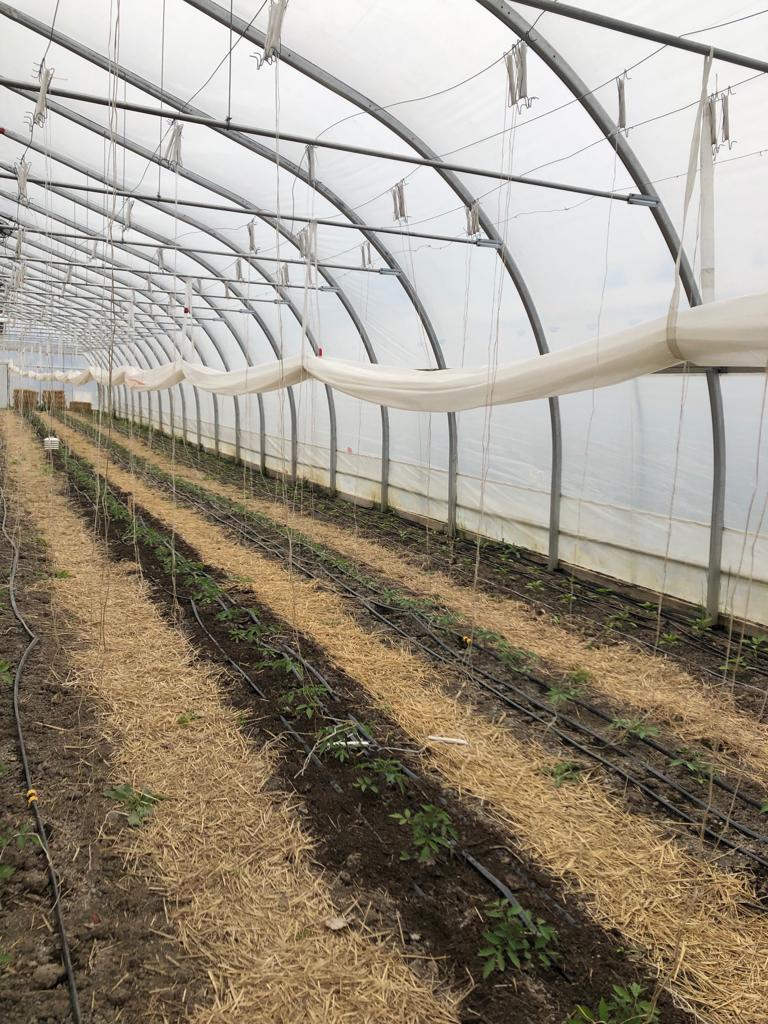
This is where organizations such as the Black Farmers and Food Growers Collective (BFFGC) come in. The BFFGC owns a large area of land just adjacent to York on Jane street (you have seen it if you have accessed campus that way) and takes a food justice approach to tackle food security issues within the community. Within their establishment, you can loan a piece of land and they will teach you how to grow your own crops for free. They also have a large portion of land and Greenhouses dedicated to orchards and variety of produce in the summer, which they will sell at affordable prices or donate to those in need, allowing those without land at home to have access to good food.

While the BFFGC is just one example, there are many other community garden initiatives popping up across Toronto, including another large plot at Downsview park and even one in York’s own backyard called the Maloca Community Garden.

Having access to adequate nutrition is a human right everyone should have. Achieving Food Security through sustainable agriculture also offers benefits to everyone:

-Eating well has been shown to improve mental health and reduce chance of sickness (saving healthcare system costs)

-Keeps money in the community through purchasing produce from small local growers, or even saves you money because you grow the produce yourself.

-Reduces carbon footprints by relying less on store bought produce which may have been grown and transported long distances.

Also on a more personal note as a person who has a garden at home, there is nothing more satisfying than seeing (quite literally) the fruits of your labor. Food that you grow just simply tastes better, and If you don’t believe me just visit a farmers market, I suggest you do and taste the difference of locally grown food, you won’t regret it!

Claudio Gay

Claudio Gay, born in 1800, was a pioneer of sciences in Chile. Born in France, he dedicated his life to botany and entomology, though he was a university professor of geology, physics, and natural history for a few years in the city of Valparaiso, Chile.

In 1830, Gay was hired by Chilean government to document flora and fauna. The collection of species he made during his trip over southern and central Chile set the basis for the Chilean Museum of Natural History to be founded. Furthermore, the vast information he gathered was the base for Chile’s Cabinet of Natural History.

He wrote the Atlas of Physical and Political History of Chile (30 volumes!), and was honoured with the top recognition the country offers and Chilean nationality by grace. He also wrote the book “Chilean Flora”, which is the first exhaustive knowledge record of Chilean flora biodiversity ever in existence.

He died in his hometown in France, in 1873.

To this day, his work remains as one of the most important contributions for sciences in Chile, since the Chilean Museum of Natural History remains a highly valuable place for science to reach general public and for general public to reach science.

Claudio Gay was the founder of deep knowledge about botany in Chile, whose research allows us to compare plant biodiversity from 200 years ago to that of the present. He was a key character for us, Chileans, to get a proper idea of the rich variety of flora in our land.

Women in STEM- Rachel Carson

Rachel Carson (born May 27, 1907), was a Marine biologist best known for her prophetic book Silent Spring (1962) that brought worldwide awareness of the dangers of   environmental pollution, and became a best seller. Rachel Carson developed an interest in nature at a young age, and went on to continue her environmental research. The environmental movement in the 60’s and 70’s was considered a hoax. It was widely perceived as negative and earth’s long- term prospects were considered bleak. Although Carson died before any positive impact resulted from her work on significant environmental issues, her publications are still considered some of the most influential environmental writings ever.

Her first book was inspired by an article in The Atlantic Monthly in 1937 which led to the publishing of her book in 1941- Under the Sea-Wind. This book was praised widely because it was able to combine scientific accuracy and thoroughness in a lyrical prose style. Her second book, The Sea Around Us (1951) became a national best seller and won a National Book Award and was later translated into 30 languages. Her third book, The Edge of the Sea, was published in 1955, after which she became more interested in conservation. Carson also became involved with The Nature Conservancy and other conservation groups. The contributed the rest of her life, to focus on the harmful effects of pesticide overuse. She received a Presidential Medal of Freedom in 1980, 16 years after she passed away from battling breast cancer.

Marianne North

Marianne North (1860) was an amateur gardener and painter from Europe, who traveled over Jamaica, Peru, Japan, India, Australia, the US, New Zealand, and more. She was so passionate about flowers, she actually went to every continent except for the Antarctic in pursuit of new specimens to paint.

Logically, but worth mentioning, she accomplished all her trips without modern means of transportation or gadgets to make tasks easier. And during all her feats she wore the customary dress of her day: floor-long gowns. 

During her times, photography hadn’t been perfectioned yet, and so her detailed paintings were key for other botanists to see for the first time some of the world’s most unusual plants, as the African Torch Lily (Kniphofia uvaria), and the Giant Pitcher plant of Borneo (Nepenthes attenboroughii). She consequently got to name several species that hadn’t been discovered yet or had never been catalogued in the wild, making priceless contributions for the study of flora.  For this reason, the plant genus Northia was named in her honour, as well as a number of plant species which include Areca northiana, Crinum northianum, Kniphofia northiae, and Nepenthes northiana.

The scientific accuracy with which she documented plant life in all parts of the world still makes her work highly valuable for scientists today from all over the globe.

For those of you who are interested in botany and may go or be in England, visiting the Kew Gardens might be a tempting opportunity. It contains the North Gallery, which is a permanent solo exhibition of North’s paintings.

Alternative Film Choice- “Over the Hedge”

Over the hedge is an award wining film about woodland animals displaced by suburban housing developments. Every year these animals prepare for the winter by collecting nuts and berries to last them for the winter. This year though, things are a little bit different because the land they once knew has changed drastically by urbanization. This year they must try and collect food while dealing with the adverse conflict of loosing their habitat. This film in relation to plant ecology deals with themes of deforestation and urbanization through depicting the impacts they have from the animals perspective. Doing this spreads awareness about the issue while giving a face to the problem. Thereby fostering an environment that people young and old are more inclined to educate themselves on what’s going on. 

Urbanization bring a variety of unique issues that impacts both human and animals. Some threats in urbanization are increased pollution and increased infrastructure acts an a physical barriers for root growth which promotes loss of urban tree cover. Animal population survival are inhibited by toxic substances, vehicles, loss of habitat and food sources (shown in the movie). Urban developments can amplify risks of environmental hazards such as flash floods as well. As you can see there are a lot of negatives that come with urbanization. Lots of things can be done in order to minimize some of the effects urbanization has on the environment. Planting trees and caring for city green spaces are key elements that should be implemented in urban planning. In addition to this air pollution can be reduced by upgrading energy use to something more eco-friendly and using alternative transport systems. Since development is necessary in growing areas taking the precautions and implementing as many environmentally beneficial practises is a start.

The Woman Behind Modern Wildlife Displays – Martha Ann Maxwell

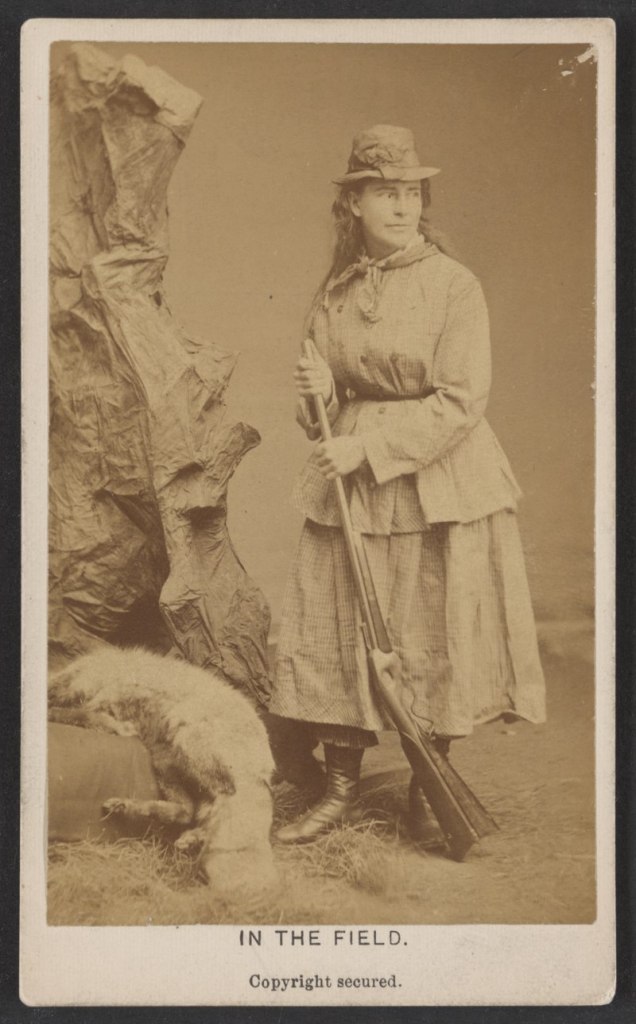
Martha Ann Maxwell (1831-1881) was a naturalist and taxidermist in the 19th century who was one of the first female naturalists who hunted and created her own specimens. She was at the time well known for displaying her animal specimens in unique, lifelike dioramas, which possibly played a part in influencing many major figures in the history of taxidermy.

Martha was born on July 21, 1831 in Pennsylvania. Martha’s father died a few years after her birth, and her mother soon remarried. Throughout her childhood, Martha developed a love for nature from her grandmother, who frequently took her on walks in the wood to watch wildlife. Martha had plans to be a teacher when she grew up, but could not complete college due to financial troubles. She was employed by her future husband in 1853, James Maxwell, a businessman with six children, and married him in 1854 and soon had a daughter in 1857.

Due to the financial crisis in 1857, the Maxwells lost most of their income and as such decided to join the Colorado gold rush, leaving her daughter behind with her parents. Martha took to ladylike duties such as washing, sewing and baking to earn her own income while the rest of her family pursued mining, and she was able to purchase her own investments such as a portion of a boarding house, a log cabin in the woods, and some mining claims.

After the boarding house in which they resided burned down in 1861, plans to move into the log cabin was met with difficulty as a man had taken up residence as a squatter. Upon eviction of the squatter, she found many stuffed animal sin the cabin, which possibly sparked her interest as upon moving back to care for her daughter, she begged a local taxidermist to let him teach her.

Martha moved back to Colorado with her husband, and there she began to build a collection of native animals, often taking trips into the Rockies with a rifle to gather them, gaining over 100 specimens by late 1868. Many locals took notice of her collection and she was asked to display it in a local exhibit, gaining positive reception which further encouraged her to gather more specimens. Martha continuously refined the taxidermy process, but due to her gender and her relative isolation, few took notice of her advances. Eventually, she opened up a museum displaying her exhibits hoping to make money, but despite all the praise it obtained it was not a profitable venture.

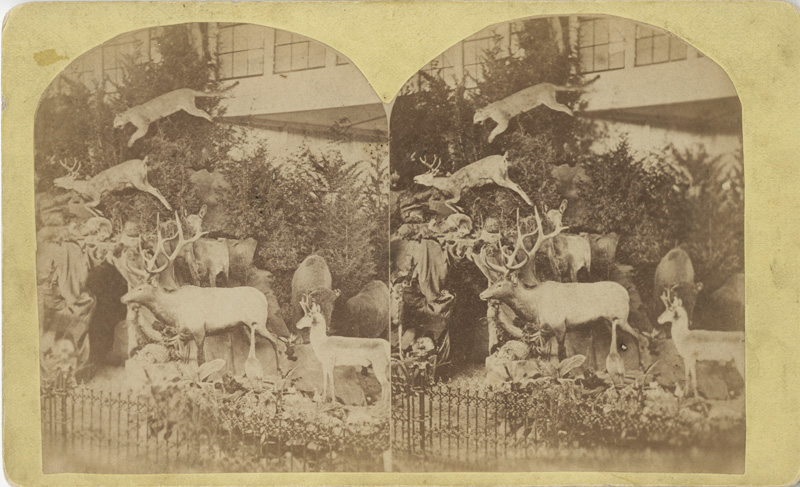
Martha’s big moment came in 1876 when she was invited to display her work at the first of what is now known as the worlds fair. There, she created a complex diorama replicating a natural scene of the Rockies, garnering massive attention and so much disbelief that a women could have done all of it themselves, that she had to put up a sign saying “Woman’s Work”. Her exhibit was popular and so many visitors wanted a keepsake of it that the fair could not keep up the demand for pictures.

Early natural-history diorama at the 1876 Philadelphia Centennial Exhibition created by Martha Maxwell, many of which she herself had killed, and all of which she had mounted. Stereograph image produced by Centennial Photographic Company.

Despite her big success at the fair, she still struggled financially for years trying to make a living off her exhibits, but soon after became too ill to work and died of ovarian cancer at 49 on 31 May 1881. Her specimens were put into storage after being exhibited a few more times, but eventually disintegrated due to time and unfortunately when rediscovered nothing was worth preserving.

Even though we cannot see her specimens, her influence can be seen in museums across the country as she influenced how specimens are displayed today.  She was inducted into the Colorado Women’s Hall of Fame in 1985.

Supplementary Sources:

Wikipedia
Americ Comes Alive
 Encyclopedia of World Scientists pg 494-495

Sustainable Agriculture and Food Health

Sustainable agriculture is about meeting the needs of the present without sacrificing that of tomorrows. It involves farming in a way that is environmentally friendly, socially responsible, and profitable for farmers. The idea behind sustainable agriculture is that is strikes for the best long-term outcomes for the world around us – that includes forests, climate stability, human rights and livelihoods.

It is urgent that we make agriculture more sustainable because in a world that has a population that is projected to reach 9.8 billion by 2050, there just is not enough food to go around. So, farmers are having to produce more food than ever before, and conventional farming methods degrade land fast and crop productivity declines overtime. This is leading to farmers seeking out crop productive lands such as forests, and that we are clearing trees for mega crops to meet the need of the increasing population. There is utmost need for the adoption of more sustainable agriculture methods because these mega crops are accelerating climate change and increasing the greenhouse effect.

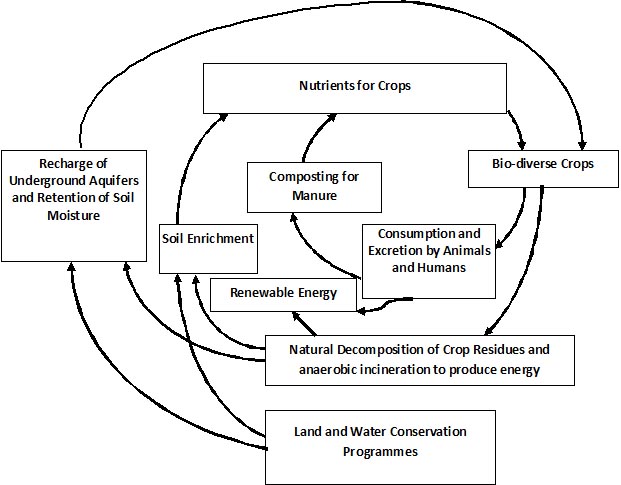
What sustainable agriculture should look like:

Schematic Diagram taken from Wikimedia Commons. Author: IKPlusOne

While sustainable agriculture affects the environment we inhabit, it can also have a two-fold effect. The methods as of current for mega crops can be detrimental to our health. Food health is also of utmost importance. If we continue to mass produce food, like is being done now and being genetically modified, and do not find a sustainable way to produce food that is strikes a balance with climate sustainability and food health, we create future problems for later generations.

In reference to:

https://www.rainforest-alliance.org/articles/what-is-sustainable-agriculture?gclid=Cj0KCQiAtOjyBRC0ARIsAIpJyGNQywTy4qRqAdL_nw2M7IXYAruhMnwWn3SfzORqH2TYwNyfuMZwcAIaAsQTEALw_wcB

Design a site like this with WordPress.com
Get started