A peer-reviewed form of literature is any form of literature or academia published after a rigorous review from a member of an academic society. There are three main forms of literature that one may come across when reviewing or reading academic literature: primary, secondary, and tertiary.
A primary source of peer reviewed literature defines a peer reviewed piece of academia that has been compiled by the conductor of the research themselves. This means that all statistics, observations, and other forms of research have been hypothesized and have gone experiments by a researcher(s), that has released the literature consequently. This can be in the form of a study paper.
A secondary source is one that interprets a primary source and the literature’s research, and attempts to use it to either support or reject a hypothesis. This can be done through a research essay.
A tertiary source is one that reviews a secondary source and uses the conclusions made in order to support a point. This can be done through a literature review or a related study.
Picture this: you are scrolling through your social media with your morning coffee, see a news article that sounds interesting and click/tap on it. You are partway through enjoying the first paragraph when… Wait! Subscribe now to see the rest of the article! Then and only then you look up to realize you are on a news site that requires a paid subscription, such as the New York Times, and you disappointingly close the article and do it all over again within the next hour. If you’re like me and can’t or don’t want to go through the hassle of signing up for every news site in existence just to be able to read credible news, what if I told you there was a better way?
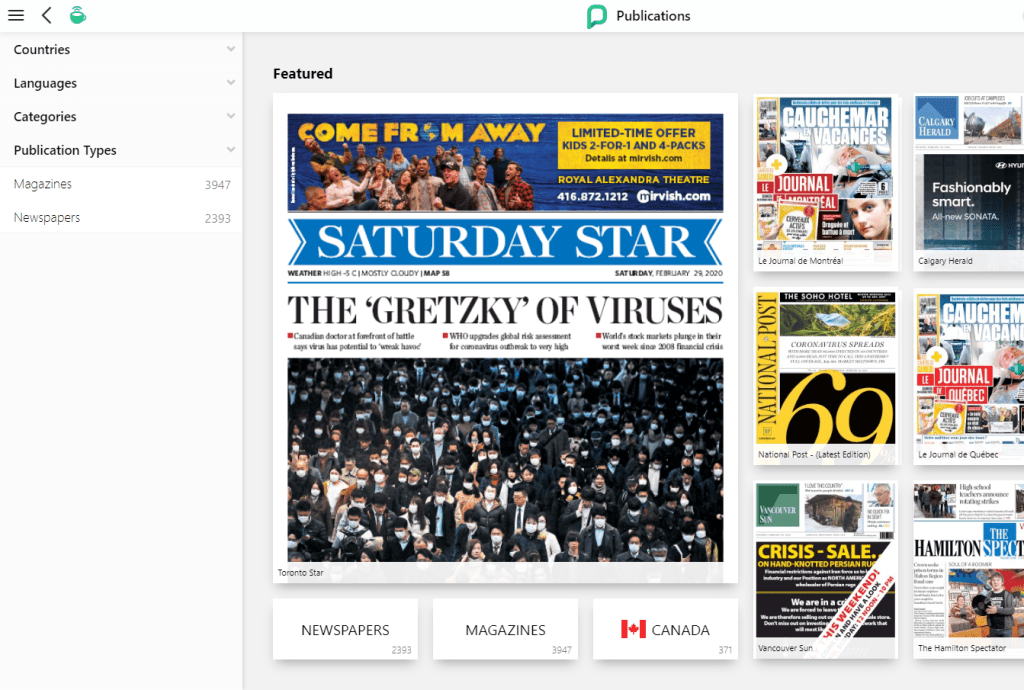
Since we are all York University students, we have access to a great tool called Pressreader. Pressreader allows you to read from over 5000 different magazines and newspapers in MANY different countries and languages (not only Canada!) — think of it as Spotify but for written media instead of music. While the app usually comes at a monthy cost, York students get it for free! After some fiddling around, I managed to get it to work both on my phone and computer, so if you like free media, read on…
Pressreader on the Computer
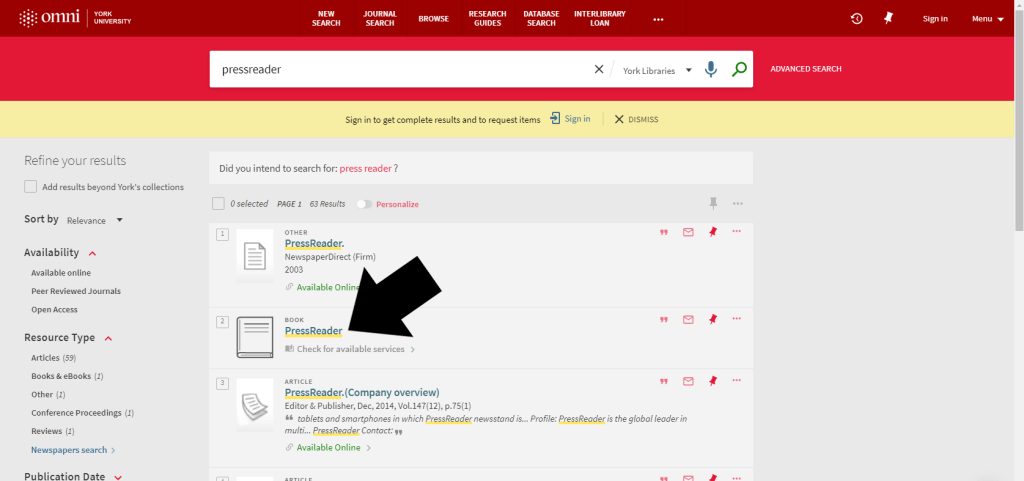
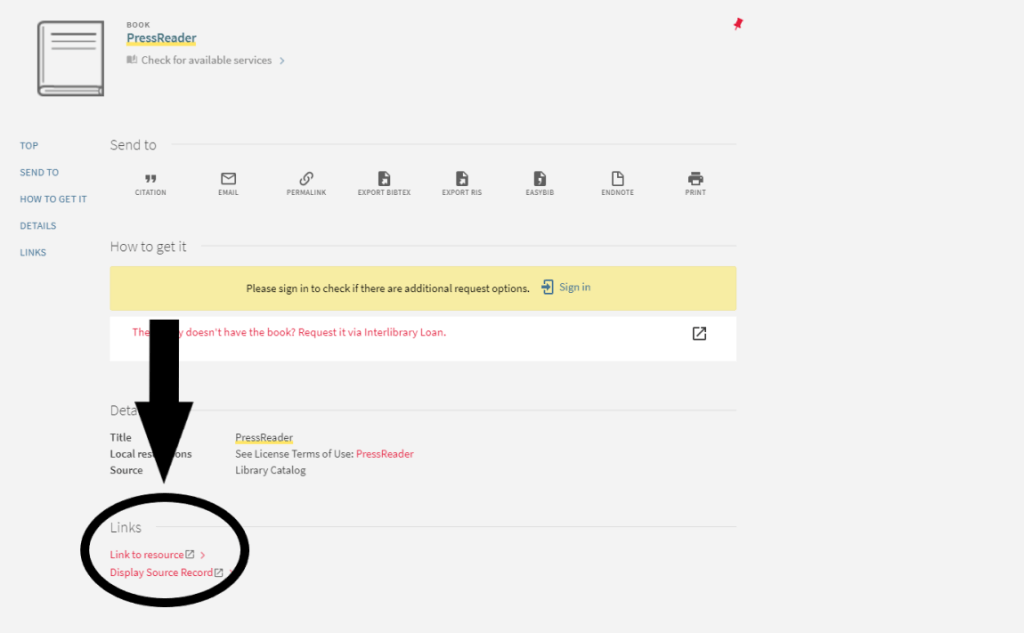
To use Pressreader on your computer or laptop: 1: Go to the York University Library Website, search for “Pressreader” 2: Click on the “book” result named Pressreader 3: On the info page, scroll down to the bottom and click “Link to resource” 4: Log in to your York University account and enjoy!
Pressreader on Mobile
Using Pressreader on mobile phones is even easier! 1: Download the “Pressreader” App 2: Open up the app and create an account using your York University email (you can also use the number found on your public library card if you have one). 3: Enjoy Unlimited Access!
Pressreader Hotspots
Too lazy to do the already minimal work to sign up? Don’t fret! Pressreader also has locations called “Pressreader Hotspots” these are usually public institutions such as universities, colleges, and libraries. When connected to the mobile network in these areas, you can skip the authentication process and read Pressreader for free without signing up, which means you can read your heart out while at school!
Pressreader is a great app to use, as not only does it put all your favourite newspapers in one convenient place, but you can also download whole magazines or newspapers for later when you’re on the train or bus. The app also you to log onto multiple devices at once (I totally didn’t install it on my parents ipad so they can read their favourites) and the best part is the York University accounts last for 5 years after they have been created, so you can read all you want until 2025!
The first time I ever learned about differences in the primary, secondary or tertiary sources of literature was in one of my second year Biology course. Primary and secondary sources can easily be found online but some reliable databases to find them are PubMed, Google scholar, Annual Review of Ecology, Evolution, and Systematics etc
Primary sources of literature provide first hand evidence gathered by the author or a document relating to direct experience. In other words it’s defined as new information. Sources of primary literature in science include research articles and autobiographies. A specific example of a primary article would be “Bacillus lipopeptides as powerful pest control agents for a more sustainable and healthy agriculture: recent studies and innovations.” This article can easily be found online.
Secondary sources of literature describe, summarize, interpret or analyzes information from other sources. Sources of secondary literature in science include many books, textbooks or scholarly articles.A specific example of a secondary source would be an ecology textbook or the review article “Ecological and physiological mechanisms of growth decline of Robinia pseudoacacia plantations in the Loess Plateau of China: A review.” This review article can be found online.
Tertiary sources of literature compile and summarize primary and secondary sources. Sources of tertiary literature in science includes manuals, guide books,encyclopedias, bibliographies or handbooks.A specific example of a tertiary source would be the field guide named A Peterson Field Guide to Edible Wild Plants: Eastern and central North America by Lee Allen Peterson, Roger Tory Peterson.
Locust, (family: Acrididae), group of insects that are distributed on the global scale, and mainly referred to the group of short-horned grasshoppers. The specie often increases in numbers and migrate long-distances in destructive swarms. Normally, these grasshoppers are not harmful and do not pose serious threat to agriculture. However, under suitable conditions of drought followed by rapid vegetation growth, a dramatic set of changes happens under the influence of serotonin. For example, they start to breed abundantly and become migratory, when the population become dense enough.
Recently, East Africa, is dealing with worst outbreak of desert locusts, which are known for forming swarms that can be highly dense and mobile. These insects destroy crops and cause major agriculture damage and attendant human miser— famine and starvation. A desert locust swarm can be 400 square miles in size and therefore, a swarm of such size would eat 423 million pounds of plants every day. The desert locusts are eating the vegetation that supports vibrant herder communities in the region and 13 million people already facing severe food insecurity in Ethiopia, Kenya, and Somalia. The spraying of chemicals to control the locust invasion is difficult because of the vastness and inaccessibility of areas, supply of chemicals on the large-scale, and the chemicals can interfere with water supply used for drinking and washing. Natural predators such as wasps, birds and reptiles measures can be adopted to combat the outbreak.
The Common Buckthorn (Rhamnus cathartica) is native to Europe and is also known as European Buckthorn and is an invasive species in Canada (from Nova Scotia to Saskatchewan). The species was introduced in Canada around the 1880s and became widespread in the early 1900s as it was often used in hedgerows and windbreaks.
In agriculture, it reduces crop yield by hosting oat crown rust and soybean aphid. It is also very adaptable and can grow in a wide range of habitats including (fence lines, woodland edges, pastures etc.). This species can harm the environment by outcompeting native plants, degrading the quality of wildlife habitat, and impacts a wide range of industries. Common Buckthorn can also harm biodiversity by affecting soil quality, plant communities, and wildlife. It impacts forestry due to its aggressive spread by seed and prolific growth. Common Buckthorn can impede recreational activities in areas where the common buckthorn has become established. Its dense stands can make it difficult to walk along and the aesthetic value also reduces along with the abundance and richness of native species. Some control measures that can be taken are pulling, cutting/girdling, mowing, grazing, flooding, fire, herbicide application, pesticides etc. Some measures that we can take include tracking the spread of European Buckthorn using an online tool called The Invasive Tracking System which allows users to view existing sightings of Common Buckthorn and other invasive species in Ontario.
As we enter a period of ever deepening climate crisis it becomes increasingly important to understand the ways in which our current food system is susceptible to breakdown, and to act in ways that strengthen it.
Our existing food distribution system is dominated by very large for profit actors. More than 80% of the grocery market is controlled by only five firms. These large companies exert downward price pressure on consumers, which encourages consolidation in the food production. In search of efficiency, food production tends towards large scale mechanization and monoculture.
Additionally, historically low transportation costs, driven by cheap energy and subsidized infrastructure, mean that a large portion of the food we eat travels hundreds or thousands of miles before reaching our plate.
Climate crisis challenges the assumption that the way capitalism is arranging our food system can continue to serve our alimentary needs far into the 21st century. As climates change, many of the areas from where north Americans source year round fresh food may be subject to desertification. Changes in climate will mean changes in the capacity of different bio regions to produce food. Due to the extent of long distance integration, the shocks will be felt at distances.
There are alternatives. The current consolidation of the distribution system is less than a century old. One concrete remainder of an earlier time is Toronto’s Ontario Food Terminal (OFC). While many Canadian metropolitan centres lack an independent wholesale produce market, in Toronto small wholesalers can sell to small retailers without needing to interact with the big chains. This means farmers can achieve higher prices for their goods, which increases the viability of smaller scale farms. On the distribution side, OFC makes it possible for food co-ops (such as Karma and Berry Road), and non profits like Foodshare to operate. Co-ops and nonprofits show us how conscious intention is already beginning the transformation of our food system. Rather than pursuing profit, these organizations pursue values, especially ecological sustainability (Karma) and health/food accessibility (foodshare).
On the production side, urban agriculture is an exciting and growing sector which has the potential to create transformative change with its integration of theory and practice. The opportunity to participate in a hands on way in food production is inspiring to people, and helps them understand the materiality of their food, and making manifest the absurdity of a system that creates such distance between production and consumption. While urban agriculture will never be a complete solution for producing the food cities need, perhaps the most important change it can herald is encouraging people to eat seasonally, which is a necessity to overcome dependence on long distance food trade.
Ultimately the transformative projects that currently exist are not substantial enough to protect us from the shocks climate change will create across our food system. Increased prices and reduced availability is how we will experience this. However, as food prices increase, so will the viability of local and smaller scale food distribution and production.
During the last 15 minutes of one of the interviews to doctor Dawn Bazely, she suggested the scientific community to think of Science as a political tool. There are several historical examples that we can recall to help support this argument, making it almost surprising to believe some people still think of science as the ultimate neutral source of facts.
Truth is that the sort of research that gets funded, the things people want to hear about or explore deeper into have everything to do with everyone’s political biases. Moreover, what type of people tend to become scientists? Certain personality types are overrepresented in particular careers.
Dawn says “If you believe in scientific method and significant collections of data but you don’t see yourself as a source of unconscious bias, then you are part of the problem”. This reality might be a hard-to-swallow pill for many members of the scientific community, but the fact goes beyond our perceptions of objectiveness.
I fully agree with Dawn’s vision on this aspect of science. In fact, many of us are still unaware of what the word “ecology” means, which is (as one of its definitions) “the advocacy for the protection of natural resources from pollution or its effects; environmentalism”. In my case, I wouldn’t have considered this career path if I didn’t believe it could be impactful for a larger amount of people than just the ones involved, which implies an encounter with social dynamics.
My advice to you: choose and use your sources under awareness of them not being exempted from the human factor.
Friedrich Wilhelm Heinrich Alexander von Humboldt was born in Berlin, Kingdom of Prussia in the Holy Empire of Roman Empire on 14 September 1769. Humboldt travelled extensively throughout the Americas and became known as one of the most famous scientific names in all of Europe during his era. After his research journeys, he returned to Berlin to settle down and compile his studies. Humboldt focused on biogeography, natural sciences, botany, and other scientific fields.
In terms of botany and plant ecology, Humboldt published extensive studies bridging biogeography and the study of plants. As he was an explorer and a naturalist, Humboldt classified many organisms in his own set of criterion in an attempt to describe the geographical land masses and create a distinction.
My second nomination for the film festival was the movie “The Lorax.” This movie not only focuses on the importance of plants and trees but also shows how it takes only one individual to encourage others. The fact that this movie is animated encourages people from all age groups to understand such an important message in a very entertaining and simple way. Also it most targets young generations encouraging them to save plants and virtually experience a life without them. Apart from this it also shows the dark reality of how humans would go to any extend for the sake of business and money. Just like humans today the character Once-ler in the movie said, “Cutting down a few trees won’t harm anyone” just to find out that one day none were left. It gives out a very strong message about how no amount of money or power in this world is worth sacrificing our environment. It relates to the aspects of Applied Plant Ecology in every possible way.
I think movies like The Lorax should be encouraged more so that younger generations can start to learn about the importance of biodiversity at a young age. Every person can contribute to such huge issues in our society today by doing their parts. I really liked the message at the end of the movie where Once-ler finally understands the message that The Lorax left behind. The message was as simple as a word “Unless” meaning that nothing would happen Unless someone cares and it only takes one individual to care and to encourage others to care. I would highly recommend this movie to everyone.
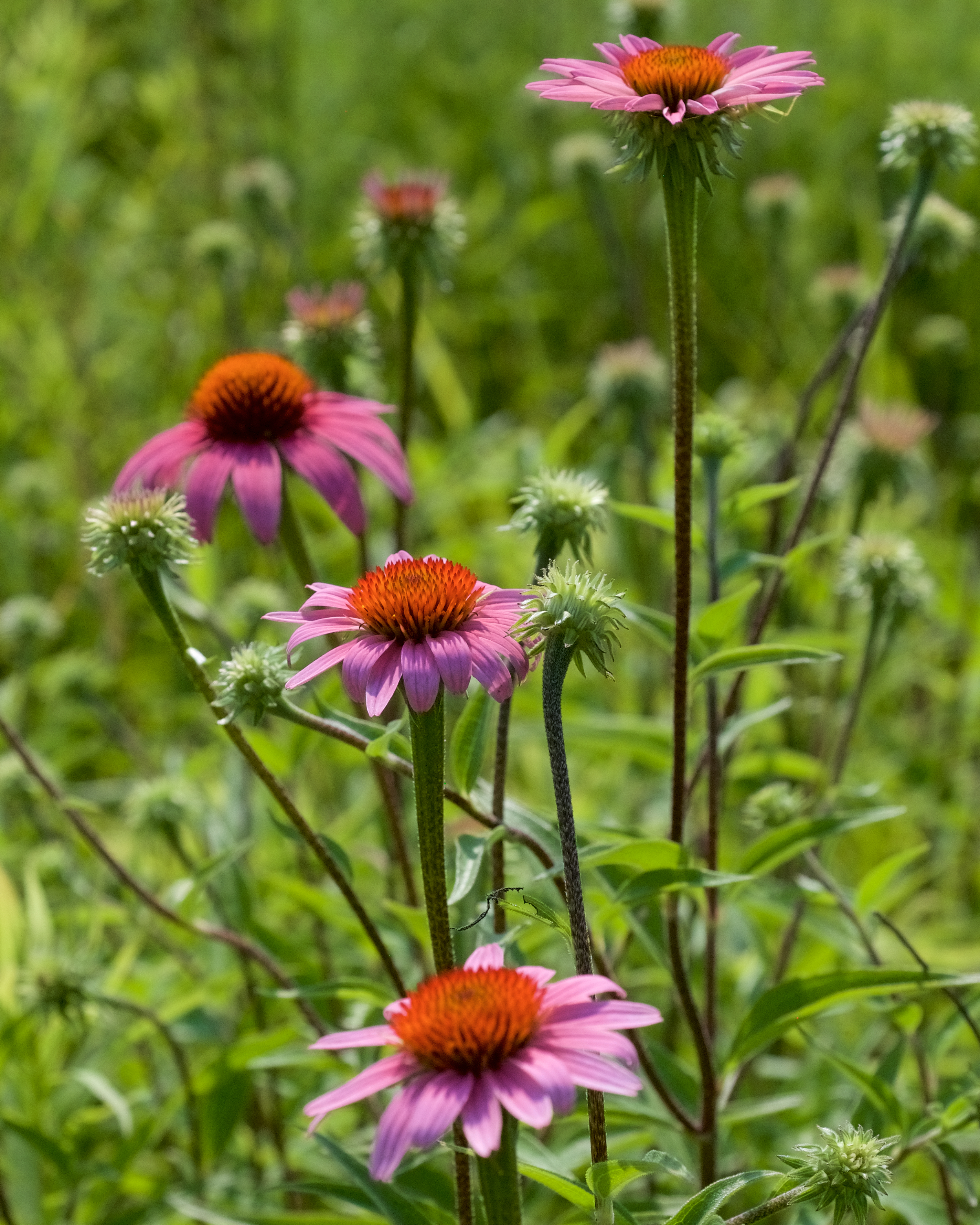
Firstly I’d like to start by thanking every single person ever who has edited a Wikipedia page. As a person who frequently (don’t pretend like you don’t use it too) uses Wikipedia as my quick go-to for answers, when I was assigned the task to edit a page of my choice, I was baffled. It’s not that I don’t understand the concept of open access data site like Wikipedia – I do – it’s just that I never thought I would be editing one. To swallow the strange and novel task of editing a wiki page, I chose to edit the page about my most favourite flower; the Purple Coneflower, Echinacea purpurea. Because why not write about the most beautiful flower ever.
I remember the first time I had seen a purple coneflower was a very long time ago, in the garden of a family friend who had a green thumb. At first I didn’t realize that these were purple sunflowers! I only made that connection much later on, as an adult, when I went to a flower farm in Milton, Ontario during prime summer season. After that trip from the flower farm, I innocently started googling purple coneflowers and found a bunch of information on Indigenous practices, of using the purple coneflower for its medicinal effect. This may seem strange, but many plants have beneficial properties to humans. Mainly due to presence of natural secondary metabolites, that not only act as a defense to plants themselves but to those that ingest them. So when given an opportunity to shed light on this stunning plant that has some medical properties, I took it upon myself to edit it’s Wikipedia page using a primary source of info. I have written a previous post here, where you can look if you have any further inquires about what a primary source of info is, and why I used it to create my Wikipedia edits.
Here is the primary source paper, that I’ve chosen to base my Wikipedia edits off. It’s an interesting read for those that have a interest in herbal remedies and the science behind them.
UPDATE: My thoughts on Wikipedia Edu.
When I first wrote this blog post over a month ago, on my experience being a first time wikipedian, I had done so without attending Wikipedia ‘University’. This is what Wikipedia Edu is. It is a formal training guide to teach novel wiki editors the rules and 5 pillars of contributing to Wikipedia. I found the dashboard concept of Wiki Edu to be helpful. It covered training on portions of Wikipedia that is used to make edits and used to communicate to other wiki editors. I did still manage to contribute to Wikipedia without completing the formal training but truthfully undergoing the training did make it more streamline. Still, without the training Wikipedia was surprisingly easy to contribute too. As long as you keep in mind general copyright regulations and are aware of plagiarism rules, any intermediate-skill leveled computer user should have no problem understanding how to contribute to Wikipedia. If I had knew before this task, how simple it would have been to contribute to my favorite wiki pages, I would have become a wikipedian a long time ago.



 Applied Plant Ecology Winter 2020
