How the mRNA Compares to Other Vaccine Types

Vaccines are used to illicit an immune response in the body by imitating an infection from a disease. The immune system is trained to fight off the actual infection once your body has encountered it. Most vaccines work through two mechanisms, the antigen is used to specify the immune system’s adaptability to the pathogen itself and adjuvants which are used to stimulate the innate immune response through the stimulation Pathogen Recognition receptors (PRRs). The stimulation of PRRs is a necessary step in activating an adaptive immunity response.

Your immune system will take a few days to produce the antibodies necessary to fight off the infection, but after it has been to exposed an invading antigen, it defends your body much more readily. T-Lymphocytes are what’s kept around for the immune system’s “memory”, they recognize previous invaders and enable a swift immune response. 

What are the types of vaccines? 

Live Attenuated Vaccines

            Contains a weakened version of the pathogen. It is not able to proliferate and spread throughout the body to cause sickness while still exposing the immune system to the antigen required to defend against the real pathogen. These are the closest thing to the pathogen out of all the vaccines. Live attenuated vaccines are safe for anyone with an uncompromised immune system but may result in symptoms after vaccination. Live attenuated vaccines need to be refrigerated to maintain its efficacy before administration.

Conjugate Vaccines 

Some Bacteria infiltrate an untrained, usually young person’s immune system using a polysaccharide cover on its antigen. To combat this, vaccines are made using an antigen your body is familiar with that has a polysaccharide cover. Your immune system then links the polysaccharide to the antigen, eliciting an immune response when the polysaccharide itself is recognized. 

Inactivated Vaccine

            The infectious microorganism is killed with heat, leaving behind the antigen without the pathogenic agent. These do not need to be refrigerated and are less likely to have side effects than live attenuated vaccines but are less effective and need multiple doses to maintain efficacy. 

mRNA Vaccine for COVID-19

                The mRNA vaccine contains a modified messenger RNA which codes for the  COVID-19 antigen. The mRNA is broken down immediately after translation leaving you with the specific immune response. The vaccine is created by taking the antigen DNA sequence to produce the mRNA is inserted into a plasmid vector, which replicates exponentially for several cycles before it is purified and finally encased in a lipid “shell”. Unfortunately, as we all know, the side effects from the vaccine can be quite unpleasant and the vaccine need to be stored at below freezing temperature to avoid degrading the mRNA. With this new breakthrough in vaccine technology, mRNA vaccines could be used to make a cheap, quick alternative to any vaccine that uses a protein-based antigen.

References

Centers for Disease Control and Prevention. (2018, August 17). Understanding how vaccines work. Centers for Disease Control and Prevention. Retrieved March 30, 2022, from https://www.cdc.gov/vaccines/hcp/conversations/understanding-vacc-work.html 

Iwasaki, A., & Omer, S. B. (2020). Why and how vaccines work. Cell183(2), 290–295. https://doi.org/10.1016/j.cell.2020.09.040 

Writers, S. (2019, November 22). How vaccines work. PublicHealth.org. Retrieved March 30, 2022, from https://www.publichealth.org/public-awareness/understanding-vaccines/vaccines-work/ 
Agriculture: Present and Future

As the human population continues to grow, so does our need to feed it. The current method of farming is not sustainable or efficient enough to continue providing food to even the current human population. Major changes to how we farm food are needed to responsibly feed humanity.

What Makes Farming so unsustainable?

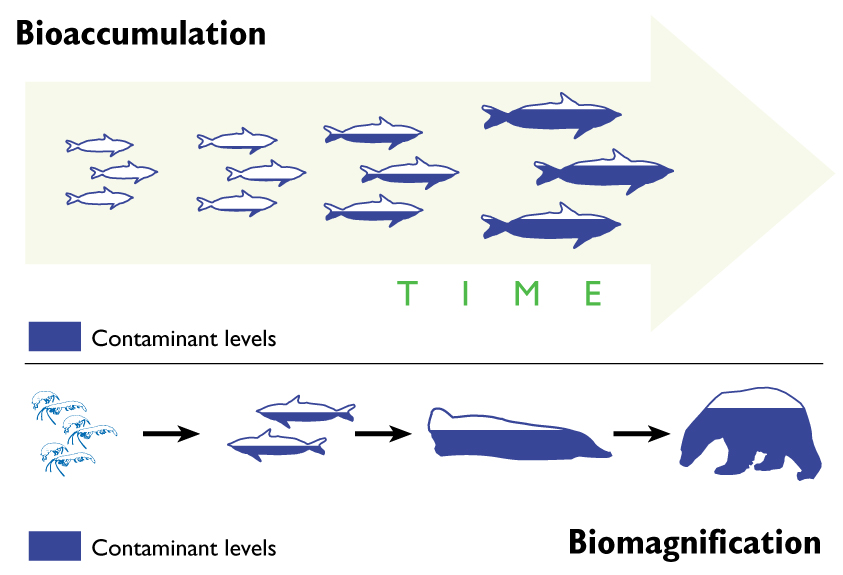
Fresh water systems are put under great amounts of stress due to our agricultural system. Agriculture is largest consumer of water in the world, comprising up to 70% of global freshwater withdrawals. The nutrients and pesticides used to grow crops are carried into local water sources when it rains, polluting the freshwater. In addition to pesticide runoff contaminating freshwater ecosystems, pesticides are found in higher concentrations in the animals on higher trophic levels that rely on pests as a food source. (See picture below).

Nutrient runoff, particularly nitrogen and phosphorus, are a source of energy for the flora in local bodies of water, creating algae blooms that can cause anoxia and death of aquatic animals. 

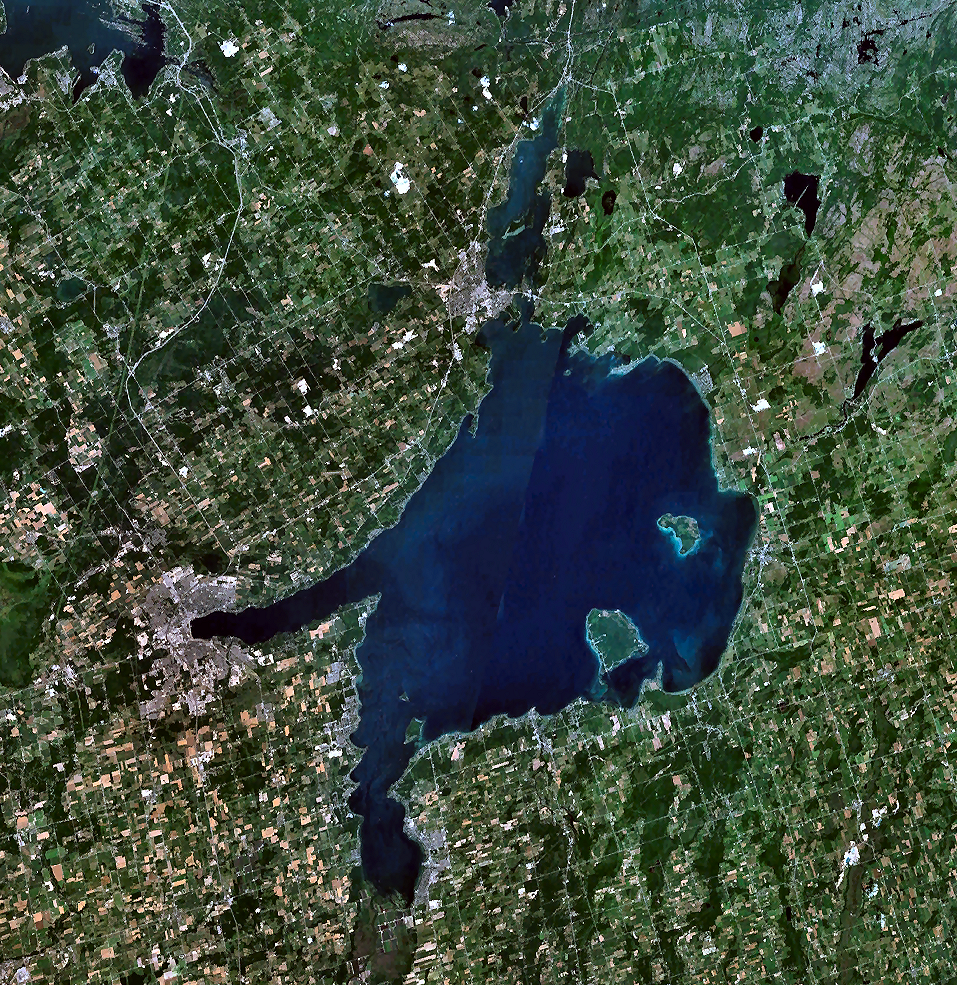
Agricultural phosphorus runoff in Lake Simcoe is a major issue that has cost Ontario and the federal government a significant portion of over $80 million that has been spent since 2008 towards lake rehabilitation.  

Habitat loss and fragmentation is decimating biodiversity thanks in no small part to the development farmlands. Forest dwelling animals are forced to relocate or live in a less favourable habitat which often leads to their death. Habitat fragmentation also results in an edge effect that reduces the size of the suitable habitat by more than the size of the area that is cleared. The area at and near the edge of the forest is less viable to organisms that live deep in the forest


So, What can we do? 

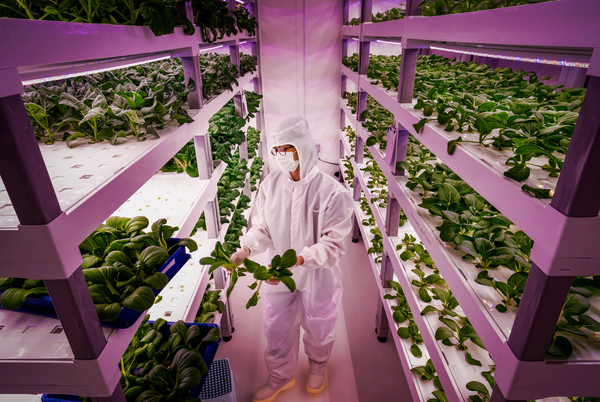
An approach that significantly mitigates all the environmental issues that are brought by current factory farming is vertical farming. Vertical farming is an indoor method of farming where the plants are grown in stacks where the temperature, lighting, nutrients are optimized, maximizing the yield for the resources and land used.

Inside a vertical farm in Singapore

Stacking crops allows the produce to be grown in much smaller spaces, minimizing the amount of land required for farming. Growing inside building allows for crops to be grown in urban areas, reducing the impact of transportation while also minimizing the exposure to pests which virtually eliminates the need for pesticides. 

There are several methods of vertical farming that do not use soil at all, but instead submerge the plants in nutrient rich water or use mist to grow produce. This allows for recycling of water throughout the farm and less water usage, there is less water loss through evaporation and it does not seep into the ground. 

References

Amorim, C., & Moura, A. (2021). Ecological impacts of freshwater algal blooms on water quality, plankton biodiversity, structure, and ecosystem functioning. Science of The Total Environment758. https://doi.org/10.1016/j.scitotenv.2020.143605 

Beaton, D., & Brook, T. (2015, May). Pesticide Contamination of Farm Water Sources. OMAFRA. Retrieved March 30, 2022, from http://www.omafra.gov.on.ca/english/engineer/facts/15-001.htm 

Federman, S., & Zankowski, P. (2021, October 25). Vertical farming for the future. USDA. Retrieved March 30, 2022, from https://www.usda.gov/media/blog/2018/08/14/vertical-farming-future 

Government of Canada, S. C. (2019, September 12). Agricultural Water Survey, 2018. StatCan. Retrieved March 30, 2022, from https://www150.statcan.gc.ca/n1/daily-quotidien/190912/dq190912d-eng.htm 

Malcolmson, C., & Prophet, M. (2021). Rescue Lake Simcoe coalition. Rescue Lake Simcoe. Retrieved March 30, 2022, from https://rescuelakesimcoe.org/wp-content/uploads/2021/03/Under-Pressure-Report-2021.pdf 

NASA. (2007). Satellite View. Wikipedia. Retrieved March 30, 2022, from https://en.wikipedia.org/wiki/Lake_Simcoe#/media/File:Simcoe_79.40W_44.47N.png. 

van der Hoop, J. (2013). Bioaccumulation Graphic. Mercury Science and Policy at MIT. MIT. Retrieved March 30, 2022, from https://mercurypolicy.scripts.mit.edu/blog/?p=499. 

Wonsim, L. (2020). Vertical Farming in Singapore. Wikipedia. Retrieved March 30, 2022, from https://en.wikipedia.org/wiki/Vertical_farming#/media/File:Sgverticalfarming1.png. 

Loss of Biodiversity and the Link to Zoonotic Viruses

Let us discuss the link between biodiversity, the loss of forests, and the rise of zoonotic viruses. A zoonotic virus is a virus that has been transmitted from a non-human animal to human beings. Examples include Ebola and the Covid-19 virus. Forest habitats are disappearing very quickly as time goes on thanks to human activities. Deforestation is a key example of the overall loss of biodiversity, and a mass extinction of species is now occurring that is caused by humans. This extinction is seeing unexpected (or should I say expected?) occurrences for human populations as well thanks to the rise in zoonotic virus pandemics. Right now, we are in the midst of the Covid-19 pandemic, a virus that was originally transmitted by bats. Do you wonder why these two things are linked? The answer to that is- now that many species are going extinct thanks to deforestation and destruction of natural habitats, the species that do tend to survive this are species that host pathogens harmful to humans such as rats and bats. As rats and bats have lesser competition for resources thanks to the extinction of several of their predators and fellow competitors, they are thriving in these conditions. Therefore, there is a more likely chance that a human will come in contact with a pathogen infected rat or bat, and this leads to disastrous consequences such as pandemics. Ecologists have been predicting this for years, but unfortunately no one listened, and we are now suffering the consequences. Is this not enough notice to reduce our biodiversity destruction and save our planet? 

Links:

https://www.nature.com/articles/d41586-020-02341-1

Basic Multiple Choice Questions for Covid-19

  • Here are some multiple choice questions about the Covid-19 pandemic that test your scientific literacy:
  • Upto how long can it take for symptoms of covid-19 to develop?
  1. 1 day
  2. 2 days
  3. 10 days
  4. 14 days
  5. 20 days

               2. What are some symptoms of covid-19?

                             a)   fever

                             b)   cough

                             c)  None of the above

                             d)  A and B

               3. Can a person get reinfected with covid-19?

                            a) Yes

                            b) No

               4. Can you get covid-19 by touching surfaces?

                           a) Yes

                           b) No

              5. What type of infection is covid-19?

                         a) Bacterial

                     b) Viral

                     c) None of the above

Answer key- 1a), 2d), 3a), 4a), 5b)

Fomite Transmission vs Airborne Transmission.

A fomite is an object that carries/spreads infections agents. A common fomite is a door knob. Many people leave bacteria or viruses behind when they touch door knobs. Without proper cleaning people also take vectors (bacteria or viruses) with them. For fomite transmission to occur the vector needs to be undamaged. If the vector is damaged by either heat or disinfectant then the next person to touch the door knob will not be infected. This makes proper cleaning and disinfecting vital to prevent the spread of droplet spread diseases. Fomite transmitted viruses cause the common cold and the flu. This is why with the new cleaning guidelines in place in various venues many people have avoided catching a cold or a flu during the pandemic.

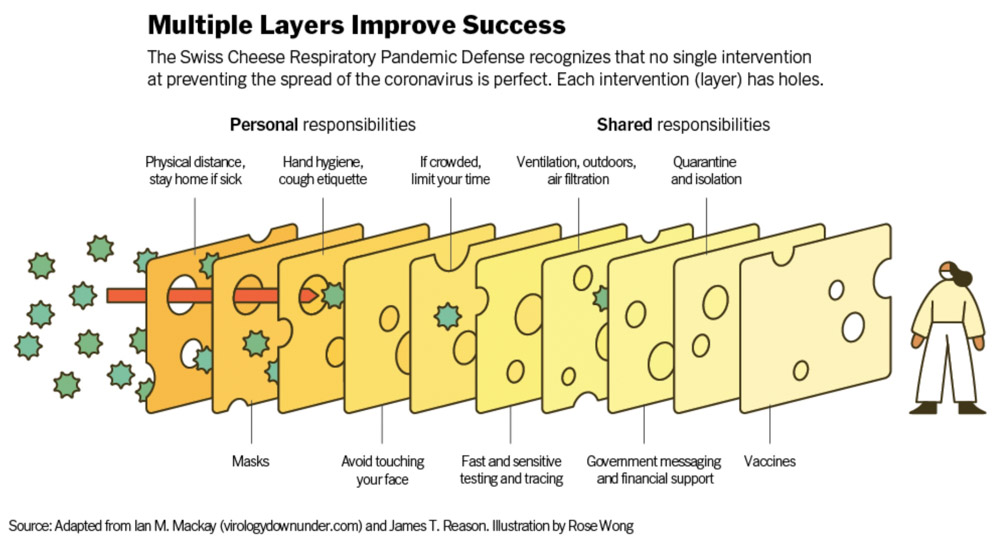
Although many illnesses are caused by fomite transmission SARS Cov-19 is not one of them. Covid 19 is transmitted via aerosol transmission. This means that it is transmitted via small aerosol particles in the air. People can contract it by breathing in the same room as someone who is spreading the virus. People who are infected came into contact with the virus in the air. In the case of Covid 19 the best way to protect yourself is to wear a tightly fitted mask that filters out the small aerosol particles that are in the air. Each layer of the mask filters out some particles while letting air through. Masks with more layers filter out more particles. If each layer filters out 25% of the particles, four layers would be required to filter out all of the particles. If the mask is ill fitted then air will enter and exit through the gaps around the mask instead of going through the filter because that it is the path of least resistance.

Kraay, A.N., Hayashi, M.A., Hernandez-Ceron, N. et al. Fomite-mediated transmission as a sufficient pathway: a comparative analysis across three viral pathogens. BMC Infect Dis 18, 540 (2018). https://doi.org/10.1186/s12879-018-3425-x

A Flicker in the Dark, Elisabeth’s Legacy

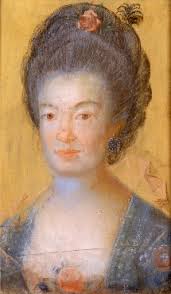
A painting of Elisabeth Von Linne

Elisabeth was born in 1743 in Sweden. While her education history is not entirely known, her along with many of the children of Linnaeus were heavily involved with her father’s teachings, and would regularly interact with other students of Linnaeus, possibly being tutored from home.

Elisabeth was a female botanist in 1700s, which as one might imagine was rare considering how scientific studies at the time were some male-centric. Her most notable work as a botanist is her discovery of the “flickering” that occurs in the Indian Cress, which is to this day still called the Elisabeth Linnaeus Phenomenon.

Tropaelum Majus, also known as the Indian Cress.

The Indian Cress is a fast growing perennial plant that originates from South America, now more commonly found throughout the world. The Indian Cress is known for its bright orange colouring and broad leaves. My mom actually has grown many orange plants similar to this in her gardens before, though I can’t confirm if it was the same one, however its distinct colouring takes me back.

At the age of 19, Elisabeth discovered a flickering effect while observing some Indian Cress. This flickering effect was commonly seen by Elisabeth closer to evening or night. At the time Elisabeth would observe the effects, and she would go on to publish papers on the topic, and over time many other botanists and scientists would come to study the topic as well, leading to the phenomenon being named in her honor. Throughout history the flickering would soon be thought of as an electrical discharge of sorts, however we now recognize the flickering to be a simple optical trick played by our own eyes due to the distinct orange flowers and dark green leaves. In some ways this is almost disappointing to know that there is no electrical discharge, as it almost takes away from the discovery, but on the other hand seeing how our eyes play tricks on us like that is fascinating as well.

References:
1. Platz, Kühn, C., Schiess, S., Schreiner, M., Kemper, M., Pivovarova, O., Pfeiffer, A. F. H., & Rohn, S. (2016). Bioavailability and metabolism of benzyl glucosinolate in humans consuming Indian cress (Tropaeolum majus L.). Molecular Nutrition & Food Research60(3), 652–660. https://doi.org/10.1002/mnfr.201500633

Are Viruses Alive?

Question of whether viruses are alive or not has lead to many deep discussions and extensive research to be able to provide a proper answer. There are many people, including scientists, can agree that viruses are not alive. According to Brown and Bhella, viruses can not sustain themselves for too long without being in contact with a host cell. Viruses coat their DNA or RNA strands with a coat of protein. Each virus varies in size and shape. Viruses need to infect a host cell in order to multiply and proliferate. They rely on the host cells to provide them with metabolic processes for replication purposes. 

If viruses are not alive, does that mean they do not communicate? According to research paper written by Erez and Shamir, they discovered that viruses can communicate with each other when they take over a host cell. While they were studying the behavior of bacterial cells that have been infected by a virus, they found that the host cells produced unusual amounts of chemical signals. However, these signals were not triggered by the bacteria’s DNA, it was produced by the virus. The chemical signals produced are in a form of a protein. This allows them to communicate with other host cells that are infected by other viruses. 

Even if not every one considered viruses as alive, viruses still evolve. Take SARS-COV-2 as an example, it is changing and mutating until now. Thus, it is the most dangerous and infectious virus that we had to deal with in decades. SarS-COV-2 can change its surface shape from one virus to another. It changes the order and structure of the protein layer that allows it to enter the host cell, making it easier to infect a cell.

References:

Alexey Solodovnikov (Idea, Producer, CG, Editor), Valeria Arkhipova (Scientific Сonsultant),

CC BY-SA 4.0 Wikimedia Commons.

Brown, N. and Bhella, D., 2016. Are viruses alive. Microbiology Today, 43(2), pp.58-61.

Erez, Z., Steinberger-Levy, I., Shamir, M. et al. Communication between viruses guideslysis–lysogeny decisions. Nature 541, 488–493 (2017). https://doi.org/10.1038/nature21049

Test Your Knowledge on SARS-CoV-2

  1. What type of transmission is identified for SARS-CoV-2:
    1. Airborne
    2. Droplet transmission 
    3. Bloodborne
  2. What is the main genetic component of Covid?
    1. DNA
    2. RNA
    3. Both, DNA and RNA
  3. What type of organisms can have SARS-CoV-2?
    1. Just humans
    2. Only bats
    3. All mammals
    4. Bugs 
  4. How to reduce chances of getting infected, or severity?
    1. Wash hands, and do basic hygiene 
    2. Wear a mask
    3. Get vaccinated
    4. All of the above
    5. Non of the above, Covid is OVER!!
  5. What are some measures you can take to keep those around you safe, if you are infected?
    1. Be in a properly ventilated area/room
    2. Keep a distance
    3. Do not interact with others until you feel better
    4. Do not interact with others under no circumstances until you have negative results.

Answers: I) A. II) B. III) C. IV) D. V) D.

Virtual Sound and Moving Library

The sound and moving image library is like a treasure that I wish I have learned about since first year. The library has many resources that range from movies and documentaries to music and podcasts. This virtual library gave me the opportunity to access many websites and resources such as a database for movies, including the recently produced films by big companies like disney and pixar. I was pleasantly surprised when i knew that i could watch my favorite movies for free. I do not need to go through paywalls on other websites to watch anything. The virtual library also allows me to access documentaries that I need for my courses and studies. 

I remember when I was researching for the movie Wall-E that I wanted to nominate for the film festival, I found the movie RIO. This is an all time, favorite childhood film. I also found many disney movies that have been removed from netflix and can only be accessed if i subscribe to disney plus, which is quite costly. 

I also found out that I could sign a form to request any movie to be rented through these databases, which is great because once a new movie is not in theaters anymore, we can sign the form to rent it out without paying for it while remaining as a legal process. This should also apply to documentaries and music collections, as well.

References:https://www.library.yorku.ca/web/smil/

What do YOU know about the Covid-19 virus?

MC#1: which of the following is CORRECT, in terms of the covid-19 disease and SARS-CoV-2?

  1. The people that are most at risk of falling ill with both these viruses are middle-aged men only.
  2. Both these viruses cause increasing issues with the lymphatic system. 
  3. Both viruses are transmitted by respiratory droplets produced when a person that is infected, coughs or sneezes. These droplets can spread via objects or surfaces that are commonly used.
  4. Both Covid-19 and SARS-CoV-2 do not lead to death, at all for any kind of patient. 

MC#2: which of the following is true about the covid-19 disease and the SARS-CoV-2?

  1. Because we are more globally connected, covid-19 is less dangerous. 
  2. Unlike Covid-19, social distancing did not help to stop the spread of SARS-CoV-2. 
  3. Both viruses (SARS-CoV-2 (covid-19) and SARS-CoV) use the same host cell receptor.
  4. SARS-CoV-2 cases were not as severe as covid-19 case.

MC#3: what is the best way to prevent the spread of the covid-19 virus?

  1. Isolating when sick. 
  2. Staying 6 feet away from others & generally avoiding gatherings.
  3. Getting fully vaccinated.
  4. Washing your hands frequently.
  5. All of the above. 

MC#4: how does getting the vaccine & wearing the appropriate PPE, help keep others (and yourself) safe?

  1. By making sure that those that are sick wear masks, we stop the virus spreading from the sick to those that are not sick. 
  2. By getting vaccinated, we are lowering the risk of getting the virus because we have already been exposed to it. & have been able to create antibodies to fight against it. 
  3. The more people that are vaccinated, the less number of people will become infected. This would reduce the virus’ ability to spread amongst the population. 
  4. Answers A, B & C are all correct. 

MC#5: how does living below the poverty line change the experience throughout the pandemic? 

  1. Living below the poverty line means less access to the proper PPE. 
  2. Living below the poverty line means a larger number of people, living in smaller spaces. This increases the spread of covid-19, as isolating is just simply impossible. 
  3. Living below the poverty line does not affect the experience that a population may go through because the government provides monetary funds to aide families financially. 
  4. During a pandemic, the government provides everyone with free PPE & opens up hotels for people to isolate in.
  5. Answers A & B are correct.  

ANSWER KEY: 3, 3, 5, 4, 5.

Design a site like this with WordPress.com
Get started