George Washington Carver aka “The Peanut Man”

George Washington Carver 1902.

George Washington Carver, born Carver, was born into slavery in the year of 1864 in Diamond, Missouri during the Civil War. When the Civil War concluded in 1865, slavery has been abolished however racial injustice was still set in place and black students in Missouri were not allowed to attend local school. Because of this, Carver as well as his brother James were educated at home by their parents. Carver always had a thirst of knowledge which was apparent from a young age; however, this did not change the fact that there was still inequality as he was rejected from Highland College in Highland, Kansas once they learned of his race. This drove him to conduct several biological experiments as well as develop a geological collection. His interest in the nature of the world prompted one of his teachers to suggest that he enroll in the botany program at Iowa State Agricultural College and it was there when he became the first black student at Iowa State and earned a Bachelor of Science degree before moving on to pursue a master’s degree on plant pathology and eventually graduating. After graduating, Carver began to do research and teach and was hired to the agricultural department at the Tuskegee Institute–now known as Tuskegee University–in 1896.

George Washington Carver (front row center) and his fellow colleagues at the Tuskegee Institute in Alabama, US, 1902.

Carver’s work included research on new developmental uses of crops such as peanuts, sweet potatoes, soy beans and pecans. He later went on to be known as “The Peanut Man” after he delivered a speech on the many uses of peanuts to the Peanut Growers Association in 1920. He also testified and supported a tariff on imported peanuts which was then passed by the Congress in 1922. In 1943, Carver passed at the age of 78 in his home and was buried on Tuskegee grounds.

My Visit to the Sound and Image Library

Image result for sound and moving image library york university
The entrance of the Sound and Moving Image Library at York University.

I’ve always passed by the Sound and Moving Image Library in my years at York University but have never had the ability or found a purpose of entering it until this semester in my Applied Plant Ecology Course. In fact, we had the pleasure of taking a tour down there with the class and I realized that this library would help in the film nominations which we would eventually submit. Upon entering, I was very intrigued and to my surprise found the library to have a delightful and nostalgic ambiance as it reminded me of the times I’d visit Blockbuster’s as a child with my family to pick up a film. There were revolving racks filled with movies (on DVD) as well as screening rooms and music rooms. The screening rooms had DVD players as well as headphones which were for a person to watch the films individually. Similar to the YorkU Library database online, there was also a database for searching movies. This proved to be beneficial as our film nominations were based on films specifically relating to plant ecology. A film I discovered there was The Wisdom to Survive: Climate Change, Capitalism & Community (2013). Overall, I was blown away with how easy it is to use the search forum for films and was completely unaware that this could be accessed via the advanced search on YorkU + Omni Libraries. It is extremely easy to use and whoever is at the front should be able to assist you with all your needs or inquiries.

Wikipedia Editing Journey

I think we often take Wikipedia pages for granted. Every time we do a search, the results often includes a Wikipedia page that has useful information about the topic. Wikipedia, although not considered a very reliable source, is a great place to start your research. It usually gives you a good overview of a subject and the different areas related to it. However, we don’t usually think about the efforts going into making these pages and all the work it takes for the authors to provide accurate information. It actually takes a lot of time to write or edit a Wikipedia page, regardless of the topic. It requires a lot of time to effectively research topics and gather information that may be missing on a Wikipedia web page.

As I am researching about the impacts of high herbivory for my research essay, for my Wikipedia assignment, I decided to edit a page in relation to herbivores. There are quite a few pages on Wikipedia in relation to herbivory and it was hard to choose one. Some that caught my interest were, ‘Herbivore’, ‘Overgrazing’ and ‘Plant tolerance of herbivory’. I decided to edit the page on overgrazing, as I found that I could contribute more to this page, based on the research I had done. Also, I think out of the pages that interested me, this was the one with the least amount of information.

After registering with Wikipedia Edu. and completing the training modules, I became more educated on how to effectively edit Wikipedia pages. I think going through the dashboard was very helpful. While doing the modules, I learned about copyright rules and what exactly is considered as plagiarism. I also got to understand how to add citations within a page more easily. In my previous edits, I put in each citation manually in source mode, as I did not know that I could easily add citations using the DOI or URL of an article. I also learned more about talk pages; a place where you can converse with other editors of that page, asking questions or clarifying problems that may arise. Out of all the things that I learned I think the most useful thing was about Creative Commons, a place where you can find pictures to legally use on public sites. I think it is a great site, and I will probably be using it more in the future. Overall, I think my Wikipedia journey throughout this course has been very eye opening and informative. I may even continue editing pages in the future and adding references.

If you would like to check out the page I edited, feel free to click here. 😊

The Impacts of Exotic Mammals on The Monkey Puzzle Tree

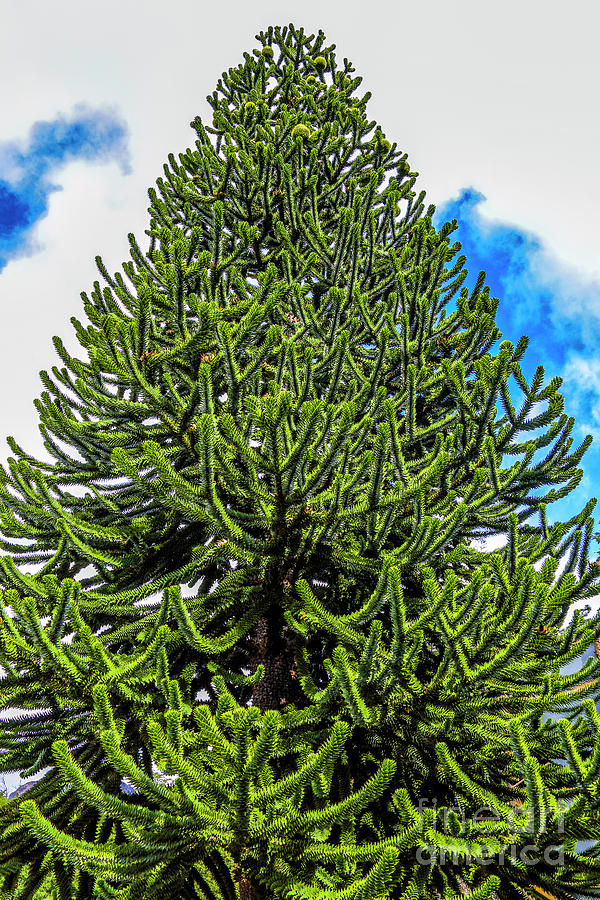
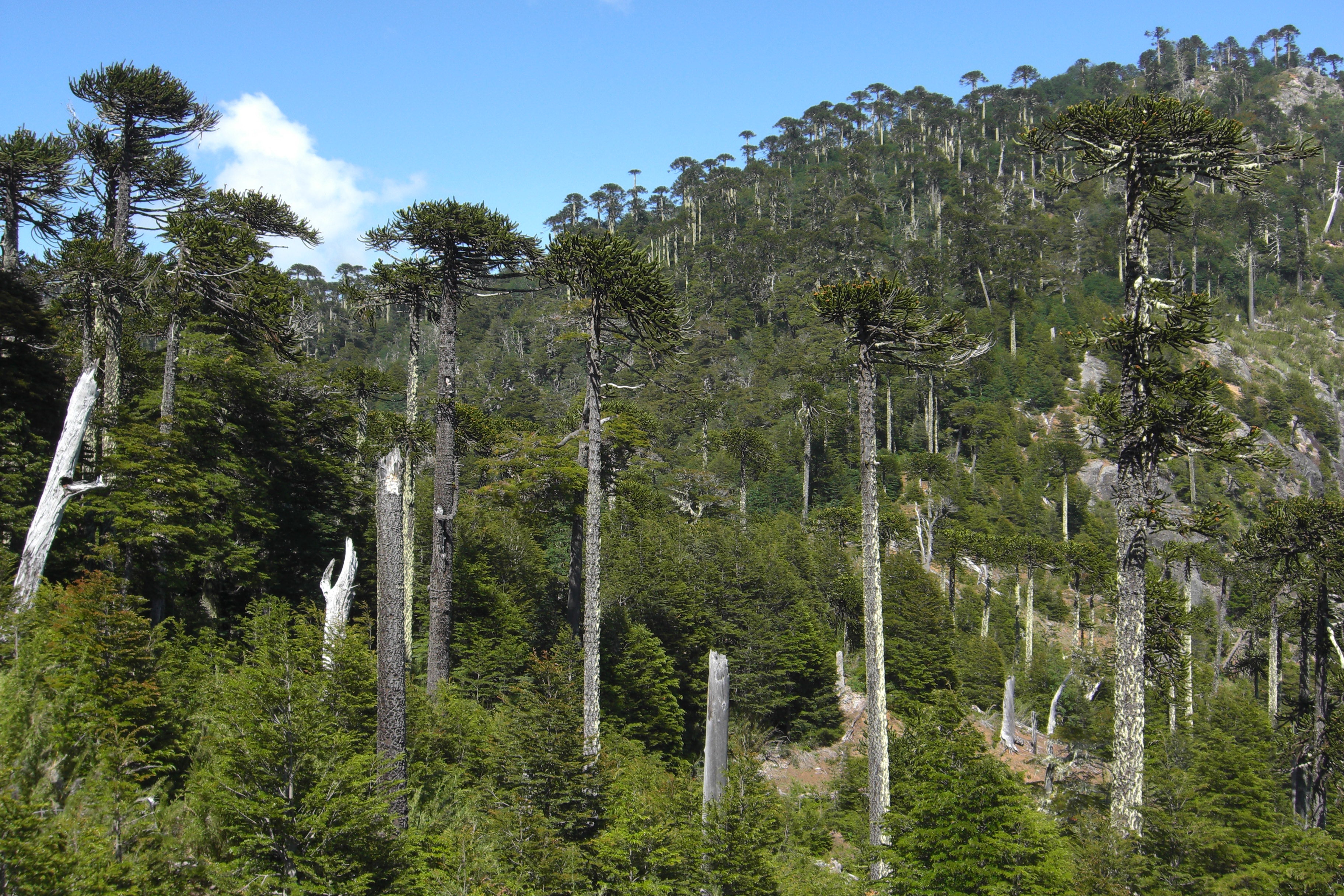
Araucaria Araucana, commonly called The Monkey Tree is an evergreen tree that is mostly found throughout the Andean range in Chile and Argentina. They can grow up to 30-40 meters in height. There are several threats to this species including, deforestation, through logging for plantation of exotic tree species and anthropogenic fires, causing a 40% reduction and fragmentation of the monkey puzzle tree range.

undefined

While researching about this unique tree, I found an article that focused on the impacts of exotic mammals on the monkey puzzle forest. The article was called, Large-scale impacts of multiple co-occurring invaders on monkey puzzle forest regeneration, native seed predators and their ecological interactions, written by Tella, J. et. al.  

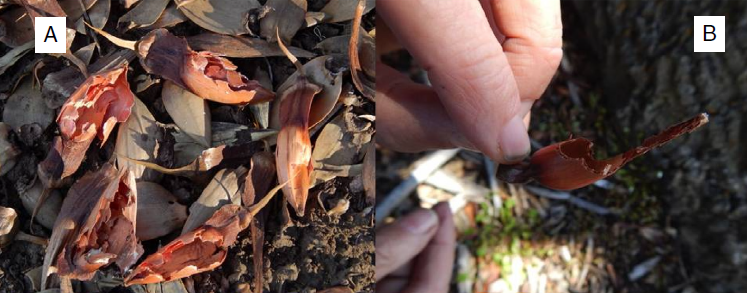
There are several animal species that consume the seeds from the monkey tree, however, after the introduction of several non-native mammals for livestock and hunting uses, there has been an increase in seed predation. Throughout this study they surveyed 516 female trees throughout the range to account for size, altitude and land use variability. Observations were made on the amount of native and exotic species interacting with the monkey puzzle trees. Animal predation was identified based on animal feces or by the way a species ate the seed.   

Picture shows predation on Monkey Puzzle seeds eaten by (A) Austral parakeets and (B) native mice. Picture taken from paper by J.L. Tella et al., 2016.

During their observations, they found that at least 90% of trees were visited by one or more exotic species. In fact, wild boars were found to contain 90% of monkey puzzle seeds in their feces. Their study suggested that exotic mammals may reduce the populations of native seed-predators in the long-term as well as the regeneration of monkey puzzle forests directly through a reduction of seed availability and seedling survival.

Reference:

Tella, J. L., Lambertucci, S. A., Speziale, K. L., & Hiraldo, F. (2016). Large-scale impacts of multiple co-occurring invaders on monkey puzzle forest regeneration, native seed predators and their ecological interactions. Global Ecology and Conservation6, 1-15.

WALL-E: a fun Applied Plant Ecology film

Movie logo for WALL-E, a 2008 movie by Pixar Animation Studios, from the Wikimedia Commons

WALL-E is a fun movie for all ages made by Pixar Animation Studios in 2008 about a seemingly lifeless planet Earth in the 29th century. Humanity had fled the planet and left behind robots named “WALL-E” to clean up the mess that was made as a result of human consumerism. Eventually, plant life was detected on Earth, which prompted the return of humans to return and re-establish life on Earth as it once had long ago.

The movie follows one particular WALL-E robot as it falls in love with a life-detection robot named EVE. But for the purposes of ecology, one notable point is that the setting in the beginning of the movie makes one thing clear: Earth had been made barren due to unsustainable human practices and lifestyles as seen from the piles of garbage, some of which being taller than high, downtown office buildings in the core of the city.

The color used for this setting also adds to the severity of the barren landscape in that it is mostly brown. Not a dark and fertile brown however, but rather a light and sandy brown you can see being blown around that shows just how eroded the surface had become. There are plant species in reality that could possibly scrape by in such an environment, but the chance is made worse if you consider that the piles of waste and garbage had polluted and reduced the already poor nutrient content in the soil.

Overall, it’s a fun movie you can watch several times to pick up on different themes you may have missed on previous viewings. It displays a rather extreme scenario of consumerism and the result of a neglected environment, but it can still be a very real possibility if we do nothing to restore or even mitigate the damage already done to our own home planet.

Advice from a podcast featuring Dawn Bazely

It’s great that people like Dawn Bazely, a biology and ecology professor at York University, take the time out of their schedules to sit down ad have a chat to record a podcast for others to listen in. There is so much to learn from guests of podcasts, and Dr. Bazely was recently able to take part of one recently in Podcast or Perish which dives into the world of academics hosted by Cameron Graham, a professor of Accounting at York University.

It is a roughly 50-minute long podcast, but I’d like to point out something that was brought up between the 8:40-12:00 mark – observe and ask questions! We won’t learn and fully understand if we don’t as questions. We only know what we know and nothing more, and we can only go so far on our own. That is where others step in to share their knowledge to fill in any gaps or misunderstandings you may have had. And who knows, maybe others will pick up something from you too. We’re all always learning, after all.

This also ties into communication as an extremely important skill. You could have all the knowledge in the world, know the deepest darkest secrets of the universe, or know the meaning of life, but it’s all somewhat meaningless if you don’t have a way to communicate it out to others in ways they will understand. It’s also important to make sure that you communicate you knowledge and ideas clearly to avoid misinterpretations.

So take it one step at a time and practice those skills. They aren’t skills exclusive to science or academics. They are skills that are useful for everything in life and will undoubtedly make the journey to your next destination a little easier.

Experience as a Wikipedian

Wikipedia logo from the Wikimedia Commons

“Wikipedian” is a neat little title I can now call myself after having done my first wikipedia edit. I edited the page of the Native Plant Trust, an organization based in the USA dedicated to the conservation of the New England area’s native plant species which, prior to my edit, only had a few lines of information regarding who they were and a quick mention of what they did.

Personally, it’s a good feeling knowing that I’m doing something good and indirectly helping the efforts of a plant conservation organization. Maybe someday, someone will come across their wikipedia page and add on some newer information. Perhaps I even helped someone decide to volunteer for the organization. In any case, it’s good to know that I’m helping to bring a little more attention to a good cause.

EDIT (April 21, 2020):

Coming back here to edit this old Wikipedia blog post, I’ve learned a few things after doing a few more edits to other pages a couple of months later. Registering through Wikipedia Edu brought a lot of important and useful information to my attention. Everybody knows (or should know) to ask themselves if the information they read is credible and reliable, but not everyone might be aware of the specifics of plagiarism and copyright. Things like this and how to use the “sandbox” is already available to every new user upon first creating an account, but it was helpful to have that information set up and ready to review in training modules so as to not miss anything important.

The sections on copyright is one thing I learned as I hadn’t thought much about it until now, nor had I realized it also applied to Wikipedia! Wikipedians must always keep in mind what information is shareable as well as properly providing credit when applicable.

Another point that was brought to my attention was “close paraphrasing.” Admittedly, it’s something I have caught myself doing on occasion and is something I need to make sure doesn’t slip through to any of my Wikipedia edits, or even my academic schoolwork! The training modules proved helpful here, as they helped reinforce a habit I picked up by opening a document during research and succinctly typing notes for me to use as reference in any of my final write-ups.

Sustainable Agriculture and Food Security

Agriculture and food is something I believe most of us take for granted at some point in our lives, even if for a short moment. Perhaps not everyone really needs to know that the global food supply comprises mainly of 14 plant species, but everyone should at least take a moment to stop, think, and appreciate where it all comes from and how it all comes together.

Ideally, we should practice long-term sustainability when it comes to agriculture, with an additional focus on improvements and efficiency. A field full of corn is probably the first thing people think of when agriculture is brought up (it’s what I thought of, at least), but a monoculture is not exactly very sustainable. A single crop in a large area homogenizes the environment and leaves it susceptible to disease and pests, which are sometimes dealt with by use of non-environmentally friendly methods like harsh pesticides.

On the other hand, a polyculture should have a healthier effect on the environment around it. Having native species around (not introduced and potentially invasive species!) would help keep the ecosystem in check and raise its resistance and resilience naturally instead of putting so much manual effort into doing the work ourselves.

Food security is the ability for people to have access to a sufficient amount of proper, healthy food, and it is tied to agriculture in that agricultural efficiency is becoming more and more important as the world’s population grows. Food is a basic necessity of our human lives, and efficiency is a clear path to achieving it. As new technology gets developed, more plant foods that we humans rely on for so much of our diet could be much more readily distributed. It doesn’t even have to be a complex idea. If done correctly, methods like drip irrigation instead of a sprinkler system can save on water and create better agricultural success by delivering water right to where it’s needed and with less wasted water in the form of runoff.

Take a quick moment to think about these kinds of things. Living our lives from one busy day to another often means they go by unnoticed.

Tansley (1917) – what’s mising?

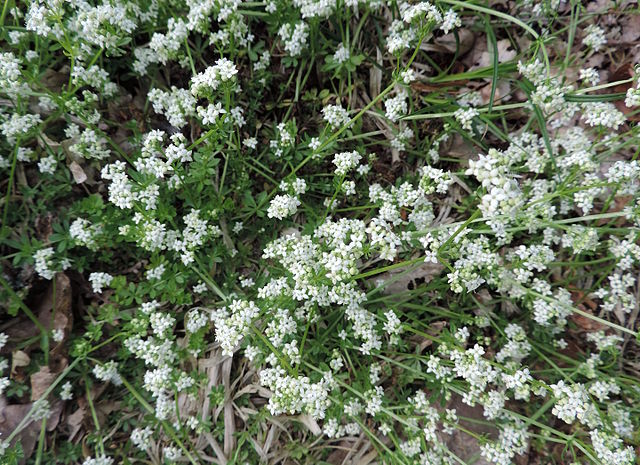
An image of Galium saxatile from the Wikimedia Commons

Have a read over Tansley’s paper on competition between two Galium plant species on different soils from 1917 and you might notice something missing – statistics! It’s important to include some kind of statistical analyses in an experiment as it allows us to identify if there are any meaningful trends and determine if the results are significant. For a result to be significant in statistics , by the way, means that it was likely caused by a variable in the experiment and did not happen by chance.Have a read over Tansley’s paper on competition between two Galium plant species on different soils from 1917 and you might notice something missing – statistics! It’s important to include some kind of statistical analyses in an experiment as it allows us to identify if there are any meaningful trends and determine if the results are significant. For a result to be significant in statistics , by the way, means that it was likely caused by a variable in the experiment and did not happen by chance.

In the case of Tansley (1917), a couple of the results observed were:

  1. Galium slyvestre germinates on calcareous soil, sandly loam, and acid peat
  2. Galium saxatile germinates on all tested soils, but to a lesser extent than G. sylvestre

For the first mentioned result, an observation was made in that “some plants maintain themselves on peat in competition with the dominant G. saxatile for at least six years.” Statistics could be used here and we could ask “are the number of plants that maintained themselves with dominant G. saxatile significant?” If so, then we know that the presence of other plant species may be able to contribute to an ecosystem and make it more stable and biodiverse despite the competition with the dominant G. saxatile.

For the second mentioned result, it was mentioned in the paper that “those which survive and become normally green do not survive competition with G. sylvestre.” Statistics here can help clarify exactly how significant this result may be. Their use of words such as “many die” leaves the exact results unclear. It already sounds significant, but having an analysis with hard numbers can really drive home the results from an experiment. And unless this exact experiment was exactly replicated many, many times, we still don’t know if this particular results was due to chance or even another variable.

Statistics may appear intimidating to some people, but just take a moment to go over them anyways. You will be able to understand the meaning of results and not leave them up in the air for interpretation.

Janaki Ammal: The Legendary Botanist

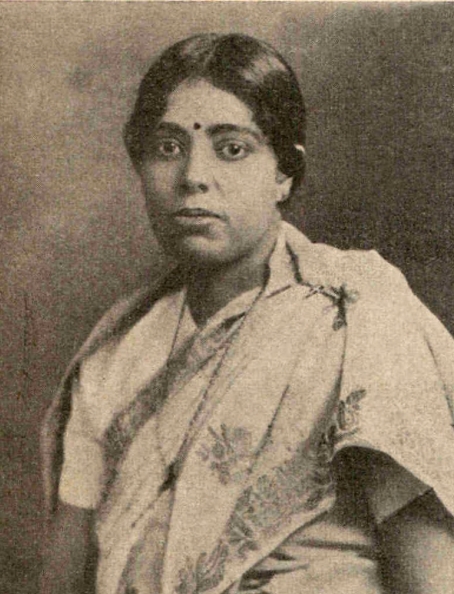
ammal-janaki.jpg
Photo Credit: The Better India

Janaki Ammal was regarded as the first Indian woman botanist. Born in 1897 in the Indian state of Kerala, Tellicherry (now Thalassery), she devoted her life to studying biology and botany, and later cytology.

EARLY LIFE AND EDUCATION

Growing up with her parents, her six brothers and five sisters, she was always encouraged by her family to engage in intellectual pursuits. After schooling in Tellicherry, she moved to Madras to attend Queen Mary’s College where she obtained her bachelor’s degree. In 1921, she obtained an honors degree in botany from Presidency College. She taught at Women’s Christian College briefly in Madras before setting off to Michigan.

She attended the University of Michigan as a Barbour Scholar (awarded for women of highest academic and professional caliber) and obtained her Masters degree in 1925. Dr Janaki Ammal returned to India to continue teaching at WCC and then later returned to Michigan on a Fellowship to get her D.Sc. in 1931. She was arguably the first woman to obtain a PhD in botany in the U.S. She continued to make many seminal contributions to her field.

PROFESSIONAL LIFE

She is best remembered for co-authoring “Chromosome Atlas of Cultivated Plants” along with C. D. Darlington. She spent some of her years in England doing chromosome studies on a wide range of garden plants. Her research on chromosome numbers and ploidy provided insight on the evolution of species and varieties.

During her time, she also worked at the Central Botanical Laboratory, the Regional Research Laboratory in Jammu and Kashmir, and the Bhabha Atomic Research Centre.

Dr Janaki Ammal has collaborated with scientists of her time as well. With Harley Harris Bartlett, a professor at the Department of Botany, she evolved a cross known as the “Janaki Brengal” (brengal being the Indian term for eggplant).

After publishing her PhD thesis (“Chromosome Studies in Nicandra Physaloides”) in 1932, she returned to India and worked as a professor of botany at the Maharaja’s College of Science. She taught there from 1932 to 1934. From 1934 to 1939, she worked as a geneticist at the Sugarcane Breeding Institute along with Charles Alfred Barber. Her work during these years included the cytogenetic analysis of Saccharum spontaneum (wild sugarcane), and several interspecific and intergeneric hybrids.

Her long and rewarding career in science as a botanist, geneticist and cytologist lead her to be elected Fellow of the Indian Academy of Sciences in 1935, and of the Indian National Science Academy in 1957.

She continues to be honored for her work in botany, even having a flower (Magnolia Kobus Janaki Ammal) and a herbarium named in her honor.

Image result for magnolia kobus janaki ammal
Photo Cred: Eisenhut

References

Celebrating Women in STEM

Feminism in India

History of Scientific Women

Design a site like this with WordPress.com
Get started