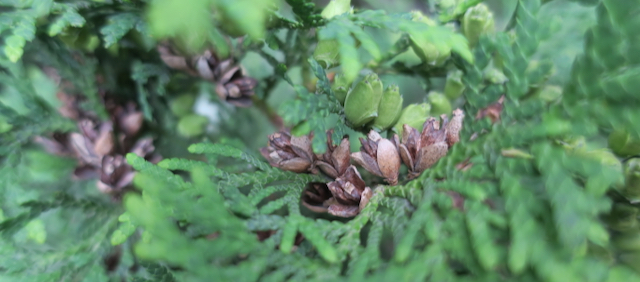
Monkey Puzzle Tree Article

This is a summary of the peer-reviewed journal talking about the history and conservation of the monkey puzzle tree.

This article describes how the monkey puzzle tree in the northern fringes of the temperate forests of South America has historically been heavily logged and used by humans for its economic value, leading to a significant reduction in native forest cover in Argentina and Chile, and the subsequent revision of governmental regulations and legislation to protect the monkey puzzle tree throughout history. Humans have historically been dependent on the monkey puzzle tree because not only were its seeds an important part of the Araucanos’ diet but the tree itself could be converted into a simple shelter, thus providing the Araucanos with a very favorable trade in the tree as a processable raw material. However, the advent of the colonial era caused a large amount of forest vegetation to be cut and burned by humans for plantation and livestock farming, resulting in a dramatic reduction in forest cover and a significant decrease in tree regeneration capacity.

After the monkey-billed tree was first declared a natural relic in 1976, the people and the government began a sustained policy regarding forest conservation with respect to the monkey-billed monkey, even though they had many conflicts with the timber industry over economic issues in the process. The landmark turning point came after the Chilean government bought the monkey puzzle trees and land for $61.5 billion and transferred these to Quinquan residents and conservation organizations, followed by a national management plan that led to a series of conservation measures for the monkey-billed tree, including the review of applications to harvest the tree, and the allocation of personnel and financial resources. Nevertheless, the Chilean government is still facing a conflict between economic development and nature conservation, and more effective forest policies need to be explored and implemented to ensure the harmonious development of human economic production and forest conservation.

Reference:

Aagesen. (1998). On the Northern Fringe of the South American Temperate Forest: The History and Conservation of the Monkey-Puzzle Tree. Environmental History, 3(1), 64–85. https://doi.org/10.2307/3985427

Impacts of Climate Change on Vegetation

I recently read a paper published in my birth year (1999) and found it interesting and meaningful, so I thought I would share it with you. The journal “Responses of Tundra Plants to Experimental Warming: Meta-Analysis of the International Tundra Experiment” talked about how tundra plants responded to warming temperature. In this study, scientists controlled and increased the temperature of the experimental environment to observe the extent to which the growth and reproduction of different plant species in different regions of the tundra are affected by increased temperature, as this experimental model is likely to reflect the real growth state of tundra plants in the face of future weather changes. The experiments showed that in warmer, lower latitudes, plant growth was substantially increased by temperature changes, leaf bud burst and flowering were found to be earlier than usual, and the asexual growth rate of plants was substantially increased. In contrast, in the Arctic, where latitudes are higher and ambient temperatures are lower, the reproductive rates of tundra plants are substantially higher. Scientists speculate that this may be due to the fact that in warmer places, tundra plants have a greater survival rate but are highly competitive, and they need to compete for resources such as sunlight and oxygen to ensure their survival. In contrast, tundra plants at high latitudes are sparsely distributed, so they choose to invest in seeds to ensure the continuation of the species in that geographic area.

I think this journal is closely related to applied plant ecology because it explores the changes in tundra plants themselves in the face of climate change and the possible effects it will have on the ecosystem as a whole. Tundra soils store large amounts of carbon, and increasing temperatures have caused tundra plants in different parts of the tundra to exhibit varying degrees of reduced carbon storage capacity due to increased photosynthesis. Thus, global warming was predicted at that time to cause tundra plants to amplify CO2 release, and indications now suggest that this prediction has been confirmed.

Reference:

Arft, Walker, M. D., Gurevitch, J., Alatalo, J. M., Bret-Harte, M. S., Dale, M., Diemer, M., Gugerli, F., Henry, G. H. R., Jones, M. H., Hollister, R. D., Jónsdóttir, I. S., Laine, K., Lévesque, E., Marion, G. M., Molau, U., Mølgaard, P., Nordenhäll, U., Raszhivin, V., … Wookey, P. A. (1999). Responses of Tundra Plants to Experimental Warming: Meta-Analysis of the International Tundra Experiment. Ecological Monographs, 69(4), 491–511. https://doi.org/10.1890/0012-9615(1999)069[0491:ROTPTE]2.0.CO;2

COVID 19 Quiz

  1. Which of the following is proper PPE (personal protective equipment)?
    1. Bandana
    2. Cloth face mask
    3. KN95 face mask
    4. Lifting your shirt to cover your mouth
  2. What is COVID 19?
    1. A bacteria
    2. A virus
    3. A boy band
    4. A type of cancer
  3. How is COVID 19 spread?
    1. Looking people in the eyes
    2. Mosquito bites
    3. Water droplets from an infected person
    4. Staying in the cold for too long
  4. What other viruses belong to the coronavirus family?
    1. SARS and HIV
    2. SARS and MERS
    3. Influenza and MERS
    4. Influenza and HIV
  5. The virus is mutating rapidly. True or False?
    1. True
    2. False

Experience in Visiting the Image and Sound Library

I’m pretty sure there are still many York students who are unaware of the existence of the image and sound library website, as I only found out about it through my professor Dawn Bazely in my final year of study, so I hope that more students will use this blog to go to the site and learn more about the films they are interested in.

To be precise, the image and sound library is not a single video site, but rather a collection of video sites that the university has licensed to students. Among the various science fiction films, documentaries, radio, and music on these sites, I was surprised to find a documentary about Jane Goodall, named after her, “Jane”, which chronicles Dr. Jane’s interesting research on chimpanzees in Gombe. Trying to get close to wild animals is not easy, but Dr. Jane’s patience has paid off for her. From observing chimpanzees with binoculars from a distance to trying to sneak up on them and gradually having her approach lowered by the growing number of individuals in a family, to brazenly walking into her tent and taking bananas, Dr. Jane was eventually able to observe chimpanzees at very close range and scrutinize a range of behavioral details such as foraging, mating, territory grabbing, and child-rearing, and contrasted the commonalities and differences between chimpanzee and human behavior. As close relatives of humans, chimpanzees are also highly intelligent and emotionally rich, making and using simple tools, helping and cooperating with each other, and grieving the loss of loved ones. What I find very meaningful about this film is that Dr. Jane mentions that the biggest difference between humans and chimpanzees is that humans are the first species in evolutionary history to be able to pass on their past successes and failures to the next generation, and to think about the meaning of their existence with high intelligence, so humans have the ability and responsibility to protect other species on Earth, which is what I ultimately learned from this film.

The Other Movie I Want to Nominate

Another movie I would like to recommend that is related to applied plant ecology is Princess Mononoke. When I watched this movie as a child, I didn’t fully understand the point the movie was trying to make, and I was scared by some fantastical and scary scenes in the movie. The movie describes a story that humans came one day to the forest inhabited by the gods of nature and other beasts, started to build a steel mill, and planned to carry out human production and development by developing a large amount of forest mineral resources. But the heroine Sang as the representative of the beast race vowed to defend the home, not allowing humans to take away the ownership of the forest so a series of struggles with humans. Finally, with the help of Mononoke and the hero Ashitaka, the god of nature restored natural life, but also awakened the concept of human beings to live in harmony with nature.

I think this movie is a concentrated expression of Miyazaki’s environmentalism, in this movie, the conflict between human beings and nature finally rose to the level of warfare. The creatures in the forest hate the humans who destroy their homes, while the greed and desire of humans drives them to plunder more resources from nature. The depiction of these scenes directly reflects the theme related to applied plant ecology: the sustainability of forests and their ecosystems. When trees, minerals, and other natural resources are exploited in an uncontrolled manner, the survival of the local species that depend on them is severely affected, to the point that they gradually fail to cooperate with each other to support the ecosystem’s value of service provision, which leads to human interests being affected as well. Another point worth mentioning is that I think the nature god in the movie represents the ecosystem itself, because it highlights that the rebirth and death of things are cyclical and self-purifying. As a tiny part of nature, human beings cannot influence the decay of the earth, but only our own survival time, and the purpose of protecting the environment is to save ourselves.

Different Kinds of Literature

Peer-reviewed primary literature in the sciences is generally new, original research and scientific discoveries. It will often be the immediate results of one’s research and will include analysis of the data that has been collected. Primary literature will often have an abstract, an introduction, a methods or materials and methods, a results, a discussion, a conclusion, and a references portion. Secondary literature in the sciences is literature that summarizes what has been written in the primary literature, making it less specific and more broad than primary literature would be. Secondary literature is often very helpful when looking for more information on a specific topic since they have bibliographies. Tertiary literature in the sciences will offer a condensed version of material that references primary or secondary sources. In general, they are useful for searching up information about a topic or facts. Some examples of tertiary literature in the sciences would include textbooks or encyclopedias. An example of peer-reviewed primary literature would be the article “Genetic variation in the vulnerable and endemic Monkey Puzzle tree, detected using RAPDs” (Bekessy, S., Allnutt, T., Premoli, A. et al. Genetic variation in the vulnerable and endemic Monkey Puzzle tree, detected using RAPDs. Heredity 88, 243–249 (2002). https://doi.org/10.1038/sj.hdy.6800033). An example of peer-reviewed secondary literature would be “Biology, ecology and conservation of the Mobulidae.” An example of peer-reviewed tertiary literature would be an encyclopedia. Knowing the difference between peer-reviewed primary literature, secondary literature and tertiary literature is crucial for students since knowing what kind of sources you should be looking for and using when doing an assignment is important.

Adrienne Clarke

Adrienne Clarke was born in 1938 in Australia and spent the majority of her life as a Professor of Botany at the University of Melbourne. Having grown up in the mid-20th century and entering a predominantly male dominated field, she experienced sexism at the hands of her peers. In that day and age, woman scientists were not only rare but frowned upon so I think it is particularly amazing how accomplished Adrienne Clarke is having to overcome so many obstacles. Once she completed an undergraduate honors degree in biological sciences, she then went on to earn her PhD. Clarke’s work throughout her career has provided a deeper understanding of the biochemistry and genetics of flowering plants, how they reproduce and how they grow. These discoveries have allowed for a variety of new industrial implementations for the control of disease of crops and insect pests. An incredible accomplishment achieved by her and her team is that they were the first to clone a couple of genes, including that which regulates self-compatibility in plants. They were also able to clone the “c” DNA of a protein known as the Arabinogalactan protein, another protein that is essential for cell division and expansion in plant growth and development. She herself describes her areas of expertise as the molecular basis of self-incompatibility, the chemistry and biology of a class of proteoglycans, the arabinogalactan-proteins and proteinase Inhibitors and their use in control of insect development. She is also co-editor of several scientific books in the fields of chemistry, genetics, and cell biology.

The Lorax

The 2012 film The Lorax is a movie about the exploitation of natural resources. It tells the story of a young boy names Ted who sets out to find a real tree. In his search, he discovers that the land he lives in was once bountiful and resource rich until one day human greed took over. The Once-ler, an aspiring businessman, began to take advantage of the surrounding environment in order to create his company. With the help of his family, he begins cutting down all the native Truffula trees and ignores all the warnings of those around him. Instead, he focuses on growing his business until eventually he depleted the entire forest of trees, leaving nothing but a baren wasteland and industrial waste behind. In doing so, he destroyed the entire ecosystem and set the environment back years. The Lorax is a satirical tale of warning us against the overexploitation of the earth’s natural resources. The animated children’s movie discusses mature themes covered in our course such as the extinction crisis and loss of biodiversity, habitat fragmentation and loss, and sustainable forestry. In the film, we see how deforestation impacts not only the surrounding environments, but how it also has a lasting effect on the entire ecosystem as a whole. All of the native species living in or near the trees that were being cut down have vanished and the air has become so polluted and toxic that it created a whole new industry, selling fresh air. The movie allows for an exaggerated outside view of how deforestation and overexploitation of resources affects our own Earth and gives viewers a real wakeup call about human impacts on the environment.

The Sound and Moving Image library

I never knew how many different websites we had access to as York University students until I discovered the Sound and Moving Image library (SMIL). The Sound and Moving Image library is one of the many resources available to students, encouraging us to broaden our horizons and discover new things like documentaries, films and more. One film I discovered thanks to the use of the SMIL was the 2009 movie Avatar. Having been a young child when the film came out, I had some faint memories of movie trailers but I had no clue what the movie was actually about. Having access to the SMIL allowed me to search hundreds of different films in a variety of genres and discover movies both new and old. I was able to look up movies I had watched religiously throughout my childhood but hadn’t seen in years and find newer movies that I had not yet had the chance to see. I think that as a student, having access to something like the Sound and Moving Image library is a wonderful thing because in today’s day and age, so many things are digitalized that people rarely visit a physical library to conduct research. Instead, search engines like Google have triumphed. However, it is often difficult to find relevant resources and so having the SMIL at our fingertips when performing assignments such as our film festival assignment allows for a plethora of knowledge and artistic creativity to be brought to light. I personally found it incredible just how many films we as students had access to without even knowing it.  

Invasive Viruses

Sars-CoV-2 has been bullying us for about two years now, so it makes sense that my blog posts have so far been very COVID-centric. As a result I’ve been looking to study viruses and how they work quite a bit.

Specifically here I will be comparing viruses to that of invasive species, and how their spread and effect follow very similar models. Invasive species are of course species that “invade” other ecosystems they are not native to. Typically invasive species will cause harm to other species in an ecosystem in many ways. Some of these effects include increased fire vulnerability, predation/competition of native species, loss of biodiversity, spread of diseases, and much more.

Invasive plant species can be particularly threatening because these species tend to have massive effects on their new ecosystems due to how they can often compete with and take away resources from other plants, and plants tend to be the primary species in the ecosystem, effecting all other species in the ecosystem. Invasive plants also tend to spread and grow very quickly, which allows them take over new ecosystems and continue to spread into others. Typically invasive plant species have ways to spread their seeds fast and far. An example is the Canada Thistle, which is native to the Mediterranean, which is now spread worldwide, notably in Canada as the name implies. The Canada Thistle uses it’s large roots as a method of spreading over larger areas for seed germination, and the seeds can last in soils for up to 22 years. The fact that the seeds can lay dormant for so long is a huge cause of invasive species as the soils that they can lay dormant in can move and relocate, causing the seeds to grow in locations, making them invasive tot he new region, and nobody even realized the seeds were there.

Cirsium Arvense, Canada Thistle

So what does this all have to do with viruses and Sars-CoV-2? In a previous blog I even went into detail about whether viruses are alive or not. Regardless of their living status, viruses know how to spread far and spread quick. There is a reason we use the term “viral” whenever something starts to trend quickly over the internet, and that is because the word has its origins meaning related to viruses. Typically viruses remain dormant until a change in their genetic makeup allows for faster spread. Once the change is made and is picked up by a carrier, if the virus is effective, it can easily start infecting more hosts, and the more hosts it infects, the faster it begins to spread. This is not at all dissimilar to the model for invasive plant species, which thrive off of quick growth and spread, often causing harm wherever they go. The comparison isn’t perfect, because it is hard to say if a virus is invasive, but the similarities are there.

Sars-CoV-2, the virus causing COVID-19, of course dates back to late 2019 to early 2020 in China. The speed at which this virus is able to spread allowed for hosts to carry the virus into new locations, and immediately start finding new host after new host. Like invasive species they grow and spread very quickly, and the further they spread, the faster and faster they can replicate. The dormant seeds of some species such as the Canada Thistle is comparable to that of asymptomatic carriers of Sars-CoV-2, who are unaware of their status of having the virus, making them especially effective and spreading the virus to many new hosts. At this point we are all familiar with this, as we often find that people meetup with others who don’t believe they have the virus as they show no symptoms taking tests days later and realizing they now have the virus. Sars-CoV-2 may not be an invasive species, but it is most certainly invasive to our lives.

Design a site like this with WordPress.com
Get started