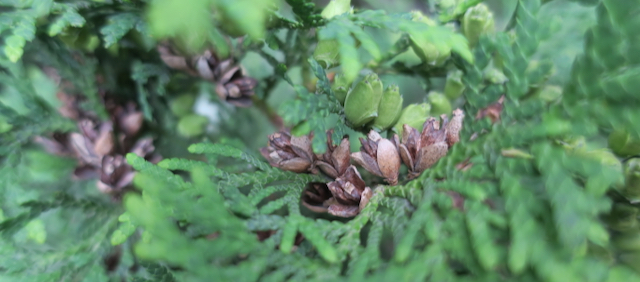
Scientist versus Biology Student on why to protect our biodiversity.

After two ears of the beginning of the major pandemic of modern history, some people are still uninformed. As a scientist, I feel the necessity to expand the knowledge that my professors passed to me, contributing to a major cause that correlates the emergence of epidemics and pandemics with the destruction of the natural world and loss of biodiversity.

COVID-19 is a zoonotic virus, that probably came from animals and evolved to infect humans. Its spreadability and mortality rate are shocking. Zoonotic viruses are viral infections that are shared among different organisms. Protecting species diversity is a way to protect ourselves.

I read about a famous scientist that wrote an opinion article for Yale Environment 360 that starts like this: “Conservationists argue that humans need to save species in order to save ourselves. The truth is we could survive without wild species — but they can’t survive without us, and the moral argument for protecting them and the beauty they bring to the world is overwhelming.”

And he continues: “The natural services humans actually need to fuel modern living come from microbes of decay, a few main insect pollinators, the ocean’s photosynthesizing plankton, and non-living things like water and the atmosphere.”*

Got really mad, and couldn’t understand why would this scientist want to criticize the scientific community as having a selfish interest in protecting biodiversity. This blog post allowed me to show that Carl Safina could have worded its article in a better way.

Let’s not mention the importance of all ecosystem services, and keep our focus on the pandemic. Recalling: preventing biodiversity loss is a way to protect the human society against pandemics. There is a concept called dilution effect that basically explains that since different species vary in susceptibility to viral infections, a biodiverse environment leads to low infection prevalence in hosts. Species that are not hosts, not prone to the infection, act as diluters. In contrast, monocultures of animals, specially when raised in poor conditions and closed environments, are very likely to transmit diseases. Compare a closed hen house of only one species of chicken to different variations of chickens raised in open fields. It is intuitive to say that the hen house is more likely to promote disease transmissions.

We still have, and forever will, to invest in continuous scientific research to understand the impacts of human activity in our world. Now it is a special time to turn eyes to how protecting our environment and species that surround us his deeply linked to our own health.

*You can read the full article here: https://e360.yale.edu/features/the-real-case-for-saving-species-we-dont-need-them-but-they-need-us

Anna Agazzi Migotto

Women in STEM: We Love to See It!

York University Schulich School of Business professor, Cameron Graham, hosts his fifth Podcast or Perish episode (link down below) with a guest who is truly a force of nature, a huge advocate for women in STEM. Dawn Bazely, York University biology professor and researcher talks “Writing Women back into Science”. This podcast episode touches on an issue that has existed since humanity started discovering science, but continues to be a political regime of today and still needs to be discussed. Exclusion, not giving credit to those who deserve it, it is a prominent issue in women and minorities in all science fields. I still see posts about it all over social media/science newsletters, raising awareness about misogyny and sexism in not only science fields but in the general workforce – it still needs to be discussed as it continues today. Graham’s 50 minute podcast gives deep, first-hand insight on this topic, highlighting examples where women in science had their work disregarded and to this day are still deemed as “unqualified” or “un-notable”. 

Dawn Bazely is the first person in Canada to propose policies about inclusivity in science societies. Raising awareness for not only women but all minorities in STEM. She tells us about her true hustle to get a number of notable women to be recognized on Wikipedia articles. She gives advice to all of us fellow Wikepedians. I did not include a specific time stamp because I encourage you guys to listen to this podcast in its entirety.

There’s a saying that empowered people empower people. Hearing the enthusiasm in her voice ignited something in me. I felt her sincerity and her burning determination for justice. I will definitely recommend this podcast to my female classmates who I think need to become “rampant self promoters”, as professor Bazely calls it (she notes her use of the #RSP hashtag on her Twitter account, linked below). She explains how she has had female students and colleagues who don’t believe in themselves. For all you women reading this, let’s be #RSP’s together! I believe in us!

Podcast Episode: https://www.podcastorperish.ca/episodes/episode-005-dawn-bazely

Dawn Bazely’s Twitter account, talking about this specific podcast and using her famous hashtag! :

Diversification as THE KEY to sustainable food production systems

Sustainable agriculture is a form of producing food that gives balanced importance to the environment, economy and to our society. When contrasted to conventional agriculture, one might think that massive production of giant, sweet and symmetrical vegetables can’t be outcompeted.

With the growing human population and climate change, most people THINK we need to produce more and more. 1 in 10 people do not have enough to eat.

But here it goes: What are the benefits of massive production if the soil is not able to bare different production cycles?  If the water cycle is disrupted?

On the stage we are now, our food production systems need to be reorganized or they will collapse. We could collapse. Sustainable food systems are the solution to end world huger and mitigate climate crisis.

Food is more important than what we believe. “You are what you eat”*. Food is a form of cultural expression, it nourishes our internal biota, that vastly influences our emotions. We are heterotrophs, we can’t transform light energy into nourishment as plants do. We need to eat to survive, that is a why of our food production systems being so important. By shifting them to sustainable production we would be benefiting our own health which is deeply linked to the health of the ecosystems that surround us, and to the health of our social systems.

I have been involved in a project in Brazil where the main goal is to increase the profit of small rural producers and enhance their social and heath conditions. The Sowing Water Project  from IPÊ** aims to substitute conventional agriculture fields by agroforests. Agroecosystems will eventually substitute conventional agriculture, but only when people listen to biologists and forest engineers and realize that they yield more profit AND benefit the ecosystem. Agroecosystems are forms of agriculture that respect biological diversity and use natural strategies to increase production, quality and decrease costs. 

Let’s use an agroforest as an example of a sustainable agriculture system. An agroforest system represents a different way of using land in which native trees and shrubs are used in addition to crops, leguminous plants and cattle in the same area. This kind of system tries to imitate the way a forest works, allowing for the soil to be always covered with vegetation and organic matter. It is a diversified agriculture that favours the productivity of degraded soils by using different plant species that play different roles. Its foundations are on taking advantage of natural strategies that already exist and create stable ecosystems to reduce the use of external inputs and increase productivity.

When thinking about sustainable agriculture we have to remember that sustainability englobes the society, the environment and money. It is by actively teaching and informing people that we will be able to re-adapt the human lifestyle to one that is less harmful to nature and more intelligent. Beneficial in all directions. It is a political game of convincing people, creating policies and integrating the social, economical and environmental platforms to promote sustainable agriculture.

How could I start contributing now? 

  • Eat seasonally
  • Support local and organic producers
  • Adopt a plant-rich diet
  • Support slow food movements
  • Avoid wasting food

*I would rather be a beautiful greenish lettuce leaf than a bloody piece of cow flesh (also called steak). But I will leave that for another blog post.

**Institute of Ecological Research

References:

Altieri, M. A. (1999). The ecological role of biodiversity in agroecosystems. Agriculture, Ecosystems and Environment, 74(1–3), 19–31. https://doi.org/10.1016/S0167-8809(99)00028-6

https://www.nature.com/scitable/knowledge/library/sustainable-agriculture-23562787/

The Lorax

Having chosen Wall-E for my applied plant ecology film festival, I also found a variety of other films which covered the idea of climate change and loss of biodiversity in a unique way. The Lorax, a 2012 film created by Universal Studios follows the story of Ted who lives in a world with no nature and no natural resources, meaning no real trees, plants, etc. As he goes on a journey to find a real tree for his neighbour, the movie begins to focus more on the reason behind the lack of biodiversity in this world. Specifically, the movie shows the Lorax, a guardian of the trees and the Once-ler, who had once been an entrepreneur and had led to complete deforestation of the Truffula trees, leaving nothing in behind as his greed for success took over. The Once-ler had originally arrived at a beautiful field of Truffula trees with a diverse ecosystem surrounding the trees. 

However, as he begins to chope down the trees one by one to create his ‘theends’. However, with that, the Lorax comes in to explain to the Once-ler that continuing to cut down trees would have massive consequences. However, he continues to cut down forests of trees, leading to a complete mass extinction of the Truffula trees. With that, the companies the Once-ler put up in their place began producing large amounts of smoke, pollution and oils, leading to the deaths of the remaining animals within the habitats. This movie directly showcases the idea of industries taking over forests through clear-cutting and mass deforestation to put up beef agricultural lands, company plants, etc. The product of thneedville, Ted’s city shows the results of such actions, which is also what our planet is also currently on the path towards. 

Meet Alice Pegler

Alice Pegler was born in Keiskammahoek, a rural town in South Africa in 1861. As she grew up to attend the Dominican Convent, she became interested in pursuing teaching and went on to train to be an educator. However, after suffering many health problems related to her eyesight, she chose to leave behind teaching and her smaller hometown to settle in Kentani where she also began to raise and teach her nieces. As she formed her new life in the new environment, she became interested in surrounding flora and fauna, after which she began a large collection of plants she had collected from areas around her village. She began catching the eyes of other botanists such as Slemar Schonand who became interested to read her notes. Her first publication consisted mainly of her observations and notes, published in 1918. She continued to diversify her learnings towards other organisms as well such as spiders and beetles. In 1903, she began travelling to further areas to collect and analyze more unique organisms. However, her health declined limited her travel and forced her interest in fungi and algae. She continued collecting fungi within the Kentani district, of which her results were published in 1918. Though she could not work towards her ultimate goals due to her early passing, her specimens were generously donated to the South African National Botanical Institute and she was honoured with a membership of the Linnaean society, as well as a species being named Aloe peglerae.

How Well Do YOU know COVID 19?

  1. Which mask is the most effective against COVID 19?
    1. N95
    2. Cloth masks
    3. Blue disposables
    4. Masks with Exhalation valves
  1. What aspect of the viral molecule do COVID vaccines target?
    1. Cell membrane
    2. Immune cells
    3. Spike protein 
    4. Red blood cells
  1. An effective had sanitizer being used to kill COVID and germs should be at least ____ alcohol. 
    1. 30%
    2. 50%
    3. 60%
    4. 99%
  1. Which of these is NOT a common symptom for COVID 19?
    1. Inability of smell or taste
    2. Fever
    3. Fatigue 
    4. Blurred vision
  1. Staying apart from others when an individual has been EXPOSED to COVID is commonly referred to as: 
    1. Physician Distancing
    2. Exposure control
    3. Isolation
    4. Quarantine 

Peer-Reviewed Articles (Primary, Secondary & Tertiary)

Through the various courses I have taken, I have learned the variety and importance of peer-reviewed articles, all of which contribute greatly to fields of research. Peer-reviewed publications are specifically given the title and credibility of being ‘peer-reviewed’ when they have been through rigorous processing of analysis and editing by other experts with equal knowledge of the topic the paper focuses on. This process ensures any errors or miscommunication is caught to make sure that all information being processed and published is accurate and well written. 

The three different types of peer-reviewed articles differ between the type of information being published and the sources that it is drawn from. Specifically,  primary peer-reviewed literature consists of original studies with raw data and results from an experiment conducted by the authors. This may come in the form of clinical experiments, participant-based studies, etc. In a non-scientific example, it utilizes information from the source itself, such as audio recordings, interviews and other forms of live information. Many times, to identify a primary research article, one may look for the presence of a methods section, which oftentimes symbolizes the use of the author’s own experimental protocol and points towards raw data being collected. As an example, a study conducted by Lange and Boucher (1990) focused on the Audouinia capitata plant to study its germination patterns. It was a primary article as the lab group followed an original protocol to collect their own raw results. Specifically, the researchers prepared a smoke drum through which smoke was blown into tents containing seeds from different plants. The germination of the seedlings was studied and results were recorded. Since original results are being recorded and presented, this is a primary source of information. 

On the other hand, secondary sources analyze and study primary sources to better explain, connect or understand the ideas and results presented in the primary studies. Oftentimes, review articles will combine dozens of primary sources to compare and contrast the results of each to interpret the final conclusions regarding the topic. In this case, review papers must give credit to all other researchers whose papers are being analyzed and critiqued. An article by Han and Yang (2015) was produced as review literature as it brought together and reviewed a large number of primary sources to further understand the molecular mechanisms of seed germination. In this case, no original data was collected.

Lastly, tertiary peer-reviewed sources put together materials of primary and secondary levels to provide overall summaries and concise understandings of the topic. No original studies are conducted but, all information is from credible sources and analyzed to put such large amounts of information in an organized manner. Usually, these sources are seen in the forms of textbooks or study materials as they put together a variety of sources with some primary data to allow for a better understanding of the material. An example would be a plant ecology textbook, such as the one written by Shukla and Chandel (1994). 

De Lange, J. H., & Boucher, C. (1990). Autecological studies on Audouinia capitata (Bruniaceae). I. Plant-derived smoke as a seed germination cue. South African Journal of Botany, 56(6), 700-703.

Han, C., & Yang, P. (2015). Studies on the molecular mechanisms of seed germination. Proteomics, 15(10), 1671-1679.

Shukla, R. S., & Chandel, P. S. (1994). A textbook of plant ecology. S. Chand Publishing.

Exploring the power of science communication

Communication is intrinsic to all organisms. It exists in the form of cell-cell biochemical interactions, translation of experiences from the environment to our brains, perfume… Have you ever thought about why flowers are so attractive and colourful? It is their way of shouting: “Hey! Hello pollinator!!! I am over here!”. Or, why fireflies keep shining tiny yellow lights at night? They communicate using light: “Wow, your are a handsome buggy”. Communication is a powerful word. It is a part of all beings. It occurs in an array of diverse forms. It can even impact evolution.

As a mature biology student I see that the scientific community is driven by curiosity and continuously aims to understand and explain the “why” and “how” behind what it is observed. That, in addition to the opportunity to change the world is what gives shine to most researcher’s eyes. Communication lyes between our answers and questionings.

But, to be able to change the world with our findings, we need to connect them to other research paradigms, we need to expand the scientific world in an understandable way to different groups of the public. We need to explore ways of engaging people with science, since science plays a central role in everyone’s lives. Learning about science can connect them back to their natural world. Science communication can influence the development of passion to beings that surround us. To our seas, sprouts, trees, sky. It is by understanding that we stop destroying.

Communicating science is a political act. By understanding and learning we can start to critique and debate. It is a way to fight ignorance, that if in mass, can lead to bad consequences, for example, to an anti-vax group formation during the COVID pandemic; or to groups of people supporting forest devastation to create more space to conventional agriculture, or to killing bees!

Science communication is a way to include, to promote the diffusion of knowledge. Our society is becoming faster. Social media, new technologies are interconnecting people in a way never seen before. It is a free continuous flow of energy, and we researchers need to break trough shyness, lift our heads (for some minutes) out of complex articles and peer-reviewed journals and think about how can we contribute to the expansion of information written in small letters on a research paper.

Because of my background, I see artistic visual and sound representations as text. Why not incorporate art to our discoveries? It might create something that will impress, touch someone’s emotions and be never forgotten. People don’t strictly have to read two paragraphs to get informed. As we see, figures in the result sections of long articles are the most intriguing, because of their ability to simply communicate what has been discovered. Information travels through different platforms. It is not separate, being a good researcher, nowadays implies being an activist, engaging people, shouting out (in the right way) to be heard, understood and to change the world.

To see art in action when communicating science go to: https://www.un.org/en/climatechange and appreciate the amazing collage

Or access: https://www.un.org/en/climatechange/graphics to check some beautiful posters!

Anna Agazzi Migotto

A More Eco-Friendly Source of Protein

By: Manmeet Makkar

A bit of an odd thing to write my first blog post about BUT today let me cover a bit about the unusual Lactarius indigo, also known as blue milkcap mushrooms. Being an unusual shade of bright blue, researchers have been actively studying its role in the ecosystem. Research has found them to live in a mutual partnership with tree species around them, which may be unusual for fungi such as these. 

 http://saveourgreen.org/allpost/wp-content/uploads/2013/03/bluemilkmashroom1.jpg

As the cultivation and usage of these species have become more prominent, researchers have begun to focus more on their dietary intake. The mushroom species have been found to be high in fibre and fatty acids as well as protein. Specifically, it is being considered as a replacement for other protein sources which have a much larger ecological footprint, such as pasture-fed beef. Specifically, as the agricultural demand continues to increase, governments make the decision to convert forests into agricultural lands, which further supports clear-cutting, deforestation, etc. Not only does this reduce major diverse habitats for a variety of species, it also creates problems for those that may not inhabit those areas. For example, the removal of forests reduces soil erosion, protects against flooding, etc. However, with the reduction of forests, homes to thousands of species continue to be destroyed. 

Understanding that the mushrooms, which produce a larger amount of protein than beef grown within the same area, it’s now important to also understand the importance of decreasing that ecological footprint through food. Researchers have specifically come up with a detailed plan which follows the process of cultivating these mushroom species, inoculating trees with them and planting the trees to further promote the symbiotic relationship of trees and this mushroom species. 

It seems like a very understandable plan so, what is stopping the government from attempting it? 

https://phys.org/news/2022-01-humble-mushroom-forests-climate.html

Testing your knowledge on COVID19

In a day where misinformation is spread rapidly, it is important for us to always do our research and look towards peer-reviewed journal articles.  Here is a list of some questions about Covid_19 and SARS CoV-2 viruses:

  1. How does the SARS CoV-2 viruses spread?

a)   Exchange of bodily fluids

b)   Droplets in the air coming from our mouths and noses

c)    Contaminated water

d)   None of the above

2. People infected with SARS CoV-2 always show symptoms of Covid_19.

a) True

b) False

3. What is the best way to protect yourself and others from SARS CoV-2 and Covid_19?

a) Get vaccinated

b) Wash hands frequently

c) Wear a mask in public places

d) Practice physical distancing

e) All of the above

4. Is there a cure to Covid_19?

a) Yes

b) No, survival is low.

c) Vaccines

d) No, but usually people recover on their own.

5. How long can the SARS CoV-2 virus survive outside the human body?

a) 3 weeks

b) 15 minutes

c) 10 days

d) Several hours to days

Design a site like this with WordPress.com
Get started