A hand sanitizer must contain at least which percentage of alcohol to be effective against Covid-19? A) 20% B) 90% C) 50% D) 60% E) 99%
2. Which of these is not a common Covid-19 Symptom? A) Cough B) Fatigue C) Loss of taste or smell D) Blurred Vision E) Cough
3. It is possible to get Covid-19 more than once A) True B) False
4. Which of the following is true? A) Cloth masks and KN95 masks are equally effective against covid-19 B) KN95 masks are more effective but are not reusable C) KN95 masks are more effective, and they are reusable D) Cloth masks are more effective against covid-19
5. Which of the following groups of people are at a greater risk of more severe complications after contracting Covid-19? (Choose all that apply)
A) Children B) Older Adults – Especially aged 65 and above C) Teenagers D) People with certain underlying health conditions E) Athletes
A lot of people can easily get lost within research on their desired topics within research papers and lab reports. There are multiple different types of literature that can be found that specifically summarises a topic. Personally when looking for information for classes I take into consideration the differences between peer-reviewed primary, secondary and tertiary sources of literature.
Primary literature is considered to be the main source of information when it goes to most topics. It indicates the outline of research data obtained from an experimental procedure, this type of literature contains structure that includes an introduction, methods, results and discussion of the data collected in the stated experiment.
Specific example : Royer, D. L., Wilf, P., Janesko, D. A., Kowalski, E. A., & Dilcher, D. L. (2005). Correlations of climate and plant ecology to leaf size and shape: potential proxies for the fossil record. American journal of botany, 92(7), 1141-1151.
Secondary literature are generally reviews and critiques of primary literature sources , it mostly summarises the general ideas it portrays. Doesn’t not contain similar elements such as methods/materials and an introduction. This type of literature is in the form of newspapers and magazines.
Specific example : Aagesen, David L. “Indigenous resource rights and conservation of the monkey-puzzle tree (Araucaria araucana, Araucariaceae): a case study from southern Chile.” Economic Botany 52.2 (1998): 146-160.
Tertiary literature is a condensed version of various sources of information with ties to both primary and secondary literature. It can be dictionaries, handbooks and wikipedias. Specific example : https://en.wikipedia.org/wiki/Extinction_event
This semester in Applied Plant Ecology, we were told to find an article about the monkey-puzzle tree. I stumbled on an article called, Indigenous resources rights and conservation of the monkey-puzzle tree (Araucaria araucana Aruaycariaceae): a case study from southern Chile. The monkey-puzzle tree is also known as the Araucaria araucana, a natural monument. For those of you wondering what the monkey-puzzle tree is, it is Cile pine that has been named the monkey-puzzle tree since even monkeys have a hard to figure out how to climb the spiralling branches of the tree. The article I selected for this course is written by David L. Aagesen and focuses on indigenous land rights and environmental conservation. The monkey-puzzle tree is native to the temperate forests of Argentina and Chile. This conifer is economically and culturally significant. The Araucanos is an indigenous group in Chile that uses the tree’s seeds as the primary food source. The monkey-puzzle tree also produces high-quality and valuable wood, which is in high demand in the timber industry. The monkey-puzzle tree has declined significantly in its natural range throughout the years. This has led researchers to find an effective and sustainable solution to manage the monkey-puzzle tree.
One of the primary anthropogenic threats to the monkey-puzzle trees has been the timber harvest, which has caused significant damage to this species. The Araucano tradition uses these trees to collect seeds, create homes and fires, help heal wounds and headaches, and other health problems. They are very connected with the tree and think of the monkey-puzzle tree as a family member. However, the Aracanos have also caused damage to the species through fire damage. The Araucano intentionally started fires to get rid of undergrowth, which has also significantly caused harm to the monkey-puzzle tree. Also, the Araucano have forcefully removed seeds from cones, which alters the natural regeneration process. These factors played a role in the researchers’ conclusion that the Araucanos must protect the area since their methods are not sustainable for the species. Researchers state that the Araucano can cause further damage to the environment through using wood, burning undergrowth, forcefully removing seeds, and cultivating of land. All these factors harm the protected area of the Ralco National Reserve. Researchers suggest that creating distance between the land and the Araucano will help improve the sustainability of the monkey-puzzle tree. This is an interesting insight into the relationship between the Indigenous people and land.
Image from Wikimedia Commons, the free media repository
Reference:
Aagesen, D. L. (1998). Indigenous resource rights and conservation of the monkey-puzzle tree (Araucaria araucana, Araucariaceae): a case study from southern Chile. Economic Botany, 52(2), 146-160.
Professor Dawn Bazely, image from Wikimedia Commons, the free media repository
I sat down to listen to the podcast with Dr. Dawn Basely, who has achieved so much throughout the years. Near the end of the podcast, she gave a lot of advice to science students, but what stuck out to me was the advice on failure creating success (1:01:07 to 1:01:44). In these last three years of my degree, I have realized how scared and anxious I have been about failure. I held myself to such high standards and did not even think of failure as an option. Since undergrad is so competitive, students and professors do not talk about the importance of failure. When Dr. Basely mentioned it in the podcast, that was one of the first times I heard that failure is vital in my four years of undergrad. I remember writing my LSAT and did not do well the first time. This did disappoint me but also motivated me to push myself more. The next time around, I did better than my goal. So, I do agree with Dr. Basely. Listening to the podcast and understanding the importance of failure made me realize that failure had pushed me to do better on my LSAT.
As a science student, I believe I struggled a lot with communicating my ideas. My advice as a fellow science student is that we should learn how to communicate science literacy. In my degree, I realized that I found it hard to talk about scientific topics and convey my ideas about general science topics to others even after three years. Especially during COVID, when everyone talked about the pandemic, I found it hard to communicate my ideas. In science, we learn much information and can explain it on paper, but when it comes to the general public, it is sometimes hard to convey our perspective or ideas. Therefore, I highly recommend having conversations with your friends and family about current and scientific topics for practice. Also, communicate your ideas to others without hesitation! I believe a critical factor in communicating science literacy is confidence, so it is crucial to practice and understand all your information when discussing a topic. From one science student to another, start talking about science more causally, so you do not struggle when conveying your ideas. This is a great skill to have, especially if you are going into research in the future!
When looking back to applied plant ecology, so many historical figures have laid the foundation for us today. One ecologist that stood out to me was Charles Sutherland Elton, who had many accomplishments in his 91 years. He is also known as the father of animal ecology. Charles Elton was born on March 29, 1900, in Manchester. He grew up in a middle-class family with two older brothers. Elton’s father, Oliver, was a professor of English at Liverpool and his mother, Letitia, was a writer. In 1927. His older brother Geoffrey had died, and Elton dedicated his first book to his older brother since he was an inspiration to Elton. Elton was a zoologist and animal ecologist who focused on community ecology, invasive species, and population development. Elton studied zoology at Liverpool College and Oxford University and graduated in 1922. After graduating, Elton remained at Oxford as a departmental demonstrator and, over the years, retained a position as a university reader in animal ecology during 1936. At Oxford University, Elton heavily focused on the interrelationship of animals in their natural habitats, which led him to many expeditions for his research.
Oxford University, image from Wikimedia Commons, the free media repository
Elton went on a few expeditions to the arctic islands in 1921, 1923, and 1924, taking ecological surveys. During expeditions, Elton got more prominent roles from 1927 to 1932 as the first chairman and treasurer of the Oxford Exploration Club. His Arctic research expedition ended in 1930, and all these expeditions had shifted his views on ecology. This also led him to continue his research in Scotland, Hudson Bay Company, and Wytham Woods in Oxford. In 1927, Elton published Animal Ecology, which focused on ecological principles of animal behaviour. This publication included detailed observations of food chains, species diet, food cycle, population cycles, the influence of predators on prey, and a pyramid to explain the feeding relationship in the ecosystem. With this research, Elton established the Bureau of Animal Population at Oxford and became the first editor of the Journal of Animal Ecology in 1932. Later, during the Second World War, the Bureau of Animal Population was given a project to find ways to control rats, rabbits, and mice. This led to Elton spending 20 years researching methods and surveying species in Oxford. In 1949, Elton’s nature conservation research led him to be a critical part of the Nature Conservancy Council and elected him to the Royal Society.
After all his accomplishments, Elton published in 1958, The Ecology of Invasions by Animals and Plants founded invasion ecology. This book mainly focused on biological invasions and introduced the ideas of the dangers of invasive species. After accomplishing so much and laying a foundation for ecology, Elton retired in 1967. However, even after his retirement (1970), he had received the Darwin Medal for all his hard work. It is truly inspiring how much he accomplished in his 91 years as an ecologist.
I spent countless hours watching movies and TV shows when selecting a film for the film festival. I wanted to choose a movie that genuinely represented the relationship between humans and the environment. Eventually, I decided on selecting The Day After Tomorrow (2004), which demonstrates the effect of anthropogenic activity on the environment. However, a close runner-up was The Lorax (2012).
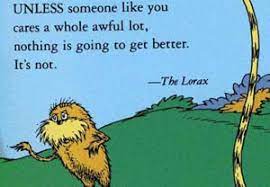
The Lorax by Dr.Seuss is a lighthearted movie with an impactful message about the importance of the environment. This movie sends a straightforward message that can be understood by viewers of all age groups while keeping them entertained. There is no need for a background in science to understand the movie’s concept; therefore, it is excellent to understand the basics of applied plant ecology. The Lorax illustrates the relationship between humans and the environment by showing how anthropogenic effects can tremendously harm the environment if not managed. In the movie, the Truffula trees represent the environment, which provides everyone with shelter, water, and oxygen. However, when the Once-ler started running his business, he became greedy and cut down all the trees. The Lorax repeatedly warns the Once-ler of how his actions can lead to the destruction of the ecosystem. However, the Once-ler chooses to ignore The Lorax and continues destroying the environment. This caused the species that relied on the Truffula trees to leave since they no longer had a home or any resources to use. Ultimately, the increase in anthropogenic effects led to the loss of biodiversity and increased pollution. This represents the current relationship seen between humans and the environment.
Due to the loss of biodiversity and increased pollution, everyone moved into an artificial city called Thneedville. This city requires everyone to pay for air, which was provided by trees for free before. The movie sends a message about maintaining, respecting, and preserving the environment for future generations. It shows how humans take advantage of the environment without considering any repercussions for their actions. Since the environment cannot speak for itself does not mean we can take advantage of that. Currently, we are facing similar problems of pollution, global warming, loss of biodiversity, deforestation, ocean acidification, and ozone layer depletion in the world. These are the result of anthropogenic effects, and the movie demonstrates how they could ultimately affect the environment and us. Humans are the root cause of the problem, and we need to change that before it is too late. I’m sure none of us wants to end up like the Once-ler.
Image Retrieved From Wikimedia Commons, the free media repository
I am officially a Wikepedian. Woohoo! To make a mark on the world’s most commonly accessed encyclopaedia is very interesting to me. I recommend you all to try it and become a Wikepedian too!
Creating a Wikipedia account is rather easy. You simply provide a username (I have chosen to use briannabanana0) with your email address and you are ready to go! All you have to do is choose any topic you wish to edit or add information to. The options are endless! This is what makes this super exciting for me. You can write about absolutely anything. For this course in particular, a topic that I am passionate about is the topic of preserving habitats and, more specifically, forest conservation and rehabilitation. After reading a United Nations article on forest restoration, and their efforts to reestablish forestry all over the world, I have chosen to edit a Wikipedia page on Forest Restoration (link down below). There is an existing quote that is already on the page that states, “The United Nations Decade on Ecosystem Restoration (2021–2030) provides the opportunity to restore hundreds of millions of hectares of degraded forests and other ecosystems. I am going to further look into what the United Nations is doing and update this page. I think it is important to include the collaborations they have made with many organizations, such as the AFR 100 (more information about this organization is mentioned in my UN blog post). I’ll update you guys as I go along. In the meantime, create your own account! Happy editing 🙂
The United Nations posted an article in March 2021, when the global pandemic was really in its heat. Forest Restoration: A Path to Recovery and Well-Being, written by Mette L. Wilke, talks on the importance of having Sustainable Development Goals (SDG’S) when it comes to forestry and forest restoration. Forests provide the world with numerous benefits; without them we’d be doomed. Fresh air, clean water, nutritious foods–we are deliberately destroying these natural resources for what, people?! Forests are helping us mitigate climate change and they provide jobs such as wood-based energy and agroforestry farming systems. I was devastated to read that every year our world is losing approximately ten hectares of forestation. Wilke also highlights the effect that COVID-19 has had on forestation. I was enlightened by the fact that many previous epidemics originated from animals and wildlife –and, major land use changes, such as deforestation, is one of the leading causes of almost a third of these infectious diseases! The United Nations Forest Management systems are doing the most to obtain the SDG’S they have by reestablishing habitats, and they are collaborating with other organizations, such as the African Forest Landscape Restoration Initiative (AFR 100). The Food and Agriculture Organization of the United Nations has already restored up to 63000 hectares of forest! Yahoo!!! Forest restoration is one of the fundamental building blocks to achieving a better future. Empowering those around us is a HUGE step towards change. And remember, from the wise words of Wilke, “healthy forests mean healthy people.”
I am super excited to see what the votes are for the Applied Plant Ecology Film Festival this year at York. My final nomination was Denis Villeneuve’s Dune. However, a very close second to me was Dr. Seuss’ the Lorax. It would not be obscure to say that the Lorax carries a totally different ‘vibe’ than Dune, but the extremities of the two films are what makes them so noteworthy and memorable to me. They both highlight very prominent ecological issues. The Lorax is a worthy opponent to Dune as it entertains a whole other audience that Dune otherwise may not. Both adults AND children can certainly enjoy the Lorax. When I first watched this animated film, my heartstrings were surely pulled. The emotional chokehold this movie had on my peers and I really showed me how deep their message comes across. The Lorax highlights important ecological topics such as deforestation, pollution, and habitat loss. Interestingly enough for a kid’s movie, the political motives that led to some of these issues are also revealed. After watching, children will be more inclined to be more environmentally conscious. The hype that this movie had in 2012 was very memorable for me, especially being in elementary school. The Lorax was the talk of the entire school and looking back, I am so glad that it had such an impact. A movie like The Lorax has such an influence on children and gives me hope for future generations. I will definitely show this movie to my children one day! The use of animations made it eye-catching and enjoyable to watch but portrayed a much deeper meaning.
I know what you’re thinking. Being called a “know-it-all” is not always ideal. No one wants to be the Sheldon of the group. However, I think we all know that it is CRITICAL for us to know at least the basics of this deadly disease. Knowing all about Covid-19 is not “cringe”. It’s something I personally want to be called a Know-it-all for.
It has been the epicentre of our lives for almost three years. Humanity’s raison d’etre, since the start of the modern roaring twenties. The infamous COVID-19 disease. Since it is affecting each and every one of our lives, let’s test your knowledge on Covid-19 and what scientists currently know to date on this topic. Here are five important multiple choice questions that will help you get the basic knowledge of covid 19.
P.S. The answer key is below! Shh. Test your friends first before they see it!
Covid-19 affects the human body in many different ways. Which example is NOT a symptom of Covid-19?
A. difficulty breathing/shortness of breath
B. loss of taste and/or smell
C.chest pain
D. loss of hearing
What is the most common form of Covid-19 transmission?
A. droplets/small airborne particles containing the virus (through coughing/sneezing from one person to another)
B. through animal transmission (pets, wild animals)
C. in water (swimming pools, lakes, oceans)
What is the most accurate way to test whether you have COVID-19?
A. blood test
B. Rapid Antigen Test (RAT test)
C. PCR test (Reverse Transcriptase Polymerase Chain Reaction)
D. intuition
Which of the following is not an effective way of preventing the spread of COVID-19?
A. wearing proper PPE (Personal Protection Equipment) in the appropriate settings, most importantly wearing an N95 mask
B. proper ventilation and air purification in indoor setting
C. maintaining an effective social distance of 6 feet apart when in contact with another individual
D. shaking hands instead of hugging
To be considered fully vaccinated (as of February 2022), how many doses does one require?



 Applied Plant Ecology Winter 2020