An article from 2000

I chose this article from 2000 on Human-caused environmental changes and loss of plant diversity. This relates back to many topics we will be discussing in our lectures including the use of biofuels, impacts of mining, ozone depletion, and most importantly climate change. The goal of this paper was to examine the impact of these effects within the next 50-100 years. Now, 22 years later, these human activities have definitely negatively impacted the earth and the plant species that it supports. The researchers looked at the environmental constraints in plant communities which include resource limitation, recruitment limitation, predators and pathogens, physical disturbances, and temperature and climate change. The evolutionary responses to these global changes as predicted by the paper included light and dispersal ability to become a major limiting factor in fast-growing and rapidly dispersing plant species. They predicted a great loss of significant plant diversity based on statistical analysis that would leave many niches empty and increase weedier species. I have attached the paper below, if you would like to have a read. It was very eye-opening that many of the things occurring today were already predicted 2 decades ago. This also laid down the importance of carefully examining what has been predicted now for the foreseeable future. 

Below are some of the predictions that the article made based on dispersal capacity and light availability in many plants 

Morodoluwa Akin-Fajiye, Amanda C. Schmidt, Lauchlan H. Fraser, Soil nutrients and variation in biomass rather than native species richness influence introduced plant richness in a semi-arid grassland, Basic and Applied Ecology, 10.1016/j.baae.2021.03.002, 53, (62-73), (2021)
Questions on COVID-19 & SARS-coV-2

Q1. What type of mask was found most effective in aiding protection against COVID-19?

  1. Regular blue hospital masks
  2. Plastic masks
  3. N95 masks
  4. Cloth masks
  5. All of the above

Q2. What would count as least important PPE against COVID-19?

  1. Water spray to spray away the virus
  2. Face shield
  3. Plastic gloves
  4. Face masks
  5. Precautionary books on COVID-19
  6. Hand Sanitizer

Q3. How does COVID-19 get transmitted?

  1. By talking
  2. By sneezing and coughing
  3. By sleeping with a mask on
  4. 3 of the options
  5. By singing

Q4. Which of the following is not a SERIOUS symptom?

  1. Chest pain
  2. Cough
  3. Difficulty breathing or shortness of breath
  4. Loss of speech or mobility, or confusion
  5. None of the above

Q5. How does ventilation aid in protecting one from COVID-19?

  1. Drawing in as much air from outside to decrease the concentration of aerosols that may be suspended in the air.
  2. It would lessen strong odours and keep it moving.
  3. Proper ventilation also reduces surface contamination by removing some virus particles before they can fall out of the air and land on surfaces
  4. Two of the above answers
  5. None of the above

Wall-E

Most animated movies created by Disney mostly target a younger audience that contain some type of subtle lesson that encourages them to think outside the box. These types of movies help introduce complex themes that can help facilitate further understanding at a younger age, these topics have helped kickstart ideas within the field of science. Furthermore revisiting the movie at this current time can reveal certain aspects of the film that couldn’t be revealed in the past, therefore I am nominating this movie because it is just a basic children’s movie that discusses real-world problems that haven’t been addressed to this very day. After watching Wall-E will you make you question the environmental procedures used in order to maintain the world around us.

     The movie is set 784 years into the future where the majority of the world is reduced to an oversize wastepool. Given the task to clear up the mess left behind by human-kind, take a tour around the basics of environmental care. Further into the movie Wall-E comes across a lone seedling desert of waste, which introduces an AI created by the humans living in an isolated system among the stars to track environmental changes within earth. With the help of these characters, people are repopulating the earth and learning to nurture future vegetation. The movie illustrates the idea of human interaction with the environment and reliance on environmentalism, given the task to emphasize on the messages of cleaning up and preserving ecosystems.

Covid-19 Multiple Choice

  1. How can Covid-19 be spread?
  1. Touching nose, eyes or mouth with hands that have been exposed.
  2. Breathing in air when close to an infected person.
  3. Entering public places with a mask
  4. All the above.

2) What is the incubation period for COVID-19?

  1. 1 week
  2. 2 days
  3. 14 days
  4. 5 days
  5. None of the above

3) Which of these is not a common covid-19 symptom?

  1. Fever
  2. Cough
  3. Loss of taste
  4. Muscle pain
  5. Fatigue

4) What does the “19” in covid-19 stand for?

  1. The strain of the virus 
  2. The year it was discovered
  3. The 19th coronavirus discovered 
  4. None of the above

5) What is the best way to protect against covid-19?

  1. Kn95 Mask
  2. Scarf
  3. Cloth Mask
  4. Tissues

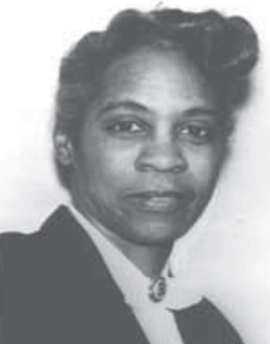
BOTANIST – MARIE TAYLOR

Marie Taylor was an American botanist, born February 16th, 1911, in Sharpsburg Pennsylvania. She was the first woman of any race to earn a science doctorate at Fordham University and acted as the head of the Botany department at Howard University from 1947 to her retirement in 1976. There was even an auditorium that was named in Dr. Taylor’s honor. Dr. Taylor’s main area of research interest lied in plant photomorphogenesis. For her dissertation, Dr. Taylor studied on the influence of definite photoperiods upon the growth and development of initiated floral primordia.

During World War II, Dr. Taylor served in the Army Red Cross in New Guinea where she met her husband Richard Taylor. They both have one son together in 1950. After the war in 1945, Dr. Taylor returned to Washington and joined the Botany department a Howard university as an assistant professor. During her time there, Dr. Taylor had been held instrumental in the design and construction of a new biology building where there was also the botanical greenhouse laboratory on the rooftop of the Ernest E. just hall biology building.

During Dr. Taylor’s career, she organized a series of summer science institutes for high school teachers through grants from the National science foundation and taught them various ways of how they can teach and introduce new methods in carrying out teaching science. She encouraged teachers to teach in innovative ways and influenced them to teach with real life botanical materials and light-microscopes to study living cells and others. On a more critical note, Dr. Taylor was even specifically requested by President Lyndon B. Johnson to enlarge her work nationally and overseas, bring about her teaching style on a whole new international level. Dr. Taylor died on December 28th, 1990, at Walter Reed Army Medical Center in Washington, D.C while still then working away as the powerhouse she was diligently trying to improve and innovate teacher training in the sciences.

A Race Against Time

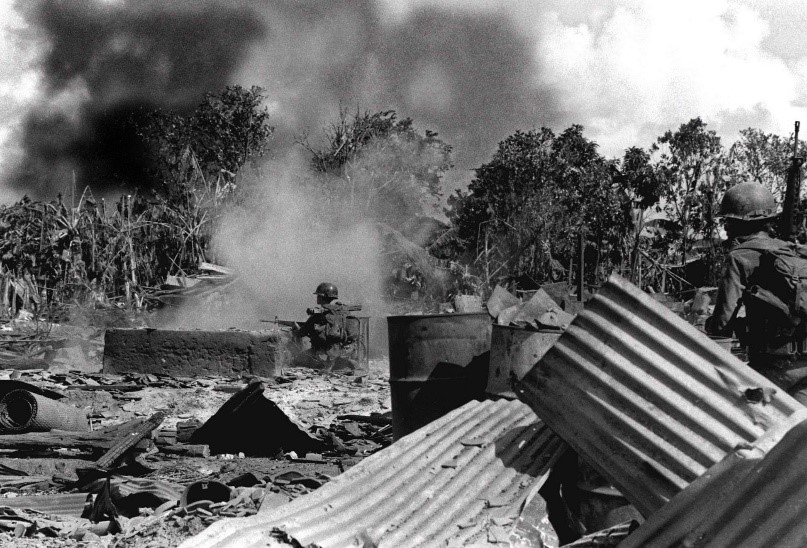
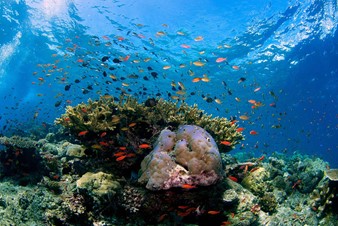
Biodiversity is all the various kinds of life you would find in one area, whether it may the variety in animals, plants, fungi, or even bacteria that make up our uniquely natural world. All of these species and microorganisms work together in our ecosystems like a well built system to maintain, balance, and support life on Earth. Biodiversity is also thought as a free fall globally, declining quicker than most moments in human history. There are numerous reasons as to why this is, but one main reason as we all know it is, human induced cause. One of these causes that destroy both humans as well as our planet, is armed conflicts.

Armed conflicts harm biodiversity in countless amount of ways, degrading forests and land, natural resources, and even hastening species loss. Military activity has significant impacts on the environment. Not only can war be destructive to the socioenvironment, but it also produces vast amounts of greenhouse gases which obviously contributes to anthropogenic climate change, pollution, and causes many of our resource reduction. Attacks can lead to water, to the soil, to species at which is only harmful and lethal.

Although this toll is increasingly acknowledged, there is no specific legal protection for biodiversity under international humanitarian law, which normalizes how armed conflict is waged and lays out protections in order to limit its consequences. Since biodiversity protection comes down to the responsibility of the actors of the armed conflict, environmental education is critical. There should be more training and education amongst armed military actors. There should also be work done to inform militaries around how to protect the environment in times of armed dispute. Thus far, we’ve only managed to create a race against time for us with everything we’ve done however with more awareness and active concern, hopefully we can slow down the race of time.

Metadata, Open access and creative commons license

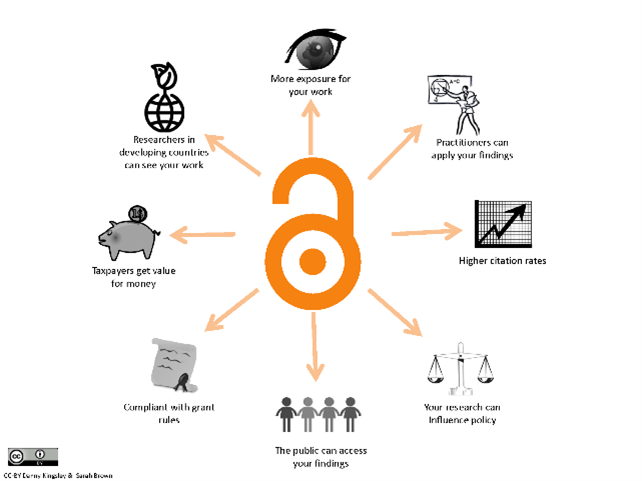
In my last year of my undergraduate studies, I had found that most of my classes required readings of all sorts, however, mostly scientific articles. It is a known fact that reading and analyzing primary literature improves scientific literacy and other skills such as critical thinking abilities. However, a lot of scientific articles and literatures are often difficult to obtain access to however there is a beautifully accomplished way by databases such as open access which is when a publishing model of some sort for scholarly communication that makes research information available to readers at no cost, as opposed to the traditional subscription model in which readers have access to scholarly information by paying a subscription. One of the most important advantages of open access is that it increases the visibility and reuse of academic research results.

Metadata is known as the data providing information about one or more aspects of the data, almost like a hub where you can pull all sorts of information. This can be very important and resourceful when you want to write on a certain topic and want to be able to pull various data on the topic. It can also be used to summarize basic information about data which is even more beneficial because at that point you know you do not need to sit through and read pages and pages of an article only to find out it is not what best fits your research.

Lastly to tie in another element, a creative commons license is usually issued by the copyright owner to allow anyone, such as you and me, to use and work with these literature work in any manner that may be consistent with that license. Some authors may allow only non-commercial uses or whatever license form that will protect their work but also provide the information to the public. There is flexibility in choosing what license type an author may supposedly get to choose which is established by the four licenses types CC offers.

An article I recently came across that was open access was called, “Uses and misuses of meta-analysis in plant ecology” by Julia Koricheva and her co-author Jessica Gurevitch. The author examines the growing number of published meta-analyses in plant ecology over the last two decades. They speak about the many cases of imprecise and inaccurate usage of the term ‘meta-analyses’ in plant ecology and regarding the confusion of using this incorrect application of statistical technique and such. It is a very interesting article and is open access as well so do make use of it if it applies to you!

Koricheva, J. and Gurevitch, J. (2014), Uses and misuses of meta-analysis in plant ecology. J Ecol, 102: 828-844. https://doi.org/10.1111/1365-2745.12224

Zoonotic Viruses and Biodiversity

I remember reading a natural geographic article by Katrina Zimmar,  an article before the pandemic that mentioned the emergence of infectious diseases in humans due to deforestation. Deforestation, which may be caused due to human activities, natural disasters or any other various reasons, not only impacts the plants lost in it but also insects and other living organisms that depend on it. This includes viruses, especially the Nipah and Lassa viruses that cause malaria and lyme disease. 

This is due to the creation of environments for these viruses to grow. Malaria, which is transmitted to mosquitoes, allows their breeding in deforested areas and thus transmittance of the viruses. Additionally, as the living organisms and insects lose their habitats from forests burning down, being cut, they move to other areas and increase viral transmission along the way. Therefore, this closing barrier between wildlife and other animals due to deforestation serves as a thriving environment for many bacteria and viruses to grow, spread and increase the likelihood of epidemics and pandemics. 

Additional research suggested the link between host diseases transmissible to humans via other mammals such as bats and rodents due to their change in environment to urban surroundings, due to decrease in biodiversity and urbanization. 

Some specific examples of these viral diseases and infections are as follows:

  • Yellow Fever: This viral disease, transmitted by mosquitoes became the cause of an outbreak in the early 91900s in Kenya where deforestation was at an all time rise. This decrease in forests ;ead to a high dentistry of primates in smaller areas and pathogens becomes more prevalent 
  • Ebola: The vector-borne virus that has had many outbreaks is transmitted through bats. There have been many links to Ebola being spread to large areas due to corridor for pathogen-carrying animals

Therefore, preventic zoonotic spillover is important until there have been clear links established between how these viruses jump from wildlife to humans. The organisms that are able to adapt to deforestation and loss of biodiversity are the ones to watch out for. 

Tollesfson. (2020). Why deforestation and extinctions make pandemics more likely. Nature.
Gibb, R. et al. (2020). Nature https://doi.org/10.1038/s41586-020-2562-8.

A Movie Draw!

Okay, sometimes and most of the time we all struggle to make a choice here and there. We get indecisive but usually we play some form of trivial game or random draw to finalize our decision. This applies when choosing movies too especially because you want to spend those couple hours watching something you find interesting or often we go by reviews too- what most others critique and comment on movies. The same applied to me this term when Dr. Bazely asked us to drop in three movies relating to applied plant ecology and more specifically when she asked us to nominate one out of all three. This is when my indecisiveness hit me once again- phew!

So, it all came down to when we had a couple weeks to sit back, relax, and start watching movies as homework! I started looking into my primary go-to search engine- google, where I searched for films and documentaries relating to topics close to applied plant ecology. There I found a couple suggestions and what I did to ensure I did not waste time watching the movies and get through halfway only to find out it was not going to entirely relate to this course and the topics was I read up on the summary and prognosis of the movies. I found two documentaries interesting as well as one nonfiction movie. I will share a brief overview and the reason why I thought these three selections of mine would have made a difference in my peers’ eyes as well as mine especially in relevance to the topics surrounding applied plant ecology both analyzed in class as well as in the day-to-day life.

Here we start with a documentary I suggested in one of the three movie selections.

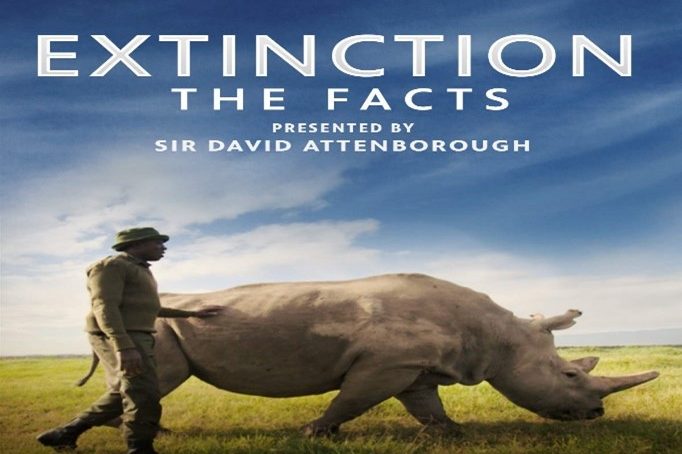
This documentary is by a historian Sir David Attenborough who portrays the continuing sixth mass extinction, caused by humans, and the consequences of biodiversity loss and climate change. I thought this would be a very nice film to see because of all the concepts it covers within extinction and the various causes induced by humans which is something we should all see and educate ourselves on. However, it did not win the number one place in my trivial brain game so, on we go to the next film…

The Martian – this movie is about when a bunch of astronauts blast off from Mars back to Earth, they leave behind Mark Watney (the main character), presumed dead after a fierce storm. The nonfiction then goes on to show how Mark survives on Mars using his knowledge of recreating some form of life through plants on Mars and keeping himself alive. I found this film very interesting to watch and it was a very close tie between nominating this film versus the next documentary I’m about to share.

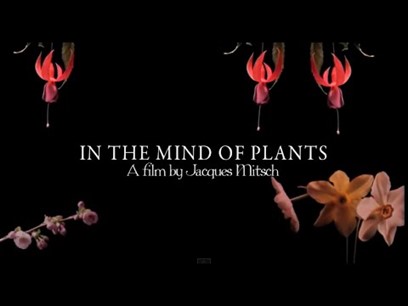
And….here it is!!! The tiebreaker champion!!! In the mind of plants by Jaques Mitsch was the documentary film I finally settled on in terms of nominating because of how captivating it was with the dialogue and the different cases shared. The film touches upon famine and resource scarceness where many plants had died off in the Savannah desert and find that populations of Kudu (a type of animal) are mysteriously dying off. The different illustrations drawn from different parts of the world in this documentary, it speaks to different concepts such as; sustainable forestry, rare plant conservation, and a lot of the other topics from the course itself too.

The Debate about Viruses

The debate about whether viruses are alive or not, has been in progress since the distinguishing of the three domains of life. Viruses share some characteristics with bacteria while some with eukarya. 

Based on the complexities of their structure, life cycle and much more, most biologists do not consider them alive. This is based on some of the following criteria: 

  • Living things have the ability to maintain homeostasis: In the case of viruses, they are made up on genes and some organelles  surrounded in an envelope and unable to resist extreme environmental changes
  • Living things have different levels of organization: Viruses do have some organelles including a capsid, nucleic acids and capsomeres and thus display some levels of organization
  • Living things reproduce: Viruses are only able to reproduce in the presence of a host, therefore they are able to reproduce but rely on the cellular mechanisms of another living organism to do so.
  • Living things can grow: Viruses make use of host energy that they are residing in to create more virions but themselves do not change in size or complexity
  • Living thing use energy: They make us of hsot energy and utilize the byproducts of metabolism 
  • Living things respond to stimuli: Viruses do not respond to immediate stimuli such as light, touch or sound but there is a lack of research in terms of other factors. 
  • Living things adapt to their environment: They are able to adapt to their surroundings via replicating through either the lytic or the lysogenic cycle, thus adapting and becoming active accordingly.

Now, more than ever, viruses are under study due to the global pandemic and their evolution is being well researched. Whether they are alive or dead is still up for debate as they demonstrate some characteristics of living things and some of dead. Viruses evolve through recombination of their DNA with other viruses and random mutations. To communicate this to the general public, it is important for them to understand why they are such complex organisms and the risk factors that come with mutations and exposure. 

Koonin, E. V., & Starokadomskyy, P. (2016). Are viruses alive? The replicator paradigm sheds decisive light on an old but misguided question. Studies in history and philosophy of biological and biomedical sciences59, 125–134. https://doi.org/10.1016/j.shpsc.2016.02.016

Design a site like this with WordPress.com
Get started