Wikipedia is a common tertiary source that many individuals use to gain quick knowledge and information about any topic. Although Wikipedia is sometimes looked down upon, it is still a great source to get basic knowledge that you are able to do further research on. Before enrolling in BIOL 4095, I never thought of creating a Wikipedia account. When creating a Wikipedia account, it was a very easy process as it did not need a lot of information. When wanting to edit a page, I liked that there was an option to edit through visual editing or source editing based on your own preferences. In the editing tab, I also noticed that it is very easy to cite and link information directly. For the future Wikipedia editing assignment, I am taking into consideration on editing a page on important plants in our ecosystem. For example, I could write on important plants that are good to reduce air pollution at home, like Aloe Vera, or the common house plant; chlorophytum comosum (spider plant). Moreover, I could also add onto a Wikipedia page of the topic I get chosen for during the group presentations.
Peer Reviewed Primary vs Secondary vs Tertiary Literature
Gaining information about a topic can be found in many different forms, through interviews, magazines, textbooks, dictionaries, encyclopedias, and many more. These types of sources can be broken down into three types of sources called primary, secondary, and tertiary sources. These different types of sources provide different levels of information and validity.
A primary literature source can be considered as the original material. It is the immediate results of research. Primary sources include the analysis of the data collected and are often written as journal articles in science. These papers often include an introduction, Methods, Results, Discussion, Conclusions, and References.
Below is an example of a Primary source of literature that focuses on the topic of applied plant ecology.
Spontaneous succession in limestone quarries as an effective restoration tool for endangered arthropods and plants
Secondary sources are ones that analyze, summarize, and interpret the information from primary sources. They tend to be much broader than primary literature. Secondary sources are usually seen as books, biographies, and literature review articles.
An example of a secondary literature about applied plant ecology is linked below.
Land use changes and associated environmental impacts on the Mediterranean shallow Lake Stymfalia, Greece
https://link-springer-com.ezproxy.library.yorku.ca/chapter/10.1007/978-1-4020-6399-2_32
Lastly, tertiary sources are shorter and summarized versions of multiple primary and secondary sources. In science, they are often textbooks, dictionaries, encyclopedias, and handbooks.
Usually, tertiary sources are used to find initial information about a topic.
An example of a Tertiary source is Wikipedia.
https://en.wikipedia.org/wiki/Plant_ecology
References
“Primary, Secondary, and Tertiary Sources: Madonna Library.” Primary, Secondary, and Tertiary Sources | Madonna Library, https://library.madonna.edu/research/primary-secondary-and-tertiary-sources#:~:text=What%20are%20primary%2C%20secondary%2C%20and,organize%2C%20or%20compile%20other%20sources.
“Libguides: Pharmacy – Research Resources: Primary, Secondary and Tertiary Literature in the Sciences.” Primary, Secondary and Tertiary Literature in the Sciences – Pharmacy – Research Resources – LibGuides at Ohio Northern University, https://library.onu.edu/c.php?g=357773&p=2720217.
Avatar-2009
In 2009, James Cameron produced and directed the fictional movie Avatar. Avatar is set in the year 2154, on an Earth-like planet called Pandora. Pandora consists of breathtaking sceneries and magnificent inter-connected ecosystems. This planet is inhabited by native, blue humanoid creatures called The Na’vi. These natives have the ability to connect to the animals, and the plants on Pandora, by connecting fiber like structures at the end of their hair to the organisms in order to communicate with it.

In this film, the Earth became almost inhabitable due to the loss of resources, overpopulation, war, and increase in pollution. Thus, humans were set to locate other planets with resources for colonization. On their mission, humans found Pandora and found that it is rich with a mineral named unobtanium, which could be used to save the earth. This lead the humans to start mining and destroying the ecosystem to harvest the minerals of the land.
I nominated this movie as a second choice movie, because this is a very well made movie and very futuristic. This movie explores topics like habitat fragmentation and loss, and impacts of mining and heavy metals on plant communities. As explained previously, humans have stated exploring other planets because the Earth is no depleted of its resources and cannot be inhabited due to pollution, and over population. Thus, humans were set on finding minerals from other planets with rich vegetations to mine, in order to save Earth. This resulted in the almost destruction of the planet Pandora due to the removal of the mother tree, which connects all life forms on this planet.
References: https://en.wikipedia.org/wiki/Avatar_(2009_film)#Na’vi
An Article on the Impacts of Herbivore Populations on Plant Diversity
In BIOL4095 lectures, the detrimental effects that large populations of deer can have on plants were covered.1 In the Habitat restoration lecture led by Dr. Dawn Bazely, she shared with the class the results of her previous scientific experiments. Bazely and her colleagues found that creating physical enclosures in forests where deer populations exist showed how much plant life quickly recovered in the enclosures where the deer could not enter.1
Knowing that deer are not the only herbivores that consume plants, I started to wonder about the effects of other herbivorous animals on plant diversity e.g domesticated livestock, rodents, herbivorous birds and insects. So I began my search for a paper that answers my questions, specifically papers published in peer-reviewed scientific journals. After reading the abstract of a couple of articles, I chose to review an article titled “Effects of Herbivores on Grassland Plant Diversity” co-authored by Han Olff and Mark Ritchie, as it has all the answers to my questions! (Fun fact: this article was published in 1998, which is the year of my birth! this undoubtedly influenced my article of choice to blog about).
As it will be explained below, there is not a single statement that perfectly describes every terrestrial herbivore-plant interaction.2 The authors of this secondary literature review article acknowledge the conflicting results found in previous primary literature regarding the effects of herbivore grazing on plant diversity. The objective of this article was to demonstrate how multiple factors can affect whether herbivorous animals reduce or increase plant diversity e.g. herbivore body size, herbivore population density, seasonality, soil type, ecosystem type and multiple layers of environmental factors that act on living organisms in nature.2
In agreement with the results of Dr. Bazely’ s experiment, this article states that high density of hoofed mammals, also known as “ungulates”, reduces plant diversity. Ungulates are relatively large-bodied animals that include but are not limited to deer, cattle, sheep, moose, etc. But surprisingly, intermediate-sized herbivores e.g birds and ground-digging rodents increase plant biodiversity.2 Ground-digging animals e.g prairie dogs create soil disturbances that facilitate the growth of less competitive plants. And finally, small-sized herbivorous insects’ effect on plant diversity range from no effects to slightly negative effects.
Additionally, abiotic environmental factors such as soil productivity might be limiting plant diversity more than herbivore interactions. Fertile soils in East African savannah tolerate high densities of diverse grazing animals, compared to other grasslands with infertile soil.
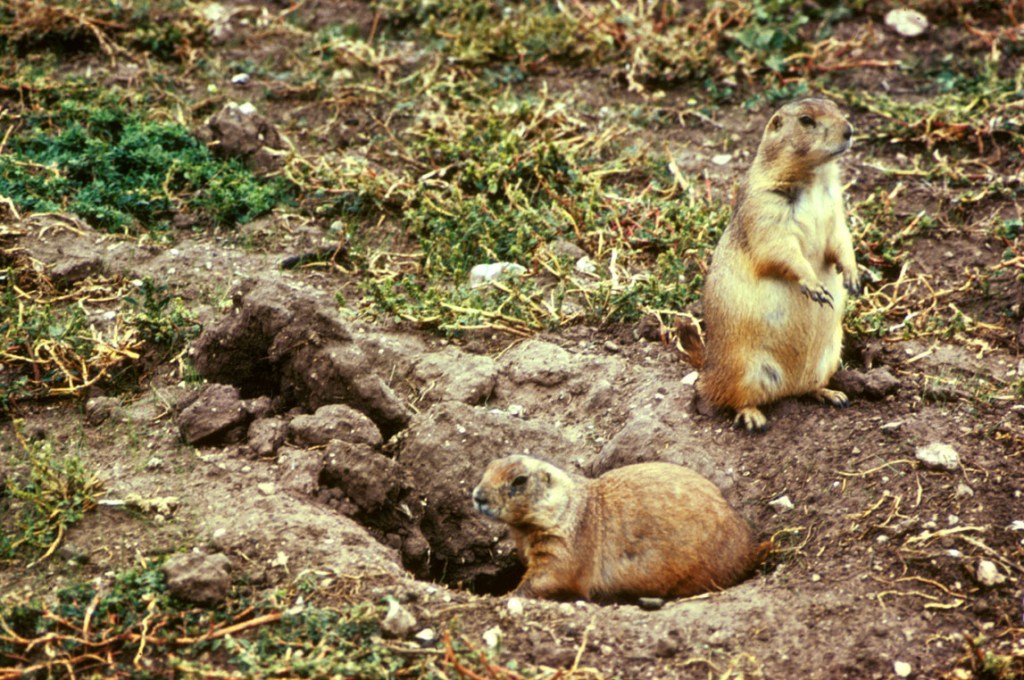
Image Source: Carley CJ. Prairie dogs at a burrow entrance. U.S. Fish & Wildlife Service 2002. https://commons.wikimedia.org/wiki/File:Cynomys_ludovicianus_2.jpg
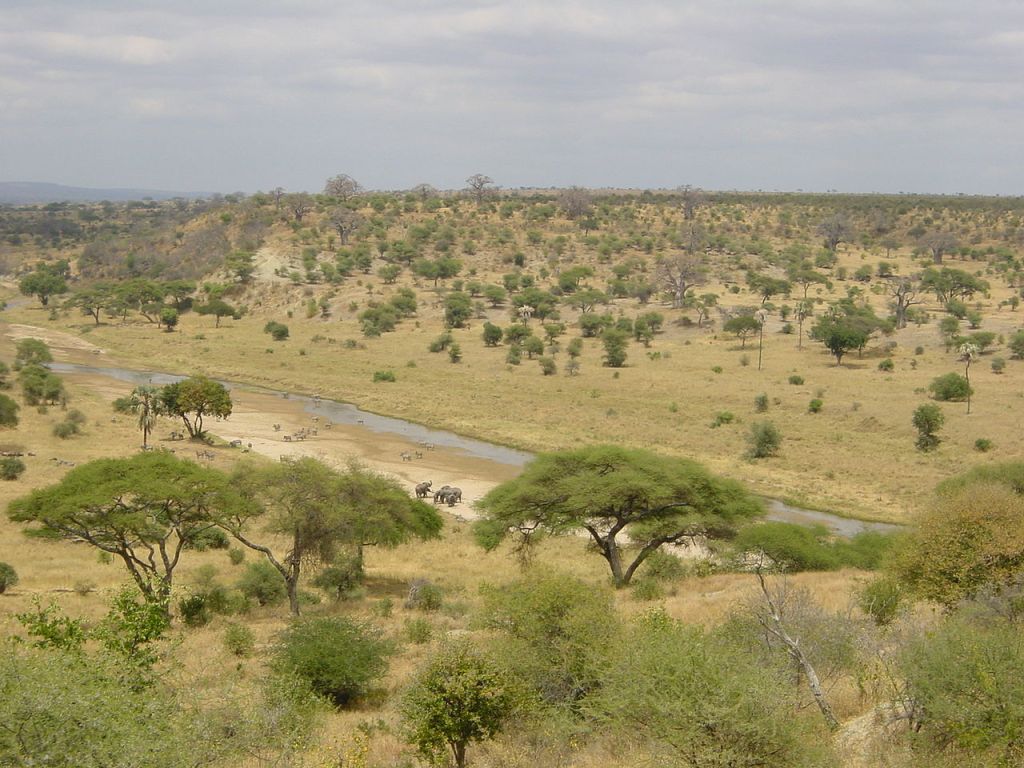
Image Source: ProfessorX. Savanna. 2005.
https://commons.wikimedia.org/wiki/File:Tarangire-Natpark800600.jpg
In conclusion, the effects of herbivores on plants in each ecosystem and environment is the result of multiple interrelated factors. So the take home message of this article is: managing herbivores and assessing the effects of herbivores on plants in each unique environment is crucial in plant restoration and conservation.
Reference List
- Bazely D. What is habitat recovery? How should we measure it? slideshare. 2016.https://www.slideshare.net/DawnBazely/high-park-stewards-talk-2016
- Olff, H., & Ritchie, M. E. (1998). Effects of herbivores on grassland plant diversity. Trends in Ecology & Evolution, 13(7), 261–265. https://doi.org/10.1016/S0169-5347(98)01364-0
What is the Link Between Habitat Loss, Biodiversity and the Emergence of Zoonotic Viruses
This is a really interesting and relatively simple topic to understand. Habitat loss/deforestation means there is some degree of human encroachment, human encroachment generally results in a significant decrease in levels of biodiversity of that area. Human encroachment also means there will be more conflict between humans and native flora and fauna of a given area, this is where problems can arise. As humans encroach further into these remotely situated forest areas it is now that we start to see passages open for the emergence of zoonotic viruses.
I will elaborate further with an example. Let’s say there is a small village that is in a remote part of the Philippines. As the village slowly expands deeper into the forest the “buffer zone” between villagers and bats living in a near by cave becomes less and less. Now, bats are constantly flying over the livestock pens that hold pigs, chickens, cows, etc. Bat guano carrying a zoonotic virus falls into the pig pit which is located on the outskirts of the village, this area happens to be closest to the edge habitat of the forest. Eventually the pig meat is consumed by some members in the village. The virus is highly infections and has now made the jump from animals to humans. The virus is not capable of spreading from human to human just like the world saw with SARS-CoV-2.
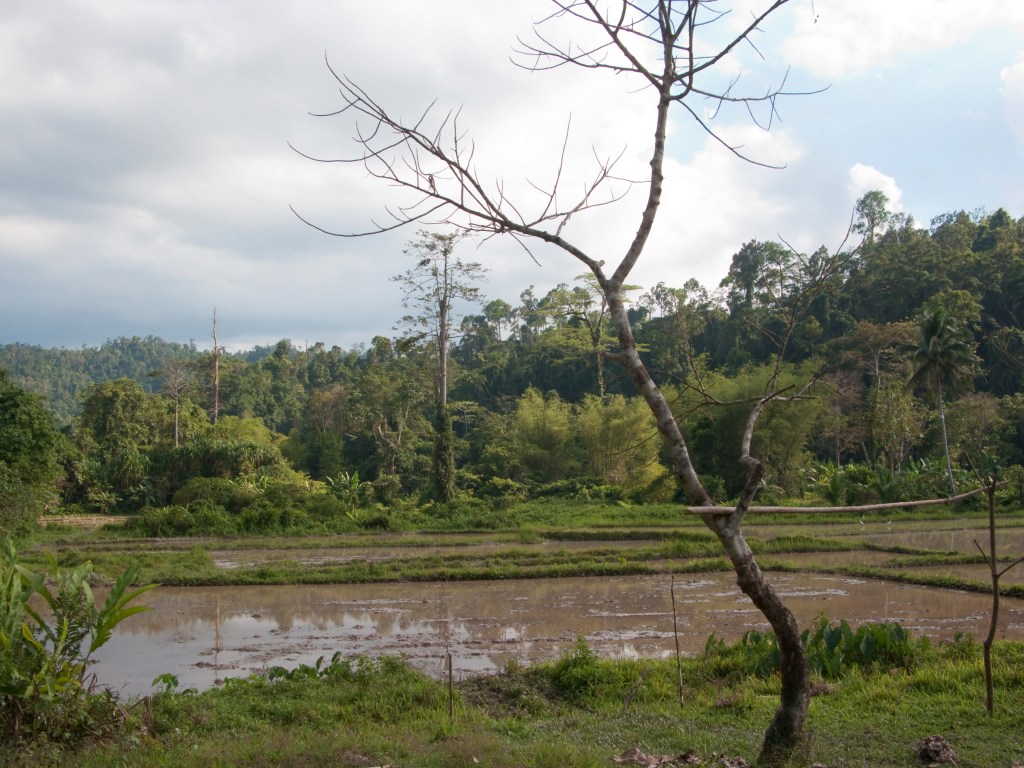
Human encroachment coupled with habitat loss has created a path for the transmission of the zoonotic virus that was originally only present in this remote population of wild bats. Without human encroachment in this remote area of the Philippines it is highly plausible that this virus wouldn’t have been able to make the jump from bats to humans. Therefore, the emergence of this new “pandemic level” virus would have never been possible.
The fact of the matter is that there are only a finite number of resources on the planet. As the human population continues to increase this is a very likely scenario for many parts of the world as more space is required to support the ever-growing human population.
A Valuable Piece of Advice from Dr. Dawn Bazely
University Professor Dawn Bazely, is a biologist and ecologist whose work on plants in the Arctic has shaped political discourse on climate change. In addition to this she is a powerful advocate of women in STEM. Dr. Bazely gave this piece of advice on the Podcast or Perish series which is a podcast about academic research and why it matters (episode 005; time stamp 47:35-48:28; Nov 4, 2019). Given the demographic in this day and age Dr. Bazely said that she now finds herself often discouraging students from doing PhDs with her over the last few years. This decision has been influenced by the Harper government which has been cutting the jobs of her former students who were working a variety of different science positions for the Canadian government. I think it’s an important piece of advice and a hard pill to swallow for a lot of student wishing to pursue academia, myself included.
I have found that a lot of professors and upper year students seem to really promote and push for the accomplishment of completing a PhD. For someone who wants to achieve a PhD with the end goal in mind of receive a well-paying job while still living in Ontario for example, they need to take in account how likely it is that jobs will be available by the time they have completed their doctorate. If the Canadian government is just going to keep cutting jobs in your field does it really make more sense spending time trying to achieve a higher tittle?
There are close to 15 million people in Ontario, that’s a lot of competition, especially for students that are studying in the ecological field. This field is often times, over looked by the Canadian government. It is difficult to say whether or not I agree or disagree with not completing a PhD since I live by the idea that in this world one thing that can never be taken from you is your education! If you are just going to end up with the same job and the same pay once you get your PhD as you would have gotten with your bachelor’s degree then maybe it is not worth it in the long run.
Link to the full podcast with Dr. Dawn Bazely. https://www.podcastorperish.ca/episodes/episode-005-dawn-bazely
Five Quick Questions to Test Your Knowledge on Covid-19
- What is PPE and where can someone purchase reliable PPE?
A) PPE stands for personalized parent education which is an online program that educates parents about how to better prepare their children for the changes that have occurred as a result of Covid-19 and SARS-CoV-2. It can be purchased online for $59.99.
B) PPE stands for protecting personal equipment. It is an abbreviation that the Canadian government has been using to promote citizens to better protect various types of gym equipment because of shortages in gym/exercise materials due to Covid-19.
C) PPE stands for personal protective equipment. It is the equipment that is worn by and individual to minimize exposure to Covid-19 and SARS-CoV-2 (ex. Face masks). The most reliable PPE on the market are N-95 masks and KN-95 masks. They can be purchased in retail stores or on websites such as Amazon.
D) PPE stands for personal protective equipment. It is the equipment that is worn by and individual to minimize exposure to hazards that cause serious workplace injuries including Covid-19 and SARS-CoV-2 (ex. Face masks). There is no such thing as a more reliable PPE, they all offer the same level of protection and can be purchased only at Walmart.
2. True or False: Normal blue surgical masks offer the same level of safety as KN-95 masks.
A) True: both masks have straps that go over the ears and cover both the nose and mouth. When you try to blow air out your mouth (like blowing out a candle) both equally prevent air from passing through and for that reason they both offer the same level of safety to the user and people in the general vicinity.
B) False: KN-95 masks are significantly safer than normal blue surgical masks since both masks offer different designs. The main difference between a KN-95 mask and a surgical mask is the KN-95 masks has 2 full straps that go around the head and do not just go behind the ears. This design helps significantly limit air flow from escaping any gaps around the nose and sides of the mouth. Since Covid-19 is an air born pathogen, this benefits both the user and anyone within the general vicinity.
3. What is Covid-19 and what are the effects of Covid-19?
A) Covid-19 is a disease caused by the virus SARS-CoV-2. The virus has a 99% survival rate so if you get sick you should recover within a week and be fine.
B) Covid-19 is a disease caused by the virus SARS-CoV-2. Different people react differently to catching Covid-19, some have mild symptoms, and some get severely ill. Getting ill can be life threating to average healthy people, let alone people that are considered to be high risk. Since Covid-19 is a relatively new disease there is still very little known about the long term effects a person can experience even after they have recovered fully from Covid-19.
C) Covid-19 is a disease caused by the virus SARS-CoV-2. Different people react differently to catching Covid-19, some have mild symptoms, and some get severely ill. Catching Covid-19 only has short term effects.
D) Covid-19 is a disease caused by the virus SARS-CoV-2. Different people react differently to catching Covid-19, some have mild symptoms, and some get severely ill. Because the disease caused a pandemic it was heavily studied all over the world and now, we know that there are both short term and long-term effects but all of them are now known to science and easily treatable.
4. How is Covid-19 transmitted?
A) Trick question, there is not such thing as Covid-19 it is a hoax that has been employed by the government to control the general public.
B) Through respiratory droplets, aerosols (smaller droplets) and touching the same object someone else touched by getting into the blood stream.
C) Respiratory droplets and aerosols (smaller droplets) only.
D) Respiratory droplets, aerosols (smaller droplets) and by touching an object that had the virus on it and then touching your mouth, nose or eyes.
5. How safe is it if my PPE covers my mouth but not my nose in an indoor setting?
A) You are fine mask mandates are not strictly enforced so there is nothing to worry about.
B) You are still pretty safe as long as you don’t breath through your nose on purpose.
C) You are 50% safe and should be fine to walk through malls and university campuses with your nose exposed.
D) You are defeating the purpose of wearing the mask and might as well not wear one at that point since all respiratory passageways need to be covered. It might be better to step outside into a well-ventilated area if you find your mask to be irritating or uncomfortable.
Check your knowledge! Correct answers are 1:C, 2:B, 3:B, 4:D and 5:D
Why I Nominated the Film Call of the Forest: The Forgotten Wisdom of Trees and how it Relates to Applied Plant Ecology
I did not nominate the film Call of the Forest simply because it is a documentary about trees which are a type of plant and therefore, I have made my connection to applied plant ecology. I nominated this film because, in my opinion trees are one of the most overlooked and under appreciated organisms. Trees require more spotlight to be placed on them since they play many important roles in environments throughout the globe.
Another reason for my selection of this film is that it focuses on forests of the northern hemisphere. I think it is safe to say that every York University student, at some point or another, has come across native Canadian tree species which the film focused on when highlighting Canada’s great Boreal Forest. I found this particularly important because it allows students to draw up their own relationship between the film and real-world experiences.
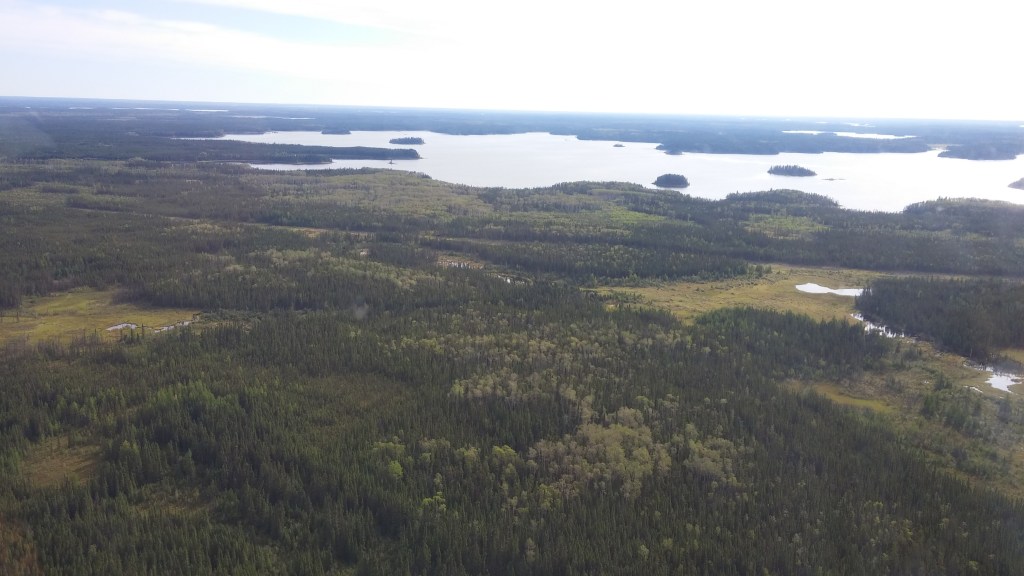
While the film is comprised of many breathtaking drone shots that were filmed over large areas of vast, pristine forests. The film also goes into a great amount of detail discussing the various roles trees play in the environment and also includes some of the ways trees help directly benefit humans, like their role in the production of medications.
The film leaves the audience with a challenge, that challenge is to simply plant one native tree species in a native area each year. Calculations predict that by doing this it has the potential to reverse the effects of climate change. By nominating this powerful film the hope is that it will get shared between more students, friends and families which just might be what it takes to make accomplishing this challenge a little easier with the goal in mind of making the world a cleaner, better place.
Other two films
The other two films that I considered nominating for the film festival were Happy Feet (2006) and Ice age: The meltdown (2006). These coming of age children’s movies, really highlighted the climate change issues going on in the current world and their impact on plant and animal species. The film is based on the ideas of greenhouse warming, the idea that greenhouse warming – triggered by rising levels of industrial gasses in the atmosphere could disrupt the ocean currents that bring warm, salty water from the tropics to eastern America and western Europe. Here is some additional information I gathered upon research: The main current, the Gulf Stream, delivers 27,000 times the energy of all Britain’s power stations and keeps our country warm in winter and our harbors ice-free – unlike those of more southerly ports such as Vladivostok. Its loss will plunge America and Britain into an ice age.
The Ice Age is coming to an end thanks to global warming and the resulting big meltdown threatens to put the valley where all the animals live underwater. The only individual who makes the most of the situation is Fast Tony, who sees the ice age as the perfect opportunity to make some money. The movie also demonstrates the importance of diversity and dependence on each other. Both of these films, along with many other children’s movies, highlight these concepts of plant ecology about the impact of our actions on vegetation and others.
Using children’s movies to highlight such important topics really helps to send the important messages to individuals of all ages all across the globe and implement changes.
Eugene and Howard Odum
Eugene and Howard Odum: The two brothers are known as the leading figures in the development of ecosystem ecology post world war 2. I chose to write about them due to their significant contributions in the field of ecology. They were from a prominent academic family, with their father being a sociologist. With their contrasting personalities and perspectives on research, they came up with many ideas together about the central concept of ecology and environmental science. In the early 1950s, they conducted an important study of ecosystem function on Eniwetok Atoll, the site of US nuclear weapons testing. All their studies were supported by the US atomic energy commission. Theri work highited coral reef ecosystems as highly integrated and cooperative assemblage of organisms. The resulting publication was awarded the Mercer Prize from the Ecological Society of America in 1956. Three years later, the second edition of Eugene Odum’s Fundamentals of Ecology was published. This was an expanded edition that included important new chapters on ecosystem energetics and biogeochemical cycling. After this, the Odums had independen careers.
The symbiotic relationship between the Odum brothers was recognized later in their careers when they were jointly awarded the Prix de l’Institut de la Vie in 1975 by the French government and the 1987 Crafoord Prize from the Royal Swedish Academy of Sciences.
Eugene entered, University of North Carolina when he was only fifteen years old. He continued his extracurricular ornithological studies, sometimes at the expense of his coursework, which resulted in several publications before he graduated. Lackluster grades nearly derailed his application for graduate studies in the Zoology Department at the University of Illinois, but the ecologist Charles Kendeigh intervened to get him accepted into the program. Under Kendeigh’s direction, Odum completed a dissertation on the heart rate of nesting birds. Eugene spent almost his entire professional career at the University of Georgia where he was hired as the first ecologist in the Zoology Department in 1940. He continued his ornithological studies, particularly on the physiology of migrating birds. However, his interests expanded to research on ecosystems after the Second World War. Intellectually, the shift toward ecosystem studies encouraged a multidisciplinary approach to ecology that fit uncomfortably within the institutional setting of a zoology department. An enduring legacy of Eugene Odum’s tenure at the University of Georgia was his successful creation of an autonomous Institute of Ecology, which became a major center of education and research after it was finally established in 1967. Odum also served as president of the Ecological Society of America in 1964.
As a boy, Howard Thomas Odum (usually referred to as H.T.) had a keen boyhood interest in electronics, which later found expression through his professional interests in using analog computers to model ecosystem functions. He also shared his older brother’s interest in ornithology and published two articles on bird migration when he was an undergraduate at the University of North Carolina. H.T.’s undergraduate studies were interrupted by three years of military service during the Second World War. He gained professional recognition for his work predicting hurricanes as a meteorologist with the United States Army Air Corps, and he later claimed that this experience stimulated his interest in large, complex systems. After the war, H.T. completed a Ph.D. at Yale under the direction of G. Evelyn Hutchinson. His dissertation on the global biogeochemical cycle of strontium continues to be influential. Unlike his older brother whose professional work was closely identified with a single university, H.T. pursued a peripatetic career. He taught biology at the University of Florida for four years. He later held a succession of academic positions at Duke University, University of Texas, University of Puerto Rico, and University of North Carolina, before returning to the University of Florida for the final thirty-two years of his long career
Barrett, Gary W. 2005. Eugene Pleasants Odum. In Biographical memoirs 87. By Gary W. Barrett, 1–16. Washington, DC: National Academy of Sciences Press.
Ewel, John J. 2003. Resolution of respect: Howard Thomas Odum (1924–2002). Bulletin of the Ecological Society of America 84:13–15
 Applied Plant Ecology Winter 2020


