Its no mystery that habitat loss of organisms in forests can have devastating effects on ecosystems or environments. These forests may be responsible for housing thousands of tiny or big animals/insects to better their survivability. The loss of these forests would severely affect these critters and potentially drive them to ecological extinction in the area. In a study, it was found that habitat loss has been shown to decrease population growth. This can have negative effects to every animal involved in that ecosystem. It can potentially lead to animals not having enough prey (food resources) to survive in that area, leading them to disappearing from the environment. Or on the other hand, it can lead to predators being driven out of the ecosystem allowing for their former prey to be overpopulated, potentially ruining that ecosystem. This can also force animals moving into areas where humans usually occupy. Some of these animals such as bats or possums may carry tons of harmful diseases which can be easily transmitted to humans (zoonotic virus). An example of a zoonotic virus would be West Nile virus as mosquitos are responsible for carrying it and transmitting it to humans. In some recent research, it was shown that fast lived species typically tend to transmit zoonotic viruses more. This would ultimately lead to a higher pool of zoonotic viruses occupying environments when biodiversity is lost.
The other film that I thought about nominating was WALL-E, which was directed by Andrew Stanton. The main character of this movie is a robot named WALL-E, which was designed to pick up and clean the trash that humans leave by hand, mainly through littering. As you may already guess, from these pieces of information, it will not turn out nice for Earth. As time goes by, humans in the movie (and real life) continue to litter since they have grown lazy into thinking that WALL-E will always clean up the trash they throw away. However, this takes a turn as these robots are not capable of keeping up to pace with the humans littering rates turning Earth into an inhabitable planet due to all the trash on the ground. This situation forces humans to leave Earth for an outer space cruise allowing the robots to clean their mess. However, the humans never end up returning to Earth leaving the planet abandoned. This movie relates to plant ecology because it can show what can happen to environments around the world when they are constantly being polluted with waste. In movie, Earth is left in a toxic condition, which killed all plant life (including animals) on the planet. Without plants, the world would not be able to function as they are responsible for producing heaps of oxygen we breathe. I believe if we keep heading down this path of constant littering, this movie may become reality.
After years, and years of using the world known database Wikipedia, I have finally etched myself into history by creating a Wikipedia account! For such a popular website on which millions of people upload information that can be used as sources for papers, it was incredibly easy to create an account. To create an account, you can simply go to the website, and select the create account on the top right. You will then be left with a couple of boxes to fill out which are fairly simple and common when creating any sort of accounts. However, one piece of advice I would like to share is that when creating your username for your Wikipedia account, I would recommend using some sort of made up name which is unrelated to your actual name as your account name will be public. An article that I plan to edit is vegetation article which can be found at https://en.wikipedia.org/wiki/Vegetation . I will be looking into adding what vegetation actually does in environments. Although I realize this article is a broad page about vegetation, I believe a simple function of this type plant would help out tremendously on people looking up this page. One of the functions that forest vegetation plays in some ecosystems is protecting water quality. I plan to incorporate a broad function amongst most vegetations to edit into this page.
There are different types of licenses when it comes to availability of data. There is open access and creative commons licenses. An open access license allows articles published under the license to be made freely available online as soon it published, without any payment walls. An example of this would BioMed Central, as it provides articles without any barriers of payment. Metadata can be defined as data that provides additional information about other data, but not the actual information the article is talking about. An example of this can the authors name, the size of the article file, or even the data the article was created. While a creative commons license allows free distribution of property that would be copy righted if it was not under the license. An example of this would be the book Little Brother, as it is distributed under the creative commons license. An article that I found which is open access is Terrestrial vegetation redistribution and carbon balance under climate change. In this paper, the authors study two different scenarios which consist of moderate and strong climate change to get a better look at the spatial redistribution of major vegetation types along with their carbon balance in 2100. If you are further interested in the article, I strongly recommend checking the link below!
When writing lab reports or some form of paper, it is often your professor may require you to use a specific type of source for your report, such as a primary peer-review journal. You may be looking around confused on what these types of sources actually mean. Well lucky for you, I’m here to explain them.
A primary peer-reviewed article is a piece of literature that reports research that is done by the authors writing the paper. A key indictor of this would be the paper having a materials or methods section. An example of this would be the article Changes in vegetation in northern Alaska under scenario of climate change, 2003-2100: implication for climate feedbacks. In this paper, it can be seen the experiment is being ran by the authors as they are explaining how they facilitated it in the methods section.
A secondary peer-reviewed article is a paper that is written based on other sources. These types of sources usually do not include a methods section. An example of this would be the paper Climate change induced vegetation shifts in the palearctic region. This paper can be seen as a secondary peer-reviewed source as they are talking about other studies and providing no materials/methods section.
Finally, we have the peer-reviewed tertiary literature. This type of source is usually a combination of primary and secondary sources which rephrase or summarize their data. An example this can be textbooks such as Functional Plant ecology.
I hope this brief blogpost will aid you on finding resources for your reports!
One of the other films I considered nominating for the Applied Plant Ecology Film Festival was The Secrete World of Plants which is a documentary by Fernando Rodriguez (2018). The film applies to Applied Plant Ecology because as the name suggests it really goes in depth into many aspects of plant life that are often overlooked. I think the main selling point of the film is their cinematography which is taken over many remote tropical areas. Along with the films nice camera work I found it to be relatively informative although I felt slightly let down by the films content.
I was hoping the documentary would really take a deep dive into the inner workings of plant life, but the film focused more on plant species that could get you high. There are a couple other reasons why I did not select this film for the applied plant ecology film festival. I encountered my first issue regarding this film, while I was conducting my preliminary research on various documentaries. During this phase I was researching plant documentaries/films by reading the reviews, checking the rotten tomato scores and also watching the trailers myself. This film had some mixed reviews regarding how accurate some of the information in the film was. I did not want to select a film that could potentially mislead my fellow classmates by distributing incorrect information regarding the amazing world of plants.
The second reason I did not select this film was because the film focused more on plants in the tropics. This is both good and bad but for the sake of the applied plant ecology film festival I wanted to try and stick to the theme of focusing on coniferous and temperate deciduous forests/plant species since these are the type of species associated with many biomes in Canada. By trying to shine light on species found in Canada I was hoping that any students that ended up watching y film nomination might become inspired about native species that are slightly easier to access rather than species that require hopping on a plane to try and see.
My final reason for not selecting the film was because of the narration in the film. The narrator seemed as if they had zero interest in the script they were reading, the total polar opposite of David Attenborough documentaries that I grew up watching. I was worried students would lose interest in the film, like I had found myself doing a couple times throughout the film. For these reasons I did not want to nominate this film for the BIOL 4095 Applied Plant Ecology Film Festival.
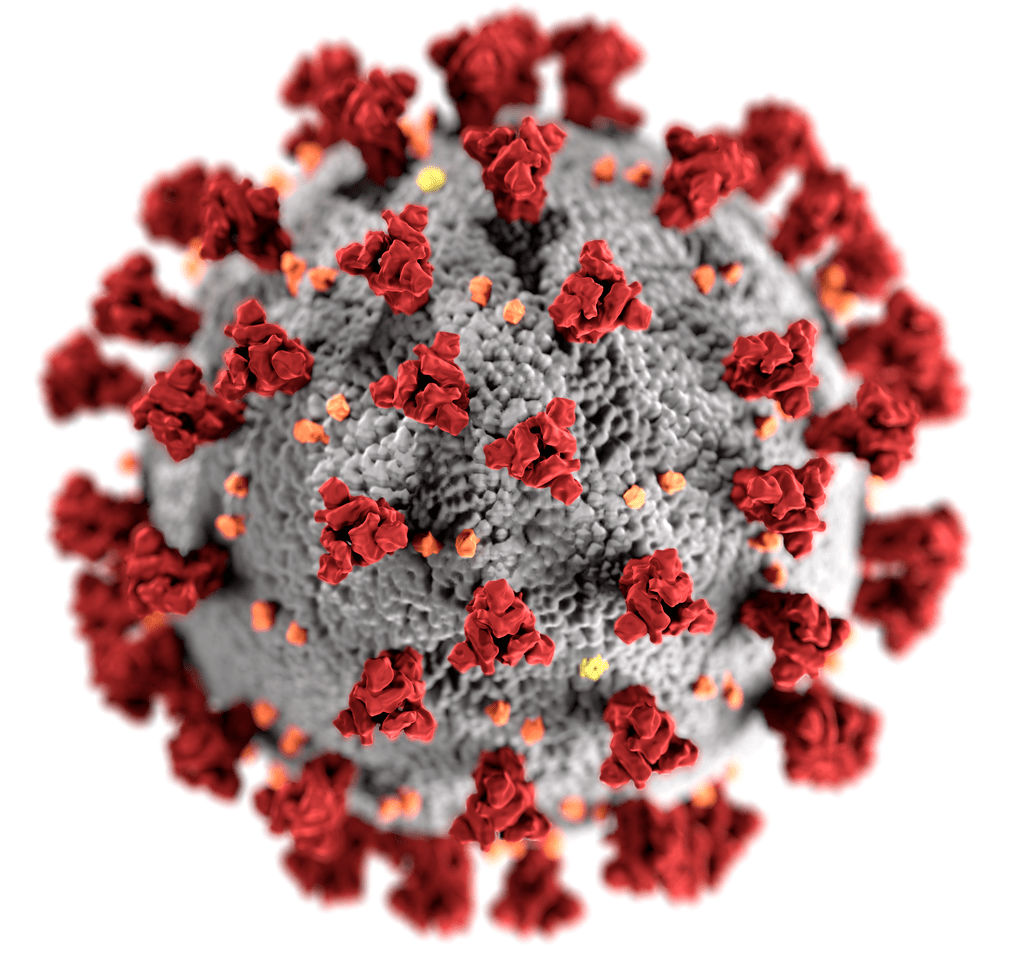
Lately when I hear the word virus, especially in the context of the current COVID-19 pandemic, the other words that immediately come to my mind include “illness, hospitalisation, and caution”. For those who are visual thinkers, figure 1, which has been shown in media outlets many times, could come to mind after hearing the word “virus”. But what is a virus? And how can something that humans cannot see with their naked eyes leave such a great impact on our society and lives.
Viruses are microscopic parasites.1 Just like bacteria, animals and plants, viruses have their own genetic material. But unlike living organisms, viruses cannot reproduce or survive on their own outside of their host’s cell. Due to these characteristics, there is a debate in the scientific community about the status of viruses as living or non-living entities.1
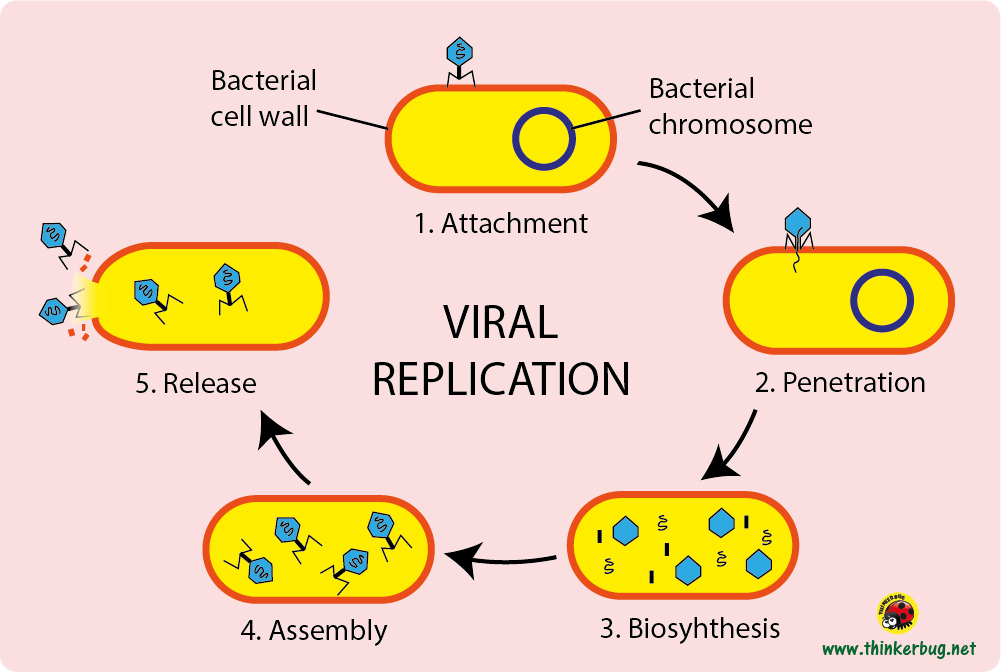
Viral genetic material, which is either in the form of DNA or RNA, contains the information for creating and assembling new viruses. So in order to replicate their own genetic material, viruses insert their DNA or RNA into the cells of bacteria, animals, plants and other living organisms. Once inside they’re in the host cell, the viral genetic material hijacks the machinery of the host cell, then guides it to create more viruses. The host cell continues to create more viruses until it bursts, releasing the viruses inside it. These new viruses continue to repeat this cycle. The figure below shows the process of a virus infecting a bacterium.
Figure 2. A virus (shown in blue), injects its genetic material into a bacterium (shown in yellow) cell to create more viruses. Image source: Cugur. Viral replication of a bacteriophage. wikipedia 2021. https://commons.wikimedia.org/wiki/File:Viral_replication.png
There are more than 9100 known viruses that evolved to specialise for parasitizing the diverse forms of life on earth!2 This includes SARS-CoV-2, which is the virus that is responsible for the current global pandemic. So why are there so many viruses, and how do they evolve? During the COVID-19 pandemic, variants of SARS-CoV-2 were discovered multiple times. A question that the public discusses is: how do new variants of the virus keep arising? The answer to this question lies in the process of viral replication where the genetic material for the new viruses is created! Although the process where the genetic material of the virus is copied is extremely fast and efficient, it is not perfect and mistakes can occur. These mistakes in the DNA or RNA are called mutations. Firstly, these mutations make the genetic material of the new virus slightly different from that of the original virus. And sometimes, these mutations can give the new virus characteristics that make it more efficient at spreading and hijacking more host cells! This is how viruses evolve.
Applied plant ecology focuses on many principles and methods of managing, conserving, and restoring landscapes and ecosystems. In the Studio Ghibli 1984 film, Nausicaä of the Valley the story follows Princess Nausicaa as she strives to repair the relationship between humans and the earth alongside her friends. This film tackles multiple applied plant ecology topics that aid in promoting the importance of earth conservation towards younger audiences and their families. The use of film when promoting these topics allows for an easier way to digest these important topics in a more fun and enticing way. By using film to attract a younger audience and their families, it brings optimization to a change the world for the better.
The movie Nausicaä Valley of the Wind takes place in a dystopian future where society is whipped out due to the Seven Days of Fire and the landscape is filled with the skulls of the God Warriors who were created by humans. In this setting, most of the world is unhabitable and is filled with toxic forests and large insects. The story follows Princess Nausicaä who is written about in a prophecy and is the only one brave enough to communicate with the beings. Throughout her journey she finds out that the forest plants are purfying the polluted soil and gains hope that the earth can go back to normal. Nausicaä and her community must create and learn to make technology that will help restore the planet.
Throughout the film, the audience is able to learn about conservation, loss of plant biodiversity, sustainability and habitat fragmentation and loss.
Julie F. Barcelona, born on January 1, 1972 is a Filipino botanist and taxonomist. She is currently working in Christchurch, New Zealand at the University of Canterbury as a Research Associate. She is married to Pieter B. Pelser who is a Lecturer in Plant Systematics and curator of herbarium at the same university. She has contributed a lot of research on the Philippine members of the genus Rafflesia. She has also worked on a website dedicated to the famous Philippine botanist, Leonard Co. called Co’s Digital Flora of the Philippines. The pitcher plant species Nepenthes barcelonae was named after her.
In a paper written in 2002, Barcelona writes about a new species of Rafflesia from Panay Island, Philippines. The Rafflesiacece is a genus within parasitic plants that are mostly known to be fount in Thailand, Malaysia, Indonesia, and other Southeast Asian countries. Barcelona was able to describe this new species of Rafflesia found in the Panay Islands and called it the Rafflesia speciosa. Barcelona has continued to contribute new information on Rafflesia and other plants in the Philippines.
Barcelona, Julie F., and Edwino S. Fernando. “A New Species of Rafflesia (Rafflesiaceae) from Panay Island, Philippines.” Kew Bulletin, vol. 57, no. 3, 2002, p. 647., https://doi.org/10.2307/4110994.
Climate change has been a topic worth talking about for years but it seems like nothing has changed and no improvement can be seen. As years go by, the glaciers continue to melt, there have been multiple wild fires and many species of flora and fauna have become endangered. These problems have arose due to man-made causes of global warming with an increase of CO2 emissions and other Greenhouse Gases.
The importance of trees and forests is key in removing carbon dioxide from the atmosphere but with continued deforestation, it makes it more difficult to combat global warming and conserve the environment.
In a United Nations article written by Hans Hoogeveen titled, “Forests and Climate Change: From Complex Problem to Integrated Solution” he mentions that forests are linked to both the problem and solution to climate change and focuses on various solutions in discovering the relationship and balance between them. The article talks about the United Nations Framework Convention on Climate Change (UNFCC) and the United Nations Forum on Forests (UNFF) and the means by which these organizations create a framework to battle climate change and sustainable forest management and should work together in order to approach the Global Warming problem. Although these organizations work very differently, the benefits of working together outweigh the disadvantages. Hoogeveen lists that working together on forest related climate change issues can only be achieved by working together and benefits sustainable development in other areas as well. He states that by working together follows the UN system.

 Applied Plant Ecology Winter 2020
.jpg)
.png)
