Scientific literature is a critical part of doing research as well as writing reports. However, knowing how to differentiate between primary, secondary, and tertiary literature is very important to understand what the article should have included and also what role the author played in the experiments.
Primary literature displays original ideas, results, or information and all observations made are done so by the author of the paper. Primary literature can come in various forms such as field datasets, journal articles, experiments, etc. One example of a primary source is ‘Seedling survival and seed size: a synthesis of the literature’ (2004), published in the Journal of Ecology. A trick to decipher if a journal article is a primary source is to make sure that there is a materials/methods section as well as results.
Secondary literature is either discussing, interpreting, or analysing results that were presented in primary literature. This type of literature contributes new ideas, however, there are no new results or experiments completed by the author. This can come in the form of an article, a textbook, an essay, etc. One example of secondary literature is the Arthur Tansley paper “On Competition Between Galium Saxatile L. (G. Hercynicum Weig.) and Galium Sylvestre Poll. (G. Asperum Schreb.) On Different Types of Soil” (1917). Tansley did not contribute new results to the study, but he interpreted data collected by two other authors.
Lastly is tertiary literature whereby the author uses primary and/or secondary literature to support their ideas or to organize them to make it easier for a reader. An example of this is the field guide “An ecologist’s guide to ecogenomics” (2007).
Tansley, A. G. (1917). On Competition Between Galium Saxatile L. (G. Hercynicum Weig.) and Galium Sylvestre Poll. (G. Asperum Schreb.) On Different Types of Soil. Journal of Ecology, 5(3/4), 173–179. https://doi.org/10.2307/2255655
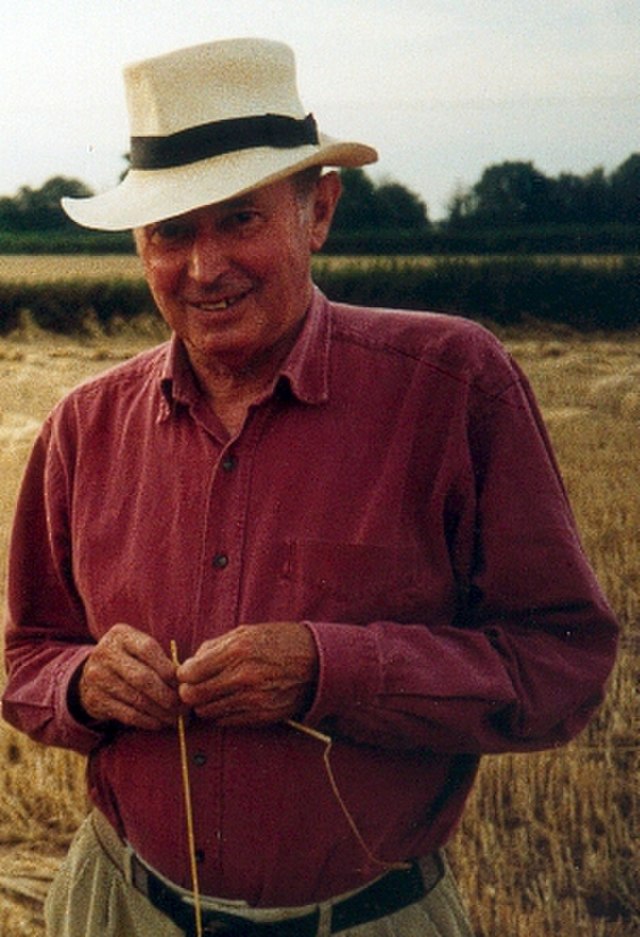
John Lander Harper had one of the greatest impacts on plant ecology and played a key role in developing it into a modern science. Harper was born in 1925 in England on a farm, which sparked his interest in crops, weeds, and grasses (which he would later study). John obtained both an undergraduate degree in botany as well as an MA and a PhD at Oxford. He then spent the next nine years lecturing and conducting research at the Department of Agriculture. In 1968 he was appointed as the new head of the School of Plant Biology at Bangor University in North Wales.
Through his research, he demonstrated a new approach of studying plants; by studying them in a similar manner to how we study vegetation. Rather than being somewhat static, vegetation was considered to be a dynamic arrangement of plant populations which constantly changed. Harper practically spearheaded the foundation of the field of plant population ecology. With the use of experimental approaches and his background on population biology, John made a connection between ecology and evolution (which is now an essential idea of plant ecology). Although he was confronted with the troubles of how to characterize “a singular plant,” Harper addressed these questions and in addition he persuaded many people that plants were worth studying. He argued that plants are even easier to study than animal populations because they are stagnant and “wait to be counted”.
He wrote many textbooks on population biology and plant ecology in later years. He also was awarded the Darwin Medal in 1990 for his research on the population biology and evolution of plants which they claimed, “greatly improved understanding of the adaptation of plants to their environment”. He passed away in 2009 after a long life of discoveries and accomplishments.
John Lander Harper. Image taken from Wikimedia Commons,
Reference: (2015). John L. Harper. obo in Ecology. doi: 10.1093/obo/9780199830060-0135
Which of the following are not an effective personal protective equipment (PPE) to be used during the COVID-19 pandemic? a) Gloves b) Masks with exhalation valves c) Face shields d) Surgical masks
When is it okay to not socially distance? a) When you are with people who live in your household b) When you already were infected with COVID c) When you recently received a negative COVID-19 test result d) When you are with your co-workers
Which group of people are most at risk for contracting more severe symptoms of COVID? a) Individuals with sickle cell anaemia b) Elderly people c) Children with obesity d) All of the above
How is COVID-19 passed on? a) By eating contaminated food b) Through droplets from the mouth or nose c) Getting bit by an infected animal d) All of the above
Which of the following is not a COVID-19 symptom? a) Body aches b) Sore Throat c) Swollen tonsils d) Shortness of breath
When Professor Bazely requested that we nominate one film for the Applied Plant Ecology film festival, I was torn. There are so many incredible movies out there that do a fantastic job of illustrating such important topics in plant ecology while still remaining enjoyable to watch. Personally, I find that movies regarding these heavy topics but are catered to younger audiences are the most powerful. After all, the younger generations are going to be the future of our ecosystem and so I find it most fitting that they would be the target audiences for the ecological issues our world faces. Although I ultimately nominated the 2008 Disney Pixar film WALL-E, my runner up equally demonstrates the severity that issues such as pollution, loss of biodiversity, deforestation, etc., can have on our planet if we continue on the path we are on.
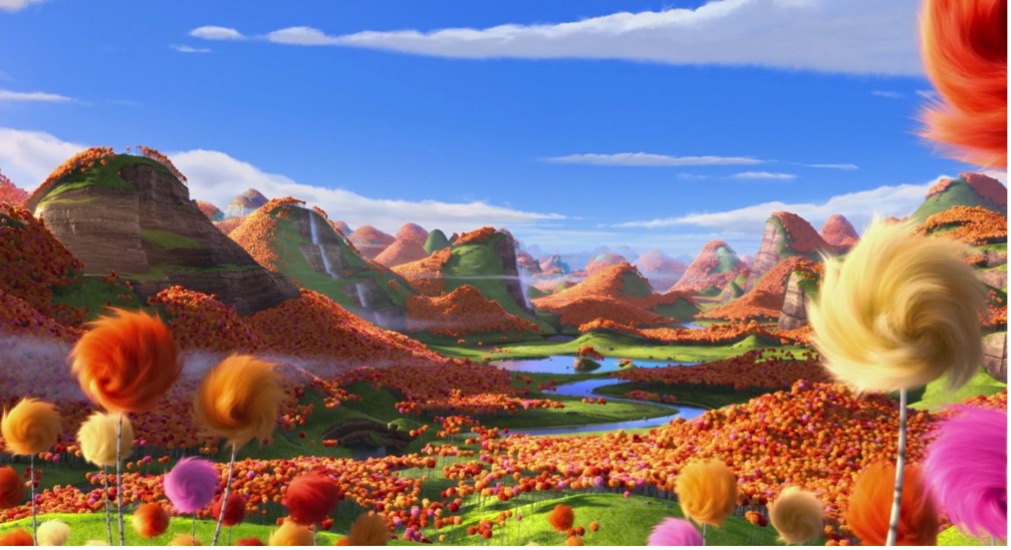
The Lorax was released in 2012 and was originally based on a Dr. Seuss book from 1971. The story is set in Thneedville, a place that has no natural flora but is instead built on artificial plants and vegetation. It follows a boy named Ted on a quest to find a real tree where he meets the Once-ler, the man responsible for cutting down all the trees in order to use their fibers for profit. The once lush planet had now gone through ecological destruction and become a barren wasteland due to the Once-ler’s greed but in an effort to make amends, he gives Ted the last real tree seed. It is now up to Ted and the community to restore the biodiversity and save their planet.
This film gives us a lighthearted preview into what a future could look like if we keep exploiting the Earth’s resources and destroying the natural flora for selfish gain. The Lorax demonstrates that it is possible to live sustainably but it needs to be a unanimous decision and requires consistent effort by those on this planet.
Arthur George Tansley was a botanist and ecologist who was published into the Journal of Ecology in 1917. His paper, On Competition Between Galium Saxatile L. (G. Hercynicum Weig.) and Galium Sylvestre Poll. (G. Asperum Schreb.) On Different Types of Soil, discussed four types of soils and the competition that occurs between two plant species in their preferred soil. The primary research started by E. Hume and later continued by A. Marsh was the basis of this article, thereby making Tansley’s paper a secondary source.
Although this is a secondary journal article and therefore does not require sections such as materials and methods, or results, his paper left out key statistical and quantitative analyses. Statistical analyses such as Chi-square tests, binomial tests, t-tests, etc., are critical in modern experiments to conclude whether or not you accept or reject your hypothesis, and whether or not your data is considered significant. Furthermore, stating the null and alternative hypothesis for this experiment is a key element that is present in scientific articles today.
Also missing from this paper is an array of figures or tables that would have better represented the data collected and allowed Tansley to be able to reference them in the discussion. For instance, a figure (such as a bar graph) illustrating the growth of each plant species on the various soil types would have clearly and concisely highlighted the competition that was being observed.
Overall, I believe that Tansley’s paper demonstrates how far scientific literature has come, and how comprehensive testing makes experimental conclusions much more substantial.
Reference:
Tansley, A. G. (1917). On Competition Between Galium Saxatile L. (G. Hercynicum Weig.) and Galium Sylvestre Poll. (G. Asperum Schreb.) On Different Types of Soil. Journal of Ecology, 5(3/4), 173–179. https://doi.org/10.2307/2255655
This article, presented by the United Nations, highlights the negative impacts of biodiversity and the climate change crisis and signifies the importance of fighting them together. I feel that it’s very important to raise awareness about how to combat these issues since they can harm human lives, livelihoods etc. It is important to note that since both these issues are caused by human activities, they need to be tackled together.
Climate change and biodiversity loss are linked together and mutually reinforce each other. Climate change and global warming lead to a decrease in water, food availability as well as negatively affect forests and trees. As a result, biodiversity is harmed which causes adverse consequences for the climate through water, nitrogen and carbon cycles. This concept was new to me, might also be novel for many readers and could potentially explain why environmentalists haven’t been able to successfully mitigate these two critical issues.
The article explains a few ways, in which these two issues could be handled together so that positive outcomes can be achieved for both problems. These include:
Protecting species and carbon-rich ecosystems on land and in the oceans such as forests, salt marshes etc. These can help reduce greenhouse gas emissions released into the atmosphere each year.
Helping replenish species and carbon-rich ecosystems which would provide habitats for plants and animal species. This would benefit the climate by reducing flooding and soil erosion.
Hindering any activities that harm biodiversity including overfishing and over-fertilization. As a result, this would help lower the negative consequences of climate change.
It is imperative to bring to the public’s attention that there are certain climate-change mitigating activities that are harmful and should be avoided as they could be damaging to biodiversity. The article addresses a few points that should be noted:
Increasing irrigation size, which could result in problems like soil degradation etc.
Planting bioenergy crops over a large area, due to its destructive impact on ecosystems.
Strategies that specifically tackle climate change issues, and have little benefit in terms of overall environmental impact, should be minimized.
In conclusion, this article mentions that in order to see a positive impact on our environment and to shape a healthier planet, we must focus our efforts and financial resources to target biodiversity crisis and climate change issues together.
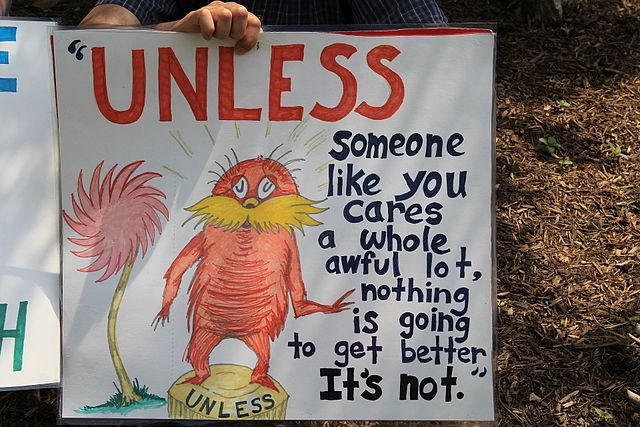
One of the films that I considered nominating for the Applied Plant Ecology film festival was the fictional film titled Lorax (2012). This film relates to Applied plant ecology because it portrays issues such as the loss of plant biodiversity as well as how it leads to the extinction of plant species on our planet. The movie illustrates how Truffula trees and forests are being cut down by fashion companies, and exploited, in order to produce handbags. As a result of the exploitation of these natural resources, habitats and ecosystems are negatively affected, as well as there is a huge loss of plant species. They are severely impacted by deforestation, and the resulting smog and atmospheric pollution lead to further damage to their health and a decline in species numbers. In the movie, the character Lorax explains how plant species, as well as animal species like the swans and the fish, have gone extinct, due to the ongoing deforestation crisis and environmental damage. Animal species that depended on forests for oxygen supplies as well as shelter and food, were badly affected and their survival was threatened. The reason why I considered nominating this film was because of the strong message it portrayed, warning the audience about the impacts of deforestation on the loss of plant biodiversity and extinction. The movie utilizes high-quality imagery when displaying the after-effects of deforestation on forests and plants. As the audience watches how a once beautiful town filled with exotic animals and plants, becomes a deserted, polluted and damaged place, it captivates their attention and leaves a memorable impression on them. The film highlights the message that we need to hinder the exploitation of natural resources like trees, for our own gain and profit, as it can have negative environmental consequences like the disruption of ecosystems and air pollution. We need to take action now, otherwise, our plant communities would suffer which would deteriorate environmental conditions further as well as harm animals and human health due to oxygen deprivation, possibly leading to extinction. In addition, we as individuals need to preserve and care for the environment in order to protect it for future generations. Lastly, the Lorax will make sure to mark a very positive impact on the audience and is definitely worth a watch.
The Sound Image Library, associated with York University, has a wide range of media collections. These include DVDs, CDs etc., which are available for loan or online access for students. I decided to visit the library’s online database, in order to find some media resources for my applied plant ecology course. The website had a collection of movies, with lots of different genres, including science-fiction, action, history etc. I was very pleased when I found this, as this would allow students from various majors to access and gain knowledge related to their disciplines. As I was searching for video resources for my class, I was able to make use of the advanced search bar and chose video for the type of source, to narrow my search. I thought this was a very helpful tool as it allows one to filter their search by inputting the date of publication, source language, type of source etc., making it easier to find resources. I came across a lot of amazing films related to plant ecology, using the database, however, the Disney film titled Wall-E made a very strong impression on me. Hence, I will be sharing a few thoughts regarding it as well as why I recommend it for other viewers due to its portrayal of very powerful messages.
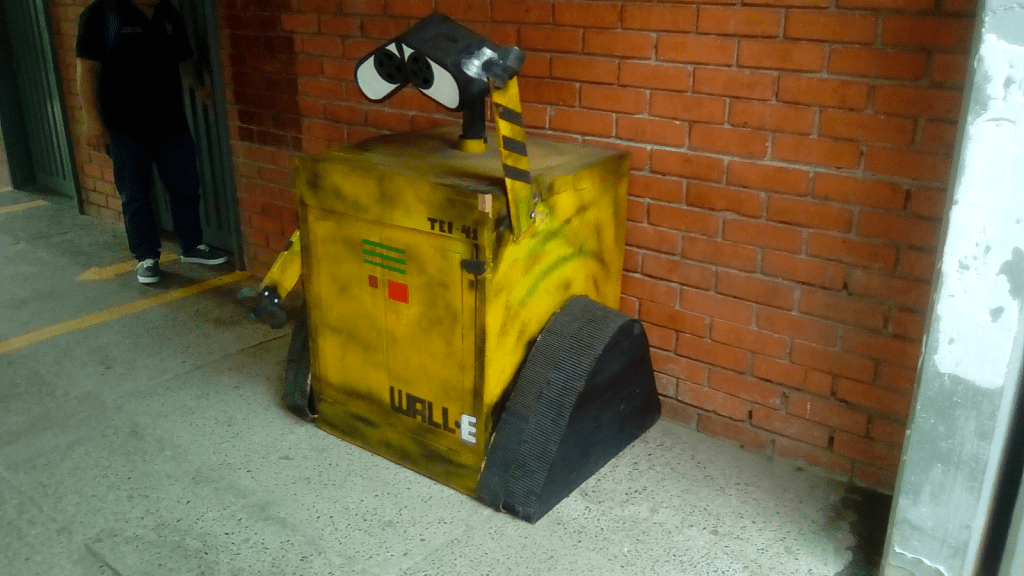
This film relates to Applied plant ecology because it illustrates issues such as the loss of plant biodiversity as well as its impact on the extinction of plant species on Earth. The film portrays how humans have used up all the planet’s resources, in a very unsustainable way, in order to satisfy their needs. This has severely damaged and polluted the Earth, and as a result, threatened the existence of plant species. Since the environment had become so toxic, plant species were unable to survive and what once used to be beautiful forests, had turned into piles of dump and landfills. The film highlights, that the deteriorating environmental conditions on Earth had eventually driven the plant species to extinction. It is shown that there were only one species of plant remaining on the entire Earth. This had vast indirect effects on humans, such as oxygen deprivation, polluted environment due to which they had left Earth and moved to another planet, leaving behind just a robot named Wall-E.
The movie portrays a very strong message, that should be addressed. It teaches us that if we continue along this path, of polluting the environment, eventually the environment would be too toxic for us to live in. Furthermore, our plant species and animal species would suffer and their existence would be threatened to extinction. However, it also depicts that just one plant could make a difference, and help restore ecosystems. This gives a message of hope to the audience, that if we try to care for and protect our environment we could make a positive impact.
Reference: Armstrong, Burtt, B., Gabriel, P., Garlin, J., Knight, E., McFerrin, B., Najimy, K., Piaf, E., Ratzenberger, J., Stanton, A., Weaver, S., & Willard, F. (2008). WALL-E. Disney Pixar.
Humanity is driving populations and species to extinction at an unprecedented rate. There are many controllers at any given level in an ecosystem, ranging from a single species in the redwood forest to a guild of many species in the rainforest. The structure of an ecosystem is determined by the interactions among the species in an ecosystem, weather, competition, predators, and other factors. Extinctions occur continuously as part of evolutionary and ecological processes, and ecosystems can sustain some amount of loss without suffering serious impairment. The deletion of one element in an ecosystem can affect the ecosystem in the long run, but the immediate impact can be judged by its involvement in the control of various functions. Deforestation and strip mining are examples of the permanent loss of a guild of dominant trees and an entire biota. Deforestation cancels numerous services such as flood control, erosion prevention, filtration of atmospheric pollutants, and the continuous supplying of firewood and timber, and can even be disastrous for populations dependent upon them. When a large area of tropical moist forest is cleared, climate change and soil and nutrient loss make natural succession unlikely or impossible or extend the time scale of restoration of the original ecosystem beyond the period of reasonable human interest. Ease of substitution for a keystone mutualist would be a long process, based on the impact of loss. This is because keystone mutualists are often long-lived, and every species that goes extinct takes with it an average of 10 to 30 other species. Looking to the future, one might imagine that genetic engineering would eventually produce crops with desirable properties without using wild plants. This is unlikely, because of the lack of information about the ecological roles of many organisms. Aldo Leopold (1953, p. 190) wrote that if we are to preserve ecosystem services, we must save every cog and wheel that the biota built. If we do not save more of the parts, we will eventually need to make substitutions. At some point, substitution will become unbearable. Therefore, preserving ecosystems and populations within them is important.
I agree that with enough human effort deserts can be made to bloom and forests to grow. Deforestation is a major contributor to climate change, and the restoration of forest ecosystems is a major human activity. Many studies show that single-species tree plantations do not replace the services provided by an original forest ecosystem. This is crucial in indicating that we need to do our part in preserving ecosystems and populations.
Citation
Ehrlich, P. R., & Mooney, H. A. (1983). Extinction, Substitution, and Ecosystem Services. BioScience, 33(4), 248-254
 Applied Plant Ecology Winter 2020

