Are Viruses Alive?

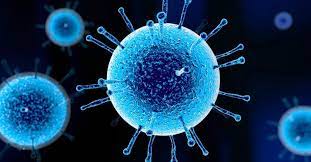
Whether or not viruses are alive is an ongoing debate but we can use a set of standards used to normally determine if something is living in order to determine if viruses are alive. To start, living things have cells. Viruses do not have cells and therefore do not meet the first standard or qulaification to be deemed living. Secondly, living things reproduce. Viruses are unable to duplicate their DNA and reproduce. However, they are able to make a new virus by injecting their DNA in a host cell. Given that viruses require a host cell in order to make a new virus and are not able to do so independently or by “mating”  I deem this standard to have not been met by viruses. Next, living things use energy. Viruses do not utilize any energy unless they have invaded a host cell and then feed off of their energy. Again, I deem this as a standard that viruses have not met as they do not use any energy on their own ouisde of a host cell. Finally, living things are known to interact with their environment. This is a broad standard and can be interpreted in different ways. Living things have cells that bind to other cells and are able to pass genetic material resulting in evolution and development. Viruses interact with cells they invade and inject their DNA in host cells which also allows them to evolve within that host cell. However, the key difference again is the fact that living things possess the ability to interact with their environment prior to invading or changing their environment. On the other hand, viruses must change their environment by invading a host cell in order to interact with said environment. The interactions viruses have with their environment is the action of infecting host cells which is more so a result of the anatomy of a virus as opposed to the capability of interacting with the environment as a living thing.  Therefore, I do not consider viruses to be living. Despite viruses not being alive, this does not mean they cannot evolve. As established viruses are able to create new viruses and evolve once they have infected a host cell. Viruses are essentially dependent on living things and once they have invaded these livings things, they get to act like they are living so long as they remain attached to their hosts.

Reference:
Ibswit. “Are Viruses Alive?” Ask A Biologist, 7 Mar. 2020, https://askabiologist.asu.edu/questions/are-viruses-alive.
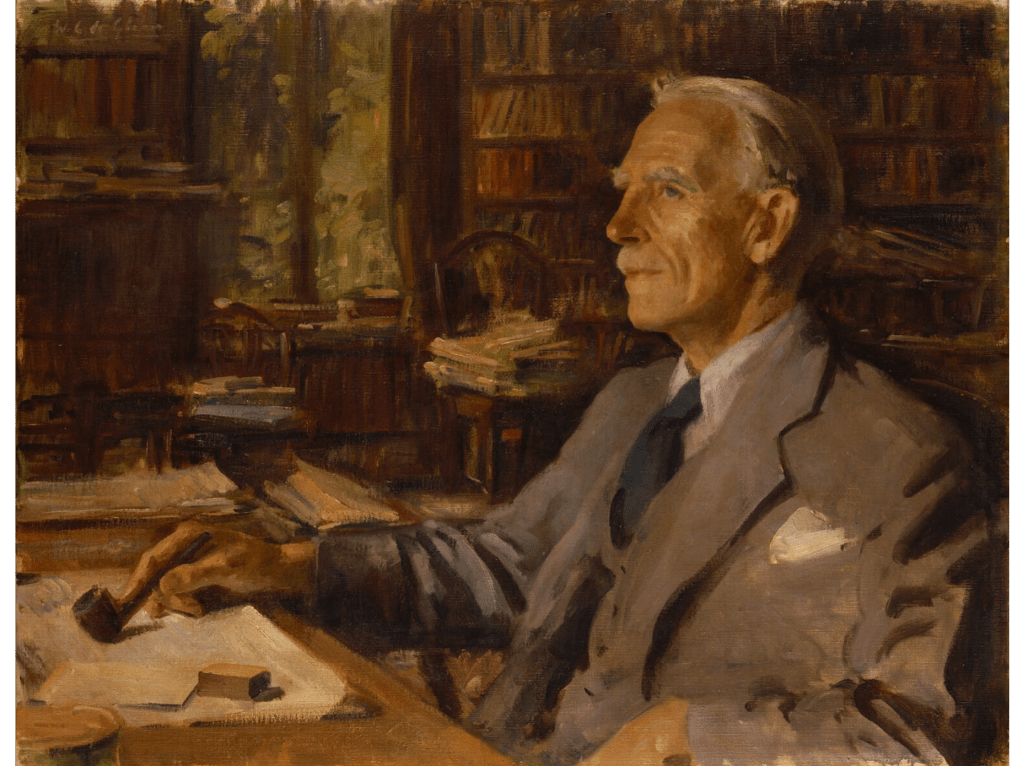
Tansley’s 1917 paper in the Journal of Plant Ecology – what is missing? and why?

Figure 1.0 Sir Arther George Tansley
(https://www.npg.org.uk/collections/search/portrait/mw80185/Sir-Arthur-George-Tansley)

Arthur Tansley published a paper in the Journal of Plant Ecology in 1917 titled, On competition between Galium saxatile L. (G. hercynicum Weig.) and Galium Sylvestre Poll. (G. asperum Schreb.) on different types of soil. He claimed in his research that Galium Sylvestre germinates on calcareous sandy soil and acid peat, but Galium saxatile flourishes on all of the soil types studied. He said that calcareous soils had the lowest germination rate, and that the seedlings that are generated there are chlorotic and perish quickly. Those that do make it are usually green, but they can’t compete with Galium Sylvestre. On acid peat and loam soil, both species grow slowly, although both species germinate readily. On calcareous soil, Galium Sylvestre grows normally, while Galium saxatile grows slowly. As a result, competition works by directly suppressing one species, resulting in the other having a rapid development for as long as it is growing on its favoured soil. The research describes two plant species that can be found in a variety of grasslands across the United Kingdom and on a variety of soils, and it demonstrates how biotic interactions and physiological tolerance limit these species.

Missing Content? and Why?

Many research papers now include abstracts, an introduction, materials and methods, and results, with statistics being used to interpret the data. When comparing modern research publications to Tansley’s 1917 work, one element that stands out is the lack of data. Tansley’s study was published in 1917, when statistics had not yet been fully invented. Over the last century, we’ve come a long way in terms of scientific studies and data analysis.

Citation

Tansley, A. G. (1917). On competition between Galium saxatile L. (G. hercynicum Weig.) and Galium Sylvestre Poll. (G. asperum Schreb.) on different types of soil. The Journal of Ecology, 173-179.

The Difference Between Peer-Reviewed Primary, Secondary, and Tertiary Literature

 Primary literature is written information that describes an original research, and is usually written by the individual(s) involved in conducting the research first-hand. In science fields, primary research scientific articles usually have these subsections in the following order: abstract; introduction; methods; results; and conclusion. The abstract, which is sometimes not explicitly titled “abstract” in some articles, is a short summary of the main research questions, methods and findings of an article. Scientific primary research articles sometimes have a standalone “discussion” section that comes after the results section. Some articles have the discussion section combined with the results section. And in some cases, there is just a discussion section in place of the conclusion.  Primary literature also includes data sets, technical reports and some news articles.1

    Secondary literature is written information that interprets and evaluates primary literature.1 For example a scientific review article, which is a form of secondary literature, describes and analyses primary research scientific articles of related topics.1 Just like primary articles, scientific articles are scholarly articles that are written by experts in the field of the primary articles that are being reviewed to write said secondary literature review articles. It should be noted that secondary scholarly articles can also have the same sub-sections that primary scholarly articles have i.e. introduction, methods and results sections.

    Primary and secondary literatures are usually published in journals; a journal is a compilation of scholarly articles. Peer-reviewed journals are journals that contain scientific articles that were reviewed by individuals who are experts in the field that the articles pertain to, hence the word “peer”. The individuals that participate in peer-reviewing cannot be the authors of the studies they review. Peer-reviewing scientific articles is voluntary work with no monetary compensation. 

  Tertiary literature compiles, and interprets primary and secondary literature in an easy to read format.1 Primary and secondary literature tend to be jargon heavy and hard to understand for individuals who do not have prior knowledge of the field the articles relate to. So tertiary literature, which is also based on credible sources, is the go-to source for many people when it comes to learning new topics. Examples of tertiary literature include textbooks, wikipedia and encyclopedia.1

Table 1. Examples of primary, secondary, and tertiary literature that relate to applied plant ecology

Type of literatureExample
PrimaryTanentzap AJ, Vicari M, Bazely DR. Ungulate saliva inhibits a grass-endophyte mutualism. Biol Lett. 2014;10(7):20140460. doi:10.1098/rsbl.2014.0460
SecondaryGórniak I, Bartoszewski R, Króliczewski J. Comprehensive review of antimicrobial activities of plant flavonoids. Phytochemistry Reviews. 2019;18(1):241-272. doi:10.1007/s11101-018-9591-z.
TertiaryInvasive Species. Wikipedia. https://en.wikipedia.org/wiki/Invasive_species (accessed 4 Mar2022). 

Reference List

  1. BIO153H5: Diversity of organisms: Primary, secondary, Tertiary. University of Toronto Mississauga Library. 2021.https://guides.library.utoronto.ca/c.php?g=251174&p=1673304 (accessed 4 Mar2022). 

Dr. Williams #BlackBotanistsWeek

Given it is black history month, it feels right to highlight amazing black women who have helped grow the world of science, specifically, plant ecology. Dr. Tanisha Williams is a black, female plant ecologist and botanist. The reason I am choosing to write about her, is because there are not many times the media focuses on women, working women, or black women and Dr. Williams falls under all of those categories which is why she deserves to be highlighted amongst our class. Dr. Williams grew up loving nature and was always exposed to it, especially through her grandmother who kept plants everywhere in her home. This sparked an interest towards plants for Dr. Williams which she later explored during her PhD at the University of Connecticut.

She is passionate about biodiversity and protecting it against climate change caused by humans. Dr. Williams most recently started #BlackBotanistsWeek which is an online movement to promote a community of black individuals who have a love for plants. Her goal is to find people to connect with through this movement and continue promoting diversity in botany. Moreover, it is common for black people to be falsely accused of wrong doings and be targeted for no good reason. This has been experienced by Christian Cooper who was bird watching in Central Park when Amy Cooper, a woman who was walking her dog unleashed, called the cops on Christian after he told her dogs must be leashed in the park and fed her dog a treat. This incident all started with Christian peacefully birdwatching and escalated to a woman accusing the black man of threatening her and her dog’s life while calling the cops on him. It is incidents like these that occur when people like Dr. Williams start movements and promote activities like bird watching for black people so that black people have a safe community to be a part of but also so that society is exposed to what ecologically engaging activities look like. Birdwatching is something not many people have seen others do and being black in today’s day and age unfortunately, makes you an automatic target. So this movement allows society to observe black individuals engaging in such activities and hopefully educates them on how opposite from harmful these activities are. 

Ultimately, Dr. Williams has built an amazing community with #BlackBotanistsWeek which allows for minorities such as black people, plant ecology, and women to shine and feel safe.

Dr. Tanisha Williams who has built an amazing community with #BlackBotanistWeek

Extinction, Substitution, and Ecosystem Services

Figure 1.0 Deforestation Depiction
(https://biofriendlyplanet.com/environment-issues/deforestation-a-few-solutions-that-can-change-the-future/)

Synopsis

Humanity is driving populations and species to extinction at an unprecedented rate. There are many controllers at any given level in an ecosystem, ranging from a single species in the redwood forest to a guild of many species in the rainforest. The structure of an ecosystem is determined by the interactions among the species in an ecosystem, weather, competition, predators, and other factors. Extinctions occur continuously as part of evolutionary and ecological processes, and ecosystems can sustain some amount of loss without suffering serious impairment. The deletion of one element in an ecosystem can affect the ecosystem in the long run, but the immediate impact can be judged by its involvement in the control of various functions. Deforestation and strip mining are examples of the permanent loss of a guild of dominant trees and an entire biota. Deforestation cancels numerous services such as flood control, erosion prevention, filtration of atmospheric pollutants, and the continuous supplying of firewood and timber, and can even be disastrous for populations dependent upon them. When a large area of tropical moist forest is cleared, climate change and soil and nutrient loss make natural succession unlikely or impossible or extend the time scale of restoration of the original ecosystem beyond the period of reasonable human interest. Ease of substitution for a keystone mutualist would be a long process, based on the impact of loss. This is because keystone mutualists are often long-lived, and every species that goes extinct takes with it an average of 10 to 30 other species. Looking to the future, one might imagine that genetic engineering would eventually produce crops with desirable properties without using wild plants. This is unlikely, because of the lack of information about the ecological roles of many organisms. Aldo Leopold (1953, p. 190) wrote that if we are to preserve ecosystem services, we must save every cog and wheel that the biota built. If we do not save more of the parts, we will eventually need to make substitutions. At some point, substitution will become unbearable. Therefore, preserving ecosystems and populations within them is important.

I agree that with enough human effort deserts can be made to bloom and forests to grow. Deforestation is a major contributor to climate change, and the restoration of forest ecosystems is a major human activity. Many studies show that single-species tree plantations do not replace the services provided by an original forest ecosystem. This is crucial in indicating that we need to do our part in preserving ecosystems and populations.

Citation

Ehrlich, P. R., & Mooney, H. A. (1983). Extinction, Substitution, and Ecosystem Services. BioScience, 33(4), 248-254.

Species, Data, and Conservation Planning

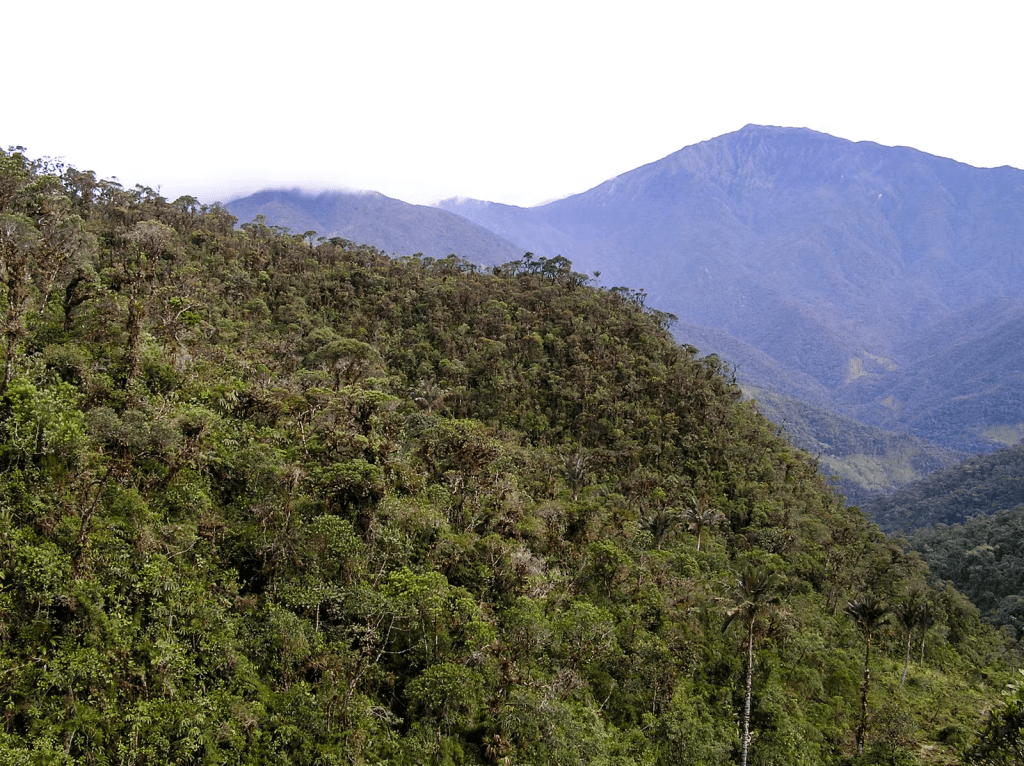
Figure 1.0 The Northwestern Andean Montane Forests
(https://www.oneearth.org/ecoregions/northwest-andean-montane-forests/)

Synopsis

Extinction is irreversible, but we can restore ecosystem functions, processes, and services by restoring habitats, ecological processes, and ecosystem services. There is an agreement that conservation planning should make the best use of both species and environmental data. Environmental data are important because they can help us correct biases and fill gaps in species knowledge. The North Central Rockies Forest and Northern Short Grassland ecoregions of North America are very distinct to our eyes, but species perceive them as one single biome. It is also difficult to trust land types for unknown species. The Northwestern Andean Montane Forests ecoregion is an example of how it is very difficult to use land types as conservation targets, as it is very important to consider the specific assemblages of different land types. The journal highlights that species data should take precedence over environmental data, with environmental information being used to expand the value of species data. In order to protect biodiversity, we need to represent not only ecological patterns, but also biological processes such as predation, biogeochemical processes, population dynamics, and disturbance dynamics. Species data can inform the spatial requirements for biodiversity persistence. We can set targets for the processes by looking at species’ ecological requirements, such as species’ endemism. The surrogacy value of land types or ED in representing species diversity is frequently assumed but rarely tested. Studies that indicate that land types are adequate surrogates for species in reserve planning are actually analyses of associations between land types and species assemblages, not surrogacy tests. This journal highlights two serious difficulties facing species-based approaches: the limitations of existing sampling and the cost of extending sampling. The variability of abundance across species ranges might mean that even low sampling might provide useful information. Any concerns about the cost of increasing sampling coverage only add to the value of the data and to the value of conservation planning and is worth it overall. Although the main challenges to biodiversity conservation are in the implementation of conservation plans, we must not lose sight of the need to compile more and better species data.

I agree that the most urgent target should be minimizing the rate of species extinction. Species data provide the best basis for setting targets for biodiversity conservation planning. Species data are not equivalent to conservation results but are a precondition for conservation because without species data we cannot understand the relationships between the components of biodiversity.

Citation

Brooks, T., Fonseca, G. A., & Rodrigues, A. S. (2004). Species, Data, and Conservation Planning. Conservation Biology, 18(6), 1682-1688.

Are viruses alive?

In my opinion viruses are alive. In simple words, a virus is an infectious agent that spreads in cells and causes deadly diseases. Viruses were first discovered in 1892 by Dmitri Ivanovsky. But they are not able to live on their own. They live and evolve in the host cell. They get ingested in the host cell and reproduce inside the host cell at their expense. Host cell gets infected by the virus which further helps the virus to multiply and replicate. Viruses do not have cells. They infect almost all life forms present in this world. So there is no life form on earth that can be safe from the virus.They cannot reproduce and evolve without a host. But once they get a host and start replicating. It is very hard to control the spread. The very good example of this scenario is SARS-CoV-2 which spreads Covid. Many people say viruses are not living because they cannot live without a host.Viruses do not possess the characteristics of other biological organisms. They lack the ability to carry out metabolic processes for example ATP Production.They also do not have the cells. The only  process that a virus can do on its own is reproduction. That further occurs in the host organism. Few viruses are known that can survive outside of their host depending on environmental conditions they have few years to live. Some scientists consider viruses to be non-living because they depend on the host to survive. 

Biologist : Edward Osborne Wilson

Edward Osborne Wilson was born on June 10, 1929, Birmingham,United States and died December 26, 2021, Burlington, Massachusetts. E.O. Wilson was an American biologist who was widely regarded as the country’s foremost expert on ants. He was also a main proponent of sociobiology, the study of the genetic foundation of all animal social behavior, including humans.Wilson earned his biology education at the University of Alabama.  He was a part of Harvard’s biology and zoology faculty from 1956 to 1976 after getting a doctorate in biology from Harvard University in 1955.His capability to observe birds and other animals in the wild was hampered by a fishing accident that left him blind in one eye during his childhood. He decided to concentrate on insects, which he could study under a microscope.Edward O. Wilson named mass extinction as the greatest threat to Earth’s future in an essay he published in 2018 for the Encyclopedia Britannica Anniversary Edition: 135 Years of Excellence.There are around 10 million different creatures on the earth with us. They are vanishing at a rate 100 to 1,000 times quicker than they were before the emergence of our own species. By the end of the 21st century, Planet’s diversity may have been reduced to half of what it is now. He was regarded as a modern-day Darwin, who had an urge to seek out new species. He created a hypothesis of adaptive demography which suggests that some types of social structure might improve reproductive fitness and the evolution of caste division for example  insect queens and worker groups. He was an honorary member of more than 30 prominent organizations, institutes, and institutions. He received more than 150 outstanding prizes and medals around the world. Several animal species have been scientifically named in his honour.

The Dawn Bazley Podcast

Dawn Bazely podcast Lumieres -Rapid Fire Q & A. Around 3 minutes the professor talks about how we can increase our critical thinking. I loved the idea of asking 5 W’s (where, what, when, who, why) should be asked for every scenario. I completely agree that for any question you have in life or science you should go in depth. If one cannot figure out something they should never give up. Instead they should collect knowledge and figure out the five W’s. It could be anything in general. I hold this position because I believe in never giving up. I always find answers to questions that I have. No matter how hard it is to find answers. I always take the 5 W’s into consideration. I always question people’s sayings if I have doubts. My advice to my fellow science students is that they should never give up.Always look for answers before giving up. Not having knowledge about something is not a bad thing but ignoring it is a huge problem. Always find answers to the questions you have in your mind.This is a very important part of critical thinking. It helps a lot in writing aspects too for example researching, essay writing etc. Investigate the Who, What, Where, When, and Why of a topic using the 5Ws approach. Nobody else will be able to discern what makes your narrative distinctive and intriguing if you can’t. Overall I follow the 5 W rule in my life and I loved the professor’s idea about it. I would encourage everyone to implement it in their life.

Charles Darwin

Charles Darwin’s full name was Charles Robert Darwin.He was born on February 12, 1809 in Shrewsbury, England and died on April 19, 1882 in Kent. Charles Robert Darwin was a naturalist and biologist who was mostly known for his theory of evolution and awareness of natural selection. His father was a doctor and wanted him to become a doctor. But he was more interested in nature than medicine. He said that looking at blood makes him feel sick.His father enrolled him at the University of Edinburgh to study medicine in 1825.In 1828, he moved to Christ’s College, Cambridge, where his instructors were generally in favour of providential design. A botany professor encouraged him to join a voyage on the HMS Beagle In 1831 Darwin set sail aboard the HMS Beagle on a five-year voyage around the world, during which time he studied many flora and developed his theories. Darwin collected a number of natural items on his journey, including birds, plants, and fossils.In 1859, Darwin published a book called Origin of Species. Darwin’s theory of evolution and the process of natural selection later became known simply as “Darwinism.” (Ref) The three fundamental elements of Charles Darwin’s theory of evolution were that variation happened randomly in between the species, that an individual’s features could be inherited by its progeny, and that only those with advantageous traits would survive in the battle for life. Despite the fact that many of Darwin’s ideas have not been confirmed by current science.He was also unable to determine how traits were inherited correctly, which was not resolved until the uncovering of Gregor Mendel’s pea study.At the age of seventy-three, Charles Darwin died in 1882. In London, England, he is buried in Westminster Abbey.

Design a site like this with WordPress.com
Get started