Featured

What I learned from being a podcast guest

Podcasts were invented in 2004. I first discovered them in 2006, when I was a visiting professor at the University of Tromsø (now called UiT – The Arctic University of Norway). I had no internet connection in the visiting scholars’ residence, so I would download podcasts and audiobooks in my university office, to have some English-language programming for my solitary evenings.

Back in Canada, I found that podcasts were a great way to catch up with missed radio programmes. But, my daughters were never interested in listening to them, and I truly thought that this media format would die out from lack of interest amongst the younger generation. I was wrong!

At university, both my daughters listened to them. Today, podcasts are more popular than ever, especially among younger Millenials and GenZ. They are fairly straightforward to make with some basic, affordable equipment. To my surprise, since 2014, I’ve been interviewed for several podcast series:

In these episodes, I’m often asked to advise students. Some of my favourite advice can be heard at the end of my People Behind the Science interview.

Get a career coach, let yourself fail, because you often learn more from failure than success, find as many mentors as possible, and learn from everyone

— Dawn Bazely 59m 39s to 1h 03m 30s

In the summer of 2019, Professor Sapna Sharma connected me with Dr. Eloïse Ashworth, a co-founder of the Lumières Science Podcast. Dr. Ashworth, who grew up in France, before doing her PhD in Australia in Marine Biology, is passionate about Science Communication.

Eloïse had turned to Professor Sharma, an experienced science communicator at York University, for advice about the Toronto #SciComm scene. She was launching the new podcast in August and was looking for scientists willing to speak at the event. Eloïse (Dr. Ashworth) asked her presenters, including me, to speak about our research and the challenges we have encountered, using only one slide.

I decided to give a five-minute talk in my ten-minute slot to allow for plenty of questions. I spent two weeks writing a two-page science communications script which I recorded as an mp3 file, and uploaded to my SoundCloud account. Here is the slide that was projected on the screen.
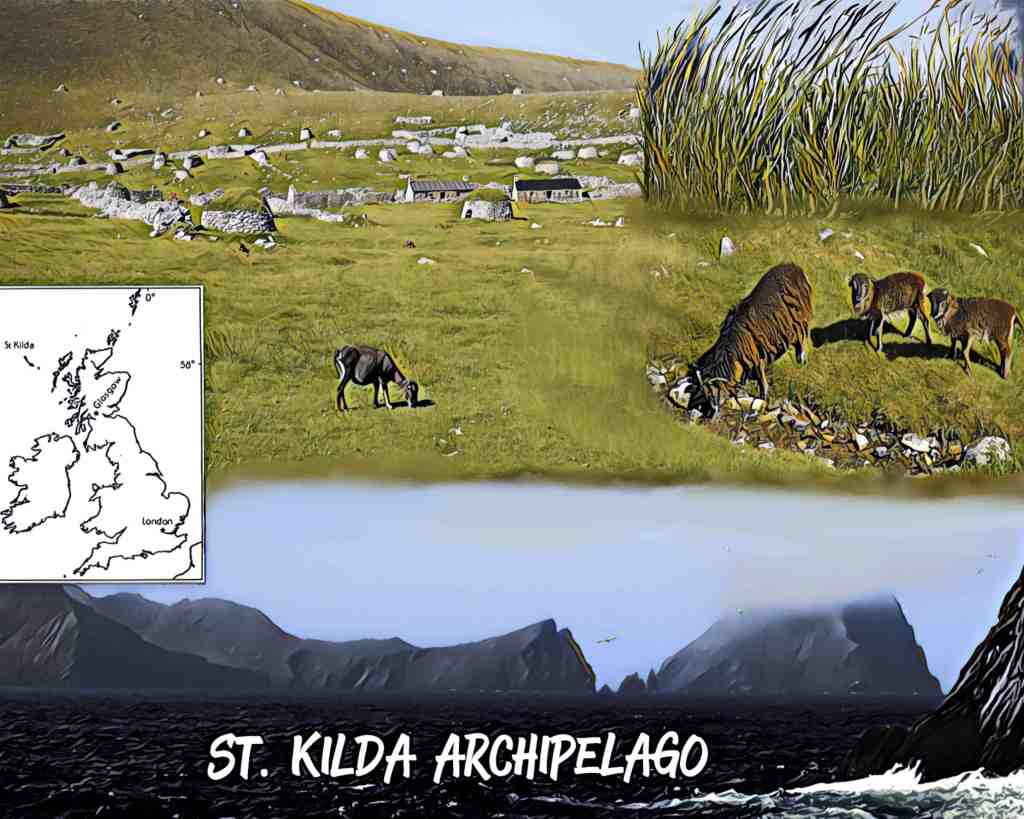
Uploading an audiofile is a great way for Biology 4095 students with low bandwidth wifi or a noisy family, to deliver their end of semester talks when joining through Zoom won’t work. We can listen to this audio as we click through your student group’s Google Slides. Compare my audiofile which was only 8MB with the high quality video from my talk below. The SoundCloud audiofile is a great alternative.

ps This post relates to Blog Topic #8: Listen to a podcast interviewing Dawn Bazely and pick one piece of advice that I have given to science students.

What is Open Access, Metadata and Creative Commons Licenses? An Ecological Example

Open access usually  refers to resources, like scientific articles, that are free to use by the public with significantly less restrictions due to open licenses. 

Meta is a prefix that comes from Greek, meaning “along with”. So metadata is data that comes along with a file –usually this data is attribute data such as location, title, publisher, year, and producer. 

Creative Commons (CC) is a non-profit organization (creativecommons.org) that allows creators to make their work available to the public while still protecting the creator’s rights and content through CC licenses and other tools. 

The open access, peer-reviewed article Plant physiology meets phytopathology: plant primary metabolism and plant–pathogen interactions by Susanne Berger et al looks into the effects of phytopathogens on defence mechanisms of different types of plant and plant tissues. Phytopathogens are plant pathogens such as fungi, bacteria, and viruses. When studying the effects of phytopathogens on the effects of photosynthesis, it was found that some plants “switch off photosynthesis and other assimilatory metabolism to initiate respiratory and other defence mechanisms”. Another defence mechanism observed is  the change in hexose-to-sucrose ratio in the plant tissues, but it was concluded that further research using spatial resolution is required for a full understanding of how sugars are distributed in the plant during pathogenic attacks. In the end, more reproducible research needs to be done on a larger scale of plant tissues and plant types for these findings to support further practical applications in the real world. 

(Word Count: 245)

Reference: 

Berger, Sinha, A. K., & Roitsch, T. (2007). Plant physiology meets phytopathology: plant primary metabolism and plant–pathogen interactions. Journal of Experimental Botany, 58(15-16), 4019–4026. https://doi.org/10.1093/jxb/erm298

About my Birth year article Authors

My birth year paper has 3 authors. This first is Manuel Lerdau, who is a professor and researcher at the University of Virginia. https://evsc.as.virginia.edu/people/profile/mlerdau

His research focuses on plant resource and distribution as well as biotic and abiotic interactions such as herbivory and atmospheric chemistry and air pollution. His research currently centers around genomics and stress tolerance and trace gas exchange between plants and the atmosphere. Some of his other publications include:  A unified mechanism of action for volatile isoprenoids in plant abiotic stress and Catabolism of volatile organic compounds influences plant survival.

Another author of the paper is Alex Guenther, he has a PhD in engineering and is a professor at the University of California Irvine. He is an international leader in atmospheric and terrestrial ecosystem research who has published more than 280 peer-reviewed journal articles such as The contribution of reactive carbon emissions from vegetation to the carbon balance of terrestrial ecosystems.

 The last author that contributed to my birth year article is Russ Monson, at the University of Colorado Boulder, he is interested in various aspect topics such as plant physiological ecology; and forest-atmosphere exchanges of carbon dioxide, water vapor, ozone and energy. He has publications such as Diurnal centroid of ecosystem energy and carbon fluxes at FLUXNET sites and is honoured in papers such as Russ Monson and the evolution of C-4 photosynthesis.  

(Word Count: 234)

Reference: 

  Guenther. (2002). The contribution of reactive carbon emissions from vegetation to the carbon balance of terrestrial ecosystems. Chemosphere (Oxford), 49(8), 837–844. https://doi.org/10.1016/S0045-6535(02)00384-3

  Lerdau, Loreto, F., Vickers, C. E., & Gershenzon, J. (2009). A unified mechanism of action for volatile isoprenoids in plant abiotic stress. Nature Chemical Biology, 5(5), 283–291. https://doi.org/10.1038/nchembio.158

  Oikawa, & Lerdau, M. T. (2013). Catabolism of volatile organic compounds influences plant survival. Trends in Plant Science, 18(12), 695–703. https://doi.org/10.1016/j.tplants.2013.08.011

  Sage. (2021). Russ Monson and the evolution of C-4 photosynthesis. Oecologia, 197(4), 823–840. https://doi.org/10.1007/s00442-021-04883-1

  Wilson, Baldocchi, D., Falge, E., Aubinet, M., Berbigier, P., Bernhofer, C., Dolman, H., Field, C., Goldstein, A., Granier, A., Hollinger, D., Katul, G., Law, B. E., Meyers, T., Moncrieff, J., Monson, R., Tenhunen, J., Valentini, R., Verma, S., & Wofsy, S. (2003). Diurnal centroid of ecosystem energy and carbon fluxes at FLUXNET sites. Journal of Geophysical Research – Atmospheres, 108(D21), 4664–n/a. https://doi.org/10.1029/2001JD001349

What type of paper is my birth year article?

My birth year paper is a secondary peer-reviewed article. Peer reviewed articles  have been subject to peer editing of others in the same field to ensure the quality of the work. There are three types of resource. Primary literature: when raw information (information acquired first handedly) is used to analyse and discuss. This type of literature is often assessed without much interpretation or commentary as the dialogue typically remains within the scope of the study. An example of this is Growing evidence for facultative biotrophy in saprotrophic fungi: data from microcosm tests with 201 species of wood‐decay basidiomycetes by Smith et al. (https://doi-org.ezproxy.library.yorku.ca/10.1111/nph.14551)

Secondary literature is when conclusions are interpreted from the analysis of one or more different sources of primary literature. Primary and secondary articles are good for using as references when writing up a scientific review on a topic of interest. An example is my chosen article, Plant Production and Emission of Volatile Organic Compounds (https://doi-org.ezproxy.library.yorku.ca/10.2307/1313152).

Tertiary literature is when information is condensed and summarized, typically with reference to multiple sources of primary or secondary literature. These resources are good for looking at general information or facts, but usually aren’t used for reference material as these sources often aren’t accredited to a single author. For example, an encyclopaedia (e.g. Wikipedia) is a tertiary source. This Wikipedia page on the Boreal Forest (https://en.wikipedia.org/wiki/Boreal_forest_of_Canada).

(Word count: 247)

***information acquired with support from https://library.madonna.edu/research/primary-secondary-and-tertiary-sources#:~:text=What%20are%20primary%2C%20secondary%2C%20and,organize%2C%20or%20compile%20other%20sources.

A Book Recommendation: The Hidden Life of Trees

I recently stumbled upon a novel titled The Hidden Life of Trees: What They Feel, How They Communicate – Discoveries from a Secret World by Peter Wohlleben. Peter is a German forester who deeply acknowledges and accepts nature. As such, this book speaks about the little intricacies and beauties about trees that are unseens by the untrained eye. The book covers the life cycle of the forest, trees, and what it takes to be a tree in a forest community through anthropomorphism. The author takes on a tone that is more palatable to the general public which is why the book has received some criticism from biologists and other scientists. I think that because it is meant for the general public, the writings should not be taken too literally, rather it should be taken introspectively. One of the main focuses of the book is the emphasis on how plants  communicate and interact with each other through chemical reactions and by utilising the resources around them. The communication occurs through signals sent through the tree root fungal networks and plant hormone signalling. This book also discusses the water transportation system within a community of trees, and the ageing processes of trees, including the factors that affect the ageing process. It’s an interesting book that i would definitely recommend to my family and friends

(Word Count: 207)

https://www.goodreads.com/en/book/show/28256439

Summary of my birth year paper: Plant Production and Emission of Volatile Organic Compounds (VOC)

My birth year article Plant Production and Emission of Volatile Organic Compounds (1997) speaks to the importance of plant produced VOC. Outlining how they affect the atmosphere globally and how there is still much unknown to us about plants and their chemical reactions. The paper addresses the two most abundant VOCs, isoprene and monoterpene. These two chemicals are formed in the Mevalonic Acid Pathway and they are Isoprenoid hydrocarbons. Isoprenoid hydrocarbons are highly reactive which give these compounds much shorter lifetimes, often just hours in sunlight, leading to high turnover rates. Due to this, there is still much unknown about these chemicals, and  there are continuing efforts in this field of research.

Isoprene’s ecological role is unclear, however it is likely that it increases the temperature threshold for damage for plants, meaning it helps to protect plants against sudden increases in thermal radiation. On the other hand, the ecological role of monoterpene has been known for a while. It is used as a herbivore deterrent, as a toxin to fight against fungal pathogens, and as a toxin delivery system. It’s important to study VOCs because these chemicals and emissions are one of the least understood aspects of plant physiology and ecology. Additionally, VOCs play an important role in the global atmosphere as they contribute to ozone production, methane oxidation, and the global carbon monoxide budget.

(Word Count: 225)

Reference: 

  Lerdau, Guenther, A., & Monson, R. (1997). Plant production and emission of volatile organic compounds. Bioscience, 47(6), 373–383. https://doi.org/10.2307/1313152

My 8 Credit Thesis With Dr. Bazely

In my 8-credit thesis with Dr. Bazely, my goal is to understand the distribution of the fungal endophyte within Festuca hallii and F.campestris. By the end of the semester, I should have a body map of either grass that displays where the endophyte is found and where it is most concentrated. To do this I am fixing and staining the top, middle and bottom sections of each leaf and the pseudostem of a selected tiller. After the samples are stained, I look at them under a microscope and count the number of endophyte hyphae, which will then be used to measure the hyphal density relative to each section of the plant. Both of these palnts will be compared to F.rubra, a closely related fescue species a any deviations form F.rubra will be recorded

If I am able to, will use an immunoblot assay to determine if the hyphal density correlates with the intensity of the colour on the immunoblots. Confirming this will be useful for future experiments because an immunoblot takes very little time compared to staining and observing the grass under a microscope.

I expect the hyphae to be most dense at the pseudostem of both fescue. I expect it to behave similarly to F.rubra, the endophyte infects the seeds of the plant before making its way up to the leaves. The endophyte has already deviated from expectations because in some of the sample plants, the endophyte was found in the plant but seems to have disappeared, which is unheard of. 

Summary of my Birth Year Article

In Fungal Endophyte Symbiosis and Plant Diversity in Successional Fields, Clay and Holah aim to improve the understanding of the impact of endophyte infection within Tall fescue (Festuca arundinace) on biodiversity and succession. To do this, they seeded 8 20x20m plots of land with Tall fescue seeds, half of which had a high rate of infection form the Neotyphodium coenophialum endophyte. All plots were also seeded with forbs. To measure the biomass they harvested a transact on each plot after two months, dried them and weighed them. This was repeated twice a year and once on the last year for 4 years. They counted the plant species harvest to measure biodiversity. They found that the endophyte positive sites had a significantly lower species diversity than uninfected sites (22 to 27 species, respectively). The variation of the species diversity was initially due to the variation of the transacts selected and eventually the variance was largely explained by whether or not the plot had a high rate of endophyte infection. The biomass was similar for both infected and uninfected plots, with infected plots being marginally higher. the dominance of the Tall fescue increased in endophyte positive sites and decreased in endophyte negative sites. An explanation for the reduced diversity on infected sites may be due to the endophyte suppressing mycorrhizal association, which disables a symbiotic relationship in many plants. Other explanations include the endophytes toxin altering feeding behaviours of predators and improved drought tolerance increasing Tall fescues competitiveness 

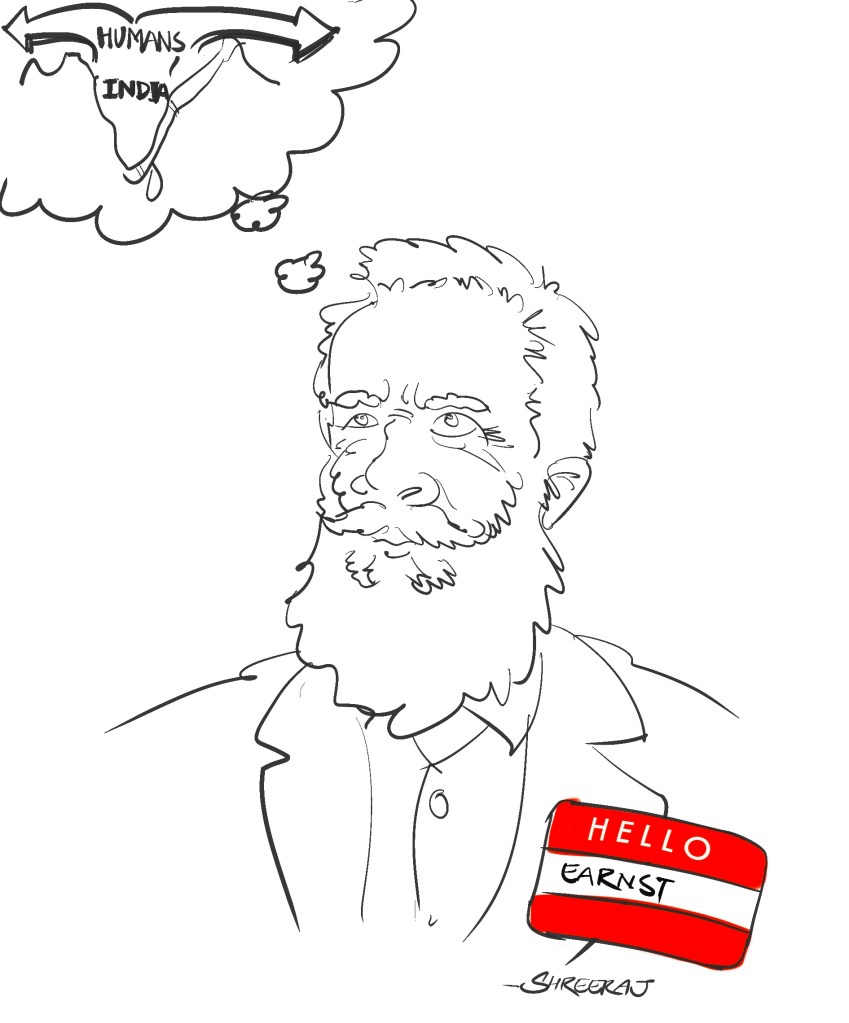
 Earnst Haeckel, the guy who coined “Ecology”

He was a quirky one, Earnst Haeckel. He did great work in science. He promoted Darwin’s work in Germany, named thousands of species, and inspired an art movement; but he also came up with some no-so-great thoughts, such as different languages evolved among different species of humans. Yes, you read that right. Haeckel was a promoter of scientific racism.

Herr Haeckel believed that there were ten human species, and the white man was at the top of the pecking order. The Nazis a few years later took this idea and ran with it.

Haeckel also believed that humans originated from India, and not Africa. Like I said, he was a quirky one; but he wasn’t alone in believing that humans originated in Asia—most anthropologists back then preferred Asia to Africa as the place of origin of humans.

Open Access, Metadata, and Creative Commons 

We are lucky that as York University students we have access to science papers, because most journals that publish these papers charge a subscription fee, which seems counter productive, as scientific research and findings should be easily available and free to access. Open access aims to do just that. Open access allows free access to scientific papers—to read, and to reuse.

What do we do when we use an image or resource from the internet? We cite it. Why do we cite it? So that we give credit to the original creator. But what do we call the info that we use to cite the resource? Metadata.  Metadata usually contains details such as the creator’s name, the place/date where the resource was accessed, and if the original creator has given permission for the resource to be shared and/or reused.

What is Creative Commons? Creative Commons license is a type of copy right license that allows free use of copyrighted material. It allows people to use, share, and build upon the original work.

Becoming a Wikipedia (student) Editor

I had dabbled in editing Wikipedia pages that I was passionate about a few years ago, so when professor Bazely mentioned that one of the assignments was going to be editing Wikipedia pages, I thought it was going to be a walk in the park. It wasn’t. Wikipedia editing isn’t about creating an account and editing stuff that I felt was inaccurate. One of the most important tenets of Wikipedia editing is that it is not a publisher of original thought or research. Nor is it a place to debate or publish one’s personal theories. For Wikipedia to be a reliable resource, us editors have to understand that it is an encyclopedia. It is a compilation (with properly referenced sources, of course) that is written objectively, with the least amount of personal bias.

When I am writing about something that I am passionate about, it is very hard to keep my personal opinion out. Thankfully, the assignment only involved editing an appropriate article that was either incomplete, had inaccuracies, or lacked proper references. The Wikipedia training modules were an excellent help in learning how to navigate, and edit Wikipedia pages. I chose to edit an article on biofuel regulations in Canada, as my class presentation was on that topic as well. My editing involved adding citations to the article, correcting obvious grammatical errors, and expanding the text a bit with updated information on the Canadian government policies regarding addition of biofuels in petroleum based fuels.

Design a site like this with WordPress.com
Get started