As the human population continues to grow, so does our need to feed it. The current method of farming is not sustainable or efficient enough to continue providing food to even the current human population. Major changes to how we farm food are needed to responsibly feed humanity.
What Makes Farming so unsustainable?
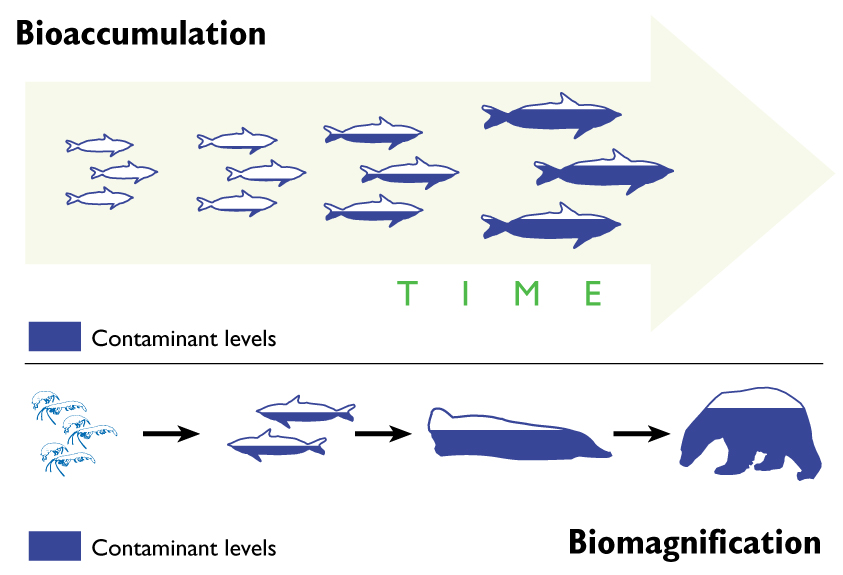
Fresh water systems are put under great amounts of stress due to our agricultural system. Agriculture is largest consumer of water in the world, comprising up to 70% of global freshwater withdrawals. The nutrients and pesticides used to grow crops are carried into local water sources when it rains, polluting the freshwater. In addition to pesticide runoff contaminating freshwater ecosystems, pesticides are found in higher concentrations in the animals on higher trophic levels that rely on pests as a food source. (See picture below).
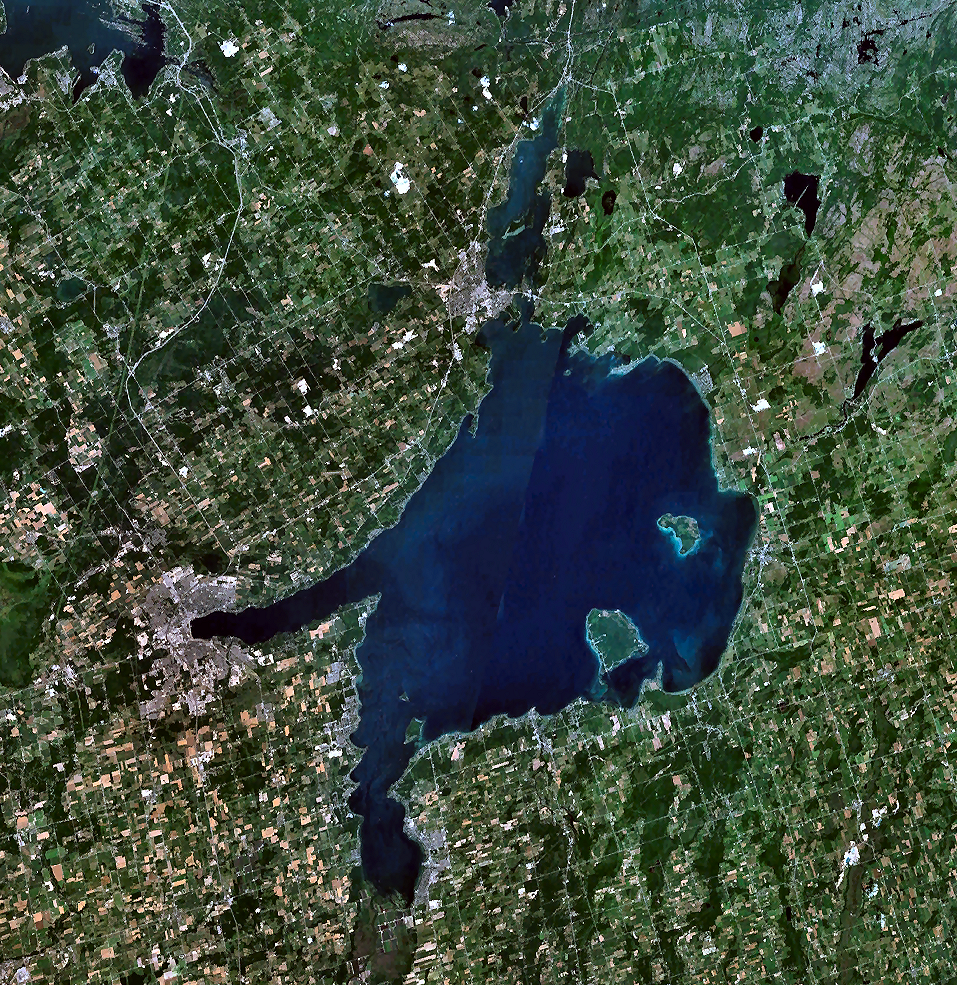
Nutrient runoff, particularly nitrogen and phosphorus, are a source of energy for the flora in local bodies of water, creating algae blooms that can cause anoxia and death of aquatic animals.
Habitat loss and fragmentation is decimating biodiversity thanks in no small part to the development farmlands. Forest dwelling animals are forced to relocate or live in a less favourable habitat which often leads to their death. Habitat fragmentation also results in an edge effect that reduces the size of the suitable habitat by more than the size of the area that is cleared. The area at and near the edge of the forest is less viable to organisms that live deep in the forest
So, What can we do?
An approach that significantly mitigates all the environmental issues that are brought by current factory farming is vertical farming. Vertical farming is an indoor method of farming where the plants are grown in stacks where the temperature, lighting, nutrients are optimized, maximizing the yield for the resources and land used.
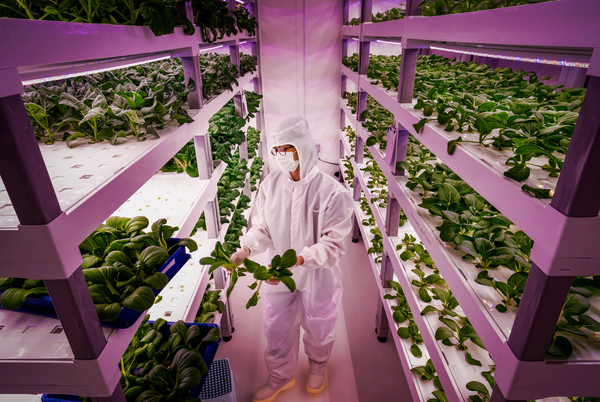
Stacking crops allows the produce to be grown in much smaller spaces, minimizing the amount of land required for farming. Growing inside building allows for crops to be grown in urban areas, reducing the impact of transportation while also minimizing the exposure to pests which virtually eliminates the need for pesticides.
There are several methods of vertical farming that do not use soil at all, but instead submerge the plants in nutrient rich water or use mist to grow produce. This allows for recycling of water throughout the farm and less water usage, there is less water loss through evaporation and it does not seep into the ground.
References
Amorim, C., & Moura, A. (2021). Ecological impacts of freshwater algal blooms on water quality, plankton biodiversity, structure, and ecosystem functioning. Science of The Total Environment, 758. https://doi.org/10.1016/j.scitotenv.2020.143605
Beaton, D., & Brook, T. (2015, May). Pesticide Contamination of Farm Water Sources. OMAFRA. Retrieved March 30, 2022, from http://www.omafra.gov.on.ca/english/engineer/facts/15-001.htm
Federman, S., & Zankowski, P. (2021, October 25). Vertical farming for the future. USDA. Retrieved March 30, 2022, from https://www.usda.gov/media/blog/2018/08/14/vertical-farming-future
Government of Canada, S. C. (2019, September 12). Agricultural Water Survey, 2018. StatCan. Retrieved March 30, 2022, from https://www150.statcan.gc.ca/n1/daily-quotidien/190912/dq190912d-eng.htm
Malcolmson, C., & Prophet, M. (2021). Rescue Lake Simcoe coalition. Rescue Lake Simcoe. Retrieved March 30, 2022, from https://rescuelakesimcoe.org/wp-content/uploads/2021/03/Under-Pressure-Report-2021.pdf
NASA. (2007). Satellite View. Wikipedia. Retrieved March 30, 2022, from https://en.wikipedia.org/wiki/Lake_Simcoe#/media/File:Simcoe_79.40W_44.47N.png.
van der Hoop, J. (2013). Bioaccumulation Graphic. Mercury Science and Policy at MIT. MIT. Retrieved March 30, 2022, from https://mercurypolicy.scripts.mit.edu/blog/?p=499.
Wonsim, L. (2020). Vertical Farming in Singapore. Wikipedia. Retrieved March 30, 2022, from https://en.wikipedia.org/wiki/Vertical_farming#/media/File:Sgverticalfarming1.png.
 Applied Plant Ecology Winter 2020

