Why I nominated the film and how it illustrate issues in Applied Plant Ecology
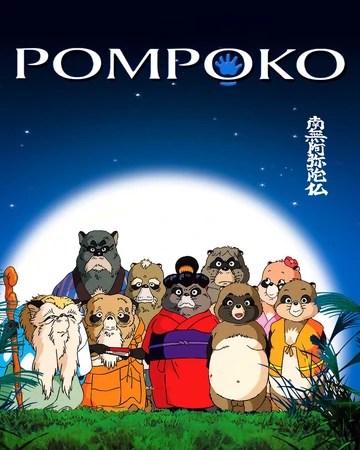
My second choice film nomination is Pom Poko (1994, Studio Ghibli). In short, it’s a film about the loss of land and habitat fragmentation due to urbanization and modern development. The film follows a family of raccoons as they attempt to navigate through the ever changing human world while trying to maintain their land and integrity from being lost to the humans. I nominated this film because it’s an enjoyable watch for all ages that does a good job of tackling the heavy topic of biodiversity extinction due to loss of land. In addition, I liked the way the anthropomorphism of the main character’s are represented both metaphorically and literally. With urbanization comes the loss of biodiversity, the increase of pollutants in the localized ecosystem, unsustainable forestry, and habitat fragmentation and loss. In Pom Poko, the deforestation outlined in film realistically reflects the negative situation humans have put on the natural habitat. Since this film was produced in the mid 90’s, it represents a state when habitat conservation was comparatively less dire to todays state which justifies the optimistic ending despite the complex problem at hand. Today, we have seen the transitive effects of the human actions that result in unstable and changing hydrological cycles which affect vegetation growth and landscapes. Racoons are omnivores and opportunistic eaters, meaning they often scavenge for what they can. In the film, the city development and urban expansion not only paints humans as an ever growing threat, but also clearly outlines the loss of natural foraging opportunities as land is lost to bulldozers. More and more, plants and animals alike are unable to adapt to human environments and are faced with the challenge of a survival so dire, it may mean extinction in the short term.
(Word count: 292)
 Applied Plant Ecology Winter 2020