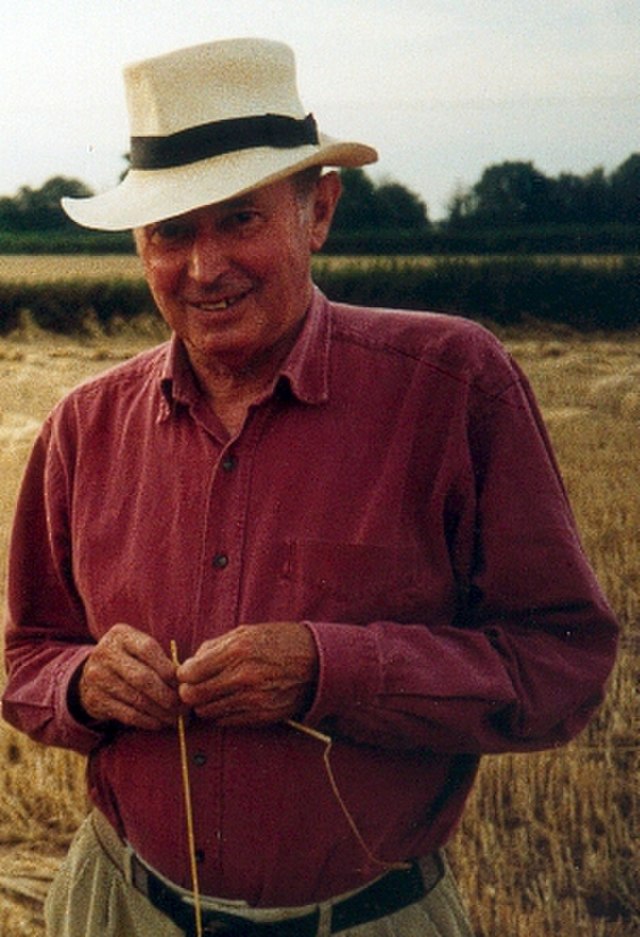
John Lander Harper had one of the greatest impacts on plant ecology and played a key role in developing it into a modern science. Harper was born in 1925 in England on a farm, which sparked his interest in crops, weeds, and grasses (which he would later study). John obtained both an undergraduate degree in botany as well as an MA and a PhD at Oxford. He then spent the next nine years lecturing and conducting research at the Department of Agriculture. In 1968 he was appointed as the new head of the School of Plant Biology at Bangor University in North Wales.
Through his research, he demonstrated a new approach of studying plants; by studying them in a similar manner to how we study vegetation. Rather than being somewhat static, vegetation was considered to be a dynamic arrangement of plant populations which constantly changed. Harper practically spearheaded the foundation of the field of plant population ecology. With the use of experimental approaches and his background on population biology, John made a connection between ecology and evolution (which is now an essential idea of plant ecology). Although he was confronted with the troubles of how to characterize “a singular plant,” Harper addressed these questions and in addition he persuaded many people that plants were worth studying. He argued that plants are even easier to study than animal populations because they are stagnant and “wait to be counted”.
He wrote many textbooks on population biology and plant ecology in later years. He also was awarded the Darwin Medal in 1990 for his research on the population biology and evolution of plants which they claimed, “greatly improved understanding of the adaptation of plants to their environment”. He passed away in 2009 after a long life of discoveries and accomplishments.
Reference:
(2015). John L. Harper. obo in Ecology. doi: 10.1093/obo/9780199830060-0135
 Applied Plant Ecology Winter 2020