I first ran our course in Winter Semester of 1993. That’s before most of you were born. When I proposed this course in 1991, there really was not much like it available for students in the Biology Department, except for Conservation Biology. Applied Plant Ecology first ran under the temporary code, BIOL 4170, that was used to designate all new courses. The curriculum included familiar topics like acid rain, the ozone hole, and global warming. I chose Bill Freedman’s Environmental Ecology (1989) as the course text.
The first and second decades of BIOL4095
In the 1990s, I took a broad taxonomic approach, and the course covered both plants and animals and biogeochemistry. Back then, a more accurate course title might have been Environmental Ecology. When I looked at my original course outline, I was surprised to see the impact of war on vegetation. I completely forgot that I included this. War is a human disturbance that affects ecosystems, and often requires ecosystem management and habitat restoration!

But, like viruses, courses evolve, and BIOL 4095 has changed in the eleven times or so, that it’s been taught over the last 28 years, though not always by me. I didn’t teach it when I was a research institute director from 2006-14.
The general topics have remained fairly constant, but Applied Plant Ecology has become much more botanically focused over. New faculty members hired after me, developed their own upper year courses, many of which havw an applied ecology component.
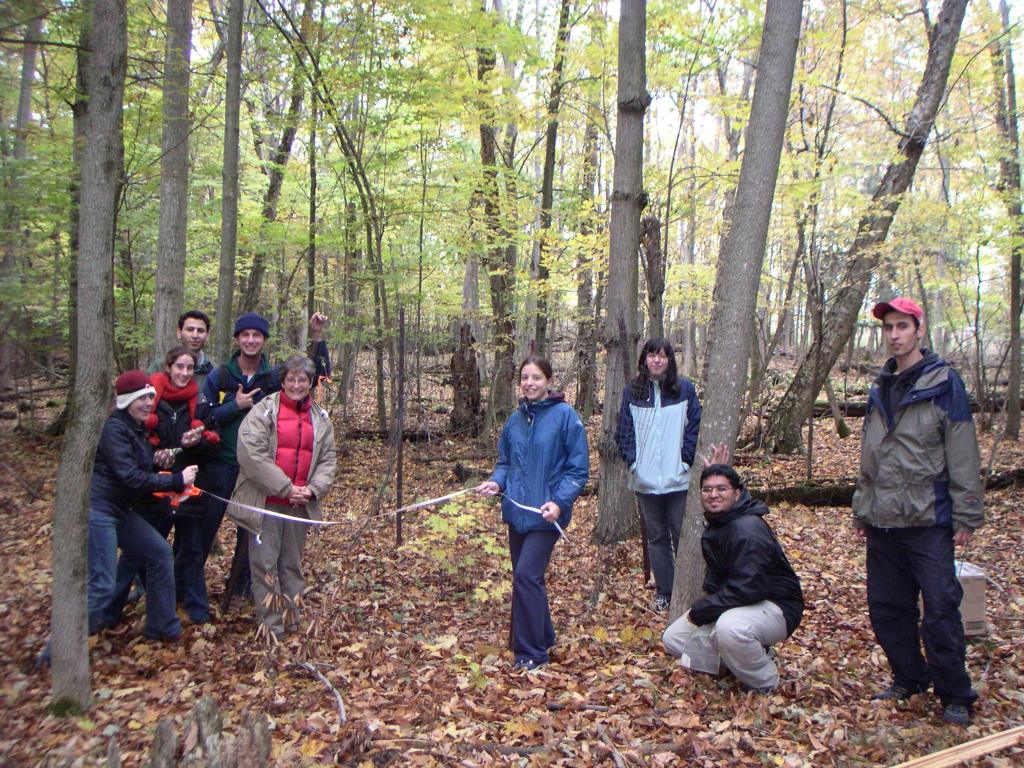
Applied Plant Ecology Field Trip to Presqu’ile Provincial Park in October 2003 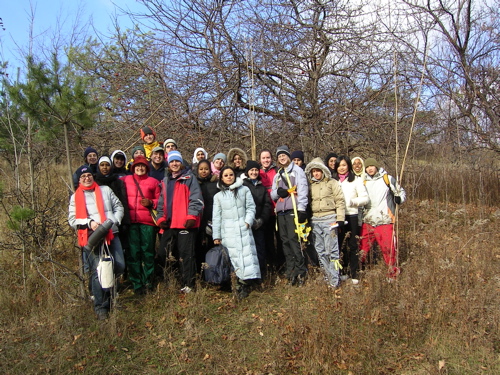
Applied Plant Ecology Field Trip to Highfields Family Farm in Fall 2008 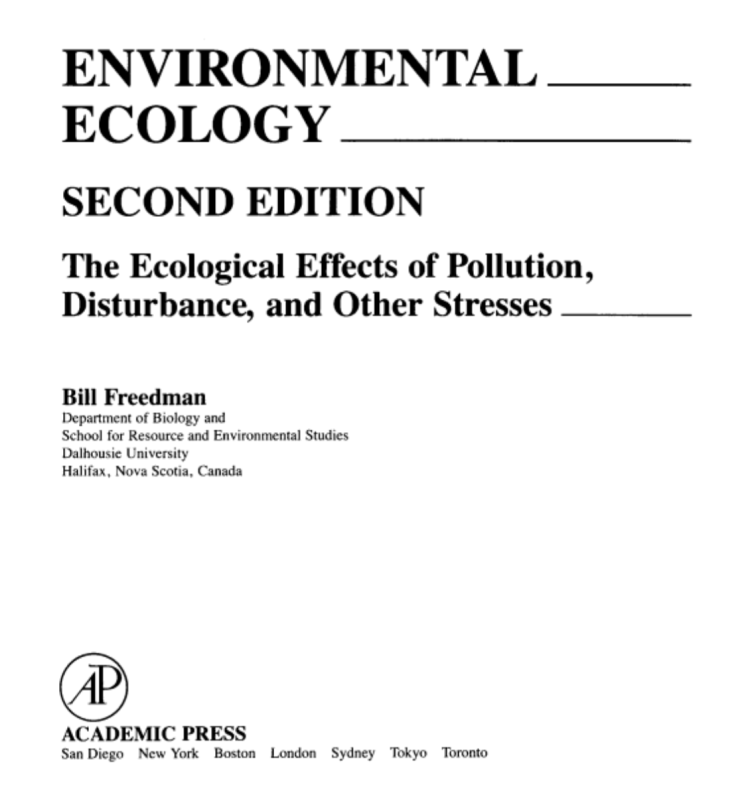

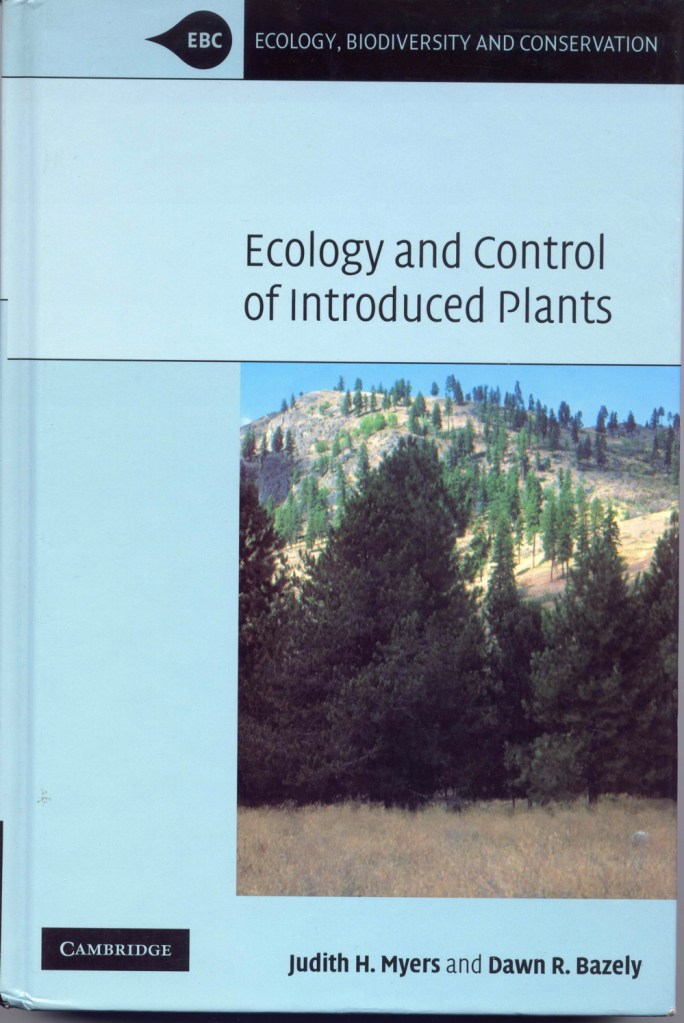
After 2003, the course heavily emphasized the management of non-indigenous, invasive plants, when Judy Myers and I published our book: The Ecology and Control of Introduced Species: Managing Invasive Plants. This topic replaced the Ecological Impact of War!
The third decade of BIOL4095
In 2014, I introduced an explicit science communication component, based on what I learned while directing York’s pan-university research institute in sustainability, IRIS (sadly, now closed). At IRIS, I learned about how and why science communication to policy makers often fails. I also learned many practical communication skills like social media and blogging. Your assignments about science communication to non-scientists this course, which is, after all, about applying ecological research, are based on my experiences.
There are two constant themes across the course over the past three decades:
- A field component, which today, would be called experiential education. In the 1990s and 2000s the course ran in both Winter and Fall semesters, and students would go on a big field trip to collect browse data from provincial parks and private forest (photos above). This year, we are running a Film Festival project to select the 11 most important films (documentaries, TV show episodes and fiction films) about Applied Ecology issues that we think that all members of the YorkU community should see.
- Visiting speakers. In 1993, an Ontario Ministry of Natural Resources biologist, Michael Rosen spoke to the course about managing Ontario forests. This year, we had seven visiting speakers!
As they say “plus ça change, plus c’est la même chose.”
Professor Dawn Bazely (Learn about who teaches your courses here)
P.S. The topic of this post, which has a historical focus, loosely falls into Topic #2 of your choices: “Write a post on a peer-reviewed journal paper published in the year of your birth, that is about Plant Ecology in general, and which loosely relates to one of our 11 applied plant ecology lecture topics. Summarize its main research question(s) and its results, and explain why you settled on this particular paper.”
 Applied Plant Ecology Winter 2020