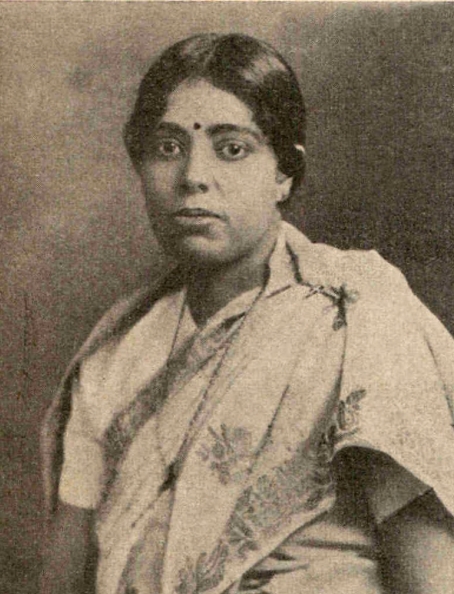
Janaki Ammal was regarded as the first Indian woman botanist. Born in 1897 in the Indian state of Kerala, Tellicherry (now Thalassery), she devoted her life to studying biology and botany, and later cytology.
EARLY LIFE AND EDUCATION
Growing up with her parents, her six brothers and five sisters, she was always encouraged by her family to engage in intellectual pursuits. After schooling in Tellicherry, she moved to Madras to attend Queen Mary’s College where she obtained her bachelor’s degree. In 1921, she obtained an honors degree in botany from Presidency College. She taught at Women’s Christian College briefly in Madras before setting off to Michigan.
She attended the University of Michigan as a Barbour Scholar (awarded for women of highest academic and professional caliber) and obtained her Masters degree in 1925. Dr Janaki Ammal returned to India to continue teaching at WCC and then later returned to Michigan on a Fellowship to get her D.Sc. in 1931. She was arguably the first woman to obtain a PhD in botany in the U.S. She continued to make many seminal contributions to her field.
PROFESSIONAL LIFE
She is best remembered for co-authoring “Chromosome Atlas of Cultivated Plants” along with C. D. Darlington. She spent some of her years in England doing chromosome studies on a wide range of garden plants. Her research on chromosome numbers and ploidy provided insight on the evolution of species and varieties.
During her time, she also worked at the Central Botanical Laboratory, the Regional Research Laboratory in Jammu and Kashmir, and the Bhabha Atomic Research Centre.
Dr Janaki Ammal has collaborated with scientists of her time as well. With Harley Harris Bartlett, a professor at the Department of Botany, she evolved a cross known as the “Janaki Brengal” (brengal being the Indian term for eggplant).
After publishing her PhD thesis (“Chromosome Studies in Nicandra Physaloides”) in 1932, she returned to India and worked as a professor of botany at the Maharaja’s College of Science. She taught there from 1932 to 1934. From 1934 to 1939, she worked as a geneticist at the Sugarcane Breeding Institute along with Charles Alfred Barber. Her work during these years included the cytogenetic analysis of Saccharum spontaneum (wild sugarcane), and several interspecific and intergeneric hybrids.
Her long and rewarding career in science as a botanist, geneticist and cytologist lead her to be elected Fellow of the Indian Academy of Sciences in 1935, and of the Indian National Science Academy in 1957.
She continues to be honored for her work in botany, even having a flower (Magnolia Kobus Janaki Ammal) and a herbarium named in her honor.

References
 Applied Plant Ecology Winter 2020