
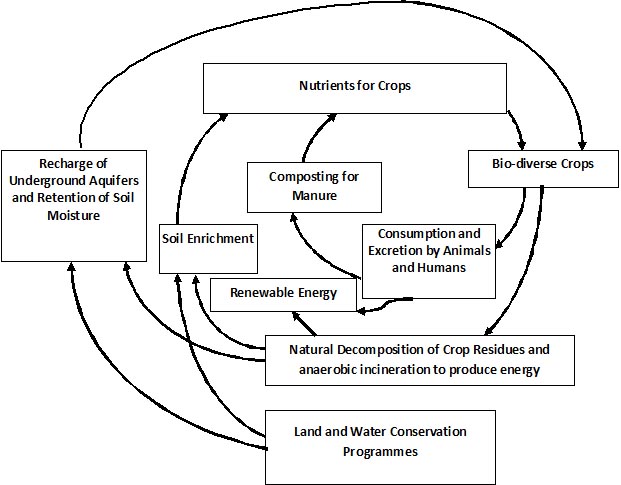
Sustainable agriculture can be defined as a type of agriculture that focuses on meeting both social and environmental needs. In other words it is a way in which farming is done using eco-friendly methods that helps maintain the relationship between the organisms and its environment. As the global population is increasing so is the demand of food consumption. Since the key variable that affects the demand for food is population growth, so it is very important to understand the rise in population worldwide. Over 5 billion people in the world are undernourished due to insufficient access to food. Farming can lead to the depletion of soil, water, air, wildlife and quality of human resources. So sustainable agriculture would not only help with conserving food but would rather also play a big role in preventing climate change.
Food security can be defined as sufficient access of food to everyone for a healthy living. Sustainable agriculture is one way to increase food security. It helps prevent food borne illnesses as it encourages the use of natural fertilizers instead of pesticides and other harmful things. This also helps improve soil quality that further helps in the increase of crop yield. There are many ways of farming sustainably. Some ways to practice sustainability are:
- Using organic waste as pesticides: Helps prevent use of toxic pesticides.
- Promote biodynamic farming: Nature animal raising in order to promote mutually beneficial relationships.
- Promote agroforestry: Growth of trees and shrubs amongst crops or grazing land.
- Encourage urban agriculture: Grow food closer to home.
- Polyculture farming: Growing multiple crop species in one area in order promote balanced diets, improve soil fertility and prevent weather fluctuations.
 Applied Plant Ecology Winter 2020