It is very important to be able to distinguish between different types of literature when you are looking for sources to write up an essay or lab report. This includes primary, secondary, and tertiary literature.
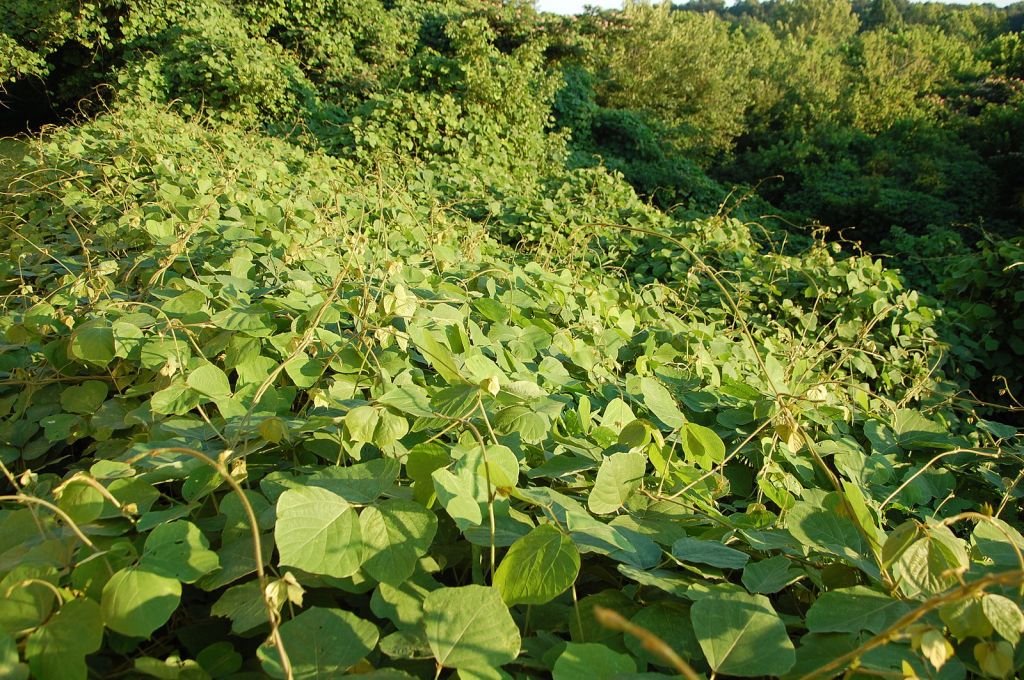
I have listed three different documents that fall under each type literature. These documents revolve around the Kudzu, which is a perennial climbing vine native to eastern Asia and one of the world’s most invasive plant species. The plant was first introduced to North America in 1876 to landscape a garden at the United States Centennial Exposition in Philadelphia, Pennsylvania. Its use was later encouraged for livestock forage, erosion control and ornamental use, which led to it being widely planted in the southeastern United States.
Primary literature
First-hand data collected by the author of events as they are first described or actually happened, and therefore represents original findings.
The following document is a study that measures the impacts of Kudzu invasion on microbially-mediated nitrogen transformations and emission of NO and N2O from invaded and uninvaded soils at three sites in Madison County, Georgia in July 2007. It includes a material and methods section to describe how the study was conducted and data was collected.
Hickman, Jonathan E. et al. “Kudzu (Pueraria montana) invasion doubles emissions of nitric oxide and increases ozone pollution.” Proceedings of the National Academy of Sciences of the United States of America 107 22 (2010): 10115-9 .
Secondary literature
When an author describes, interprets, or analyzes information from other sources, often primary sources.
The following document is a review on the use and characteristics of Kudzu as a potential feedstock. The fact that this document is a review shows that it does not contain the original findings of the author.
Gulizia, Joseph P., and Kevin M. Downs. “A Review of Kudzu’s Use and Characteristics as Potential Feedstock.” Agriculture 9.10 (2019): 220. Crossref. Web.
Tertiary literature
When the author compiles and summarizes mostly secondary sources. This includes reference publications such as encyclopedias, bibliographies, or handbooks. Wikipedia, which is widely-known online encyclopedia, is the perfect example of tertiary literature.
https://en.wikipedia.org/wiki/Kudzu
https://en.wikipedia.org/wiki/Kudzu_in_the_United_States
 Applied Plant Ecology Winter 2020