Dr. Seaton was one of the first African American women awarded a doctorate in Belgium, in a time and era where that was not the norm. Notable for her study in Embryology, she was a biologist. With her husband by her side, an International lawyer, they moved around to countries in East Africa, Bermuda, and Seychelles and pursued academic career as well as got involved in African independence movements. She attended the notorious Black College, Howard, where she met her husband, who was also a biology student. Her move to Europe, where she later attained her PhD was driven by the high barrier that were on African American in pursuit of post graduate study. Only a few African American went into postgraduate, yet alone, African American women to gain PhDs in the United States, in the 1940s.
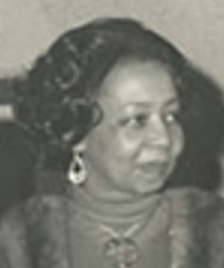
Not only a biologist, Seaton as also involved in African freedom movement until later returning to the U.S. with her family in 1953. She became the assistant professor of biology at Spelman College in 1953 and spent time as a research fellow at the California Institute of technology. It was not until 1960 that she became a full professor at the Texas Southern University. She was also awarded several grants for her research in antibodies and cell division in sea-urchin eggs.
Seaton’s latter years consisted of time lecturing in biology in Seychelles, Bermuda and Uganda, where her husband was a judge of the Supreme court in Bermuda. She was a member of the American Association for Advancement of Science, and so many other associations. She died in 2014 in her hometown Houston, Texas at the age of 89. She will be remembered as being one of the first prominent black women biologist.
Written in summary of:
 Applied Plant Ecology Winter 2020