Over the 4 years I have spent at York University, if I went to the library it was definitely Staecie Science library. The only time I would venture into Scott library is if I was meeting with a group to study, but that was not very common. As I began doing research practicums with Dr. Bazely she often used the terms “super librarians” and emphasized the importance of librarians more than any professor I had ever seen. Her lessons emphasized the importance of library services and how utilizing them can help your research skills immensely increase.
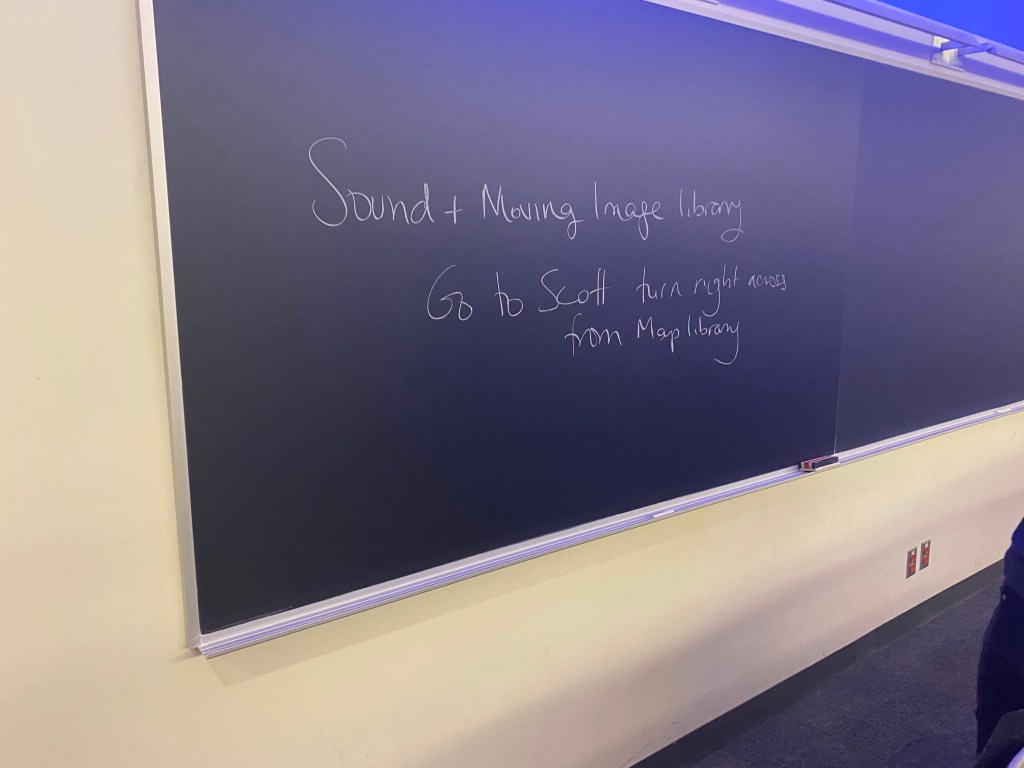
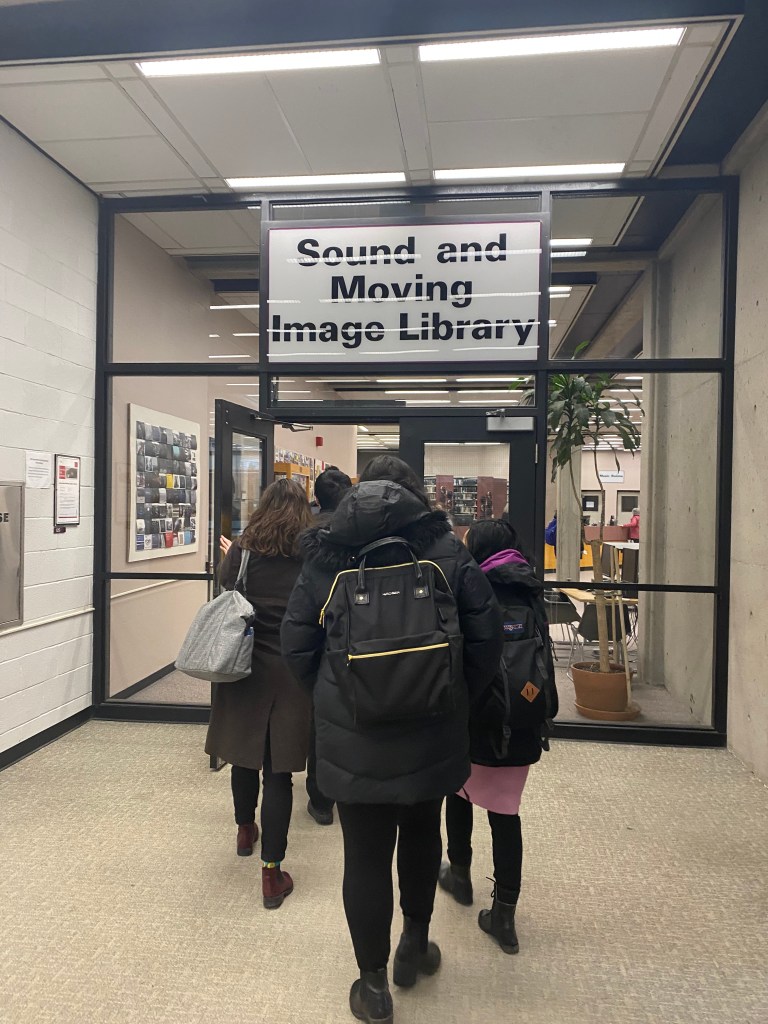
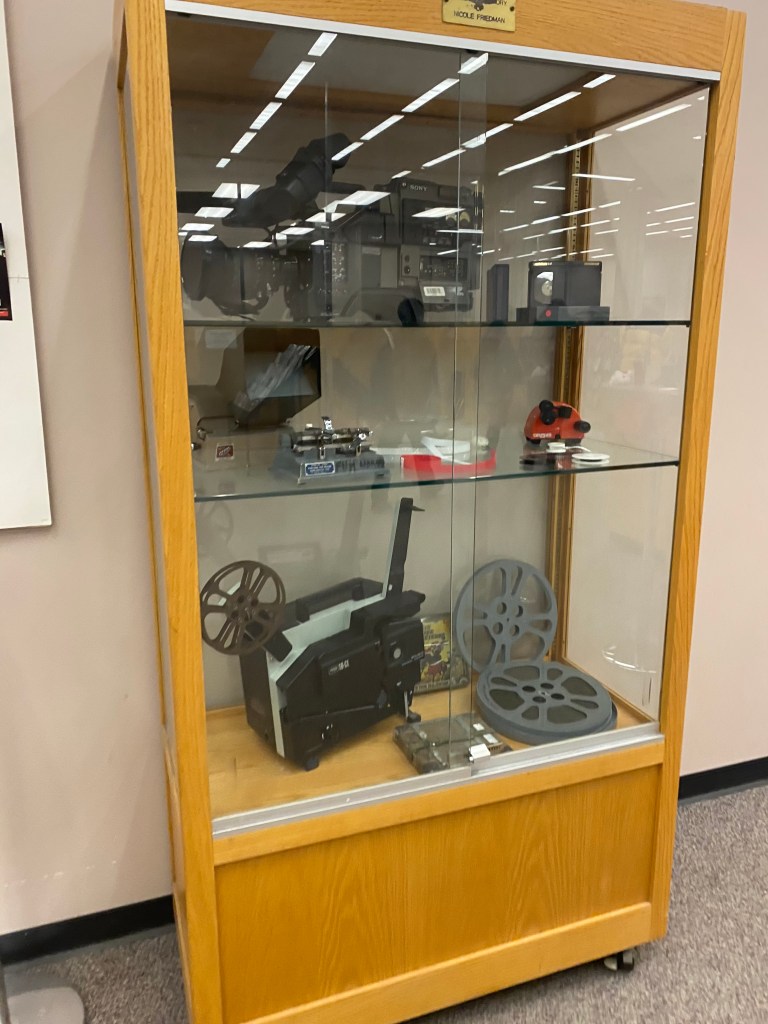
I had vaguely heard of the Sound and Moving Image Library (SMIL) but, I was unsure of where it actually was or what is actually does. Cut to Feb 3rd, 2020, the BIOL4095 class took a visit to the SMIL. As you enter Scott Library, most people head straight for the escalators to go upstairs to the collaboratorium or quiet study rooms. Just to the right of the escalator is a whole other section of the library that is rarely explored by science majors. Walking past the escalator, to the right is a wall full of images from the past, like the IBM Data Center in Toronto during 1965. Following this route, you see the Map Library to your left and then finally the sign that says, “Sound and Moving Image Library.” What immediately caught my eye was the display cabinet with video reels, a video reel recorder, and an “old school” video camera that looked way too heavy for one person to hold.
I was also surprised to see that the DVD display had many modern/current selections, like ” A Wrinkle in Time”. I was expecting to only see documentaries there. The SMIL houses media formats including DVD, CD, LP, VHS, CD-ROM, audiocassette, and audio reel. They have various audio and visual equipment to plat the media (cassette decks, turntables, VHS players, etc). You can search for items in SMIL using the same OMNI library system used by Scott and Staecie, simply limit the search parameters to audio or video. Even if the SMIL doesn’t have the exact selection you are looking for you can put in a request for it. Specialized collections like the Clara Thomas Archives are located here. This archive houses manuscripts and rare books in the subject area of Canadian history, environmental history, fine arts, and sexual diversity. One of the things that I found most surprising, which in retrospect is something that should not have been surprising, is that there are specialized areas in the librarian field. Rob van der Bliek is a music librarian and Mary Kandiuk is a Visual Art, Design, Theatre, and Dance Librarian.
The second time I visited the SMIL, I went to attend one of the learning skills workshops for mastering group work. Learning Skills Services host most of their workshops in room 124 (the screening room). After the workshop I looked around the main area of the SMIL and I noticed that, unlike the cubicles in Scott library that just have an electrical plug, these also have devices for watching movies or documentaries. The vast majority of students sitting at these desks weren’t actually watching something It looked like they were just studying, so it seems that the SMIL is also a great study area with lots of seating since most people don’t know about it.
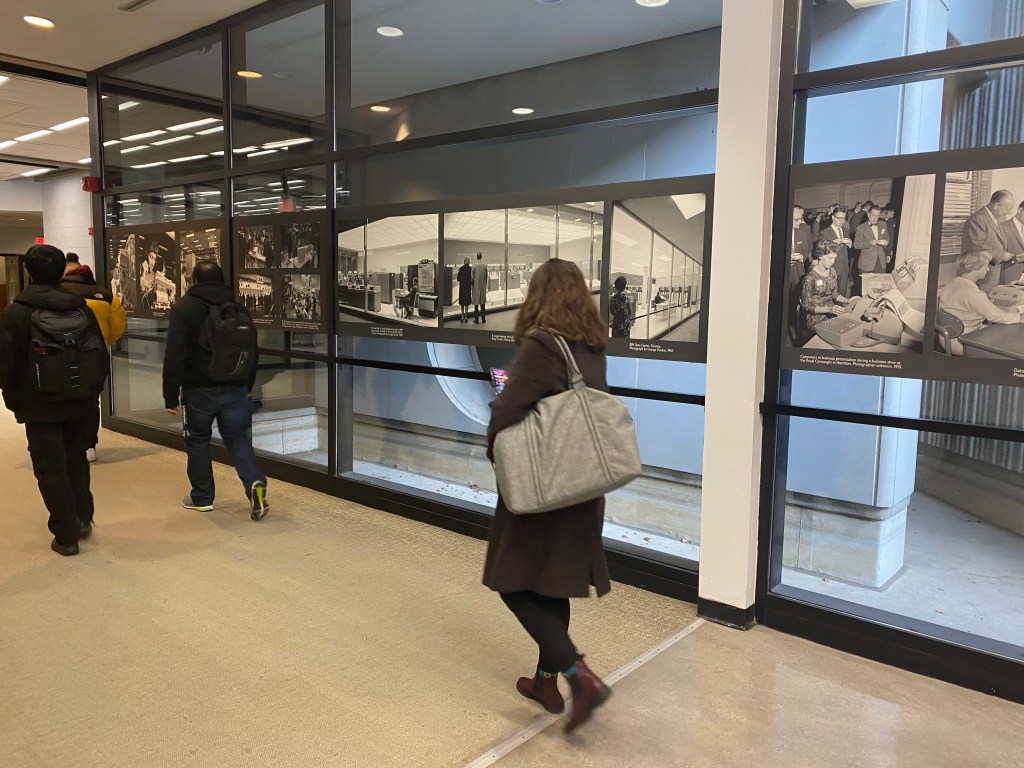
Walking towards the entrance of the SMIL the walls are lined with images from the past
The second time I visited the SMIL on my own, I went to attend one of the learning skills workshops for mastering group work. Learning skills services host most of their workshops in room 124 (the screening room). After the workshop I looked around the main area of the SMIL and I noticed that, unlike the cubicles in Scott library that just have an electrical plug, these also have devices for watching movies or documentaries. The vast majority of students sitting at these desks weren’t actually watching something It looked like they were just studying, so it seems that the SMIL is also a great study area with lots of seating since most people don’t know about it.
 Applied Plant Ecology Winter 2020